Remorque porte-balles rondes compacte 9JYY-2.5
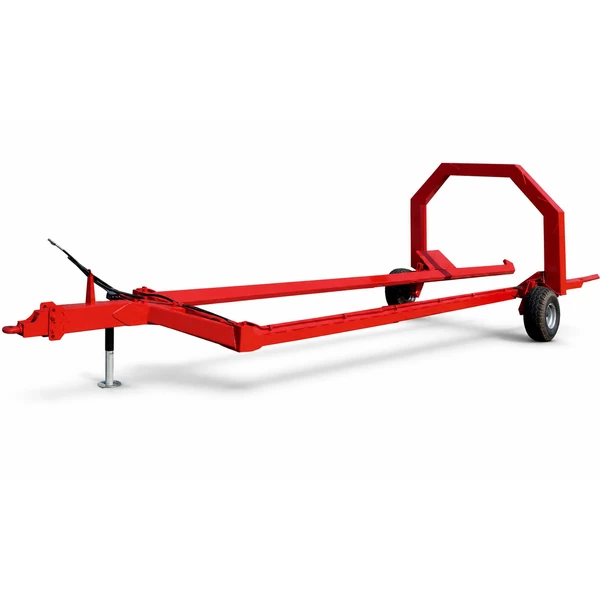
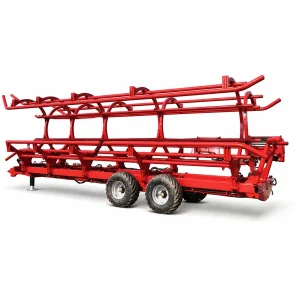
Le Transporteur de balles rondes 9JYY-2.5 Cette remorque à foin compacte à un seul essieu est conçue pour les exploitations américaines transportant des balles rondes avec un tracteur utilitaire de 30 à 50 ch : petits élevages bovins, producteurs de foin pour chevaux, éleveurs des États montagneux sur des chemins étroits et petits producteurs de foin qui n’ont pas besoin (et ne peuvent pas se permettre) d’une machine de 100 ch. Avec une charge utile de 2 500 kg, un système de chargement hydraulique à deux circuits à ≥ 16 MPa et un poids à vide de seulement 1 165 kg, la remorque se tracte aisément avec un Kubota série L, un John Deere 4066R, un New Holland Workmaster 75 ou un Massey 1740, sans la consommation de carburant ni l’encombrement au sol d’une remorque à plusieurs essieux.
Transporteur de balles rondes compact 9JYY-2.5 pour petites exploitations de tracteurs
En mode transport, le châssis affiche une largeur hors tout de 2 420 mm, largement inférieure à la limite de largeur maximale de 2 896 mm (9 pieds 6 pouces) imposée par la réglementation américaine. Il n'y a ni circuit de freinage pneumatique, ni capteur de charge électronique, ni pompe auxiliaire pour le brûleur à AdBlue. Le 9JYY-2.5 est une machine volontairement simple : attelage par timon, deux distributeurs hydrauliques, deux pneus 10.0/80-12, prise hydraulique, pince hydraulique et vidange hydraulique. Le nombre total de pièces mobiles est bien inférieur à celui d'une remorque de 4 500 kg, ce qui explique pourquoi elle est idéale pour les petites exploitations agricoles où un agriculteur-mécanicien assure l'entretien dans son atelier le samedi matin. Le transporteur de balles rondes 9JYY-2.5 est expédié de Sacramento avec le même engagement de disponibilité des pièces à vie que nous offrons à chaque machine de notre gamme : pièces d'usure en stock, joints hydrauliques en stock complet et un schéma des pièces imprimé, attaché avec un collier de serrage à l'intérieur du couvercle de la boîte à outils, pour l'opérateur qui finit par le consulter à 6 heures du matin un samedi en pleine saison des foins.
Spécifications techniques
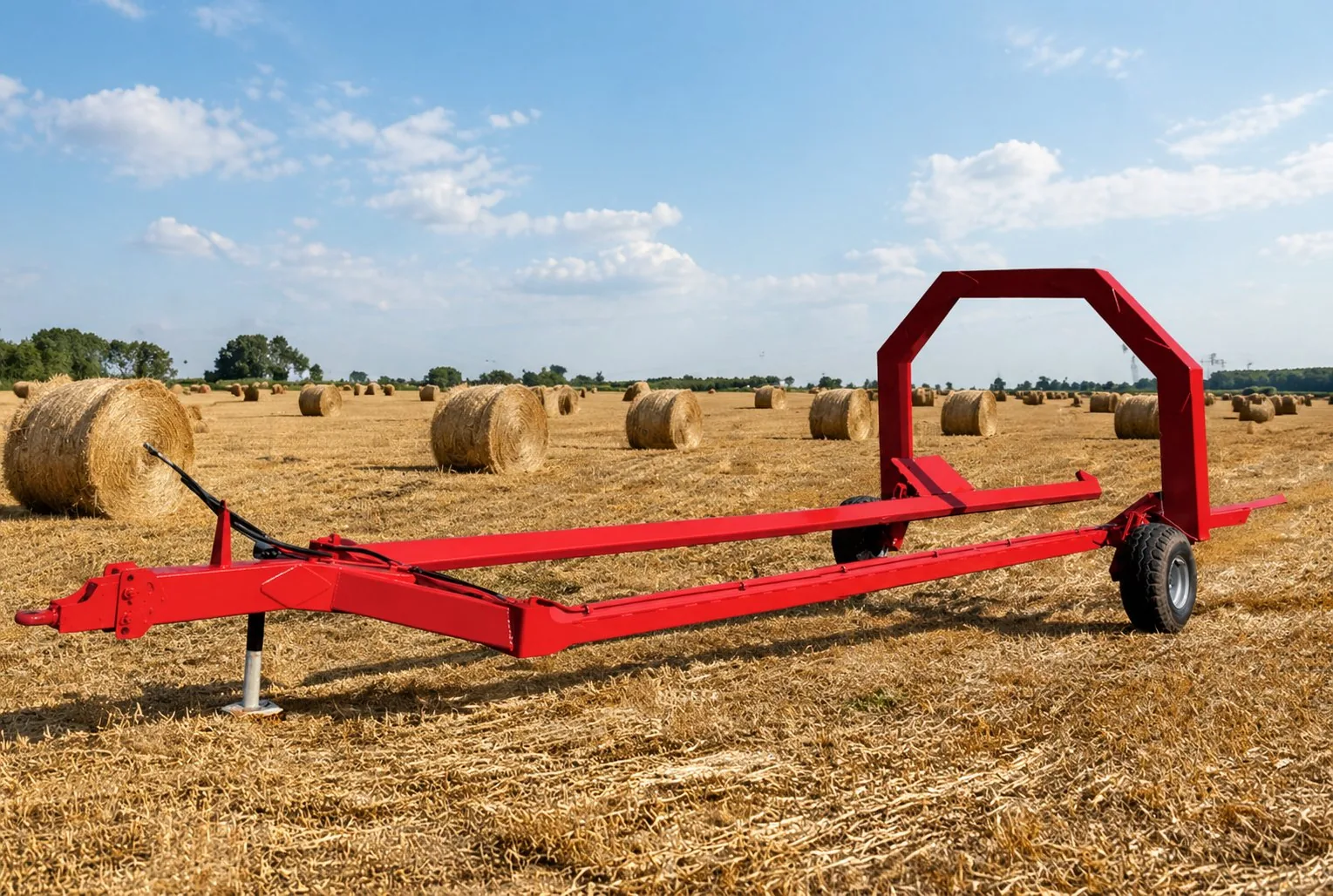
La fiche technique ci-dessous est reproduite intégralement à partir des plans du fabricant pour le lot de production 2026, avec les conversions impériales ajoutées dans une deuxième colonne pour les marchés américain et canadien. Le modèle 9JYY-2.5 est dimensionné pour la balle ronde de Ø 1 300 mm, format dominant dans les petites exploitations agricoles américaines ; la balle de foin sec standard de 4×5 et la balle d’ensilage enrubannée typique de 4×5 correspondent toutes deux à ces dimensions.
Si votre exploitation presse habituellement du foin commercial en balles de 5×5 ou 5×6, la remorque acceptera physiquement ces dimensions dans les limites de longueur prévues, mais la charge utile sera le facteur limitant : une balle de luzerne de 5×5 de 600 kg signifie 4 balles par chargement au lieu des 5 à 6 balles de format laitier pour lesquelles la remorque a été dimensionnée. Pour des volumes plus importants, optez pour le modèle renforcé 9JYY-4.5. Le transporteur de balles rondes 9JYY-2.5 est livré de série avec des pneus flottaison jumelés 10.0/80-12, un axe d'attelage Cat. I/II, un emblème SMV, un kit de câblage pour feux de signalisation rouges et un manuel d'utilisation en anglais en fin d'ouvrage. Ce manuel couvre la procédure de chargement des balles, le schéma hydraulique, le tableau de lubrification et les couples de serrage. Parmi les options disponibles à la commande, on trouve un kit de conversion pour freins à inertie hydrauliques, un additif hydraulique grand froid et un kit de réparation de vérin de rechange, livrés dans la même caisse.
| # | Article | Unité | Spécification | Référence impériale/américaine |
|---|---|---|---|---|
| 1 | Produit | / | Ramassage et transport de balles rondes (compact) | — |
| 2 | Modèle | / | 9JYY-2.5 | — |
| 3 | Attelage | / | Barre de traction (remorquée) | Broche Cat. I / Cat. II |
| 4 | Chargement | / | Hydraulique | Commande en cabine, 2 distributeurs |
| 5 | Charge utile maximale | kg | 2,500 | ≈ 5 510 lb |
| 6 | puissance du tracteur | kW | ≥ 20 | ≥ 27 CV (≈ 30 CV utilitaires) |
| 7 | Pression de service hydraulique | MPa | ≥ 16 | ≈ 2 320 PSI |
| 8 | vitesse de transport | km/h | ≤ 40 | ≤ 40 km/h |
| 9 | Taille des pneus | / | 10.0/80-12 (jumeau) | essieu simple, 2 roues |
| 10 | balle compatible | mm | Ø 1 300 × L 1 000 – 1 500 | ≈ Ø 51 po × L 39-59 po |
| 11 | Dimensions totales (L×l×H) | mm | 10 300 × 2 420 × 2 485 | ≈ 33,8 × 7,9 × 8,2 pi |
| 12 | Poids net | kg | 1,165 | ≈ 2 568 lb |
Fonctionnement de la remorque à balles compacte 9JYY-2.5
Le transporteur de balles rondes 9JYY-2.5 effectue un cycle en quatre étapes, du ramassage en bordure de champ au déchargement sur l'aire de stockage. Ces opérations sont commandées depuis la cabine du tracteur par deux distributeurs hydrauliques. La remorque elle-même ne comporte pas de prise de force ; tous les actionneurs sont hydrauliques. Le temps de cycle total par balle est d'environ 50 à 60 secondes sur terrain plat, ce qui correspond à environ 18 à 22 balles chargées et empilées par heure avec un seul opérateur. La simplicité du processus est primordiale : aucun risque de court-circuit électrique dans une grange humide, aucun risque de fuite du système pneumatique par temps froid, aucun capteur de pesage électronique à recalibrer.
Étape 1 — Ramassage au champ de balles individuelles
Avec la remorque positionnée à côté d'une balle ronde debout, l'opérateur actionne le premier levier du distributeur hydraulique. Un bras de ramassage se déploie, se glisse sous la balle au niveau du sol et la soulève sur le plateau. Le système est dimensionné pour des balles de 1 300 mm de diamètre et fonctionne aussi bien avec des balles dressées sur leurs faces plates qu'avec des balles couchées sur leur face bombée après leur sortie de la presse.
Étape 2 — Enclenchement de la pince hydraulique
Une fois la balle déposée sur le plateau, la seconde vanne de régulation de pression (SCV) pressurise le circuit de serrage pour la maintenir fermement au niveau des épaules. La pression de serrage est dimensionnée pour maintenir la balle pendant le transport sans comprimer l'enrubannage ni déformer sa forme – un point crucial pour les balles d'ensilage enrubannées destinées à l'alimentation animale, où l'intégrité de l'enrubannage est essentielle à la fermentation.
Étape 3 — Transport routier
Avec une largeur hors tout de 2,42 m et des pneus jumelés 10.0/80-12 sur un seul essieu, cette remorque est conforme à la réglementation routière américaine (DOT) sur toutes les autoroutes des États-Unis. Sa vitesse de transport est de 40 km/h (environ 25 mph) ; elle doit correspondre à celle du tracteur tracteur. Le poids sur la flèche reste inférieur à 250 kg en pleine charge, une charge supportée par tout attelage de catégorie I ou II sans assistance supplémentaire.
Étape 4 — Déchargement du parc à déchets
Sur l'aire de stockage, l'opérateur inverse le circuit de serrage pour libérer la balle, puis actionne le vérin d'éjection pour la faire rouler hors du plateau et la déposer au sol. Pour le stockage en grange, la remorque peut être positionnée devant une porte ouverte et la balle roulée directement sur l'aire de stockage. Le cycle de déchargement complet dure entre 30 et 40 secondes.
Principaux avantages du transporteur de balles 9JYY-2.5
Cinq choix techniques distinguent le 9JYY-2.5 des anciens porte-balles à un seul essieu et des remorques à plateau combinées avec chargeur frontal utilisées dans les petites exploitations. Chaque choix correspond à une problématique fréquemment rencontrée par les petits exploitants agricoles américains : puissance du tracteur requise, poids de la machine, compatibilité avec les différents formats de balles, conformité aux normes de transport routier et coût total d’acquisition par rapport au volume de production réellement transporté au cours d’une saison.
Fonctionne avec un tracteur utilitaire de 30 CV
≥ 20 kW (≈ 27 ch) à la barre de traction. Un Kubota L3560, un JD 3033R, un NH Workmaster 50 ou un Massey 1740 tractent aisément la remorque, à vide comme chargée. Inutile de remplacer votre parc de tracteurs actuel.
Poids à sec léger : 1 165 kg
Moins de la moitié du poids à sec d'une remorque de 4 500 kg. Consommation de carburant réduite, tassement du sol moindre sur les pâturages humides, manœuvres facilitées dans les champs de 3,65 m de large et dans les virages serrés des cours de ferme.
Compatible avec les balles 4×4 et 4×5
Conçue pour les balles de diamètre standard de 1 300 mm, cette presse traite les balles de foin sec de 350 à 450 kg et les balles d'ensilage enrubannées de 500 à 650 kg sans reconfiguration. Sa plage de longueurs de 1 000 à 1 500 mm couvre la production de la plupart des presses utilisées dans les petites exploitations agricoles.
Conforme aux normes DOT, largeur inférieure à 2,5 m
Largeur hors tout de 2 420 mm — largement inférieure à la limite de 2,90 m (9 pi 6 po) requise pour les véhicules hors gabarit dans tous les États américains. Emblème SMV et kit de signalisation lumineuse rouge inclus. Aucun permis spécial n'est nécessaire pour les trajets habituels sur les routes nationales et départementales.
Alternative moins coûteuse
Le prix d'acquisition est généralement de 50 à 65 000 $ inférieur à celui d'une remorque multi-essieux de qualité comparable. Pour une exploitation annuelle de 100 à 300 balles, le calcul est avantageux en deux saisons seulement par rapport à l'alternative avec chargeur frontal et plateau.
Structure, matériaux et qualité de construction
Le châssis du 9JYY-2.5 est soudé en acier de construction Q345B (équivalent chinois de l'ASTM A572 Gr. 50) dans l'usine partenaire située près de Sacramento. Les deux longerons principaux sont constitués d'un profilé creux rectangulaire de 150 × 80 × 6 mm, dimensionné avec un coefficient de sécurité de 3 par rapport à la charge utile dynamique de 2 500 kg à 40 km/h. Les soudures au niveau du pivot du bras de levage et de la fixation de la barre d'attelage sont protégées par CO₂ et inspectées visuellement et par ressuage sur chaque châssis sortant de la chaîne de production. Les bras de levage sont fabriqués en tôle d'acier anti-usure de 10 mm d'épaisseur, avec des bagues trempées à chaque pivot.
La protection de surface suit le même procédé en quatre étapes que la gamme renforcée 9JYY-4.5 : prétraitement au phosphate, primaire électrostatique, couche de finition polyuréthane et cuisson au four. Les résultats des tests de brouillard salin effectués par notre laboratoire de contrôle qualité interne montrent une résistance à la corrosion supérieure à 600 heures avant l’apparition de rouille rouge sur les bords des rainures. Les vérins hydrauliques sont conformes aux spécifications européennes et supportent une pression d’éclatement de 21 MPa (largement supérieure à la pression de service de 16 MPa). Les tiges de vérin sont chromées et protégées par des racleurs en élastomère à leurs deux extrémités. La configuration à un seul essieu utilise des ressorts paraboliques à deux lames avec des bagues d’attelage graissables — des composants identiques à ceux d’une remorque utilitaire routière d’une capacité de 2 268 kg (5 000 lb).
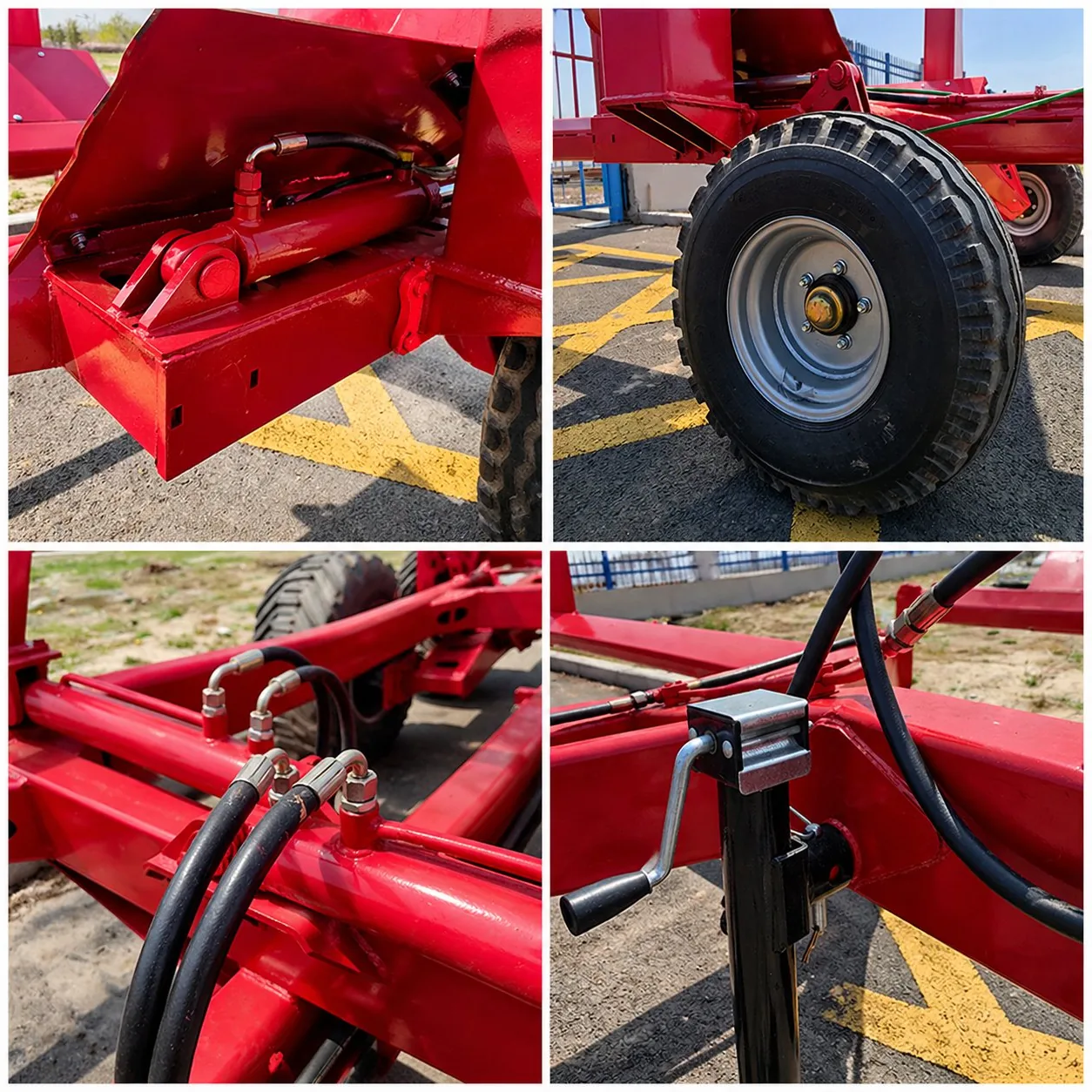
Note concernant l'entretien : la remorque est réparable sur le terrain avec une trousse d'outillage de base. Les points de graissage (six sur chaque bras de ramassage, deux sur l'essieu, un à chaque extrémité de tige de vérin) sont accessibles sans démontage. Le remplacement des pièces d'usure sur les pivots des bras de ramassage peut être effectué en 90 minutes par une seule personne. La plupart des petits exploitants agricoles réalisent eux-mêmes leur entretien annuel en un après-midi : graissage, inspection des flexibles, contrôle de la pression des pneus et vérification rapide des joints de vérin. La simplicité de la 9JYY-2.5 est voulue : les petites exploitations ont rarement accès à un spécialiste hydraulique dans un rayon de 160 km, et la remorque est conçue pour qu'un agriculteur-mécanicien compétent puisse l'entretenir pendant toute une saison sans intervention extérieure. Des mises à jour d'entretien, sous forme de bulletin technique, sont envoyées par courriel aux propriétaires enregistrés deux fois par an et publiées sur le portail des pièces détachées de la page d'assistance de silagebalers.com.
Scénarios d'application pour les petites exploitations agricoles américaines
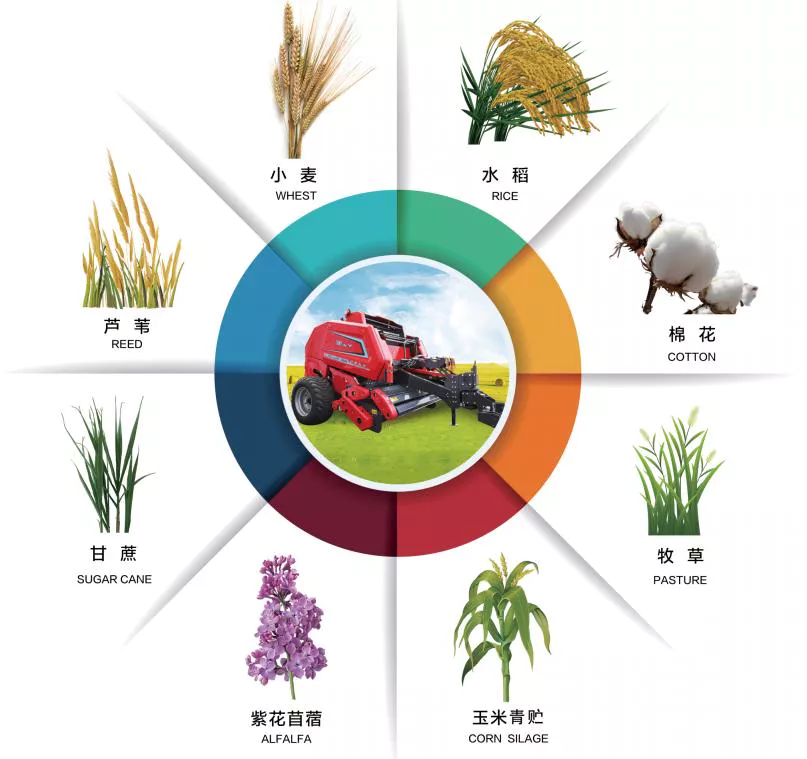
Les trois catégories d'application ci-dessous couvrent environ 90 % des commandes de la 9JYY-2.5 passées par des opérateurs américains. Si votre exploitation ne correspond pas exactement à l'une de ces catégories (par exemple, une installation de stockage de balles sur un terrain de foire ou un programme de stockage de cultures de couverture dans un vignoble), veuillez contacter le service des applications de Sacramento afin que la configuration puisse être confirmée avant l'expédition de votre commande.
Exploitations agricoles de loisirs et de petite taille
Une exploitation bovine typique de 30 à 200 têtes (vaches et veaux) située dans le Mid-Atlantic, le Sud-Est ou les monts Ozarks doit transporter de 100 à 400 balles rondes par saison, depuis des prairies louées jusqu'à une aire d'alimentation hivernale. La remorque 9JYY-2.5 répond à ce besoin sans nécessiter de changement de tracteur. Nombre de ces éleveurs utilisent un Kubota série MX, un JD 4066R ou un Massey Ferguson 1740, achetés neufs entre 2015 et 2020 – soit précisément la catégorie de puissance (30 à 50 ch) pour laquelle la remorque a été dimensionnée. Le transport balle par balle correspond également au rythme de travail naturel d'une exploitation individuelle : charger, transporter, décharger, et recommencer.
Producteurs de foin équin et de foin de niche
Les exploitations équines et les petits producteurs de foin pour chevaux du Kentucky, de Caroline du Nord, du Vermont et des États de la Nouvelle-Angleterre produisent généralement de 200 à 500 balles rondes de haute qualité par coupe sur de petites surfaces. Le transporteur de balles rondes 9JYY-2.5 s'intègre parfaitement à ce flux de travail car il préserve l'intégrité du film d'enrubannage et du filet (un point important pour les acheteurs de foin haut de gamme) et n'abîme pas le gazon des pâturages bien entretenus, contrairement à une lourde remorque à plusieurs essieux. Son faible encombrement au sol est un atout majeur pour les exploitations qui organisent des visites guidées.
Opérations en zone montagneuse avec routes escarpées
Les élevages de vaches allaitantes et de bovins d'engraissement en Virginie-Occidentale, dans l'est du Tennessee, au pied de la Sierra Nevada en Californie et dans les monts Ozarks au Missouri se déroulent souvent sur des terrains en pente. Les chemins escarpés des champs rendent inadaptés les larges remorques à plusieurs essieux, mais conviennent parfaitement à la 9JYY-2.5 grâce à sa voie étroite et son centre de gravité bas. Son poids à vide de 1 165 kg permet également à l'exploitant de manœuvrer aisément une remorque lourde en marche arrière dans les virages serrés, un atout précieux dans les collines du sud du Missouri et les prairies de l'est du Kentucky.
Guide des tailles et des choix
Avant de commander le 9JYY-2.5, veuillez suivre cette liste de vérification en cinq points. La plupart des retours de commande que nous constatons sont dus à une incompatibilité avec le tracteur (généralement un débit hydraulique insuffisant à bas régime moteur), et chacun de ces problèmes peut être évité lors d'un échange préalable avec notre service d'assistance technique à Sacramento.
- Dimensions de la balle. Vérifiez que vos balles standard mesurent Ø 1 300 mm × L 1 000-1 500 mm. Les formats 4×5 pour le foin sec et 4×5 pour l'ensilage enrubanné sont parfaitement adaptés. Les balles commerciales plus grandes, de 5×6, se serreront physiquement, mais réduiront le nombre de balles par chargement.
- La puissance du tracteur à la barre de traction. ≥ 20 kW (≈ 27 ch). La plupart des tracteurs utilitaires de 30 à 50 ch répondent aisément à cette exigence. Les tracteurs sous-compacts de moins de 25 ch peuvent tracter une remorque vide, mais auront des difficultés en pente avec une charge de 2 500 kg.
- Sorties hydrauliques. Deux distributeurs hydrauliques à commande hydraulique (SCV) : un pour le bras de ramassage, l’autre pour la pince/le refoulement. Vérifier un débit ≥ 20 l/min à 16 MPa. Les tracteurs sous-compacts plus anciens équipés d’un système hydraulique à pompe unique peuvent nécessiter un diviseur de débit adaptable.
- Hauteur de la barre d'attelage et goupille. Attelage de catégorie I ou II, hauteur de barre d'attelage réglable de 33 à 41 cm. La plupart des tracteurs utilitaires américains se situent dans cette plage sans modification.
- Largeur du chemin et du portail. L'enveloppe de 2,42 m permet de franchir les portails agricoles de 2,74 m (9 pi) avec une marge. Veuillez vérifier la présence de portails d'allées étroites, de couloirs de passage pour le bétail ou d'entrées de grange sur votre propriété.
Si votre exploitation déplace entre 50 et 400 balles rondes par saison et que vous êtes lassé de les empiler avec un chargeur frontal et une remorque à plateau, vous êtes l'acheteur idéal pour cette remorque. Demander un devis de transport Depuis le bureau de Sacramento. Pour les opérations de plus grande envergure (plus de 400 balles), transporteur de balles robuste Au sein de la même gamme de produits, l'utilisation d'un modèle plus adapté sur le plan économique est plus avantageuse. Pour les très petites exploitations traitant moins de 50 balles par saison, un transporteur de balles individuelles ou une combinaison chargeur frontal et plateau peuvent suffire. Le calcul du modèle 9JYY-2.5 est plus favorable aux exploitations qui déplacent un volume de balles suffisant chaque saison pour justifier son coût d'acquisition, compte tenu des économies de main-d'œuvre réalisées grâce au chargement automatique. La plupart des acheteurs de remorques traitant entre 100 et 300 balles amortissent le coût de la remorque en deux saisons seulement, par rapport à l'alternative du chargement frontal individuel de chaque balle.
Comparaison du 9JYY-2.5 avec les modèles Frontier et Anderson
Nous ne sommes affiliés ni à Frontier Equipment (une marque de matériel John Deere), ni au groupe Anderson, et le transporteur de balles rondes 9JYY-2.5 n'est en aucun cas une contrefaçon de leurs produits. Le tableau comparatif ci-dessous vise à aider les acheteurs américains à choisir la remorque la mieux adaptée à leurs besoins. Chaque machine de référence est un excellent équipement ; la question est de savoir si l'écart de prix en fonction du volume justifie le surcoût pour le transport annuel de vos balles.
| Spéc. | 9JYY-2.5 | Frontière BT1124 | Anderson TRB-1400 |
|---|---|---|---|
| Charge utile maximale | 2 500 kg | ~1 360 kg (balle unique) | ~3 600 kg (8 balles) |
| Chargement | chargement hydraulique automatique | Alimentation manuelle/par chargeur | chargement hydraulique automatique |
| Puissance nécessaire du tracteur | ≥ 27 CV | ≥ 25 CV | ≥ 80 CV |
| Capacité de balles | 5 à 6 balles de lait | 1 balle | 8 balles |
| largeur de transport | 2,42 m | 2,13 m | 2,85 m |
| Niveau de prix approximatif | $ — entrée | $ — entrée | $$$ premium |
| Meilleure adaptation | Transport en volume pour les petites exploitations agricoles | Déplacement et alimentation de balles individuelles | Exploitations agricoles canadiennes de taille moyenne |
Points forts des machines de marque : le Frontier BT1124 est encore plus simple (porte-balles simple, sans système hydraulique) et disponible chez tous les concessionnaires John Deere ; l’Anderson TRB-1400 transporte 8 balles et bénéficie d’un meilleur soutien du réseau de concessionnaires canadiens. Le transporteur de balles rondes 9JYY-2.5 se situe entre les deux : capacité supérieure au Frontier, coût d’acquisition inférieur à celui de l’Anderson et puissance de tracteur requise plus faible que les deux remorques multiballes mentionnées précédemment.
Pour un acheteur de petite superficie effectuant un calcul de coûts sur 5 ans, le 9JYY-2.5 l'emporte en termes de dollars par balle déplacée pour un volume annuel de 100 à 400 balles — la tranche qui couvre la plupart des fermes de loisirs, des exploitations équines et des petits élevages de vaches et de veaux à l'est du Mississippi.
Certifications de qualité et engagement de service
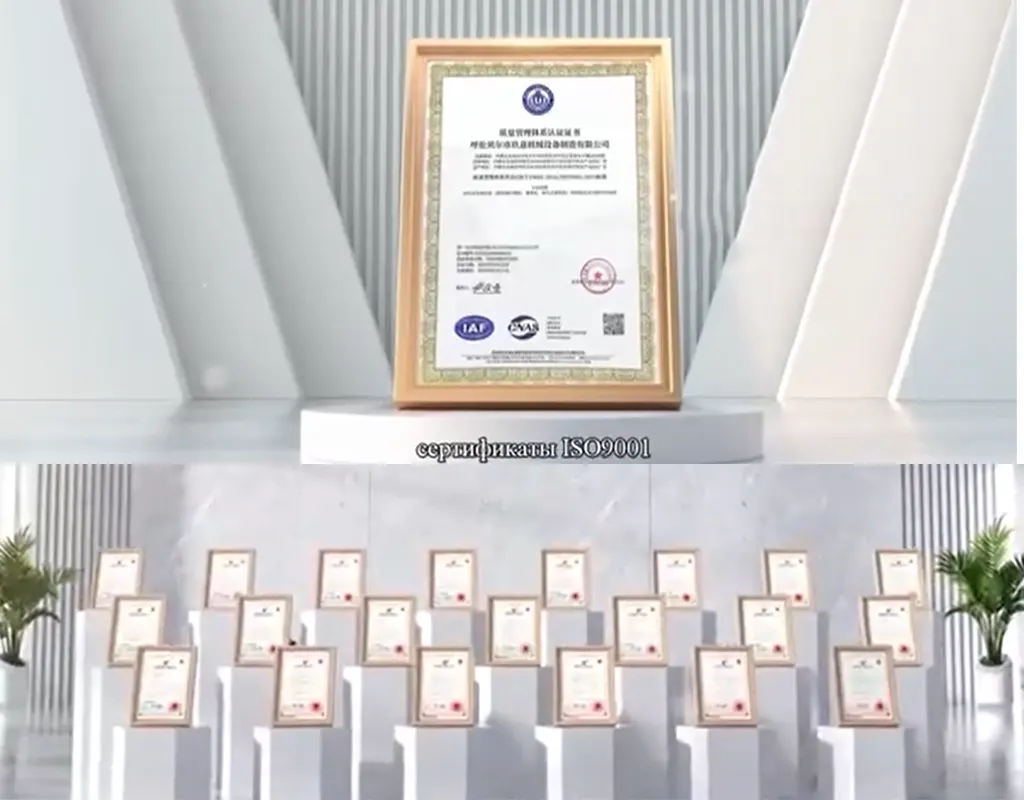
Chaque remorque 9JYY-2.5 qui sort de l'usine partenaire est fabriquée selon un système qualité certifié ISO 9001:2015, audité annuellement par un organisme certificateur tiers. Chaque châssis subit un test hydraulique à chaud de 30 minutes sur la ligne de production : le bras de levage est actionné 25 fois sous charge, le circuit de serrage 25 fois, chaque vérin est testé sous pression à 21 MPa et chaque soudure au niveau de la fixation du timon est inspectée par ressuage. Les résultats sont consignés avec le numéro de série de l'unité et transmis avec le manuel d'utilisation.
Conditions de garantie pour les acheteurs américains et canadiens : garantie limitée de deux ans sur le châssis soudé et le bras de levage, garantie d’un an sur les vérins hydrauliques et les roulements de moyeu de roue, garantie de six mois sur les pièces d’usure (patins de serrage, bagues, manchons anti-abrasion des flexibles). Les pièces sont expédiées depuis l’entrepôt de Sacramento par UPS Ground vers les adresses commerciales et résidentielles des 48 États contigus. Les commandes passées avant 11 h 00 (heure du Pacifique) sont expédiées le jour même pour les articles en stock, ce qui concerne environ 92 références % des pièces d’usure de ce modèle.
L'assistance téléphonique est disponible en anglais du lundi au vendredi de 7 h à 18 h (heure du Pacifique). Les questions techniques reçoivent généralement une réponse le jour même. Les titulaires d'un contrat de service sont mis en relation avec un ingénieur d'application senior pour la remise en état des vérins, le raccordement des flexibles ou le dépannage des problèmes de débit hydraulique. La plupart des petits exploitants agricoles assurent eux-mêmes l'entretien de leur matériel après la première saison. Le manuel d'utilisation contient les couples de serrage, les intervalles de graissage et le schéma hydraulique en fin d'ouvrage.
Matériel complémentaire pour les programmes de production de foin dans les petites exploitations agricoles
Le transporteur de balles rondes 9JYY-2.5 est généralement spécifié avec les équipements de pressage et de préparation du fourrage en amont, de même puissance. L'association naturelle est la suivante : presse à ensilage pour petit tracteur Issu de la gamme 9YG, ce modèle offre la même philosophie hydraulique, le même flux de travail pour l'opérateur et la même équipe d'intervention d'une seule personne. De nombreuses petites exploitations agricoles commandent la presse à balles et la remorque simultanément pour un transport partagé depuis Sacramento.
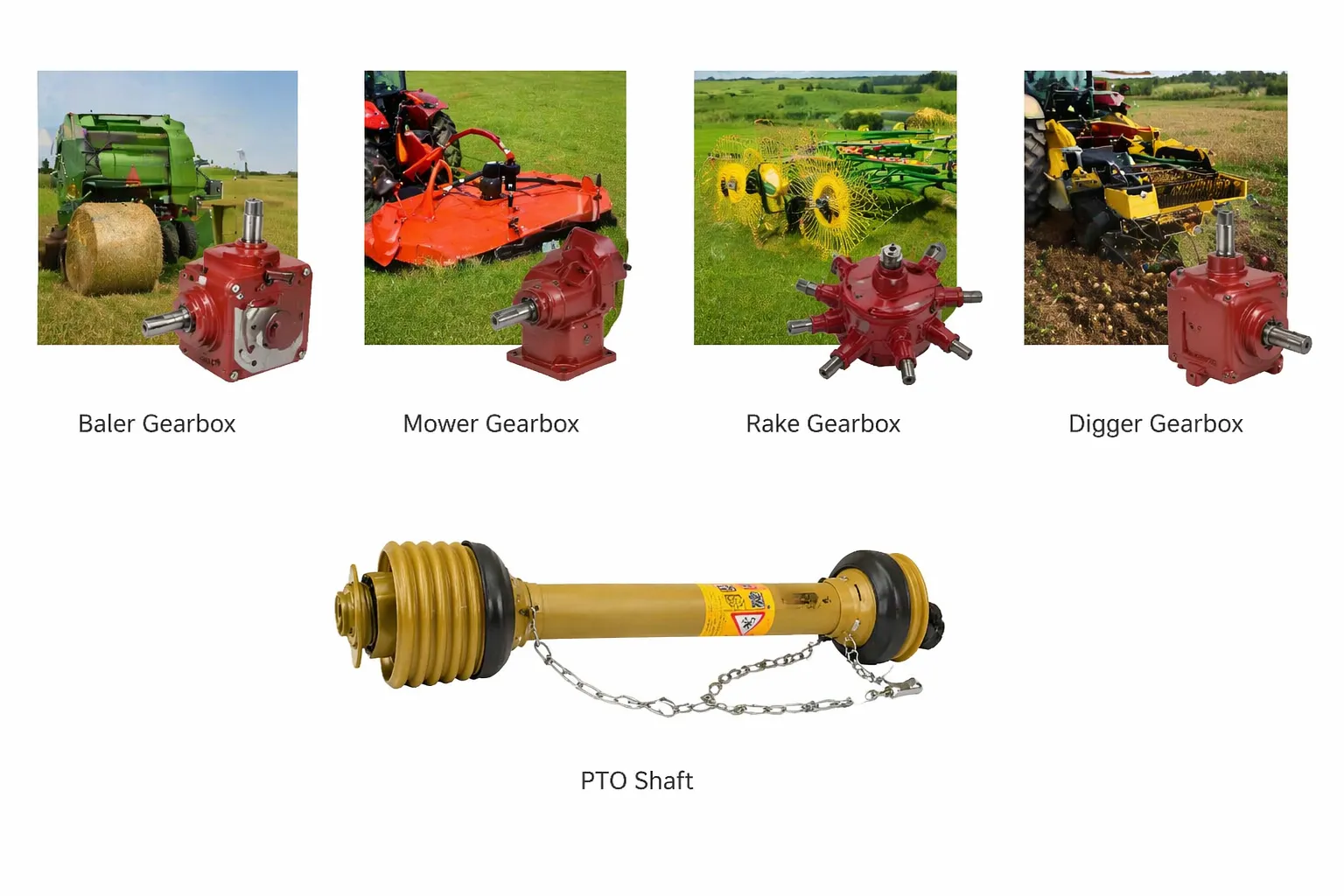
Pour les équipements à prise de force en amont d'une petite exploitation agricole, la fiabilité de la transmission est primordiale. Les opérateurs qui modernisent d'anciens tracteurs utilitaires limités à 1 000 tr/min ou qui utilisent des arbres cannelés atypiques peuvent spécifier une transmission adaptée. boîte de prise de force agricole Fabriqués par notre fonderie partenaire, ces réducteurs sont dimensionnés pour une vitesse de 540 tr/min côté outil. Des boîtes de vitesses de rechange sont livrées sur demande avec la presse à balles rondes et ajoutent environ 18 kg au poids de la caisse.
Parmi les autres accessoires souvent fournis avec la 9JYY-2.5, on trouve des patins de serrage de rechange ($95 par jeu, en stock), un kit d'entretien des flexibles hydrauliques pour 12 mois (environ $145) et un kit de vérins de rechange couvrant les réparations les plus courantes. Ce kit coûte environ 5 % du prix catalogue de la remorque (%) et est recommandé pour tout opérateur situé à plus de 320 km d'un atelier de réparation hydraulique. Le filet et le film étirable pour la presse en amont sont disponibles toute l'année dans le même entrepôt de Sacramento afin d'éviter les ruptures de stock pendant la période des récoltes.
Pourquoi choisir America Ever-Power Silage Baler Equipment INC.
Plusieurs remorques à balles compactes importées sont disponibles sur le marché américain. Voici ce qui distingue concrètement le transporteur de balles rondes 9JYY-2.5 d'Ever-Power pour les petits exploitants agricoles : un modèle qui gère lui-même son téléphone, entretient son matériel et optimise ses coûts par balle transportée à chaque étape de son exploitation.
- ✔ usine basée en Californie — 1401 21st ST, Sacramento. Expédition de pièces la même semaine aux États-Unis continentaux, 7 à 12 jours ouvrables pour le Canada et le Mexique.
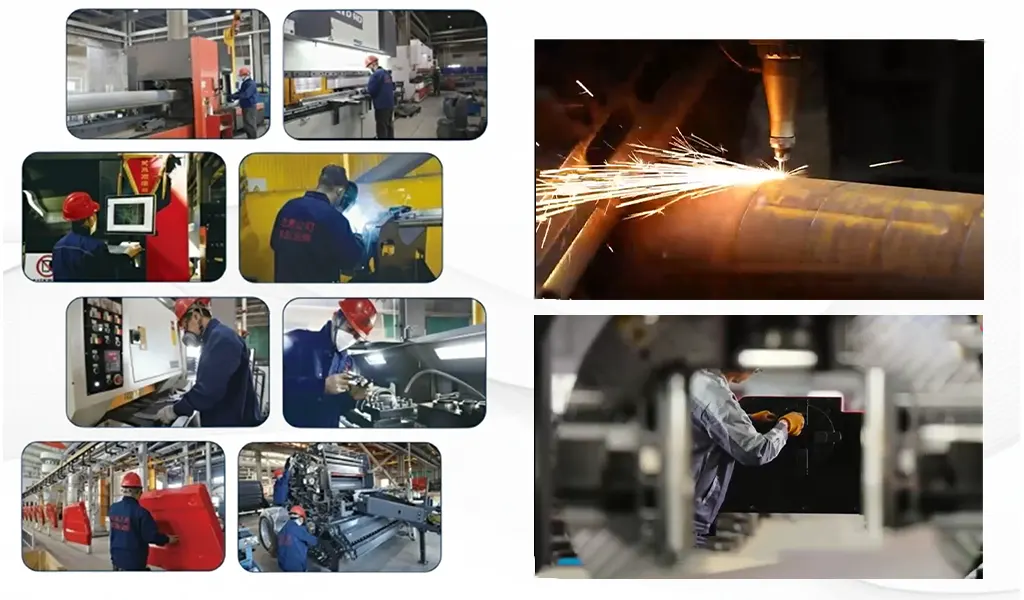
- ✔ Plus de 200 machines sur la chaîne de production — laser CNC, cellules de soudage automatisées, ligne de peinture polyuréthane.
- ✔ Certifié ISO 9001 depuis 2023, fournisseur classé AAA avec des distributeurs régionaux.
- ✔ Prix direct usine — généralement 50 à 65 % en dessous des prix catalogue Anderson comparables de la catégorie de wagons multiballes ci-dessus.
- ✔ Ingénieurs de terrain anglophones, paiements en USDT et ACH acceptés, conditions de paiement à 30 jours pour les acheteurs vérifiés.
- ✔ Garantie de deux ans sur le châssis avec pièces en stock pour 92 % des références courantes.
Foire aux questions — Transporteur de balles compact 9JYY-2.5
Quel est le plus petit tracteur que je puisse utiliser ?
Une puissance d'au moins 20 kW (environ 27 ch) à la barre de traction, avec deux distributeurs hydrauliques, est requise. Un Kubota L3560 (37,5 ch), un JD 3033R (32,4 ch), un NH Workmaster 50 (47 ch) ou un Massey Ferguson 1740 (40 ch) répondent aisément à cette exigence. Les tracteurs sous-compacts de moins de 25 ch peuvent tracter la remorque vide, mais auront des difficultés en pente avec une charge utile de 2 500 kg.
Le modèle 9JYY-2.5 peut-il transporter des balles de 5×5 ?
Physiquement, oui : les balles de 5×5 tiennent dans l’encombrement de la pince (Ø 1 300 mm × L 1 500 mm). En pratique, la limitation réside dans la charge utile : une balle de luzerne de 5×5 pesant 600 kg implique 4 balles par chargement au lieu des 5 à 6 balles de format laitier pour lesquelles la remorque a été dimensionnée. Pour la manutention courante de foin commercial en balles de 5×5 ou 5×6, le modèle 9JYY-4.5 renforcé est plus économique.
La remorque transporte-t-elle une seule balle de foin à la fois ou plusieurs ?
Multiple. La plateforme de 10,3 m de long peut contenir 5 à 6 balles de lait de Ø 1 300 mm disposées bout à bout, jusqu'à une charge utile maximale de 2 500 kg. Le bras de ramassage charge les balles une à une, mais celles-ci s'accumulent sur la plateforme au fur et à mesure du transport. En général, les opérateurs chargent 5 balles, se dirigent vers la pile et les déchargent successivement.
La largeur de la remorque est-elle conforme à la réglementation routière de mon État ?
Sa largeur hors tout de 2 420 mm (environ 7 pieds 11 pouces) est inférieure à la limite de 2 591 mm (8 pieds 6 pouces) des autoroutes fédérales et respecte les tolérances de largeur pour les engins agricoles de chaque État américain, sans permis supplémentaire. L'emblème SMV et le kit de signalisation rouge sont fournis de série. Avant tout long trajet sur autoroute, veuillez vérifier auprès de votre bureau local du ministère des Transports les exigences en matière d'éclairage et de freinage.
Comment la remorque est-elle freinée ?
La remorque 9JYY-2.5 est livrée sans freins et à un seul essieu, homologuée pour le transport d'engins agricoles à une vitesse maximale de 40 km/h. La plupart des États américains autorisent les remorques agricoles sans freins jusqu'à certains seuils de poids total autorisé en charge (variables selon les États, généralement entre 4 500 et 5 400 kg). Pour les opérations nécessitant un système de freinage, un kit de conversion avec freins à inertie hydrauliques est disponible en option lors de la commande ; veuillez vérifier les exigences auprès de votre bureau local du ministère des Transports.
Avis clients d'exploitants de petites exploitations agricoles américaines
Tous les avis ci-dessous proviennent d'acheteurs vérifiés et sont publiés avec leur autorisation. Les noms sont réels et les adresses correspondent au comté. Les avis sont renouvelés chaque trimestre ; les plus anciens sont archivés, mais disponibles sur demande auprès du bureau de Sacramento.
Roy P., vache-veau, comté de Grafton, NH (automne 2025)
« Je gère un troupeau de 65 têtes de bétail sur 73 hectares de pâturages et de prairies dans les contreforts des Montagnes Blanches. J'ai acheté la remorque 9JYY-2.5 l'automne dernier pour remplacer une remorque plateau des années 80 et un chargeur frontal usé sur mon tracteur 4066R. La remorque se tracte parfaitement avec le John Deere, sans aucun problème sur les chemins escarpés derrière la grange. J'ai chargé 5 balles par voyage, trois voyages ont été nécessaires pour nettoyer ma principale prairie. Cela m'a permis de gagner une demi-journée de travail à chaque coupe. La suspension à un seul essieu absorbe les chocs aussi bien que je l'espérais. »
Sarah B., productrice de foin pour chevaux, comté d'Addison, Vermont (été 2025)
« Nous vendons du foin de qualité supérieure pour chevaux aux écuries du centre du Vermont. La présentation du film d'emballage et du filet est primordiale pour nos acheteurs : ils refusent les balles dont le film est déchiré. Le transporteur de balles rondes 9JYY-2.5 préserve le film. La pince agrippe les balles au niveau des épaules, et non sur le côté incurvé, ce qui a permis de réduire notre taux de rejet à moins de 2 balles de 1 TP5T, contre 6 à 7 auparavant avec un chariot élévateur. Après deux saisons d'utilisation, aucune intervention sous garantie à ce jour. »
Marcus T., vache-veau, comté de Watauga, Caroline du Nord (automne 2025)
« Exploitation dans les montagnes de Blue Ridge, 95 têtes de bétail, chemins escarpés. La plupart des wagons à plusieurs essieux se renverseraient dans nos virages en épingle à cheveux. Le 9JYY-2.5 a un centre de gravité bas et sa voie étroite lui assure une grande stabilité. Il se tracte sans problème derrière un Massey 1740. Je l'ai acheté à Sacramento, le transport jusqu'à Boone, en Caroline du Nord, a pris 6 jours. Le technicien de terrain m'a appelé le lendemain de la livraison pour m'expliquer le fonctionnement du système hydraulique. Un suivi impeccable. »
Caroline F., Boutique Hay, Comté de Bourbon, KY (été 2025)
« Nous fournissons du foin de fléole des prés et du dactyle aux petites exploitations de pur-sang des environs de Lexington. Sur ce marché, la qualité prime sur la quantité. La faucheuse 9JYY-2.5 s'intègre parfaitement à l'esthétique des petites exploitations : les clients la voient garée près de l'écurie et comprennent qu'il s'agit d'une activité professionnelle, et non d'un simple passe-temps. Elle se tracte sans effort derrière mon Kubota L3560. La pince hydraulique préserve la fibre de fléole. Après trois coupes, aucun problème de la part des acheteurs ni d'entretien. »
Dean L., Ferme d'élevage de bovins de loisir, comté de Howell, Missouri (automne 2025)
« Élevage de vaches et veaux en complément, 38 têtes sur 97 hectares dans les monts Ozarks, au sud du Missouri. J'utilise un tracteur John Deere 3033R et je n'envisage pas de le changer. Je cherchais une remorque à balles que je puisse tirer sans avoir à acheter un tracteur plus gros. La 9JYY-2.5 répondait parfaitement à mes besoins. Je chargeais 4 à 5 balles à la fois, trois voyages par champ, et c'était réglé. Le relief accidenté de la région ne permettait pas d'opter pour la remorque Anderson plus large que j'avais repérée. Le transporteur depuis Sacramento a livré la remorque à West Plains en 8 jours. Un paiement à 30 jours m'a permis de gérer efficacement ma trésorerie. »
Demandez un devis pour le transporteur de balles compact 9JYY-2.5
Si le modèle 9JYY-2.5 correspond à votre volume de balles et à votre parc de tracteurs, l'étape suivante consiste à obtenir un devis incluant le transport jusqu'à votre code postal. Veuillez indiquer le modèle de votre tracteur, le nombre de distributeurs hydrauliques et la semaine de livraison souhaitée à notre bureau de Sacramento ; nous vous ferons parvenir un devis sous 48 heures. Des remises sur volume sont appliquées pour les commandes de 3 remorques ou plus, et des conditions de paiement à 30 jours sont disponibles pour les petites exploitations agricoles vérifiées.
Informations complémentaires
| Éditeur | Cxm |
|---|