Baling Cover Crops & Sorghum Silage: Rotation Calendar
Cool-season cover crops, warm-season sorghum, and shoulder-season millet — how a silage baler turns rotation crops into supplemental forage on the same field across one annual cycle.
Cover crops and warm-season annuals are non-traditional applications that have gained traction across U.S. operations in the last decade. Cover crops were originally promoted for soil health benefits — erosion control, nitrogen fixation, weed suppression, organic matter building — but operations running them at scale discovered that the cover crop biomass itself is a meaningful forage resource. Similarly, sorghum-sudangrass and other warm-season annuals planted in summer for soil cover or for nematode suppression turn into wrapped silage when the silage baler enters the field at the right phenological window. This article walks through the four major cover crop and warm-season annual species that operations bale, organized as a rotation calendar showing how each fits within one annual cycle on the same field.
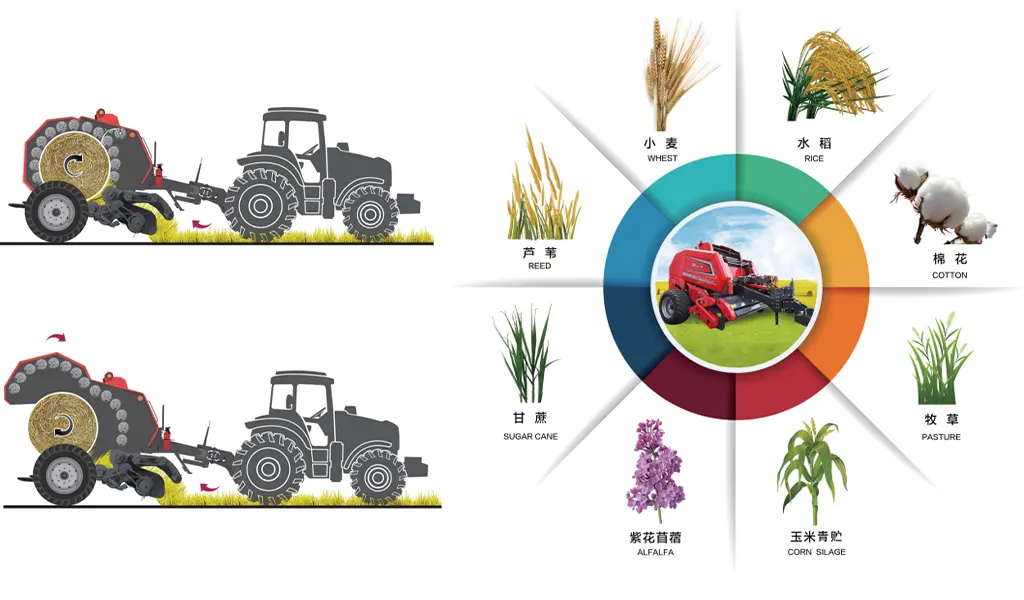
The reference rotation here is a 200-acre Iowa operation rotating corn-soybeans on the main acreage with overlapping cover crop and warm-season annual cycles. The silage baler runs on the cover crop and annual acreage during 5 separate windows across the year — May for cool-season cover, July for sorghum-sudan first cutting, August for sorghum-sudan second cutting, September for millet, and November for late-fall cool-season crops. This 5-window pattern fills gaps in the silage baler’s operating calendar that would otherwise be idle between alfalfa cuttings.
Warm-season windows (July, August, September)
Why Cover Crops and Annuals Make Sense as Silage
Cover crops were originally agronomic interventions, not forage crops. The standard cover-crop economics calculation considered planting cost, soil-health benefits, and a small return from grazing or biomass termination — but did not include silage harvest. The shift toward harvesting cover crops as silage came from operations that already owned silage equipment for alfalfa or grass forage and noticed that their cover crop biomass at the termination decision was equivalent to 1.5–3 tons DM per acre. Captured rather than terminated, this biomass effectively doubles the per-acre forage productivity of the rotation without changing the underlying agronomic plan.
Warm-season annuals — sorghum-sudangrass, pearl millet, BMR (brown-mid-rib) sorghum varieties — were originally planted as summer pasture or as nitrogen-scavenging crops between corn rotations. Operations running these in their plantation regimes again noticed the harvest opportunity: 4–8 tons DM per acre in 60–90 days from planting, with some species producing two cuttings before frost. The economic case for warm-season annual silage is strong on operations that already have the silage baler equipment and the storage capacity — incremental costs are modest, incremental forage production is meaningful, and the agronomic benefits (soil cover, nitrogen scavenging, weed suppression) are unaffected by whether the biomass is left as residue or harvested as bales.
The third reason these crops fit the silage baler economics is calendar fit. Cool-season cover crop harvest in early May fills the gap before alfalfa first cutting; warm-season annuals harvest in July-September overlap with the alfalfa cutting schedule (and often share equipment between crops on the same day); late-fall cover crop harvest in November is a final-cutting operation when alfalfa has already finished for the year. The 5 baling windows distribute across the calendar in ways that fit unused silage baler capacity rather than competing with the primary alfalfa or grass program.
PODERIACool-Season Cover: Cereal Rye & Triticale
Cereal rye and winter triticale are the two dominant cool-season cover crops in U.S. row-crop rotations. They get planted in the fall after corn or soybean harvest (September-October), establish a low canopy through winter, and resume rapid growth in early spring. By late April or early May, the standing crop reaches 60–90 cm height with significant biomass — the optimal window for silage harvest. Cutting earlier sacrifices yield; cutting later (post-heading) drops protein and increases fiber as the plant prepares to flower.
From the silage baler perspective, cereal rye behaves similarly to grass silage but with higher fiber content and slightly lower sugar content than perennial grass species. Wilting time runs 24–36 hours under typical Plains weather; chamber settings can match grass silage settings without modification; wrap layer count of 4–6 is sufficient for the 6-month feeding window typical of cover-crop silage. The harvest window is narrow — typically 5–7 days from optimal cutting stage to over-mature — so operators usually plan the rye-silage harvest tightly against the upcoming alfalfa first cutting (which on the same operation is usually 7–14 days later).
Triticale (a wheat-rye hybrid) behaves similarly to cereal rye but with slightly higher protein content (12–15% CP vs 10–12% for cereal rye at the same growth stage) and slightly lower yield per acre. Operations that prioritize protein over total tonnage favor triticale; operations focused on tonnage favor rye. Both species produce silage that fits well in beef cattle wintering rations and in dairy heifer-grower rations where the lower-protein-versus-alfalfa profile is acceptable. Mature lactating dairy cows typically need higher-quality forage than cool-season cover crops can deliver, so this silage usually goes to non-lactating animal categories.
JUL · AUGSorghum-Sudangrass & BMR Varieties
Sorghum-sudangrass (a hybrid between forage sorghum and sudangrass) is the warm-season annual workhorse for silage operations across the Midwest, Plains, and Mid-Atlantic. Planted in late May or early June after soil temperature reaches 18°C, it grows 1.5–2.5 meters tall in 60–75 days from planting and produces 4–6 tons DM per acre at first cutting. After cutting, it regrows rapidly and produces a second cutting 50–60 days later — a typical operation gets 8–10 tons DM total per acre across two cuttings before frost.
The silage baler operating profile for sorghum-sudangrass differs from grass or alfalfa in several important ways. The plant produces large coarse stems that can reach 15–20 mm diameter at the base; cutting height needs to be set higher than grass settings (10–12 cm rather than 7–8 cm) to keep the heaviest stem material out of the chamber where it would compromise bale density. Wilting times run shorter than expected — sorghum stem moisture drops faster than grass at the same conditions because of cellular structure differences — so operators monitor moisture more closely than they would for grass.
BMR (brown-mid-rib) varieties of sorghum-sudangrass and forage sorghum are increasingly common in dairy-focused operations. The BMR genetic trait reduces lignin content in the stem and leaf material, producing forage that ferments better and feeds out at higher digestibility than conventional varieties. The trade-off is slightly lower yield (5–10% reduction) and higher seed cost, but the dairy-feeding economics typically justify BMR for operations targeting lactating cow rations. The silage baler does not behave differently between conventional and BMR varieties; the differences show up in the feed-out and milk-yield results.
Prussic acid (HCN) management is a sorghum-sudangrass concern that does not apply to other silage crops. Young sorghum plants under 50 cm height contain prussic acid at potentially toxic levels for ruminants; mature plants over 75 cm height are safe. Drought-stressed or frost-damaged sorghum can spike HCN content even in mature plants. Operations targeting sorghum-sudangrass silage cut at full vegetative or boot stage (1.2+ meter height), avoiding the toxic-young-plant range, and avoid harvesting within 5 days of frost or severe drought stress. Properly fermented silage (3+ weeks in the wrap) further reduces HCN to safe levels regardless of starting concentration, so the bale-out product is generally not a feeding hazard even if the standing crop was at borderline levels.
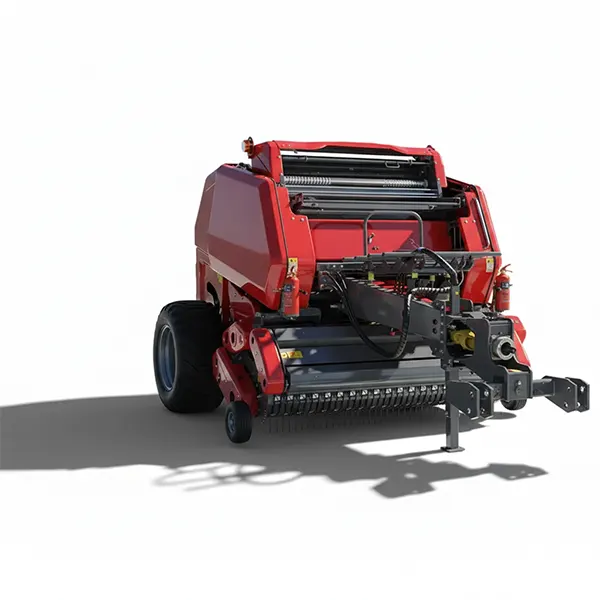
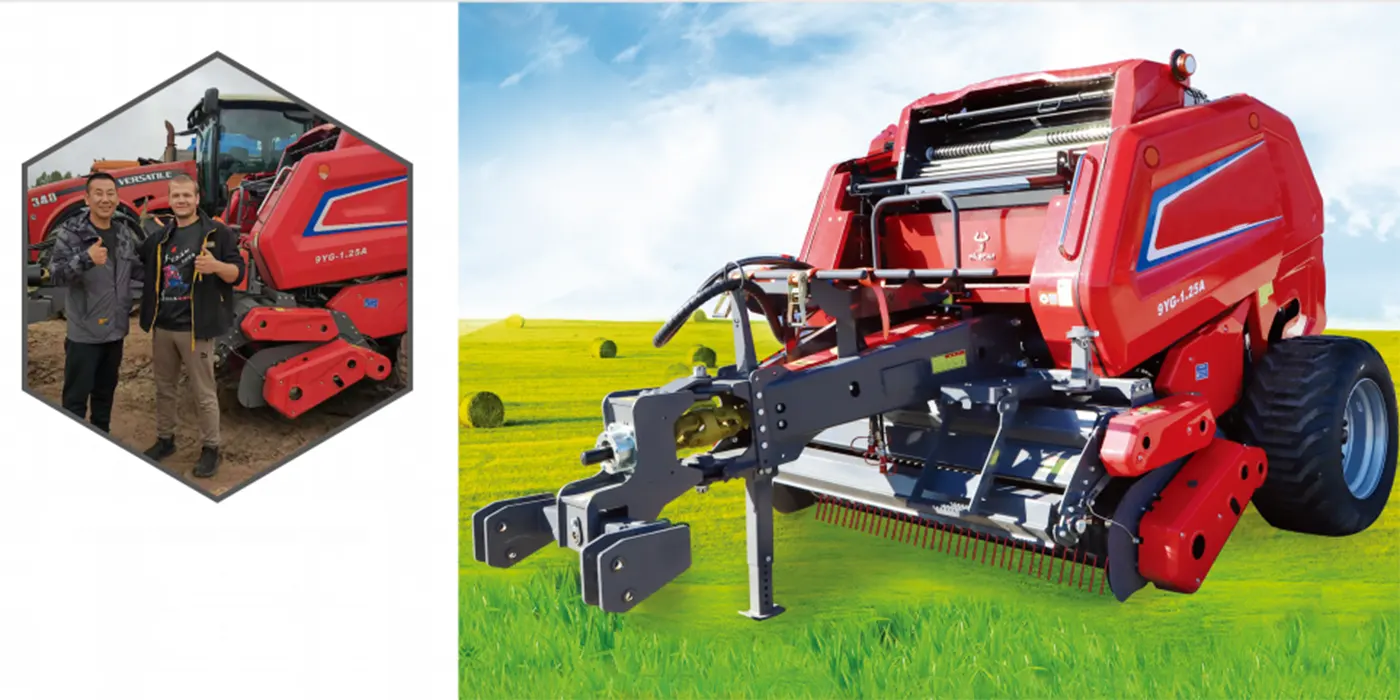
Enfardadeira de silagem de nível médio 9YG-1.25A
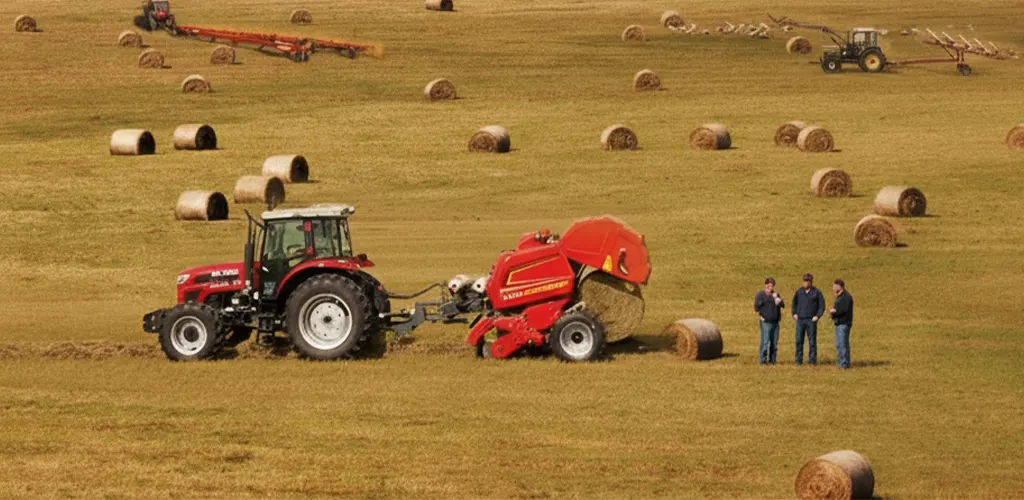
The 4×5 chamber handles all five rotation crops covered in this article — cool-season cover, sorghum-sudangrass, pearl millet, brassica mix — without machine modification between species. Variable chamber pressure adjusts for stem coarseness from windrow to windrow.
SETPearl Millet
Pearl millet is the late-warm-season alternative to sorghum-sudangrass for operations that need a forage crop fitting the August-September planting window. Planted after cool-season grain harvest (oats, wheat, barley), pearl millet grows 1.5–2 meters tall in 60–80 days, producing 3–5 tons DM per acre. The silage baler typically harvests pearl millet in mid-to-late September, completing the cutting before fall frosts that would terminate the crop’s growing window.
From the silage baler perspective, pearl millet behaves similarly to sorghum-sudangrass but with finer stems and higher leaf-to-stem ratio. Cutting height settings can return to grass-equivalent (7–8 cm), chamber pressure runs at standard grass settings without modification, and wilting times match sorghum-sudangrass. The forage feeds out well to dairy heifers and beef cattle but is generally not used in lactating dairy rations because the protein concentration (10–13% CP) is below dairy requirements. Pearl millet’s main feeding role is as a flexible warm-season filler for non-lactating animal categories, complementing rather than competing with the primary alfalfa or corn silage program.
Pearl millet does not have the prussic acid concerns that sorghum-sudangrass has, which simplifies management decisions during drought-stressed seasons. Operations that have cut sorghum-sudangrass for silage in early or mid summer often plant pearl millet for a third late-season cutting, using the rotation to keep the soil covered through October when winter-cover crops (cereal rye or triticale) get established. The 3-cutting rotation across the same field — sorghum-sudan first cutting, sorghum-sudan second cutting, pearl millet third cutting — is feasible only in regions with long growing seasons (Tennessee, Missouri, southern Iowa) but produces 12+ tons DM per acre annually when conditions support it.
NOVLate-Fall Brassica Mix
Brassica mixes — typically combinations of forage radish, turnip, and rape — get planted in August or early September and reach harvestable biomass in late October or early November before hard frost. The mix provides both above-ground forage (the leafy tops) and below-ground biomass (the taproots) that breaks compaction and scavenges nitrogen left over from corn or soybean harvest. Some operations harvest the above-ground biomass for silage and leave the roots to decompose; some terminate both above and below ground at frost without harvesting.
From the silage baler perspective, brassica forage is the most challenging crop covered in this article. The leafy material is high-moisture (75–85% at typical harvest), has minimal fiber structure, and tends to clump rather than flow uniformly through the chamber. Bale density is harder to achieve than for any cereal-grain or grass crop. Operations producing brassica silage often add a small amount of dry forage (5–10% by weight) to the windrow before baling, providing structural fiber that helps the chamber compress the leafy material into stable bales. Without this fiber addition, brassica bales tend to deform during storage and lose their cylindrical geometry.
Brassica silage is not common in U.S. operations because of the chamber-compression challenges and because most operations find that grazing the brassica fall growth produces better economic outcomes than silage harvest. The silage option exists for operations that have specific reasons to capture the biomass — typically dairy operations valuing the high-protein late-fall forage, or operations with cattle that cannot be grazed at the brassica field due to fence or transport constraints. Wrap discipline for brassica bales runs at 8 layers minimum because the high-moisture leafy material is more fermentation-sensitive than other crops covered here.
Five-Window Annual Production Summary
All five rotation windows in one place, with their typical yields, silage baler operating considerations, and primary feeding categories.
| Window | Crop | Yield (DM/acre) | Feeding Use |
|---|---|---|---|
| Poderia | Cereal rye / triticale | 2.0–3.5 tons | Beef wintering, dairy heifers |
| Julho | Sorghum-sudangrass (1st) | 4–6 tons | Dairy lactating (BMR varieties), beef |
| Agosto | Sorghum-sudangrass (2nd) | 3–4 tons | Dairy lactating (BMR), beef |
| Setembro | Pearl millet | 3–5 tons | Dairy heifers, beef |
| novembro | Brassica mix | 1.5–2.5 tons | Dairy fresh-cow, beef finishing |
| Total anual | 5 windows, same field | 13.5–21 tons | Multiple categories supported |
The 13.5–21 tons DM per acre annual total from rotation crops is competitive with or exceeds most permanent forage stands. The Iowa reference operation gets approximately 17 tons DM per acre across the 5 windows in a typical year, compared to roughly 14 tons DM per acre from a 4-cut alfalfa stand on irrigated acres. The trade-off is operational complexity — managing 5 distinct planting and harvest windows requires more attention than a permanent alfalfa stand — but the per-acre output advantage justifies the complexity for operations targeting maximum forage productivity from limited acreage.
Equipamentos em torno da enfardadeira de silagem
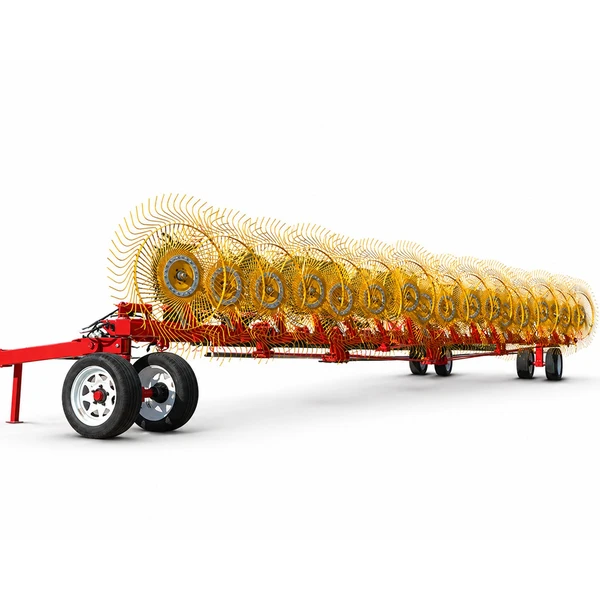
Cover crop and warm-season annual baling uses the same harvest equipment chain as primary forage operations but with adjustments for crop-specific characteristics. The segadora-condicionadora running on tall sorghum-sudangrass needs to be set higher than grass operations would dial in, with conditioning intensity reduced because the coarse stems do not need additional crushing. The ancinho de feno handles all five crops at standard grass-rake settings; brassica is the only species where rake adjustment matters and most operations rake brassica more gently than other crops to keep the leaf material intact.
Bale handling differs by crop. Cereal rye and triticale bales are similar weight to grass silage bales (700–800 kg). Sorghum-sudangrass bales are heavier (800–950 kg) due to coarse stem density. Pearl millet bales match grass bale weight. Brassica bales are the lightest (550–650 kg) due to the leafy material’s lower bulk density. The transportador de fardos selected should be rated for the heaviest crop in the rotation (typically sorghum-sudangrass) rather than averaged across all crops.
Storage pad logistics also vary across the rotation. The 5 baling windows produce bales that arrive at the storage pad in 5 separate batches; operations that segregate bales by crop and cutting in the storage layout maintain the ration-management advantages that mixed bales would lose. Most operators allocate dedicated pad sections for each crop window and label individual bales with crop type and cutting date. The labeling discipline takes 2-3 minutes per bale at storage placement and pays back consistently at feed-out time when the operator can pull specific cuttings for specific feeding categories.
Para onde ir a seguir
For operations evaluating cover crop and warm-season annual silage production, the next reading depends on the specific question. The article on small farm operations covers the operational complexity of managing multiple crop rotations on limited acreage. The article on grass silage species covers cool-season grass species that overlap with the cover crop discussion. The article on common silage baler problems covers chamber and density issues specific to non-traditional crops.
For specific silage baler models suited to multi-crop rotation operations, our Catálogo de enfardadeiras de fardos redondos e enfardadeiras de silagem covers configurations that handle the full range of crops described above. The Sacramento application desk can also walk through rotation-fit considerations against your specific cropping plan and primary forage program.
Editor: Cxm