Rastrillo cortacésped remolcado 9GL-5.0/5.6 | Combinación de corte de 5 m y rastrillo de 5,6 m
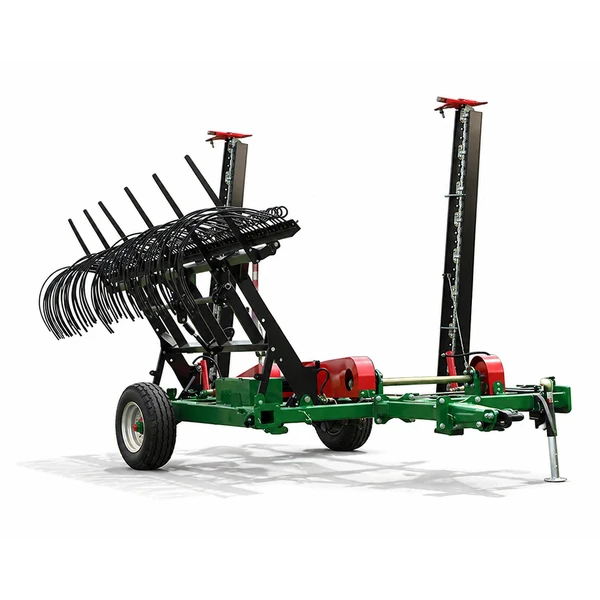
La combinación profesional de segadora y rastrillo 9GL-5.0/5.6 ofrece un corte alternativo de 5 m más un rastrillo trasero de 5,6 m, procesa de 2,4 a 2,8 hectáreas por hora con un tractor de 40 a 80 CV y reemplaza dos máquinas separadas para las operaciones comerciales de heno para la industria láctea y la exportación en EE. UU.
Siega y hilerado a escala comercial en una sola pasada: el doble de producción, la mitad de flota.
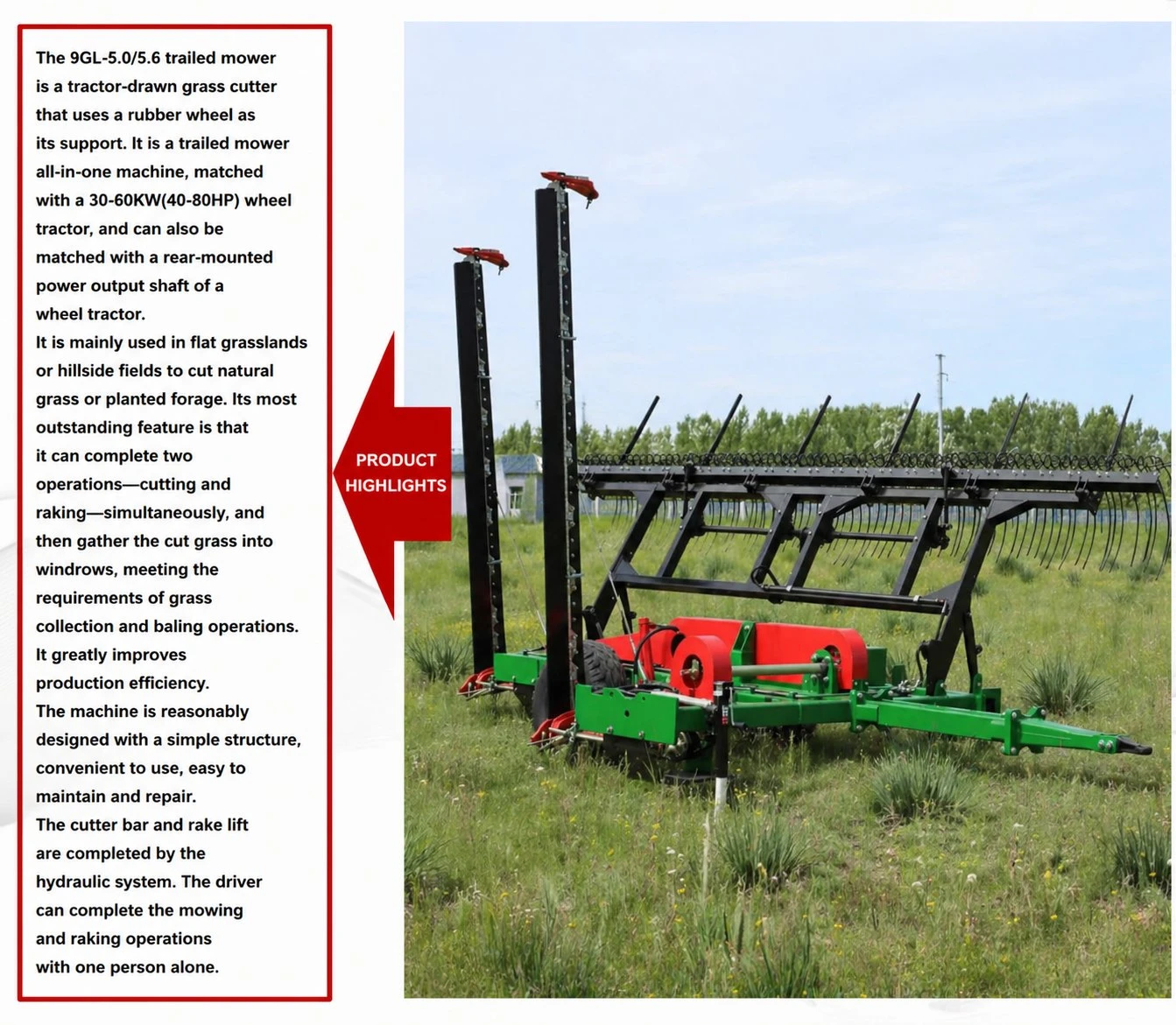
El Rastrillo segador remolcado 9GL-5.0/5.6 es la versión a escala comercial completa del concepto de siega y rastrillado en una sola pasada. Una barra de corte recíproca de 5 m (16,4 pies) corta el cultivo en pie, un rastrillo de dedos trasero de 5,6 m (18,4 pies) recoge el material en una hilera lista para la empacadora, y un tractor de 40 a 80 HP arrastra todo el conjunto a una velocidad de 3,7 a 4,4 mph. Las lecherías medianas de EE. UU., los productores de heno para exportación y los operadores de cosecha por contrato que manejan de 250 a 1500 acres limpian aproximadamente el doble de terreno por día que con configuraciones separadas de segadora y rastrillo.
Descripción general del producto: rastrillo cortacésped de uso comercial para explotaciones agrícolas medianas y grandes.
Las operaciones comerciales de heno y ensilaje dependen completamente de las condiciones climáticas. Un primer corte de 120 hectáreas que requiere tres días con maquinaria independiente, a menudo se completa en un día y medio con una segadora-rastrillo combinada de 4,9 metros. Esta eficiencia permite a las explotaciones lecheras comerciales de Wisconsin y Pensilvania terminar la cosecha de alfalfa antes de la próxima tormenta, y a los exportadores de pasto timothy de Alberta y Saskatchewan llegar a los mercados asiáticos antes de que se agoten las tarifas de transporte. La 9GL-5.0/5.6 está diseñada precisamente para operaciones de esta magnitud.
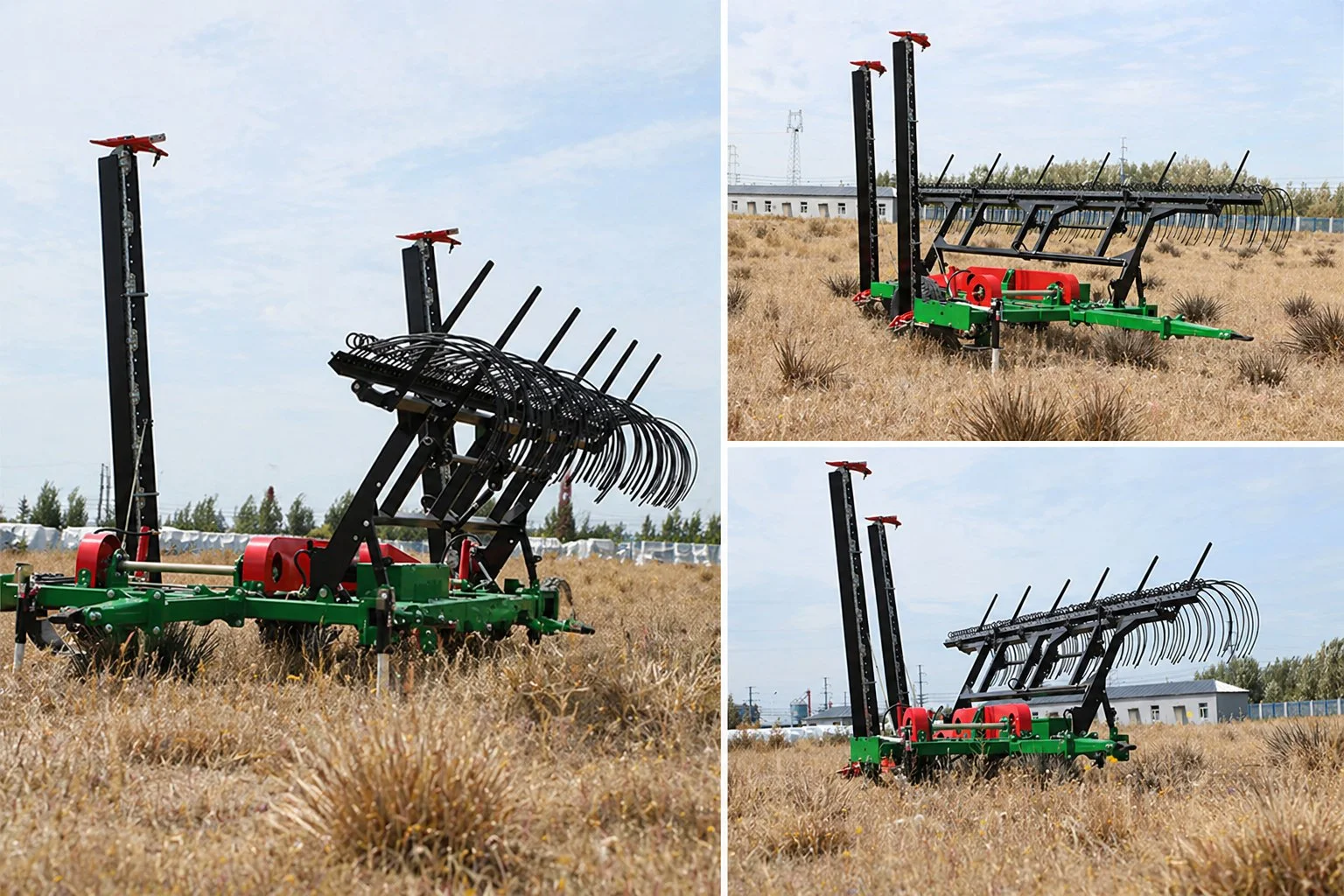
Bajo el capó, el conjunto incorpora una barra de corte recíproca de 68 cuchillas que corta el cultivo en pie a una altura de 60 a 70 mm, y un rastrillo trasero de 78 dedos que aglomera el material cortado a lo largo de 5,6 m en una hilera continua. El conjunto completo pesa 1100 kg (aproximadamente 2425 lb), lo suficientemente pesado para una estabilidad a alta velocidad, pero lo suficientemente ligero como para que un tractor de 40 CV pueda remolcarlo en terreno llano, y un tractor de 60 CV lo maneje cómodamente en el terreno ondulado típico de las zonas lecheras del Alto Medio Oeste y las Grandes Llanuras. El modo de transporte se pliega hasta alcanzar un ancho de 3 m (aproximadamente 9,8 pies), lo que permite que la máquina se mantenga dentro de los límites de ancho de carretera sin necesidad de permisos para cargas anchas.
Combine la combinación con un producto comercial a escala similar. empacadora redonda A la mañana siguiente, un equipo de dos personas se encarga de toda la cadena de cosecha: uno maneja la segadora-rastrillo y el otro la empacadora. Para los operadores contratados que prestan servicios a varias granjas en un condado, esta eficiencia reduce el costo total por paca lo suficiente como para ganar licitaciones frente a competidores más grandes que utilizan equipos de dos tractores con implementos separados.
Especificaciones técnicas completas del rastrillo cortacésped 9GL-5.0/5.6
Todos los valores a continuación provienen de pruebas de fábrica contra GB/T 10940-2008, el estándar para segadoras de heno recíprocas, con verificación adicional en condiciones de funcionamiento comerciales en Norteamérica.
| No. | Parámetro | Unidad | Especificación |
|---|---|---|---|
| 1 | Designación del modelo | / | 9GL-5.0/5.6 Segadora-rastrillo remolcada |
| 2 | Tipo de enganche | / | Remolcado (Pasador de barra de tiro) |
| 3 | Estructura de corte | / | Barra de hoz recíproca |
| 4 | Ancho de corte | metro | 5.0 (~16.4 pies) |
| 5 | Ancho de rastrillado | metro | 5,6 (~18,4 pies) |
| 6 | Velocidad de trabajo | kilómetros por hora | 6 – 7 (~3,7–4,4 mph) |
| 7 | Productividad | ha/h | Cortar el césped 2,4–2,8 / Rastrillar 3,0–3,6 (6,0–9,0 acres/h) |
| 8 | Altura promedio del rastrojo | mm | 60 – 70 (~2,4–2,75 pulgadas) |
| 9 | Potencia requerida del tractor | kW | 30 – 60 (40–80 CV) |
| 10 | Velocidad del eje de la toma de fuerza | rpm | 540 |
| 11 | Masa estructural | kilogramo | 1100 (~2425 libras) |
| 12 | Número de dedos del rastrillo | piezas | 78 |
| 13 | Tono de dedo | mm | 71 (~2,8 pulgadas) |
| 14 | Número de cuchillas de corte | piezas | 68 |
| 15 | Dimensiones de transporte (largo × ancho × alto) | mm | 3860 × 5600 × 3000 |
| 16 | Dimensiones de trabajo (largo × ancho × alto) | mm | 3860 × 7600 × 850 |
| 17 | Operadores | Persona | 1 (Solo para el conductor del tractor) |
El ancho de transporte de 3 m (aproximadamente 9,8 pies) permite que el vehículo se mantenga dentro del límite informal de 10 pies reconocido en la mayoría de las carreteras rurales estatales de EE. UU. sin necesidad de escolta para cargas anchas. Confirme la normativa local de su estado antes de transportar la carga por vías públicas; algunos estados del noreste aplican límites de ancho más estrictos para la circulación nocturna.
Selección profesional de flotas de tractores: gama de 40 a 80 CV.
Un tractor de 40 CV maneja la 9GL-5.0/5.6 en terreno llano. Las explotaciones comerciales que trabajan en terrenos montañosos o con alfalfa de primera cosecha suelen optar por tractores de 55 a 65 CV para mayor potencia. A continuación se muestran los tractores utilitarios medianos más comunes en explotaciones lecheras comerciales y empresas de cosecha por contrato de EE. UU. y Canadá; todos ellos ofrecen una toma de fuerza trasera de 540 rpm y los dos circuitos hidráulicos remotos necesarios para esta combinación.
- 🚜 John Deere — 5075E / 5100E / 5100M — el caballo de batalla por defecto en las lecherías familiares comerciales de EE. UU.
- 🚜 Kubota — M5-091 / M5-111 / M6060 — ampliamente utilizado en operaciones en el Alto Medio Oeste
- 🚜 Caso IH — Farmall 75A / 85C / 95C — fuerte presencia en las flotas de cosecha por contrato de Plains
- 🚜 Nueva Holanda — Workmaster 75 / 95 / 105 — popular entre los operadores transfronterizos entre EE. UU. y Canadá
- 🚜 Massey Ferguson — Tractores utilitarios MF 4707 / MF 4710 / MF 5711
- 🚜 Deutz-Fahr — Serie 5080 / 5100 — Presencia creciente en flotas de camiones contratadas en la región amish
Descargo de responsabilidad sobre la referencia a la marca: Los modelos de tractor mencionados anteriormente se citan únicamente para ayudar a los operadores agrícolas y administradores de contratos a encontrar la combinación ideal de segadora-rastrillo comercial para su flota. Su inclusión no implica afiliación, respaldo ni reclamación de marca registrada. Todas las marcas registradas son propiedad de sus respectivos dueños.
Tren de transmisión mejorado y brazo Pitman reforzado
Corte de alta velocidad con 68 cuchillas
Doble de cuchillas que el modelo de 2,5 m, soporte de cuchillas reforzado y barra de apoyo endurecida con una vida útil de 2000 horas de servicio comercial. El movimiento alternativo funciona a 1000 ciclos por minuto con una entrada de toma de fuerza estándar de 540 rpm, cortando limpiamente tallos de hasta 12 mm (media pulgada) de diámetro, suficiente para la primera cosecha de alfalfa densa y pasto ovillo maduro sin obstruir el cabezal de corte.
Rastrillo de 78 dedos accionado por el suelo
La sección de rastrillo de 5,6 m cuenta con 78 púas de acero elástico con una separación de 71 mm (aproximadamente 2,8 pulgadas). Dado que el ancho del rastrillo supera el ancho de corte en 60 cm, las púas del borde exterior barren cualquier material que la segadora haya proyectado lateralmente, devolviéndolo a la hilera, lo que produce una cinta compacta en lugar de los bordes irregulares que suelen presentar las combinaciones más sencillas de segadora y rastrillo.
Caja de cambios de alta resistencia con baño de aceite
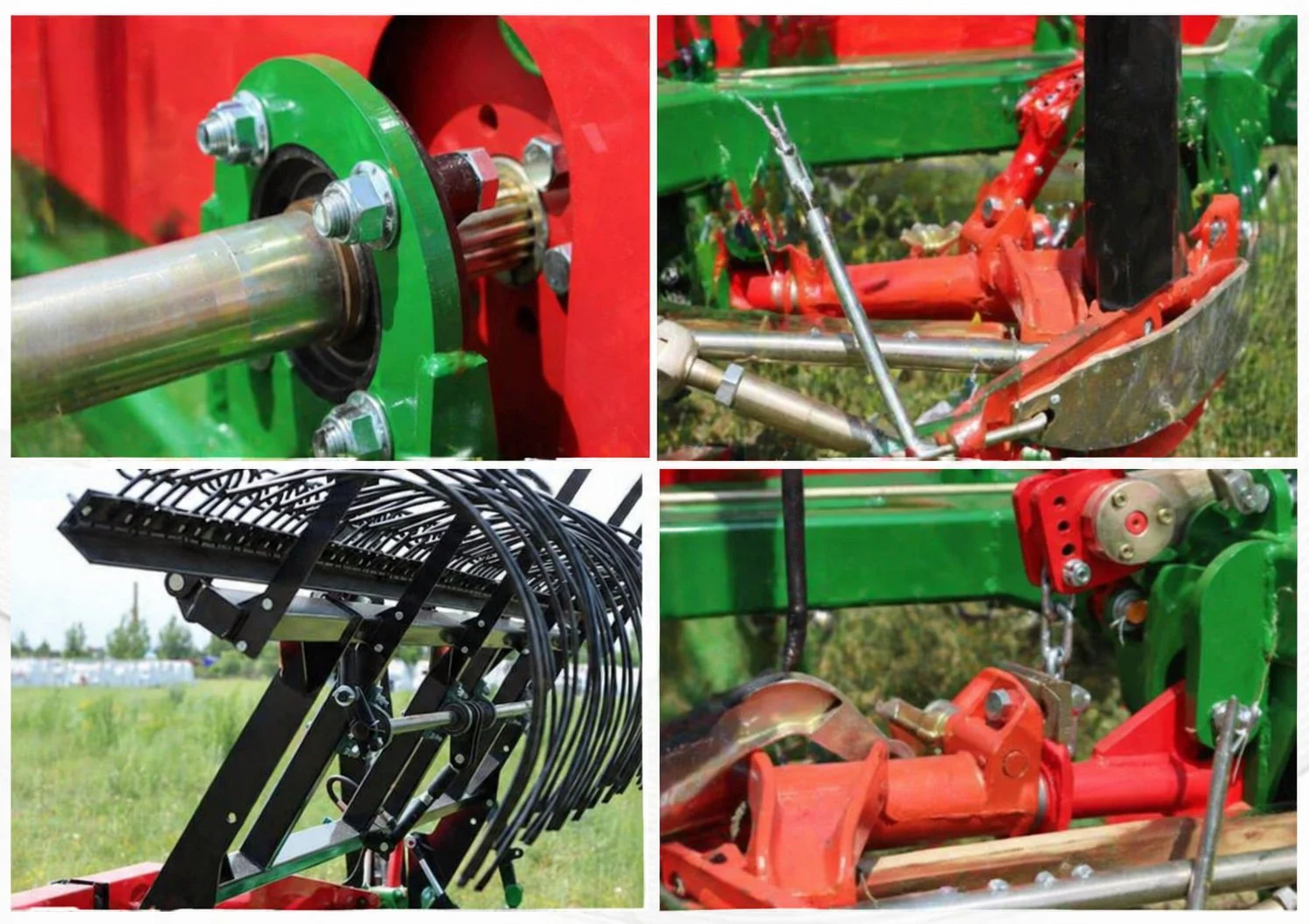
El mecanismo Pitman funciona dentro de una caja de engranajes de hierro fundido completamente sellada, llena de aceite para engranajes ISO 220, con una vida útil de 2000 horas entre cambios de aceite. Las aletas de la carcasa de hierro fundido ayudan a disipar el calor de funcionamiento, y el conjunto de rodamientos utiliza rodillos cónicos en lugar de los rodamientos de bolas más económicos que se encuentran en las segadoras de gama básica. Esta es la razón por la que este diseño mantiene la holgura entre la cuchilla y el soporte durante miles de hectáreas, en lugar de desajustarse después de una sola temporada.
Seis ventajas de nivel profesional del 9GL-5.0/5.6
5 m de corte + 5,6 m de rastrillado en una sola pasada.
El voladizo de 60 cm en el lado del rastrillo barre el material suelto de vuelta a la hilera, lo que da como resultado una cinta compacta y lista para la empacadora, en lugar de los bordes deshilachados que hacen que el empacado posterior sea más lento y engorroso.
2 veces más productividad que con máquinas separadas
Un ritmo de trabajo de 6 a 9 acres por hora en el campo significa que una primera cosecha de 300 acres se completa en menos de dos días en lugar de cuatro. Esa es la diferencia entre terminar antes de una tormenta eléctrica y tener que rescatar lo que se pueda después.
18 Ahorro de combustible por acre con %
Un tractor, una pasada, un consumo de combustible. Los operadores contratados que prestan servicios a varias granjas en un condado observan una reducción del consumo de diésel de aproximadamente un 18 por ciento por acre facturado, en comparación con el uso independiente de la segadora y el rastrillo en el mismo terreno.
Mínimo 40 CV, óptimo 60 CV
Las flotas comerciales que ya utilizan tractores de 60 a 80 CV encontrarán en esta combinación la solución ideal. No es necesario adquirir un tractor de mayor potencia, y el requisito de toma de fuerza de 540 rpm funciona con cualquier transmisión ISO estándar del mercado norteamericano.
Ancho de transporte de 9,8 pies
Una vez plegado, el vehículo cabe dentro de los límites de ancho de las carreteras rurales estándar en casi todos los estados de EE. UU. No requiere escolta para cargas anchas, ni permisos especiales, ni restricciones nocturnas más allá del triángulo de señalización y el kit de reflectores estándar para vehículos de servicio pequeño que se incluyen con cada unidad.
Estructura con capacidad para 1500 acres/temporada
Los tubos de pared gruesa Q345 y la caja de engranajes en baño de aceite están diseñados para 1500 acres de servicio comercial continuo por temporada, el volumen que realmente manejan los operadores contratados y las lecherías de tamaño mediano, no una cifra de marketing obtenida de una prueba de laboratorio.
Calidad de construcción: acero Q345 y transmisión en baño de aceite.
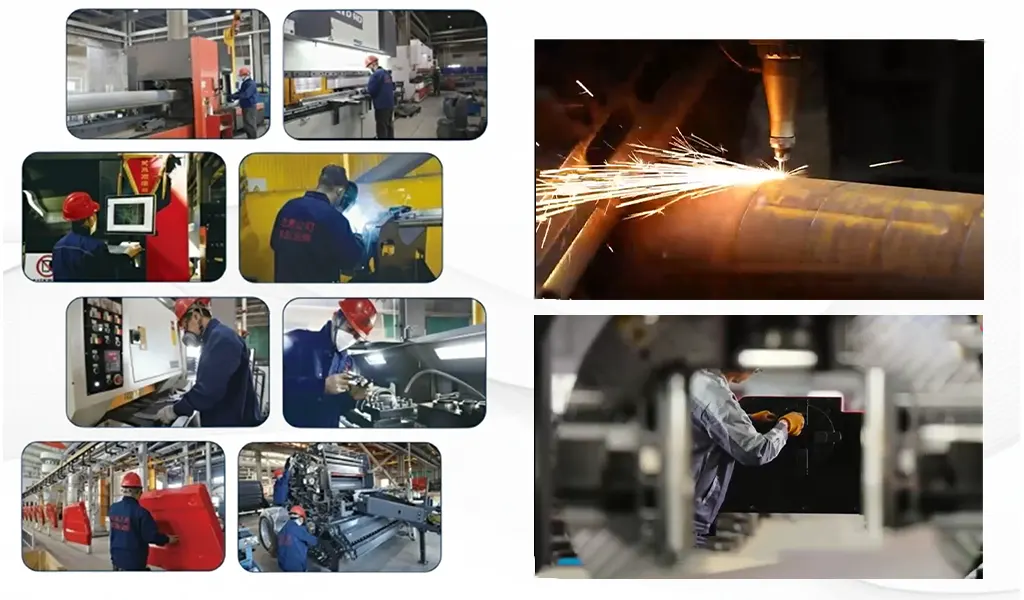
La barra de corte de 5 m (16,4 pies) está construida sobre una estructura de barra plana mecanizada con 68 secciones de cuchillas, cada una con una hoja triangular dentada reemplazable atornillada al soporte. Placas de refuerzo se ubican frente a cada hoja, y todo el conjunto se monta sobre almohadillas guía endurecidas que absorben el desgaste lateral en la conexión con el cabezal de accionamiento Pitman. El reemplazo completo del juego de cuchillas (68 piezas) toma aproximadamente 20 minutos con una llave de tubo y agrega alrededor de 18 lb al peso del envío. Operadores que pasan del nivel básico Combinación de rastrillo y cortacésped 9GL-2.5/2.9 Encontrará que el kit de cuchillas a escala comercial es significativamente más pesado, pero comparte el mismo procedimiento de reemplazo.
La carcasa de la caja de engranajes es de hierro fundido con aletas de refrigeración, a diferencia del aluminio que utilizan los modelos de gama básica de la competencia. El aceite para engranajes, de grado ISO 220, se aplica mediante lubricación por inmersión y salpicadura, alcanzando todos los cojinetes en cada revolución. El tapón de drenaje incorpora un imán para capturar cualquier fragmento metálico antes de que circule. La vida útil de los sellos a temperaturas normales de funcionamiento es de 5000 horas o más.
El chasis del rastrillo utiliza una estructura de varillas con tensión de resorte que permite que los 78 dedos individuales se flexionen al chocar con un obstáculo. Las ruedas de transporte son neumáticos de flotación 13.0/65-18, lo que proporciona el contacto con el suelo necesario a escala comercial en pastos húmedos de primavera sin que se formen surcos, algo importante para los ganaderos lecheros preocupados por la recuperación del pasto entre cortes.
Aplicaciones comerciales típicas en Norteamérica
🥛 Operaciones comerciales de ensilaje de productos lácteos
Las explotaciones lecheras comerciales con entre 250 y 800 vacas lecheras necesitan entre 3000 y 9000 toneladas de ensilado de maíz y heno al año. La segadora 9GL-5.0/5.6, acoplada a un tractor de 65 CV, limpia los primeros y segundos cortes de alfalfa y pasto mixto antes de la picadora, sin retrasar la producción de ensilado de maíz. Las regiones lecheras de Wisconsin y Nueva York han sido las que más rápidamente han adoptado esta combinación de segadora y rastrillo.
🌾 Producción de alfalfa y timothy de calidad para exportación
Los exportadores de heno de EE. UU. y Canadá que envían alfalfa y pasto Timothy de primera calidad a Japón, los Emiratos Árabes Unidos y Corea del Sur se enfrentan a estrictas especificaciones de humedad y calendarios de transporte ajustados. Finalizar el primer corte en 1,5 días en lugar de 3 permite al equipo de empacado comenzar antes con el secado, y las pacas más secas cumplen con las especificaciones de humedad para la exportación sin necesidad de un costoso secado secundario. Los productores de la zona de Lethbridge en Alberta y los productores de la cuenca del Columbia en el estado de Washington han sido clientes clave para este tamaño de paca.
🤝 Servicios de siega de heno a gran escala por contrato
Los operadores contratados que prestan servicios a entre 25 y 50 granjas en un condado obtienen una prima por terminar los trabajos rápidamente. Utilizar una 9GL-5.0/5.6 significa facturar más hectáreas por día y regresar la próxima primavera con un historial comprobado. Los operadores contratados del Alto Medio Oeste y las Grandes Llanuras reportan ventajas en las licitaciones de entre el 15 y el 25 por ciento por hectárea sobre los competidores que utilizan segadoras y rastrillos por separado.
🌐 Operaciones transfronterizas entre EE. UU., Canadá y México
Los operadores a gran escala que utilizan maquinaria de forma estacional a través de las fronteras de EE. UU. y Canadá valoran la transmisión de la toma de fuerza (PTO) estándar ISO de 540 rpm y el ancho de transporte de 3 metros (9,8 pies) que cumple con las regulaciones estatales de EE. UU. y los límites de las carreteras provinciales canadienses. Las piezas de repuesto se envían desde nuestro depósito en Dallas, Texas, a ambos lados de la frontera en un plazo de 3 días hábiles.
🌿 Heno de hierba de segundo y tercer corte
Los cortes de finales de temporada suelen tener menor masa por hectárea que los del primer corte, pero las condiciones climáticas son más restrictivas y el valor por paca mayor. La 9GL-5.0/5.6 procesa alfalfa ligera de segundo corte con el mismo ancho de 5 m que utiliza para la alfalfa pesada de primer corte, lo que permite a los operadores comerciales realizar tres cortes por temporada con el mismo equipo sin necesidad de reconfiguración.
Comparación directa: 9GL-5.0/5.6 vs 9GL-2.5/2.9 vs Importaciones de la competencia
| Criterio | 9GL-5.0/5.6 | 9GL-2.5/2.9 | Importación europea de primera calidad |
|---|---|---|---|
| Ancho de corte | 5,0 m (16,4 pies) | 2,5 m (8,2 pies) | 3,5–4,0 m típico |
| Ancho de rastrillado | 5,6 m (18,4 pies) | 2,9 m (9,5 pies) | A menudo, unidades separadas |
| Se requiere HP | 40–80 HP | 35–75 HP | 80–120 CV típicos |
| Productividad (rastrillado) | 6–9 acres/hora | 3,7–4,5 ac/h | Varía según la configuración. |
| Peso | 1.100 kg (2.425 lb) | 920 kg (2030 lb) | 1.400–1.800 kg |
| Nivel de precios | Valor comercial | Entrada comercial | Nivel Premium (2–3 veces el costo) |
| Tamaño objetivo de la granja | 250–1.500 acres | 50–150 acres | Más de 500 acres |
| Disponibilidad de repuestos en EE. UU. | 3 días desde Dallas, Texas | 3 días desde Dallas, Texas | Plazo de entrega de importación de 2 a 6 semanas |
Nota comparativa: Esta tabla hace referencia a las características genéricas de importación europea de alta gama; los modelos específicos de las principales marcas europeas de maquinaria para heno pueden ofrecer configuraciones, características y rendimiento diferentes. No se afirma que exista equivalencia, superioridad o inferioridad con respecto a ningún producto de marca específico. La comparación tiene como único objetivo ayudar a los compradores norteamericanos a comprender el posicionamiento dentro del mercado general.
Flujo de operación de la segadora-rastrilladora paso a paso
A escala comercial, las pequeñas ineficiencias en cientos de pasadas se acumulan rápidamente. Capacitar a los operarios en esta secuencia exacta es lo que permite a los equipos contratados alcanzar de forma constante la cifra de 9 acres por hora de rastrillado, en lugar de hacerlo solo ocasionalmente.
- Revisión previa al vuelo y enganche — Con el tractor al ralentí, fije la barra de tiro, conecte el eje de la toma de fuerza de 540 rpm con la cadena de seguridad y conecte ambas mangueras hidráulicas. Compruebe visualmente el nivel de aceite de la caja de cambios a través del visor y engrase el extremo de la biela. Accione brevemente la toma de fuerza al ralentí bajo para comprobar que el movimiento alternativo es suave.
- Entrada de campo y despliegue de módulos — En el borde del campo, active el primer control remoto hidráulico para desplegar y bajar la barra de corte; active el segundo control remoto para bajar el rastrillo. Verifique que la holgura entre el soporte y la cuchilla sea de entre 0,004 y 0,012 pulgadas con un calibrador de espesores antes de comenzar la primera pasada.
- Cortar y rastrillar a una velocidad de 3,7 a 4,4 mph. — La combinación alcanza su ritmo óptimo entre 6 y 7 km/h (3,7–4,4 mph). Una velocidad menor supone una pérdida de tiempo sin mejorar la calidad del corte; una velocidad superior a 5 mph conlleva el riesgo de que queden tallos sin cortar bajo la barra oscilante. En campos de alfalfa densa recién cortada, comience a 3,5 mph y aumente la velocidad gradualmente a medida que el operador adquiera más confianza.
- Formación de hileras y respiración Los 78 dedos de resorte comprimen 5,6 m de material cortado, formando una hilera de 91 a 122 cm de altura con una estructura esponjosa y transpirable. La humedad comienza a salir de la parte inferior tan pronto como se forma la hilera, por lo que el cultivo suele perder entre un 4 y un 6 por ciento de humedad en los primeros 30 minutos después de tumbarse.
- Giro en el cabo y reenganche — En los límites del campo, levante ambos módulos simultáneamente con un solo control remoto, realice un giro en U amplio, baje ambos módulos con cuidado y acceda a la siguiente franja. Los giros bruscos con los módulos acoplados sobrecargan las bisagras del bastidor y deben evitarse; una franja de cabecera de 3 metros (10 pies) ofrece suficiente espacio para giros suaves.
Complete su flota comercial para la cosecha de heno.
A escala comercial, cada implemento de la cadena de heno debe tener la misma capacidad que los demás. Un rastrillo segador de 5 m que alimenta una empacadora de cámara pequeña crea un cuello de botella en la paca; un rastrillo segador de 5 m que alimenta una empacadora de pacas redondas a escala comercial funciona a pleno rendimiento sin que el operador tenga que esperar. America Ever-Power Silage Baler Equipment INC. diseña su gama de productos comerciales con un rendimiento, una potencia y unas especificaciones de transmisión compatibles, de modo que toda la flota funcione como un sistema integrado en lugar de como un conjunto de piezas.
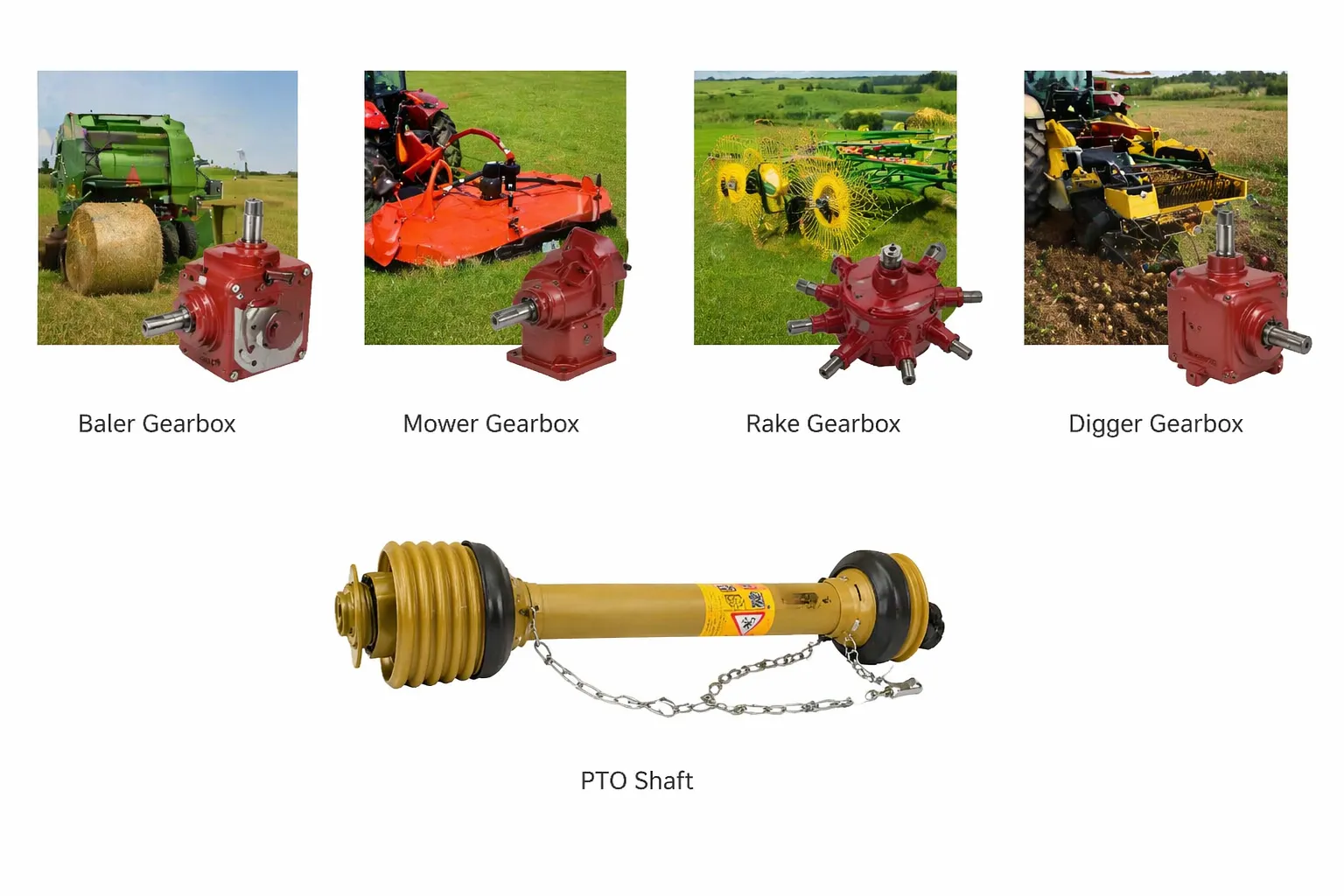
El componente que silenciosamente decide la longevidad de los implementos comerciales es el caja de cambios agrícola En el corazón de cada máquina accionada por la toma de fuerza (PTO), la caja de engranajes de hierro fundido con baño de aceite del modelo 9GL-5.0/5.6 es el componente más caro de reemplazar. Por ello, seleccionar el grado de aceite adecuado, comprobar el nivel de aceite diariamente y cambiarlo según el programa de mantenimiento son los tres hábitos que marcan la diferencia entre una vida útil de 2000 horas y una de 10 000 horas. Los gestores de flotas comerciales que aplican esta disciplina a todos sus implementos (cortacésped, rastrillo, empacadora, cargadora) observan una drástica reducción del coste total de propiedad a lo largo de la década.
- 🌀 Henificado aguas arriba: un henificador hidráulico plegable de rueda de dedos acelera el secado a mediodía entre cortes, liberando la cosechadora para trabajos más productivos por la tarde.
- 🌾 Capacidad de rastrillado adicional: los rastrillos en V grandes manejan franjas de 6 metros para volver a rastrillar por la tarde una vez que las hileras iniciales estén secas.
- 📦 Empacadoras de balas redondas a escala comercial: las unidades de cámara de 1,5 m × 1,5 m igualan el rendimiento de la hilera que ofrece esta combinación.
- 🔪 Segadora-rastrillo para pequeñas explotaciones agrícolas: versión de 2,5 m (8,2 pies) para operadores contratados que prestan servicios ocasionales en pequeñas explotaciones agrícolas de menos de 40 acres.
Casos prácticos comerciales de todo el continente.
📍 Condado de Fond du Lac, Wisconsin — Explotación lechera comercial, septiembre de 2024
Una explotación lechera de 450 vacas con 130 hectáreas de alfalfa y heno mixto sustituyó su segadora y rastrillo independientes por el modelo 9GL-5.0/5.6 acoplado a un tractor John Deere 5100M. El propietario informa haber completado cada uno de los tres cortes de verano en menos de 40 horas de trabajo en el campo, aproximadamente la mitad de las horas de la temporada anterior. La uniformidad de las hileras mejoró lo suficiente como para que la empacadora remolcada funcionara con mucha más suavidad, reduciendo así las incidencias de atascos.
📍 Condado de Lethbridge, Alberta — Operación de exportación de heno, junio de 2025
Un exportador de pasto Timothy que abastece a lecherías japonesas cultiva 900 acres distribuidos en tres parcelas. Utilizando la cosechadora 9GL-5.0/5.6 con un tractor Case IH Farmall 85C, el período de primer corte se redujo de cinco días a dos días y medio. El contenido de humedad de las pacas al momento del empacado fue un 2 % menor, cumpliendo con la estricta especificación de exportación del 12 % sin incurrir en costos adicionales de secado.
📍 Condado de Barron, Wisconsin — Cosecha por contrato, julio de 2025
Un operador contratado que presta servicios a 34 granjas lecheras en un radio de dos condados incorporó una 9GL-5.0/5.6 como su unidad comercial principal y conservó una 9GL-2.5/2.9 para parcelas más pequeñas. La facturación diaria de hectáreas con la máquina más grande alcanzó las 52 durante la temporada alta de la primera cosecha, lo que representa un aumento del 40 por ciento con respecto a la configuración del año anterior.
📍 Cuenca del Columbia, estado de Washington — Granja de alfalfa de primera calidad, agosto de 2024
Un productor de alfalfa de primera calidad de 650 acres que exporta a mercados lácteos y de exportación combinó esta tecnología con una Kubota M5-111. El corte limpio de la barra recíproca conservó aproximadamente entre un 8 y un 10 por ciento más de masa foliar en la paca final en comparación con su antigua segadora de discos rotativos, lo que se tradujo en un aumento verificado de proteínas en las pacas analizadas en laboratorio.
📍 Condado de Holmes, Ohio — Servicio de Contratación en la Región Amish, octubre de 2024
Una empresa de servicios comerciales que opera en la zona agrícola amish del condado de Holmes utiliza el modelo 9GL-5.0/5.6 como su herramienta principal para parcelas de más de 40 acres. Con un New Holland Workmaster 95, el operador trabajó 1180 acres durante la temporada 2024, realizando únicamente reemplazos rutinarios de cuchillas y cambios programados de aceite de la caja de engranajes, sin tiempos de inactividad imprevistos.
📍 Saskatchewan, Canadá — Cooperativa de Ensilaje, julio de 2025
Una cooperativa de ensilaje de tamaño mediano, ubicada en las afueras de Saskatoon, eligió esta combinación por su tolerancia a las condiciones húmedas, después de que dos veranos lluviosos dañaran su segadora rotativa. La barra recíproca mantuvo una calidad de corte impecable incluso con un 72 % de humedad en el cultivo, y el rastrillo formó una hilera que se secó dentro de los cortos periodos de tiempo que ofrecen las praderas canadienses.
Preguntas frecuentes para compradores profesionales
P: ¿Qué potencia necesito realmente para mi tractor?
A: 40 CV son suficientes para el trabajo combinado en terreno llano con cultivos normales. Para alfalfa de primera cosecha abundante, terrenos con pendientes o trabajos comerciales continuos, de 55 a 65 CV ofrecen un margen de rendimiento cómodo y prolongan la vida útil del motor. Por encima de 80 CV no hay ninguna ventaja adicional, ya que el implemento no es el factor limitante.
P: ¿Es legal que el ancho de transporte de 9,8 pies circule por las carreteras rurales estatales de EE. UU.?
A: En la gran mayoría de los estados de EE. UU., los implementos agrícolas de hasta 3 metros de ancho de transporte circulan por caminos rurales con triángulos y reflectores estándar para vehículos pequeños, que se incluyen con cada unidad. Algunos estados del noreste aplican límites más estrictos para el transporte nocturno, y otros requieren vehículos de escolta para anchos superiores a ciertos límites. Consulte siempre las normas del Departamento de Transporte estatal antes de su primer uso en carretera.
P: ¿Cuánto duran las 68 cuchillas de corte?
A: En terreno limpio, cada juego de cuchillas rinde de 400 a 600 acres para heno; en terreno pedregoso, este rendimiento se reduce a la mitad. La mayoría de los operadores comerciales reemplazan la mitad de las cuchillas a mitad de temporada y el juego completo después del segundo corte, manteniendo un kit de repuesto en el taller para realizar el cambio en menos de 30 minutos.
P: ¿Puedo usarlo en condiciones de humedad?
A: La barra recíproca maneja mejor los cultivos húmedos con un 72 % de humedad que las segadoras de discos rotativos; el movimiento de corte limpio no desgarra los tallos húmedos en masas fibrosas que obstruyan las carcasas rotativas. El rastrillo también recoge la hierba húmeda en una hilera de forma limpia, aunque el secado lleva más tiempo y requiere un rastrillo específico. rastrillo de heno arrastrado Pasar el control más tarde aún podría ayudar.
P: ¿Cuál es el programa de lubricación?
A: Engrase el extremo de la barra Pitman cada 50 horas de trabajo; engrase los cubos de las ruedas cada 200 horas; cambie el aceite de la caja de cambios cada 2000 horas o anualmente, lo que ocurra primero. El tapón de drenaje magnético debe limpiarse en cada cambio de aceite para comprobar si hay fragmentos de metal, lo que indica un posible desgaste de los cojinetes.
P: ¿Son intercambiables las piezas con los modelos europeos de gama alta?
R: No. Las cuchillas, los dedos, los cojinetes y los racores hidráulicos cumplen con las normas ISO y JIC, pero utilizan nuestros números de pieza propios. Cada pedido incluye un catálogo de piezas con los equivalentes autorizados por la aduana estadounidense, y nuestro almacén en Dallas, Texas, dispone de todos los artículos de desgaste comunes para su entrega en 3 días en cualquier lugar de Estados Unidos continental y Canadá.
P: ¿Qué cobertura de garantía se aplica?
A: Garantía completa de 12 meses a partir de la fecha de puesta en servicio, excluyendo las piezas de desgaste (cuchillas, dedos, pasadores de seguridad). La garantía cubre los componentes estructurales, de la caja de engranajes e hidráulicos contra defectos de fabricación. Los operadores comerciales que registren más de 800 horas de uso en los primeros 12 meses pueden adquirir una cobertura extendida de hasta 24 meses.
P: ¿Se ofrece formación para los operadores?
A: La puesta en marcha inicial incluye una visita de medio día en las instalaciones para un operador sin costo adicional para pedidos dentro de los Estados Unidos continentales. Se ofrece capacitación adicional para los operadores a solicitud. Cada unidad incluye una tarjeta de referencia rápida impresa en inglés.
P: ¿En cuánto tiempo se amortiza la máquina?
A: Los operadores comerciales que reemplazan un sistema independiente de segadora y rastrillo suelen recuperar su inversión en un plazo de 18 a 24 meses gracias al ahorro de combustible, la reducción de las horas de trabajo del operador y la ventaja de una finalización más rápida (menos pacas dañadas por el clima). Los contratistas que ganan licitaciones adicionales gracias a una mayor rapidez en la entrega suelen recuperar su inversión en una sola temporada alta.
Calibración operativa y precauciones de seguridad
- ⚠️ Comprobación del nivel de aceite de la caja de cambios: Antes de cada jornada laboral, compruebe el nivel de aceite mediante el visor. Si el sistema de transmisión Pitman de 68 aspas funciona con poco aceite, se produce una falla rápida en los cojinetes y la caja de engranajes puede quedar inservible en una hora. El llenado completo de aceite cuesta 25 USD y solo toma cinco minutos.
- 🔧 Liquidación del libro de contabilidad de cuchillos: Mida con un calibrador de espesores cada 50 horas de trabajo. El rango objetivo es de 0,004 a 0,012 pulgadas: lo suficientemente ajustado para un corte limpio, pero lo suficientemente suelto para evitar el contacto metal con metal. Las desviaciones fuera de este rango son la principal causa de un corte irregular y de tallos sin cortar.
- 📌 Bloqueo en modo de transporte: Siempre active el bloqueo mecánico de transporte después de plegar el bastidor. Confiar únicamente en la presión hidráulica no es seguro: una pérdida repentina de presión durante el trayecto puede hacer que el brazo de inclinación de 5,6 m caiga sobre la calzada a velocidades de autopista.
Solicite un presupuesto comercial para el 9GL-5.0/5.6
America Ever-Power Silage Baler Equipment INC. distribuye equipos combinados de segadora-rastrillo a escala comercial en Estados Unidos, Canadá y México, con un centro de repuestos en Dallas, Texas, con servicio de entrega en 3 días. Indíquenos la superficie cultivada, la variedad de cultivos y su flota de tractores; nuestros ingenieros le responderán en 24 horas con una configuración personalizada y un presupuesto con precio final.
Información adicional
| Editor | Cxm |
|---|
Productos relacionados
-
9LZD-9.0 Rastrillo en V de 17 ruedas | Rastrillo de heno de 9 m con ruedas dentadas
-
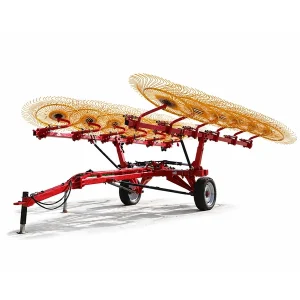
Rastrillo de heno de rueda de dedos 9LZ-6.0 | Rastrillo en V de 12 ruedas accionado por el suelo
-
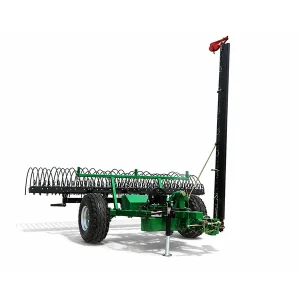
Combinación de cortacésped y rastrillo remolcado 9GL-2.5/2.9 | Corte de 2,5 m + Rastrillo de 2,9 m
-
Rastrillo de heno de rueda de dedos 9LZY-9.0
-
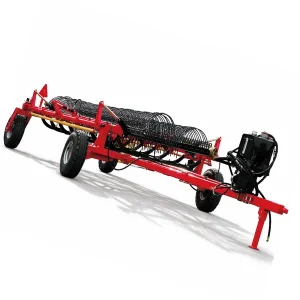
9LH-12 Rastrillo de heno horizontal remolcado