Ot Tırmığı Seçim Kılavuzu: Parmaklı Tekerlekli mi, Döner Tırmık mı, V Şekilli Tırmık mı?
ABD'deki işletmelerde kullanılan üç farklı saman tırmığı ailesine dair pratik bir satın alma rehberi: genişlik, tahrik tipi, yaprak tutma özelliği ve her birinin yuvarlak balya makinenizle nasıl uyumlu olduğu.
Saman tırmığı, yuvarlak balya makinesinin toplama haznesine neyin ulaşacağına karar veren en önemli ekipmandır ve ABD'deki işletmelerde kullanılan üç tırmık ailesi arasındaki seçim, ilk kez satın alanların beklediğinden daha önemlidir. İyi eşleşmiş bir saman tırmığı, balya makinesinin tam hazne kapasitesinde tutarlı balyalar halinde sıkıştırabileceği düzgün sıralar oluşturur. Uyumsuz bir tırmık ise balya makinesinin tasarım verimliliğinin altında çalışmasına, bir tarafı daha hafif, diğer tarafı daha yoğun ve tarlanın genelinde belirgin şekilde daha az tutarlı balyalar çıkmasına neden olur.
Üç tırmık tasarımı, ABD'deki tüm saman üretim programlarını neredeyse kapsar: kompakt ve bütçe dostu işletmeler için parmak tekerlekli tırmıklar, yaprak tutmanın en önemli olduğu yüksek kaliteli saman için döner tırmıklar ve yüksek verimli ticari programlar için V tırmıklar (çift sıralı tekerlekli tırmıklar). Bu kılavuz, her tasarımın hangi konularda başarılı olduğunu, hangi konularda yetersiz kaldığını ve mevcut yuvarlak balya makinenize (aynı ailedeki silaj balya makinesi varyantları da dahil) uyacak şekilde tırmığınızı nasıl boyutlandıracağınızı, böylece en yoğun saman hasat haftalarında yukarıdan aşağıya doğru verimlilik hesaplamasının nasıl tamamlanacağını adım adım açıklamaktadır.
Doğru saman tırmığı neden balya kalitesini belirler?
Balya kalitesi, balya makinesine ulaşan ot yığını tarafından belirlenir ve ot yığını da tırmık tarafından oluşturulur. Ot yığınının üç özelliği balya kalitesini etkiler: genişlik tutarlılığı, üstten alta yoğunluk ve yaprak tutma özelliği. Tırmık, yem programı için yanlış tipte olduğunda bu özelliklerin her biri hızla bozulur ve her biri depoda veya alıcının değerlendirmesinde ölçülebilir bir sorun olarak ortaya çıkar.
Genişlik tutarlılığı anlaşılması en kolay olanıdır. 1,8 m boyutundaki bir toplama başlığı, yaklaşık 1,5-1,7 m genişliğinde ve toplama başlığı boyunca eşit şekilde yerleştirilmiş bir sıra ister. Tırmık engebeli zeminde sekerek yanlara doğru kayan bir sıra, operatörün eğri bir şekilde sürmesine neden olur; bu da ileri hızı, verimliliği ve balya yoğunluğu tutarlılığını olumsuz etkiler. Silaj iş akışlarında, kuru samana göre üstten alta yoğunluk daha önemlidir; üstte gevşek, altta sıkı bir sıra, hazneye düzensiz bir şekilde girer ve sarma zamanlamasını zorlaştıran bir nem gradyanına sahip balyalar üretir.
Yaprak tutma özelliği, tırmık tasarımının en önemli olduğu noktadır. Yonca samanı, protein içeriğinin -80'ini yaprakta taşır ve tırmık yemi çok agresif bir şekilde işlediğinde yaprak sapından kopar. Yemi tırmık ucuyla yerde sürükleyen bir tırmık, balya oluşmadan önce bile protein değerinin %8-15'ini kaybettirir. Ton başına 1280-520 TL ödeyen at ve süt ürünleri alıcıları, kuru madde kadar yaprak tutma özelliği için de ödeme yapmaktadır; bu nedenle bu pazarlara satış yapan işletmeler, daha yüksek sermaye maliyetine rağmen genellikle döner tırmıklar tercih eder. Ton başına 190-180 TL'ye çiftlik kış yemi satan işletmeler daha ucuz tırmıklar kullanabilir çünkü alıcı yapraklar için değil, saplar için ödeme yapmaktadır.
Üç Farklı Saman Tırmığı Tasarımına Genel Bakış
Aşağıdaki kartlar, üç farklı saman tırmığı ailesi hakkında temel bilgileri göstermektedir. Uygulama masasında çoğu siparişi belirleyen çalışma prosedürleri ve avantaj-dezavantajlar için aşağıdaki ayrıntılı bölümleri okuyun.
Parmaklı Tekerlekli Tırmık
Genişlik 4-8 m | Yerden çakılır
Hafif, basit, düşük maliyetli
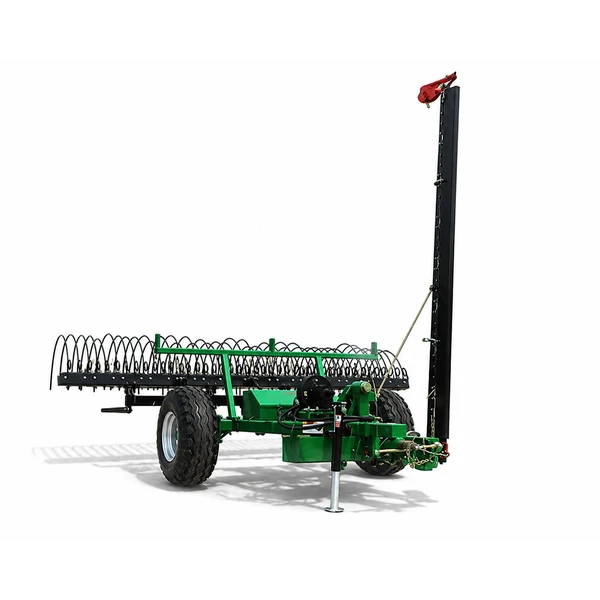
Kavisli parmaklara sahip çoklu tekerlekler, yemleri sıra kenarlarından merkeze taşır. Küçük ölçekli işletmelerde genel kuru saman için en uygundur.
Döner Tırmık
Genişlik 3-7 m | PTO tahrikli
Yaprağa en nazik davranan
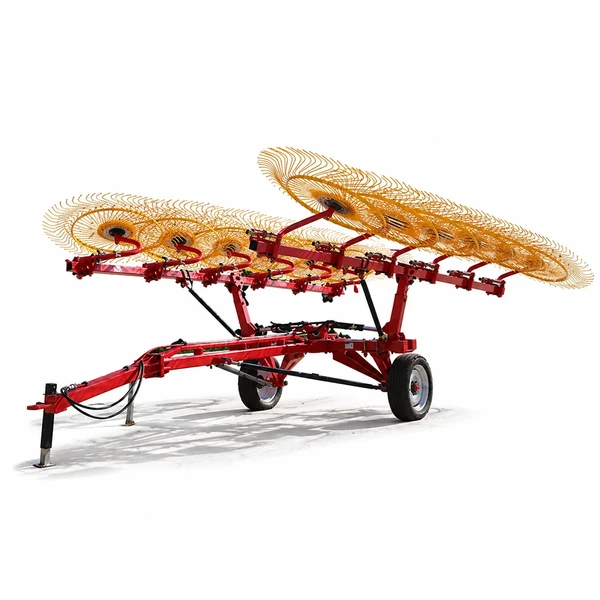
Kontrollü tırmık kollarına sahip yatay rotor, yemleri temiz bir şekilde kaldırır. Yaprak tutmanın karlı olduğu yonca ve atçılık pazarları için en iyi tercihtir.
V-Eğimli (Çift Taraflı Tekerlek)
Genişlik 6-9 m | Yerden çakılır
En yüksek verim
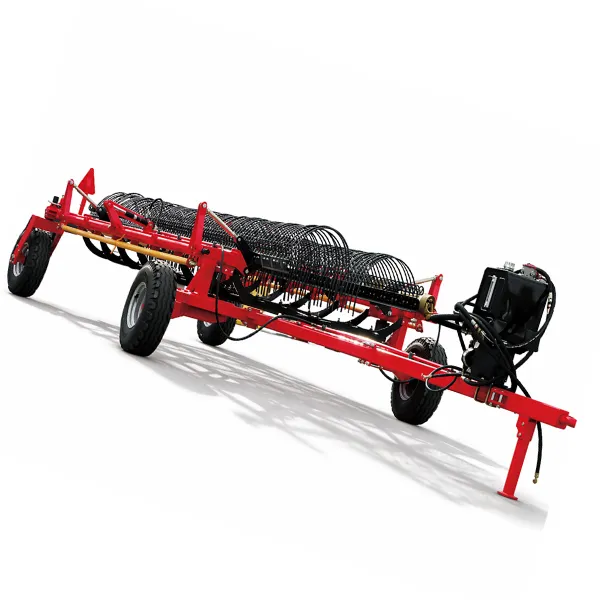
V şeklinde yerleştirilmiş iki tekerlek grubu, iki sıra otu tek bir geniş sıra halinde birleştirir. 600 dönümün üzerindeki ticari saman programlarında standarttır.
Bazı işletmeler birden fazla tırmık kullanır; genellikle çiftlik otu için geniş V şeklinde bir tırmık ve at pazarına satılan birinci sınıf yonca kesimleri için daha dar bir döner tırmık kullanılır. Tek bir ekipman alımıyla çalışan çoğu ABD'li alıcı için, bir tasarım işletmeye tam olarak uyacaktır. Sonraki üç bölüm, her tasarımın ne zaman daha avantajlı olduğunu açıklamaktadır.
Devam etmeden önce terminolojiye ilişkin bir not: "V-tırmık" ve "çift sıralı tekerlekli tırmık" terimleri aynı makineyi tanımlar; iki zıt sıraya sahip V şeklinde yapılandırılmış tekerlekli bir saman tırmığı. "Döner tırmık" ve "rotorlu tırmık" terimleri ise bir veya iki yatay rotor ve tırmık koluna sahip PTO tahrikli bir tasarımı tanımlar; bazı üreticiler, saman yığınının rotorun bir tarafına bırakılma şeklinden dolayı bunlara "yan teslimatlı" tırmıklar da derler. Bu kılavuzun geri kalanını okurken ve bayi özelliklerini karşılaştırırken lütfen kategorileri buna göre kullanın.
Parmaklı Tırmıklar — Avantajları ve En Uygun Kullanım Alanları
Parmak tekerlekli saman tırmığı, ABD'de yıllık 600 dönümden daha az biçilen kuru saman işletmeleri için giriş seviyesi bir iş makinesidir. Mekanik basitliği en önemli avantajıdır: traktöre PTO bağlantısı yok, tırmığın kendisinde bakım gerektiren hidrolik sistem yok ve herhangi bir çiftlik atölyesinin önceden sipariş vermeden stoklayabileceği düz bir parça kataloğu. 6 metrelik bir parmak tekerlekli tırmık, satın alma maliyetinde, benzer genişlikteki bir döner tırmığın yaklaşık 40-551.500 TL'sine denk geliyor; bu da, sadece hacim açısından döner tırmıkların ekonomik avantajlarını haklı çıkaramayan işletmeler için ulaşılabilir hale getiriyor.
Çalışma mantığı yere dayalıdır: tekerlekler tarlada yuvarlanırken döner, kavisli parmaklar yemi biçilmiş alandan kaldırır ve rüzgar sırasının merkezine doğru içeri taşır ve operatör sadece ileri hızı (tipik olarak 8-14 km/sa) ve tırmık genişliği ayarını kontrol eder. Tekerlek sayısı, tırmık boyutuna bağlı olarak 4 ila 12 arasında değişir; 5-7 metrelik kesim genişliklerinde en yaygın özellik 8 tekerlekli tırmıklardır. Traktör PTO gücüne gerek yoktur; temel üç noktalı bağlantıya sahip 35-65 HP'lik bir yardımcı traktör, çoğu parmak tekerlekli tırmığı sorunsuz bir şekilde çalıştırabilir.
Dürüst bir ödünleşme, birinci sınıf yonca yapraklarında hasar oluşmasıdır. Parmaklar, yem bitkisini uçtan yere doğru sürükler ve bu sürükleme hareketi, nem seviyesi -221'in altında olan kuru yonca yapraklarını parçalar. At perakende pazarı için ilk biçim yonca balyalayan işletmeler, bu nedenle genellikle parmak tekerlekli tırmığı tercih etmezler. Çim samanı (meyve otu, timothy, brom), karışık saman veya solma neminin daha yüksek olduğu silaj balyalama sınıfı saman biçen işletmelerde daha az yaprak hasarı görülür ve parmak tekerlekli tırmığın ekonomik olarak çok güçlü olduğu bulunur. 9LZ-6.0 parmak tekerlekli tırmık, yuvarlak balya makinesini çalıştıran aynı traktörde 6 metrelik bir kesim genişliğini işleyebilir, bu da küçük bir çiftlik işletmesi için ekipman listesini kısa tutar.
Döner Tırmıklar — Avantajları ve En Uygun Kullanım Alanları
Döner tırmıklar, yaprak tutma oranının ton başına geliri belirleyen değişken olduğu yüksek fiyatlı saman pazarlarında prim kazanırlar. Rotor tasarımı, kontrollü tırmık kollarına sahip yatay bir tambur kullanır; her tırmık kolu, yemi tarladan temiz bir şekilde kaldıran, rotor gövdesi boyunca döndüren ve hiçbir şeyi yerde sürüklemeden kontrollü bir sıra halinde bırakan bir kam yolu boyunca döner. Döner tırmıkların yaprak parçalanma oranları, aynı nemde aynı yonca biçiminde parmak tekerlekli tırmıklara göre tipik olarak -75 daha düşüktür; bu da balyada daha fazla protein ve aracıda daha yüksek fiyat anlamına gelir.
PTO gücü gereklidir; genellikle genişliğe ve rotor sayısına bağlı olarak tırmıkta 35-75 HP güç yeterlidir. Tek rotorlu tırmıklar 3-5 metre çalışma genişliğine sahiptir; çift rotorlu tasarımlar 6-9 metreye ulaşır ve bazen iki sırayı yan tarafta tek bir sıra halinde birleştirmeleri nedeniyle "yan teslimatlı" tırmıklar olarak adlandırılır. Çalışma hızı parmak tekerlekli tırmıklara benzer (8-14 km/sa), ancak daha temiz toplama özelliği sayesinde operatör, yemi geride bırakmadan bu aralığın üst ucunda çalışabilir. 9LH-12 yatay döner tırmık, 12 fit (~3,7 m) kesme genişliğine sahiptir ve atçılık pazarına hizmet veren orta ölçekli ABD saman programları için yaygın bir özelliktir.
Değişimlerin çoğu ekonomiktir. Döner tırmık, benzer genişlikteki parmak tekerlekli tırmığa göre yaklaşık 1,8-2,5 kat daha pahalıdır ve PTO tahriki, yerden tahrikli bir modele kıyasla yıllık bakım maliyetine yaklaşık $200-450 ekler. Yılda 200 dönümden az birinci sınıf yonca biçen işletmeler, döner tırmıkların ekonomik avantajlarını nadiren haklı çıkarır; bu hacimde yaprak tutma avantajı, maliyet farkını telafi edecek kadar ek gelir sağlamaz. 400 dönümün üzerindeki birinci sınıf yoncalarda ise, ton başına fiyat farkı genellikle birinci sınıf ve çiftlik otu arasında $80-180 olduğu için, maliyet farkı hızla kapanır. Yonca-çim karışımlarında silaj balyalama iş akışlarını kullanan süt işletmeleri de döner tasarımları tercih eder çünkü daha nazik işlem, süt beslenme uzmanlarının TMR rasyonlarında değer verdiği uzun saplı lifi korur.
V-Tırmıklar — Avantajları ve En Uygun Kullanım Alanları
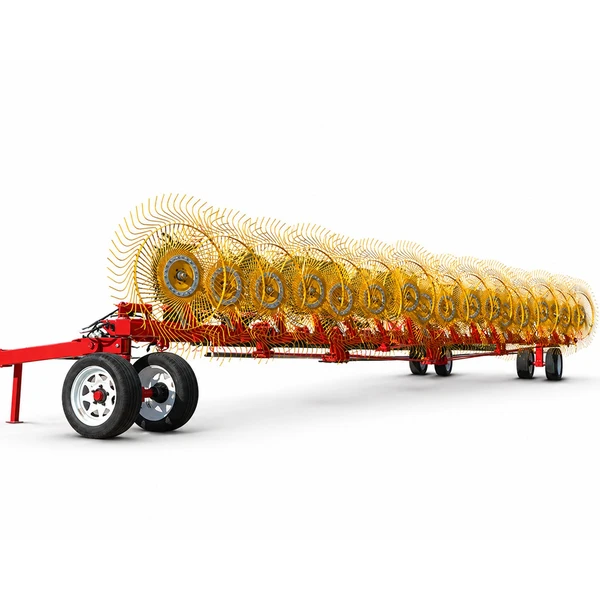
V-şekilli tırmıklar, yıllık 600 dönümden fazla biçilen ticari ABD saman işletmeleri için verimlilik şampiyonudur. V konfigürasyonu, iki tekerlekli tırmık sırasını zıt açılarda yerleştirerek, geniş bir biçme alanından yemleri merkezde tek bir konsolide yığına süpürür. 6-9 metre çalışma genişlikleri standarttır; 17 tekerlekli ticari modeller tek geçişte 9 metreyi kapsar ve ikinci bir tırmık geçişine gerek kalmadan iki biçme sırasını tek bir yığına birleştirir.
Çalışma mantığı, parmak tekerlekli tırmıklardan esinlenmiştir; tekerlekler yerden tahrik edilir, PTO bağlantısına gerek yoktur ve operatör ileri hızı (tipik olarak 8-14 km/sa) ve sıra genişliğini ayarlayan V açısı ayarını kontrol eder. 9LZD-9.0 V-tırmık, bu kategorideki amiral gemisidir ve merkezde 1,5-1,7 m'lik bir sıra oluşturan V şeklinde düzenlenmiş 17 tekerleğe sahiptir; bu da 1,8 m'lik balya toplama borusunun yüksek yoğunluklu 5×5 veya 5×6 yuvarlak balya makinesine tam kapasiteyle beslemesi için mükemmel boyuttadır. Traktör gereksinimi düşüktür (50-90 HP) çünkü PTO yükü yoktur; sınırlayıcı faktör çekme gücüdür.
V-tırmığın en büyük avantajı, verimliliği artırmasıdır. 8-10 km/sa hızla çalışan yüksek yoğunluklu yuvarlak balya makinesine besleme yapan 9 metrelik bir V-tırmık, saatte yaklaşık 18-22 ton kuru yemi işler; bu da operatörün ikinci bir tırmık geçişi için yavaşlamasına gerek kalmadan, ticari sınıf balya makinelerinin bile önünde kalmak için yeterlidir. Dezavantajları ise yaprak tutma konusunda parmak tekerlekli tırmıkla aynıdır: tekerlekler yemi uçta sürükler, bu da kuru yoncada 5-121 ton yaprak proteinine mal olur. Çiftlik samanı ve çayır otunu toplu yem pazarına satan ticari işletmeler, verimlilik avantajının ton başına fiyat noktasında yaprak maliyetinden daha ağır bastığı için bu dezavantajı kabul ederler. Premium yonca programları genellikle V-tırmığı, at perakende kanalına yönelik kesimler için ayrı bir döner tırmıkla birlikte kullanır.
Balya Makinesinin Toplama Genişliğine Uygun Ot Tırmığı
Saman işleme zincirinin başından sonuna kadar en önemli teknik eşleşme, tırmıktan çıkan saman yığınının genişliği ile yuvarlak balya makinesinin toplama genişliği arasındaki farktır. Toplama genişliğinden daha dar bir saman yığını, balya makinesinin kapasitesini boşa harcar ve kuru günlerde toz kaldırabilir; toplama genişliğinden daha geniş bir saman yığını ise tarlanın kenarlarında yem bırakır ki bu da yem israfına ve düzensiz balya yoğunluğuna yol açar. Aşağıdaki tablo, yaygın balya makinesi toplama genişliklerini, doğru saman yığınını üreten tırmık genişlikleriyle eşleştirmektedir.
| Yuvarlak Balya Makinesi Alımı | Hedef Yığın Genişliği | Önerilen Tırmık Genişliği | En İyi Tırmık Tipi |
|---|---|---|---|
| 1,0 m (kompakt 4×4) | 0,8-1,0 m | 3-5 m | Parmak tekerleği veya döner tekerlek |
| 1,4 m (4×5 standart) | 1,1-1,4 m | 5-7 ay | Parmak tekerleği veya döner tekerlek |
| 1,8 m (5×5 yüksek yoğunluklu) | 1,5-1,7 m | 7-9 ay | V-şekilli tırmık (çift sıralı) |
| 2,4 m (5×6 ticari) | 2,0-2,3 m | 8-9 metre veya 5 metrelik 2 geçiş | V-tırmık ticari |
Masada iki önemli nokta var. Birincisi, tırmık genişliği, sıra genişliğinin yaklaşık 4-5 katıdır çünkü tırmık, çok daha geniş bir kesimden gelen yemleri daha dar bir şerit halinde bir araya getirir. İkincisi, silaj balyalama iş akışları, hedef aralığın üst ucundaki sıralardan fayda sağlar; daha yoğun sıralar, daha yoğun balyalar üretir ve bu da balya sarıcıya ulaştığında oksijen dışlanmasını iyileştirir. Aynı ekipmanda hem kuru saman hem de silaj kullanan operatörler, saman tırmığı konfigürasyonunun her iki mod için de uygun sıra yoğunluğunu ürettiğini doğrulamalıdır; bazı ayarlanabilir V-tırmıklar bu aralığı karşılayabilirken, eski sabit açılı tırmıklar karşılamayabilir. Silaj balyalama iş akışı burada özellikle hassastır çünkü sarılmış fermente balyalardaki oksijen dışlanması, sarıcıdaki balya yoğunluğuna doğrudan bağlıdır ve balya yoğunluğu, toplama noktasındaki sıra yoğunluğunu takip eder. Sıra yoğunluğundaki 5%'lik bir düşüş, altı hafta sonra depolama yığınında sarılmış silaj yem değerinde 7-9%'lik bir düşüşe dönüşür.
PTO Tahrikli ve Toprak Tahrikli Güç Kaynakları
Ot biçme makineleri, PTO tahrikli ve yerden tahrikli olmak üzere ikiye ayrılır ve bu seçim traktör uyumluluğunu, bakım maliyetini ve çalışma tutarlılığını etkiler. Çoğu döner tırmık PTO tahriklidir; çoğu parmak tekerlekli ve V tırmık ise yerden tahriklidir. Her yaklaşımın kendine özgü avantajları vardır.
Yerden Tahrikli Ot Tırmıkları
Tekerlek dönüşü, tırmık ileri doğru çekilirken doğrudan zeminle temastan kaynaklanır. PTO bağlantısı yok, tırmık tarafında hidrolik sistem yok, traktörden motor gücü aktarımı yok.
Güçlü Yönler: Daha düşük maliyet, daha basit bakım, daha hafif traktör gereksinimi, PTO sürtünmesi yok.
Zayıf yönler: Tekerlek hızı zemin hızına bağlı olarak değişir, ıslak çimlerde veya kumlu topraklarda zorlanabilir.
En uygun kullanım alanı: Parmak tekerlekli tırmıklar, V-tırmıklar, kuru koşullarda çalışma
PTO Tahrikli Saman Tırmıkları
Rotor, traktörün PTO'su tarafından tahrik edilen sabit bir hızda, zemin hızından bağımsız olarak döner. Operatör, tırmık hareketini etkilemeden ileri hızı değiştirebilir.
Güçlü Yönler: Zemin hızından bağımsız olarak tutarlı tırmıklama hareketi, yaprağa daha nazik davranır, ıslak koşullarda çalışır.
Zayıf yönler: Daha yüksek satın alma maliyeti, PTO donanımlı traktör gerektirir, daha fazla bakım gerektirir.
En uygun kullanım alanı: Döner tırmıklar, yüksek kaliteli yonca programları, silaj iş akışları
ABD'deki çoğu saman yetiştirme programında, seçim tırmık tasarımının kendisine bağlıdır; parmak tekerlekli ve V-tırmıklar varsayılan olarak yerden tahrikli, döner tırmıklar ise varsayılan olarak PTO tahrikli olarak gelir. Seçimin en çok önem taşıdığı yer, sulama döngüsünden sonra toprağın yumuşak kaldığı sulama yapılan saman tarlalarında faaliyet gösteren alıcılardır: yerden tahrikli tekerlekler ıslak koşullarda kayabilir ve bu da sıra tutarlılığını olumsuz etkilerken, PTO tahrikli tırmıklar her koşulda işlevini korur. Snake Nehri Vadisi, Imperial Vadisi ve Yukarı Snake saman koridorlarındaki işletmeler, daha yüksek yatırım maliyetine rağmen bu nedenle genellikle PTO tahrikli tırmıkları tercih eder.
Ot Tırmığı Aşınma Noktaları ve Bakım Programı
Bir saman tırmığı, yuvarlak balya makinesine göre daha az hareketli parçaya sahiptir, bu da servis yükünü hafif tutar; ancak aşınan parçalar, saman zincirindeki diğer tüm aletlerden daha doğrudan kum, çakıl ve kayalık toprağa maruz kalır. Aşağıdaki beş aşınma noktası, üç tırmık tasarımının tamamında ABD operasyonları için pratik servis yükünü kapsamaktadır.
- ▸
Dişler veya parmaklar: Kayalık arazilerde tipik kullanım ömrü 200-400 saat, düz zeminde 600-900 saattir. Eğilmiş tırmık uçları kırılmadan önce sıra tutarlılığını azaltır; 15-20% eğilmiş uç sayımı yapılır ve değiştirilir. - ▸
Tekerlek rulmanları: Düzgün yağlanmış ünitelerde 1.500-2.500 saat kullanım ömrü. Rulman arızası, çalışma sırasında tekerlekte sallanma veya gürültü şeklinde kendini gösterir. Günlük yağlama, kullanım ömrünü önemli ölçüde uzatır. - ▸
Çerçeve ve dönme noktaları: Genellikle düzenli olarak yağlandığı takdirde tırmığın ömrü boyunca (5.000+ saat) dayanır. V-tırmıkların pivot burçları daha hızlı aşınır; aşırı boşluk olup olmadığını yıllık olarak kontrol edin. - ▸
PTO mili ve dişli kutusu (sadece döner tip): Tipik kullanım ömrü 2.000-3.000 saattir. En sık görülen servis işlemi üniversal mafsal değişimidir; şanzıman keçesinin sızdırması ise erken uyarı işaretidir. - ▸
Kam mili yolu (sadece döner): Tırmık kolunun hareketini kontrol eden ray, normal çalışma koşullarında 3.000-5.000 saat çalışır. Aşınmış raylar düzensiz ot yığınlarına neden olur; değiştirilmesi atölye işidir.
Mevsimler arası kapalı alanda saklama, çoğu aşınma noktasındaki ömrü iki katına çıkarır. Plastik diş uçlarının UV ışınlarına maruz kalması, açık havada saklanan parmak tekerlekli tırmıkların erken değiştirilmesinin en büyük nedenidir; dişler, plastik ile çelik kolun birleştiği tabanda çatlar. Sezon dışı depolama sırasında bir sundurma veya basit bir branda örtüsü bile bu arıza türünü yıllarca geciktirir.
Saman Biçme İş Akışının Oluşturulması
Saman tırmığı, dört aşamalı saman yapım zincirinin bir parçasıdır: biçme, şartlandırma, tırmıklama, balyalama. Tırmık seçimi, yuvarlak balya makinesi seçimi ve biçme makinesi seçimiyle her iki yönde de etkileşim halindedir — 1,0 m'lik bir balya makinesine beslenen geniş bir V tırmık kapasiteyi boşa harcarken, 2,4 m'lik ticari bir balya makinesine beslenen dar bir döner tırmık verimliliği kısıtlar. Aşağıdaki dört ürün ailesi, tüm zinciri kapsamaktadır.
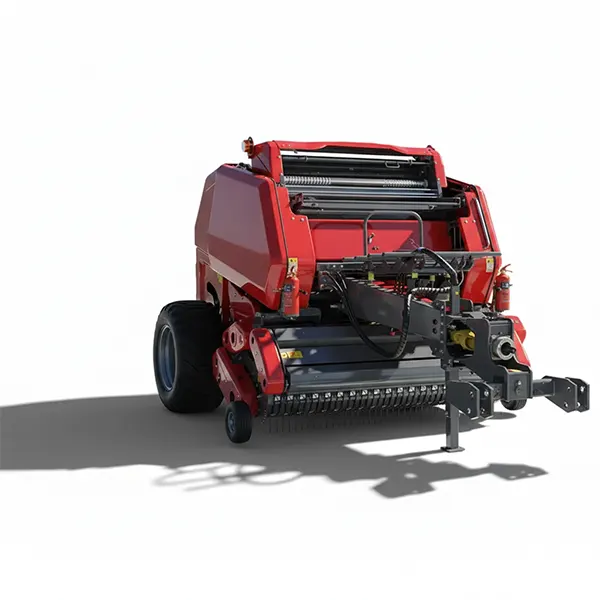
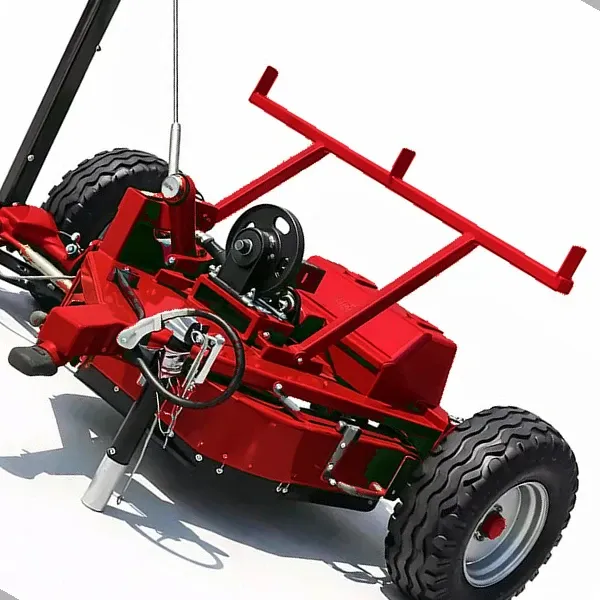
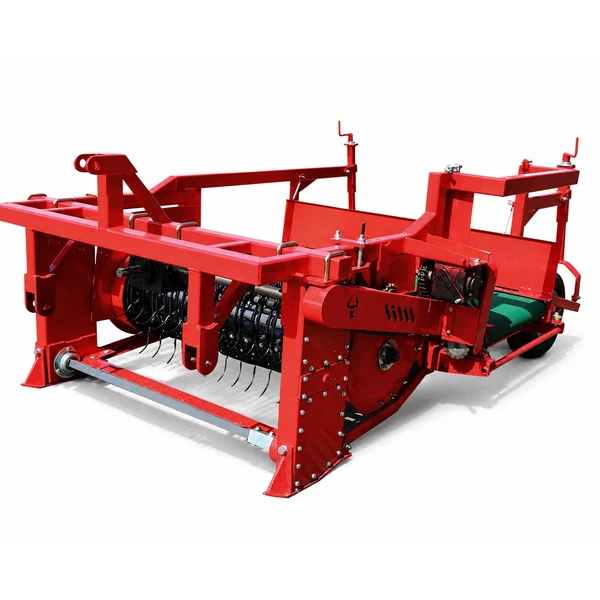
Tamamını inceleyin silaj ve yem ekipmanları kataloga bakın veya göz atın diğer ürünler Balya taşıyıcıları ve yem öğütücüleri gibi, tırmıktan balya makinesine kadar olan iş akışı tamamlandıktan sonra çiftlikteki zinciri tamamlayan ekipmanlar.
Mümkün olduğunda dört ekipmanın tamamını birlikte sipariş edin; tek bir Sacramento sevkiyatında, her parçayı ayrı ayrı temin etmeye kıyasla nakliye maliyetinden tasarruf, Batı Yakası ve Dağlık Eyalet teslimatlarında genellikle 12-18%'dir. Uygulama masası ayrıca, sipariş gönderilmeden önce, örneğin 9 metrelik bir saman tırmığı ile 1 metrelik bir balya makinesinin aynı anda kullanılması gibi boyut uyumsuzluklarını tespit eden tek bir satış öncesi görüşmede, tüm zincirdeki verimliliği eşleştirir. Mevcut kuru saman programına silaj balya makinesi iş akışı ekleyen işletmeler, tırmık özelliklerini yalnızca sahada zaten bulunan kuru saman traktör konfigürasyonu için değil, özellikle silaj nemi için planlamalıdır.
Sıkça Sorulan Sorular
1,8 metrelik balya makinesinin toplama genişliği için ne kadar geniş bir saman tırmığına ihtiyacım var?
7-9 metrelik bir tırmık, 1,8 metrelik balya makinesinin toplama kapasitesi için doğru sıra yoğunluğunu sağlar. 7 metrenin altında sıra çok dar olur ve balya makinesinin kapasitesini boşa harcar; 9 metrenin üzerinde ise sıra çok yoğunlaşabilir ve ağır ilk biçim yoncasında hazneyi tıkayabilir. 9 metrelik 17 tekerlekli V-tırmık, yüksek yoğunluklu 5×5 ve 5×6 yuvarlak balya makineleri için standart eşleşmedir.
Yüksek kaliteli yonca üzerinde parmaklı tırmık kullanabilir miyim?
Yapabilirsiniz, ancak size maliyeti olacaktır. Parmak tekerlekli tırmıklarda yaprak parçalanması, kuru yonca kesimlerinde 8-15%'ye mal olur; bu da ton başına proteinde 6-12%'lik bir azalmaya karşılık gelir. Atçılık pazarına yüksek kaliteli yonca satan işletmeler, daha yüksek maliyete rağmen genellikle döner tırmıklar kullanır; ton başına fiyat farkı, yıllık 200-300 dönümden fazla kesim için ekipman primini haklı çıkarır.
Bir saman tırmığının tipik kullanım ömrü ne kadardır?
İyi bakımlı bir saman tırmığı, büyük bir onarıma ihtiyaç duymadan önce 5.000-8.000 saatlik çalışma ömrüne ulaşır; bu da orta hacimli ABD işletmelerinde tipik olarak 10-15 yıla denk gelir. Tekerlek yatakları ve tırmık uçları düzenli olarak aşınan parçalardır; çerçeve ve pivot yapısı, düzenli olarak yağlanıp mevsimler arasında kapalı alanda saklanırsa makinenin ömrü boyunca dayanır.
Saman tırmığı için PTO donanımlı bir traktöre ihtiyacım var mı?
Yerden tahrikli parmak tekerlekli ve V-tırmıklar için hayır; temel üç noktalı askı sistemine ve yeterli çekme kapasitesine (tırmık genişliğine bağlı olarak genellikle 35-90 HP) sahip herhangi bir traktör, PTO'ya ihtiyaç duymadan tırmığı çalıştırabilir. Döner tırmıklar için evet; PTO bağlantısı gereklidir ve çoğu ABD traktör konfigürasyonunda standart olarak 540 RPM bulunur.
Tarlada biriken saman yığınının doğru yoğunlukta olup olmadığını nasıl anlarım?
Doğru boyuttaki bir ot yığını, tepe noktası yerden 30-45 cm yukarıda olan, uçtan uca eşit kalınlıkta ve biçimden elde edilen tüm yemi her iki tarafta da kalıntı bırakmadan içeren, kabaca koni şeklinde bir yığındır. Balya makinesi bir tarafta belirgin şekilde daha hafif balyalar üretiyorsa, ot yığını dengesizdir; bu genellikle düzensiz tırmıklama veya tırmığın bir tarafındaki bükülmüş dişten kaynaklanır.
Silaj işletmesi için döner tırmık, fazladan ödenen paraya değer mi?
Süt sığırlarında silaj balyalama işlemlerinde, sarılmış fermente yem üretiminde evet, daha nazik işlem uzun saplı lifleri korur ve daha yüksek silaj neminde (50-55%) yaprak kırılmasını azaltır; bu da daha iyi yem değeri ve balyalama makinesinin kapatması için daha tutarlı balya yoğunluğu anlamına gelir. Ot karışımı samanla yapılan sığır silajı işlemlerinde ise yaprak tutma avantajı daha küçüktür ve V-tırmık genellikle daha iyi ekonomik sonuçlar sağlar.
Bir saman tırmığı siparişinin teslim süresi ne kadar?
Standart konfigürasyonlar, Sacramento deposundan ABD'nin 48 eyaletinin çoğu posta koduna 14-21 gün içinde gönderilir. Geniş ticari V-tırmıklar genellikle yuvarlak balya makinesi siparişiyle aynı kamyonda taşınır; bu da ayrı sevkiyatlara kıyasla nakliye maliyetinde -18% tasarruf sağlar. İlkbahar ot biçme planı yapan operatörler, üretim zaman aralığını garanti altına almak için siparişlerini kış ortasına kadar onaylamalıdır.
İşletmeniz için doğru saman tırmığını seçmeye hazır mısınız?
İşletmeniz daha küçük bir parmak tekerlekli tırmıktan ticari bir V-tırmığa geçiyorsa veya yüksek kaliteli yonca için döner tırmık düşünüyorsanız, doğru cevap, belirli ekim alanınıza, nihai pazarlarınıza ve mevcut traktör ve yuvarlak balya makinesi envanterinize bağlıdır. Verilerinizi Sacramento başvuru masasına gönderin, 48 saat içinde posta kodunuza göre nakliye fiyat teklifi vereceğiz.
Editör: Cxm