Baling Grass Silage: Ryegrass, Fescue & Mixed Pasture
Grass silage species behave differently under a silage baler than alfalfa does. A species-by-species matrix covering the five grasses U.S. operations actually bale.
Most silage baler discussion centers on alfalfa because alfalfa dominates the U.S. premium-forage market. But grass silage represents a larger total acreage than alfalfa silage in many regions — the Pacific Northwest, the Southeast, the Northeast, and most of the dairy belt run primarily grass-based forage systems with alfalfa as a secondary input. The silage baler operating discipline for grass differs from alfalfa in several specific ways: moisture targets shift slightly, sugar content and fermentation behavior differ, leaf-to-stem ratios change cutting decisions, and species-level differences mean the same machine setting that produces good ryegrass silage produces sub-optimal fescue silage. This article walks through the five grass species U.S. operations actually bale at scale, with the silage baler adjustments each one requires.
Geographic context matters here because grass species map onto specific U.S. regions. Perennial ryegrass dominates the Pacific Northwest and parts of the Northeast. Tall fescue covers most of the Southeast and Mid-Atlantic transition zone. Orchardgrass is the workhorse cool-season grass across the Northeast and Midwest. Timothy is the premium hay-grass of the Northeast and parts of the Mountain West. Mixed pastures combining 2–4 species are the reality on most operations. The species cards below describe each in isolation, then the closing section covers mixed-pasture combinations.
Why Grass Silage Behaves Differently from Alfalfa
Three biochemical differences drive the silage baler’s behavior on grass versus alfalfa. First, sugar content. Cool-season grasses typically run 8–14% water-soluble carbohydrates (sugars) in vegetative growth stages, compared to 4–8% for alfalfa. Higher sugar content means faster lactic-acid fermentation, lower final pH, and better-fermented silage at given moisture content. Grass silage at 60% moisture often ferments better than alfalfa silage at 55% moisture purely from the sugar advantage.
Second, structural differences. Grasses are monocots with linear leaves running parallel to fibrous stems; alfalfa is a dicot with branched leaves attached to woody stems. Grass material flows through the silage baler chamber more uniformly, producing more consistent bale density across the cross-section. Alfalfa material tends to bunch at the chamber walls because of its branched geometry. Operators making the transition from alfalfa to grass often notice their bales come out denser and more uniform on the same machine settings — a quiet quality improvement that comes free with the species change.
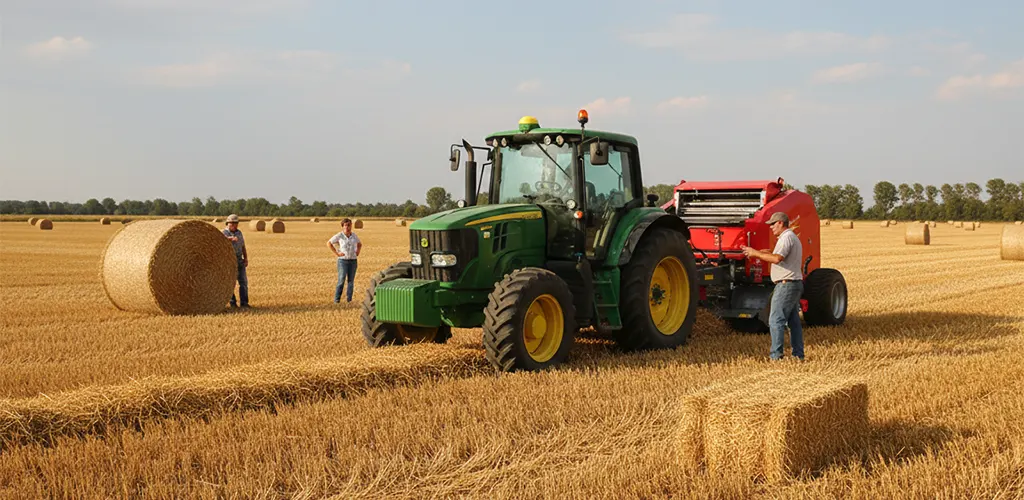
Third, leaf shatter. Alfalfa leaves shatter and break off during raking and baling, producing the leaf-loss problem that drives premium-alfalfa baling discipline. Grass leaves are integrated into the stem structure and do not shatter the same way. The result is that grass silage forgives raking and baling discipline that would damage alfalfa silage — operators can rake more aggressively, bale at slightly lower moisture, and handle bales more roughly without the protein loss that comparable alfalfa handling would produce. This is a significant operational advantage in regions where grass dominates and afternoon thunderstorms force decisions to be made faster than alfalfa would tolerate.
01Perennial Ryegrass
Perennial ryegrass (Lolium perenne) is the premium silage grass in temperate regions with adequate rainfall. It tolerates frequent cutting, regrows quickly after harvest, and produces the highest soluble-carbohydrate content of any commonly-baled grass species — often 14–18% WSC at vegetative growth stages and even higher under cool, sunny weather. The Pacific Northwest’s combination of mild summers and frequent moisture is where ryegrass production peaks; the Willamette Valley alone produces a meaningful share of the U.S. perennial ryegrass seed supply and uses extensive ryegrass acreage for dairy silage and standing-bale production.
The silage baler operating profile for ryegrass differs from alfalfa in three ways. Wilting time is shorter — ryegrass at 80% moisture standing wilts to silage range (60–65%) in 18–24 hours under typical Northwest conditions, compared to 30+ hours for alfalfa. The narrow wilting window means operators need to be ready to bale earlier than they expect. Chamber pressure can run slightly lower than alfalfa settings because ryegrass compresses more readily; over-pressure produces excessively dense bales that strain the chamber components without quality benefit. Wrap layer count can stay at the 4–6 layer cattle-silage standard because ryegrass ferments cleanly enough that thicker wrap rarely changes the outcome.
Cutting timing for ryegrass silage targets the late-vegetative-to-early-boot stage. Earlier cutting (mid-vegetative) sacrifices yield with limited quality gain because young ryegrass is already high in everything that matters. Later cutting (full boot or beyond) drops sugar content and increases fiber as the plant prepares to flower. Ryegrass operators in the Northwest typically run 4–5 cuttings per year on irrigated stands, with each cutting producing 1.5–2.5 tons DM per acre. Total annual yield of 8–12 tons DM per acre is achievable on well-managed irrigated ryegrass — competitive with alfalfa on a per-acre basis but at lower protein concentration (typically 16–20% CP for ryegrass silage versus 20–24% for alfalfa silage).
Key adjustments for ryegrass: Shorter wilting window (18–24 hours typical); reduce chamber pressure slightly versus alfalfa; standard 4–6 layer wrap is sufficient; cut at late-vegetative to early-boot stage.
02Tall Fescue
Tall fescue (Festuca arundinacea) covers more U.S. pasture acreage than any other cool-season grass, dominating from Missouri through Virginia and including most of Tennessee, Kentucky, and the southern Appalachian foothills. Two distinct fescue regimes exist for silage purposes: traditional KY-31 fescue containing the wild-type endophyte fungus, which produces toxic alkaloids that limit livestock performance, and novel-endophyte or endophyte-free varieties that eliminate the toxicity problem at higher seed cost. The silage baler operating profile is similar across both varieties; the regulatory and feeding implications differ significantly.
Fescue is a tougher grass mechanically than ryegrass. Fescue stems contain higher silica content and the leaf surfaces have more cuticle waxes, both of which slow moisture loss during wilting and increase friction against the silage baler chamber components. Wilting times run 24–36 hours under typical Southeast summer conditions — slower than ryegrass but faster than alfalfa. Chamber wear from fescue baling runs 15–20% higher than from ryegrass baling because the silica content acts as a mild abrasive on belts and rotor knives. Operators baling primarily fescue should plan knife sharpening and belt replacement intervals slightly tighter than the manufacturer recommendations developed for ryegrass-dominant operations.
The endophyte question affects silage decisions even though the silage baler does not care which variety is in the chamber. Endophyte-infected fescue baled as silage retains its toxic alkaloid content through fermentation — the bacteria that drive lactic-acid fermentation do not break down the relevant compounds. The downstream consequence is that operators feeding endophyte-fescue silage must blend it with non-fescue forage to dilute the alkaloid concentration below problematic levels, typically a maximum of 30% endophyte-fescue in the total ration for cattle. Operations that have transitioned to novel-endophyte or endophyte-free stands avoid this dilution requirement.
Key adjustments for tall fescue: Longer wilting time than ryegrass (24–36 hours); plan tighter knife and belt service intervals due to silica content; check endophyte status of stand and adjust feeding ratio accordingly.
03Orchardgrass
Orchardgrass (Dactylis glomerata) is the workhorse cool-season grass across the Northeast and Midwest. It tolerates a wider range of soil and moisture conditions than ryegrass, persists longer in stands than perennial ryegrass typically does, and produces forage that finds easy markets in both dairy and equine sectors. Quality stays high through 3–4 cuttings per season on managed stands, and the species responds well to nitrogen fertilization in ways that enable predictable annual yields.
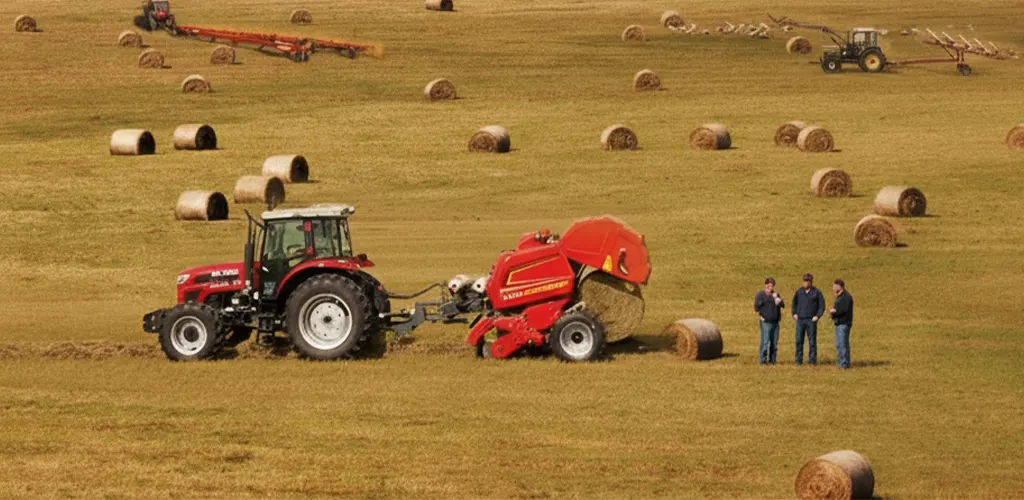
From the silage baler perspective, orchardgrass is the easiest grass to handle. Wilting times match alfalfa (24–36 hours typical), chamber behavior is uniform with no special pressure adjustments needed, sugar content (10–14% WSC at vegetative stages) is high enough to drive clean fermentation, and the leaf-stem ratio stays favorable across multiple cuttings. Operators making a transition from alfalfa to orchardgrass — common in Northeast dairy operations diversifying their forage base — find their existing silage baler settings work without modification on the new species. This operational continuity is part of why orchardgrass dominates Northeast dairy silage despite alfalfa’s higher protein content.
The cutting timing for orchardgrass silage targets the late-vegetative-to-early-boot stage, similar to other cool-season grasses. The window is somewhat wider than ryegrass — orchardgrass tolerates 1–2 days of delayed cutting without significant quality loss because its sugar concentration is more stable across phenological stages than ryegrass. This forgiving window is meaningful in Northeast weather where spring and early-summer windows often close unexpectedly. Operators have more cutting-decision flexibility on orchardgrass than on ryegrass or even alfalfa.
Key adjustments for orchardgrass: Treat as the “default” grass — alfalfa-equivalent silage baler settings work without modification; widest cutting window of the cool-season grasses; plan 3–4 cuttings annually on managed stands.
04Timothy
Timothy (Phleum pratense) is the premium hay-grass of the Northeast and parts of the Mountain West, dominating the high-quality horse-hay market and finding limited but valuable use as silage in operations targeting horse-grade haylage. Most timothy production stays in the dry-hay channel because horse customers prefer dry timothy, but a meaningful fraction goes to silage when weather windows for dry-hay production close. The silage baler producing timothy haylage is essentially making a backup product for the dry-hay program.
Timothy behaves differently in the chamber than other cool-season grasses. The grass produces relatively coarse stems with prominent nodes and somewhat lower leaf-to-stem ratio than orchardgrass or ryegrass. Bale density on timothy silage runs 5–8% lower than equivalent orchardgrass at the same chamber pressure setting; operators producing timothy silage often increase pressure 10–15% to reach the same density target. This setting change is small enough to be made on the cab control without machine modification.
Cutting timing for timothy is more critical than for other grasses because timothy quality drops rapidly after the early-heading stage. The optimal window — pre-bloom to early-heading — is only 5–7 days wide in typical Northeast weather, and missing this window drops crude protein from 14–16% to 8–11% within 10–14 days. Timothy operators target their cutting decision based on stand observation rather than calendar dates, with experienced operators able to identify the optimal cutting day by examining seedhead emergence on dominant tillers. Silage cutting (rather than dry-hay cutting) gives 1–2 days of additional flexibility because moisture in the chamber tolerates slightly later phenology than dry hay does.
Key adjustments for timothy: Increase chamber pressure 10–15% to compensate for coarser stem geometry; tight cutting window (5–7 days) requires phenology-driven decision rather than calendar-driven; primary use is backup product for dry-hay program rather than primary silage source.
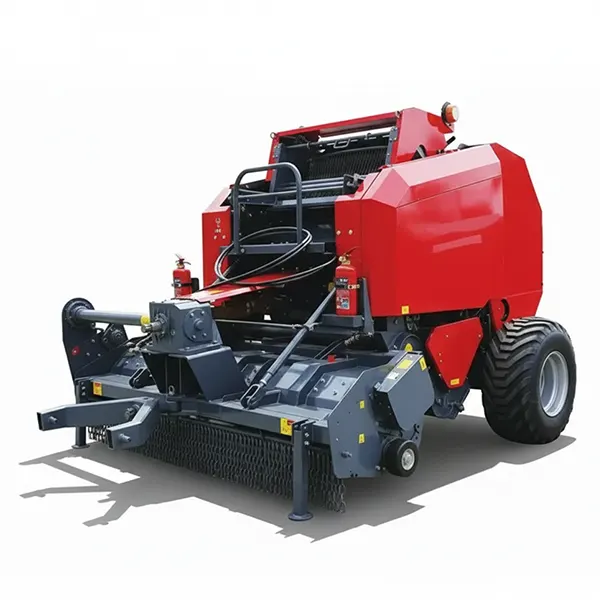
9YG-1.25 Mid-Tier Silage Baler
The 4×5 chamber suits grass silage operations across all five species covered in this article. Variable chamber design accommodates the density variations between ryegrass (low pressure) and timothy (higher pressure) without machine modification.
05Mixed Pasture (Reality on Most Farms)
Most U.S. hayfields contain mixtures of 2–4 species rather than monoculture stands. A typical Northeast hayfield might run 60% orchardgrass, 25% timothy, 10% red clover, and 5% miscellaneous (volunteer ryegrass, white clover, weed grasses). A typical Southeast field runs 70% tall fescue, 15% orchardgrass, 10% red clover, 5% other. The mixed-stand pattern is partly intentional (legume-grass mixtures fix nitrogen and improve overall protein) and partly accidental (volunteer species establish over years). The silage baler operator running mixed-pasture stands has to set machine settings against the dominant species while accepting some performance compromise across the minor species.
Mixed pastures with legume components — typically red clover, white clover, or alfalfa fractions — present specific challenges. Legumes wilt slower than grasses (the cuticle is thicker on legume leaves), so a mixed stand reaches silage moisture later than a pure-grass stand of the same age. Operators baling mixed pastures usually wait 6–12 hours longer than pure-grass timing would suggest, with the tradeoff of slight grass over-drying (grasses lose moisture faster) accepted in exchange for the legume fraction reaching target moisture. The averaging effect generally produces acceptable silage, but the mixed-stand bale will never match the quality of a monoculture stand baled at exactly its species-optimal moisture.
Cutting timing for mixed stands targets the dominant species with allowance for the minor components. An orchardgrass-timothy mix targets late-vegetative orchardgrass (which is then early-heading timothy). A fescue-clover mix targets early-boot fescue (which is then mid-bloom red clover). Operators developing experience on mixed stands learn to identify their fields’ “tipping point” where the combination is at peak quality, which may not align with any single species’ individual optimum. The 3–5 day phenology window for mixed stands is typically narrower than any single species’ window, requiring more attentive monitoring during the cutting decision week.
Key adjustments for mixed pastures: Set machine to the dominant species; legume components extend wilting time; cutting window narrower than monoculture; expect 5–10% quality compromise versus a pure stand of the dominant species.
Grass Species Settings Matrix
Five species side by side, with the silage baler operating settings each one prefers and the typical outcomes operators see.
| Species | Wilt Time | Sugar (WSC) | Chamber Pressure | Cutting Window |
|---|---|---|---|---|
| Ryegrass | 18–24 hr | 14–18% | Slightly low | 3–5 days |
| Tall Fescue | 24–36 hr | 8–12% | معيار | 7–10 days |
| Orchardgrass | 24–36 hr | 10–14% | معيار | 7–10 days |
| Timothy | 24–36 hr | 8–12% | +10–15% | 5–7 days |
| Mixed pasture | +6–12 hr (legume effect) | عامل | Set to dominant | 3–5 days |
The general pattern across the five species is that grass silage forgives operator decisions more than alfalfa silage does. Sugar content is generally adequate to drive fermentation regardless of small moisture deviations, leaf shatter is not a meaningful concern, and chamber behavior is consistent across moisture and species variations. Operators making a transition from cattle-grade alfalfa baling to grass-based dairy or beef silage usually find the operation easier than they expected — with the notable exception of timothy, which behaves differently enough to warrant operator-attention and pressure adjustment.
المعدات المحيطة بآلة كبس السيلاج
The harvest equipment chain for grass silage looks similar to the alfalfa chain but with a few species-specific tweaks. The جزازة العشب وتكييفها running on grass benefits less from aggressive conditioning than alfalfa does — grass stems do not need the same crushing intensity as alfalfa stems for moisture release, and over-conditioning grass produces leaf damage without faster wilting. Most grass operations dial conditioning down by 25–35% from alfalfa settings.
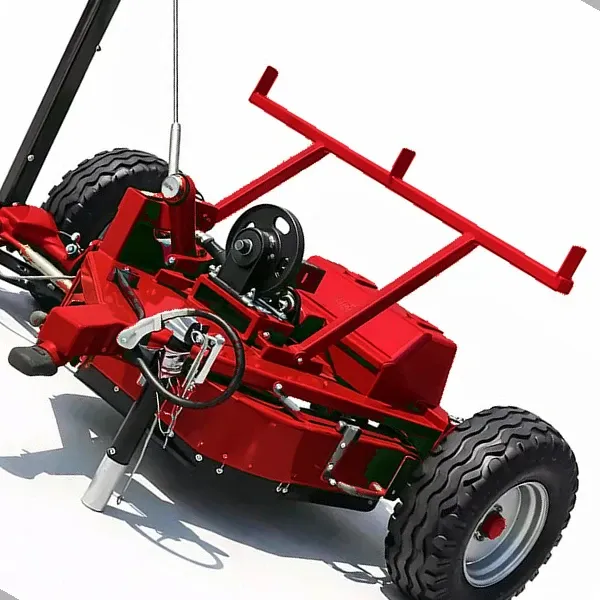
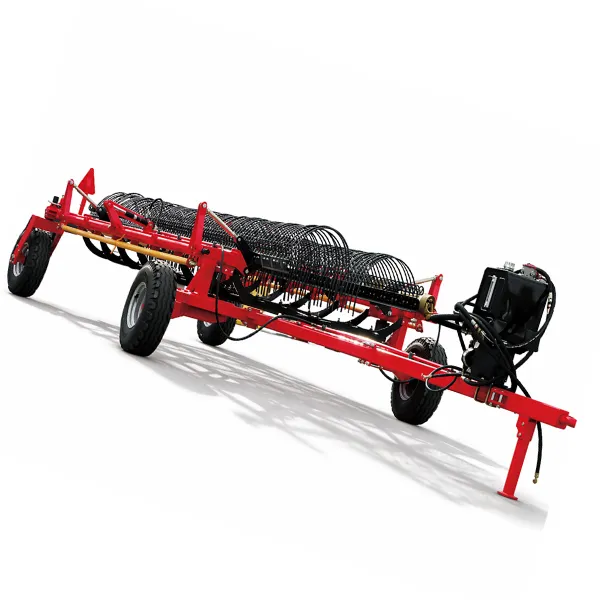
ال مجرفة التبن can run more aggressively on grass than on alfalfa because grass tolerates leaf-shatter risks that alfalfa does not. Wheel rakes work well on grass; finger-wheel rakes work even better; rotary rakes provide the most aggressive consolidation but are usually unnecessary for grass operations. The ناقلة بالات requirements are unchanged from alfalfa operations — wrap protection is the priority for any silage bale regardless of forage species.
Tractor specification can run lower for grass operations than for alfalfa. The lower friction in the chamber means horsepower demand drops by 10–15% for typical grass silage compared to alfalfa silage on the same machine. Operations dedicated to grass silage can often run a 75–85 HP tractor on a mid-tier silage baler that would require 90–100 HP on alfalfa. This power-margin advantage can extend tractor service life and reduce fuel consumption per bale by a measurable 8–12%.
إلى أين نذهب بعد ذلك؟
For operators baling primarily grass silage, the next reading depends on the specific question. The article on alfalfa silage timing covers the comparison-baseline phenology timeline that grass species are measured against. The article on common silage baler problems covers fermentation outcomes that vary by species. The article on optimal moisture covers the moisture window in detail across species.
For specific silage baler models matching grass silage applications, our كتالوج مكابس القش الدائرية ومكابس السيلاج covers compact through commercial configurations suited to grass-based forage systems. The Sacramento application desk can also walk through species-specific settings against your specific stand composition, regional climate, and feeding program.
المحرر: Cxm