Respuesta rápida
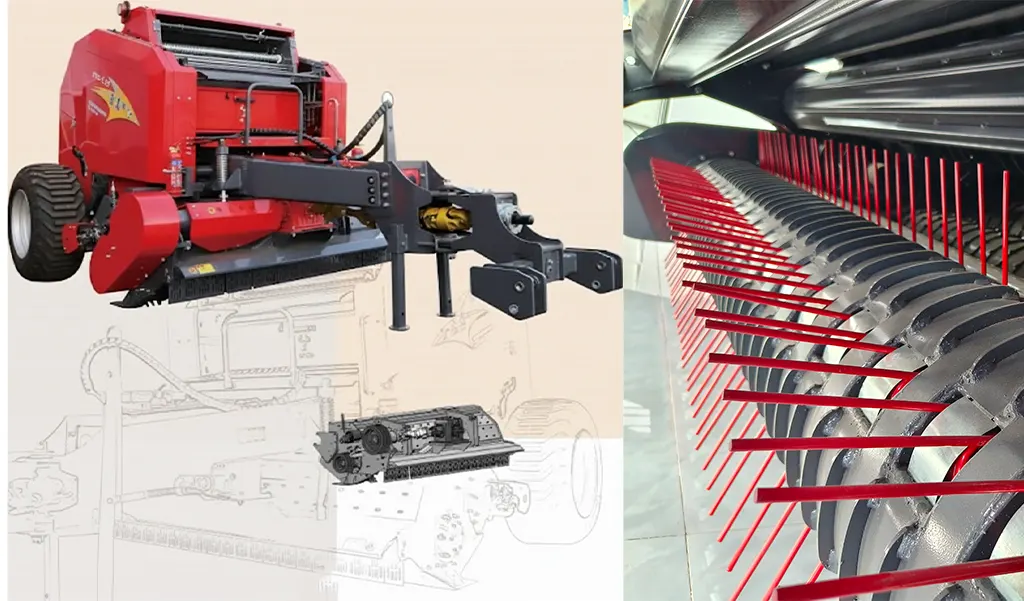
PTO (power take-off) is a rotating shaft at the rear of the tractor that transfers engine power to attached implements through a splined driveline. Most hay equipment operates at 540 RPM PTO speed, which requires the tractor engine to run at approximately 1,900 to 2,100 RPM. The PTO delivers 75 to 85 percent of the tractor’s rated engine horsepower as usable implement-driving power — meaning a 75 HP tractor delivers approximately 56 to 64 HP at the PTO shaft. Every hay implement has a minimum PTO HP requirement, and the empacadora redonda is the most demanding implement in the chain at 35 to 65 PTO HP for dry hay and 50 to 100 PTO HP for a empacadora de ensilaje with a knife system.
How PTO Works: The Mechanical Power Chain From Engine to Implement
The PTO system is a mechanical power delivery chain with 5 components connected in sequence. Understanding each component explains why PTO speed must be maintained, why mismatched drivelines fail, and why the implement’s caja de cambios is the critical transition point between tractor power and implement function.
The 5-Component PTO Power Chain
- 1. Tractor engine — generates the raw horsepower at a governed RPM (typically 2,200 to 2,500 RPM at full throttle). This is the number printed on the hood.
- 2. Tractor transmission and PTO clutch — routes a portion of the engine power to the PTO output shaft at the rear of the tractor. The PTO clutch engages and disengages the power flow independently of the tractor’s ground-drive transmission, allowing the implement to be powered while the tractor is stationary. The transmission and hydraulic systems consume 15 to 25 percent of the engine power before it reaches the PTO shaft — this is the “parasitic loss” that explains why PTO HP is always lower than engine HP.
- 3. PTO stub shaft — the 6-spline or 21-spline shaft protruding from the rear of the tractor, rotating at either 540 or 1,000 RPM. This is the physical connection point where the tractor’s power meets the implement’s driveline.
- 4. PTO driveline (cardan shaft) — a telescoping, two-piece shaft with universal joints at each end that connects the tractor’s PTO stub to the implement’s input shaft. The universal joints allow the driveline to flex as the tractor and implement move independently over uneven ground. The telescoping section allows the driveline to extend and compress as the distance between the tractor and the implement changes during turns and over terrain.
- 5. Implement gearbox — converts the PTO shaft rotation speed and direction into the specific speed and direction required by the implement’s working components. A disc mower gearbox converts 540 RPM input into 3,000+ RPM at the cutting discs. A round baler gearbox converts 540 RPM input into the belt or roller speed that rotates the bale chamber. The gearbox is the most mechanically stressed component in the PTO chain because it handles the full torque load while changing the speed ratio, which is why gearbox quality and maintenance determine the long-term reliability of every PTO-driven implement.
540 RPM vs 1,000 RPM: Which Speed Standard Your Hay Equipment Needs
The PTO industry uses two standardized rotation speeds: 540 RPM and 1,000 RPM. The speed is physically encoded in the PTO stub shaft itself — a 540 RPM shaft has 6 splines and a 1-3/8 inch diameter, while a 1,000 RPM shaft has 21 splines and a 1-3/8 inch diameter (or 20 splines at 1-3/4 inch on larger tractors). You cannot connect a 540 RPM implement to a 1,000 RPM stub without a speed adapter, and doing so without the adapter would spin the implement at nearly twice its designed speed, destroying bearings, gears, and potentially the operator.
| Characteristic | 540 RPM PTO | 1,000 RPM PTO |
|---|---|---|
| Spline count | 6 splines, 1-3/8″ diameter | 21 splines, 1-3/8″ (or 20 at 1-3/4″) |
| Tractor engine RPM to achieve PTO speed | 1,900 to 2,100 | 2,100 to 2,400 |
| Typical tractor size | 20 to 120 HP (compact to utility) | 80 to 400+ HP (utility to large) |
| Hay equipment that uses it | All mowers, tedders, rakes, round balers, small square balers | Large mower-conditioners, large square balers, some forage harvesters |
| Torque characteristic | Higher torque per RPM (slower speed = more twist force) | Lower torque per RPM but higher power throughput |
For the vast majority of hay operations — including every disc mower, tedder, finger wheel rake, and empacadora redonda in the America Ever-Power product line — the PTO speed standard is 540 RPM. This includes both dry-hay round balers and silage-grade forage balers. If your tractor has a 540/1,000 dual-speed PTO (common on utility tractors above 60 HP), ensure the PTO is set to 540 before connecting any hay implement. Running a 540 RPM baler at 1,000 RPM will destroy the gearbox within seconds.
PTO Horsepower Requirements for Every Hay Implement
Each implement in the hay chain has a specific PTO HP demand that the tractor must meet with reserve power. Operating an implement at its exact minimum PTO HP rating leaves zero margin for heavy windrows, hillside loads, or slugs of material that momentarily spike the power demand. The practical rule is to size the tractor at 20 to 30 percent above the heaviest implement’s PTO HP rating so the engine operates at 70 to 80 percent of its capacity during normal use, with reserve for peak loads.
| Implementar | PTO HP Required |
What the PTO Drives |
|---|---|---|
| Disc mower (7 to 9 ft) | 30 to 55 | Spins cutting discs at 3,000+ RPM through the mower gearbox |
| Rotary tedder (4 to 8 basket) | 15 to 35 | Spins tedder baskets at 200 to 350 RPM through the central gearbox |
| rastrillo de rueda dentada | 0 (ground-driven) | No PTO needed — wheels spin from ground contact |
| Round baler (dry hay) | 35 to 65 | Drives pickup, belts or rollers, net wrap system, and hydraulic pump |
| Silage baler (wet, + knives) | 50 to 100 | Same as dry baler plus knife bank (10 to 15 additional PTO HP) |
| Empacadora cuadrada pequeña | 25 to 45 | Drives plunger, knotters, pickup, and feeder through a flywheel |
The silage baler row explains why producers who plan to make baleage need a larger tractor than producers who only make dry hay. A dry-hay round baler on the same 4×5 frame requires 45 to 55 PTO HP. The same frame configured as a empacadora de forraje for high-moisture baleage requires 55 to 70 PTO HP because the wet crop is 40 to 80 percent heavier per cubic foot than dry hay, demanding more torque to compress inside the chamber. If the empacadora de ensilaje includes a pre-cut knife system for chopping the stems during bale formation, the knives consume an additional 10 to 15 PTO HP, pushing the total requirement to 65 to 85 PTO HP. An operator who buys a 55 engine HP tractor for dry hay and later upgrades to a silage baler with knives will discover the tractor is 15 to 25 HP short for the baleage operation.
PTO Safety: 6 Non-Negotiable Rules That Prevent Deadly Accidents
The PTO shaft is the most dangerous component on any farm. It rotates at 540 RPM — 9 turns per second — with enough torque to wrap a human body around the shaft in less than one second. PTO entanglement is the leading cause of farm machinery fatalities in the United States, killing approximately 40 to 60 people per year according to NIOSH data. Every one of those deaths was preventable by following these 6 rules without exception.
- Never step over a rotating PTO shaft. If your foot catches the shaft, the rotation wraps you around it before your brain registers what happened. Walk around the tractor, never between the tractor and the implement while the PTO is engaged.
- Always keep the PTO shield in place. The plastic or metal shield that covers the rotating driveline between the tractor and the implement exists to prevent contact with the spinning shaft. Many farmers remove the shield because it is inconvenient during hookup. Every shield removed is a death waiting to happen. If the shield is damaged, replace it before the next use.
- Disengage the PTO before dismounting the tractor. No adjustment, inspection, or unclogging should ever be performed while the PTO is spinning. Shut off the PTO, wait for full stop, set the parking brake, and remove the key before leaving the seat.
- Wear close-fitting clothing. Loose sleeves, untucked shirts, hoodie strings, and long hair are entanglement hazards that the spinning shaft can grab. Tuck everything in, tie hair back, and remove any dangling jewelry before operating PTO equipment.
- Never allow passengers or bystanders near the operating equipment. Children, helpers, and observers should stay at least 30 feet from any tractor with an engaged PTO. The bystander cannot see the spinning shaft under the shield and may walk into the entanglement zone without realizing the danger.
- Shut down if the PTO makes unusual noise. A clicking, grinding, or vibrating PTO driveline indicates a failing universal joint, a worn spline, or a loose coupling. Any of these can cause the driveline to separate under load and whip freely at 540 RPM — a rotating steel tube that will strike anything within its radius with lethal force. Stop the tractor, disengage the PTO, and inspect before continuing.
PTO Driveline Maintenance: 5 Checks That Prevent Mid-Season Breakdowns
- Grease the universal joints every 8 to 10 hours of PTO operation. Each U-joint has a grease zerk that must be pumped until fresh grease appears at all 4 bearing caps. A dry U-joint fails in 20 to 40 hours, and the failure happens under full load when the torque demand is highest — typically in the middle of baling a heavy windrow on the hottest day of the season.
- Inspect the slip clutch annually. The overload slip clutch on the implement end of the driveline protects the gearbox from shock loads (plugged pickup, jammed chamber). If the clutch plates are worn below the manufacturer’s minimum thickness, the clutch will not release during an overload, transferring the full shock to the gearbox and potentially breaking a $400 to $1,200 gear set. Slip clutch plate replacement costs $50 to $150 and takes 30 minutes.
- Check the driveline length and telescoping action. The telescoping section must slide freely without binding. If the inner and outer tubes are corroded or bent, the driveline cannot accommodate the distance changes during operation, creating binding forces that overload the U-joints and the PTO stub bearings. Clean and grease the telescoping surfaces annually.
- Verify the shield is intact and rotates freely. The safety shield must spin independently of the driveline shaft inside it. If the shield is cracked, missing, or seized to the shaft (from rust or debris), it becomes an entanglement hazard rather than a safety device. Replace any damaged shield before operation.
- Confirm the driveline angle does not exceed 25 degrees. At operating height, the PTO driveline should form a relatively straight line between the tractor stub and the implement input. An angle greater than 25 degrees at either U-joint accelerates bearing wear by 300 to 500 percent and causes vibration that fatigues the shaft. Adjust the implement hitch height or the tractor drawbar position to minimize the operating angle. A driveline running at 15 degrees or less delivers the smoothest power transfer and the longest component life.
Why PTO Matters More for a Silage Baler Than Any Other Hay Implement
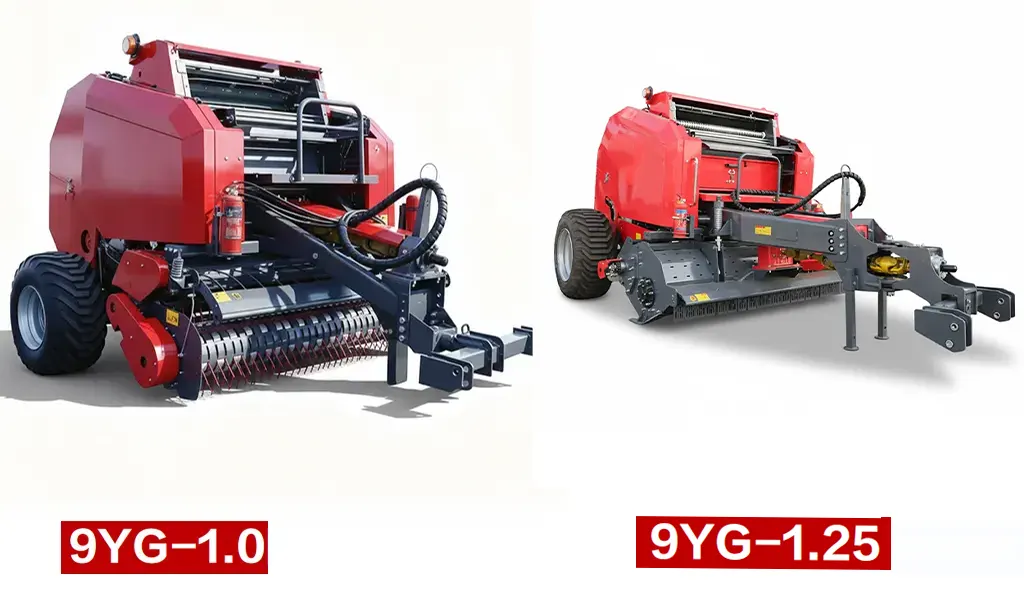
Every hay implement requires PTO power, but the empacadora de ensilaje places the highest sustained demand on the PTO system because it combines 3 power-consuming functions simultaneously: the pickup and feed system lifts heavy, wet forage into the chamber; the belt or roller system compresses that wet forage under maximum hydraulic pressure at the highest density setting; and the optional knife bank shears the stems against 14 to 25 stationary counter-knives at full bale rotation speed. A dry-hay round baler performing the first two functions on lightweight, dry forage draws 45 to 55 PTO HP. A empacadora de forraje performing all three functions on forage that weighs 40 to 80 percent more per cubic foot draws 65 to 85 PTO HP — a 40 to 55 percent increase in sustained power demand from the same physical machine frame.
This sustained high-load operation stresses every component in the PTO chain more aggressively than dry-hay baling. The U-joints run hotter. The slip clutch engages more frequently. The gearbox gears carry higher torque loads for longer periods. The tractor engine operates at a higher percentage of its rated capacity for the entire baling session. This is why producers who switch from dry hay to baleage production with a silage baler often discover that their PTO driveline, gearbox, and tractor capacity — all of which were adequate for dry hay — need upgrading to handle the heavier sustained load. Sizing the PTO system for the silage baler at the time of initial equipment purchase avoids the cost and frustration of mid-season upgrades when the original components begin failing under the baleage workload.
What Happens When PTO Speed Drops Below 540 RPM Under Load
When the tractor engine cannot maintain the governed RPM needed to deliver 540 at the PTO shaft — because the implement demand exceeds the available power — the PTO speed drops below 540 RPM. On a round baler, this speed drop reduces belt or roller rotation speed, which means the bale chamber turns more slowly and the forage is compressed unevenly. The result is a soft, lopsided bale that does not hold its round shape, sheds net wrap during handling, and stores poorly outdoors because the loose spots absorb rain faster than the tight spots. On a disc mower, a PTO speed drop slows the cutting discs below their designed tip speed, causing ragged, torn cuts instead of clean shears. The torn stems dry 20 to 30 percent slower than cleanly cut stems because the ragged tissue surface seals less effectively against moisture loss. In both cases, the solution is a tractor with enough reserve PTO HP that the engine never drops below the governed speed under peak load — a planning decision made at the time of purchase, not a field adjustment made during a crisis.
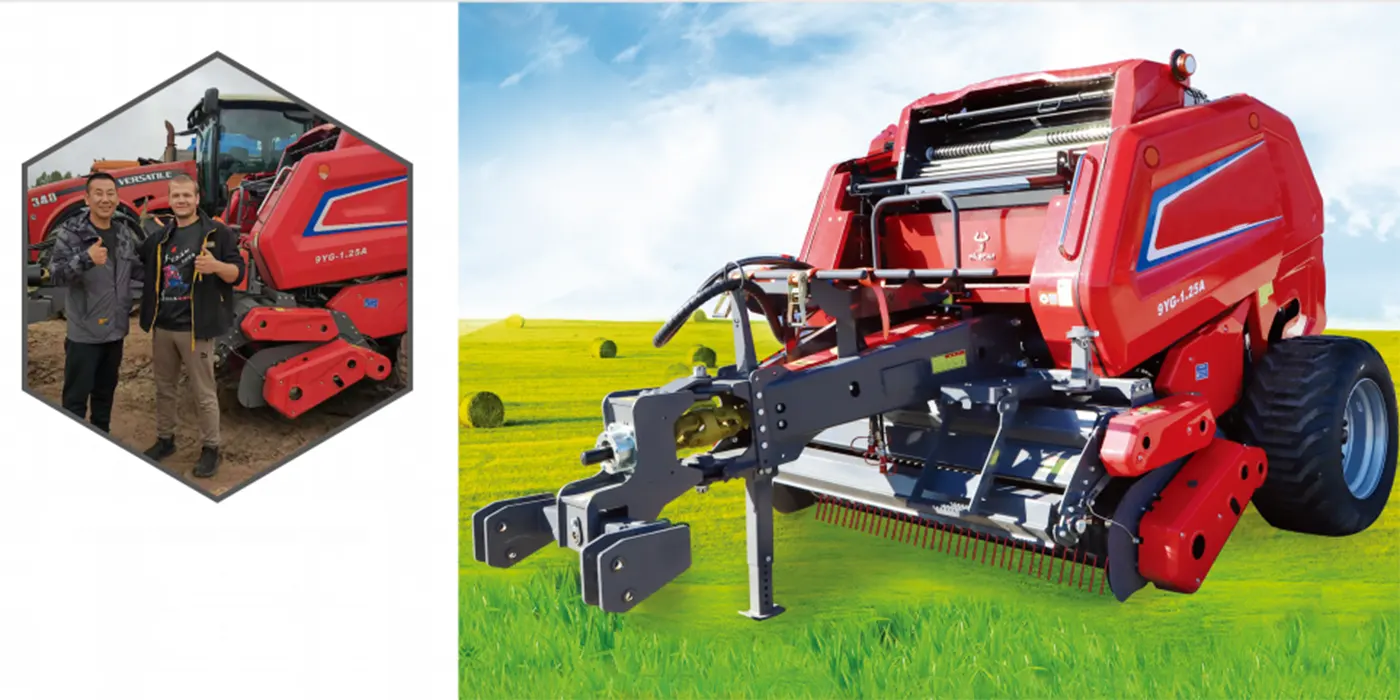
PTO-Matched Equipment for Reliable Power Delivery
America Ever-Power disc mowers, tedders, rakes, and round balers are all designed for 540 RPM PTO at clearly specified HP requirements, so you can match every implement to your tractor without guessing. Our silage-grade round balers include heavy-duty gearboxes and Category 6 drivelines rated for the sustained high-torque loads of baleage production. Tell us your tractor model and we confirm compatibility. Dallas, TX parts depot for 3-day delivery.
Editor: Cxm