9YQ-1950 Round Baler — Mid-Size Roll-Drum Round Baler
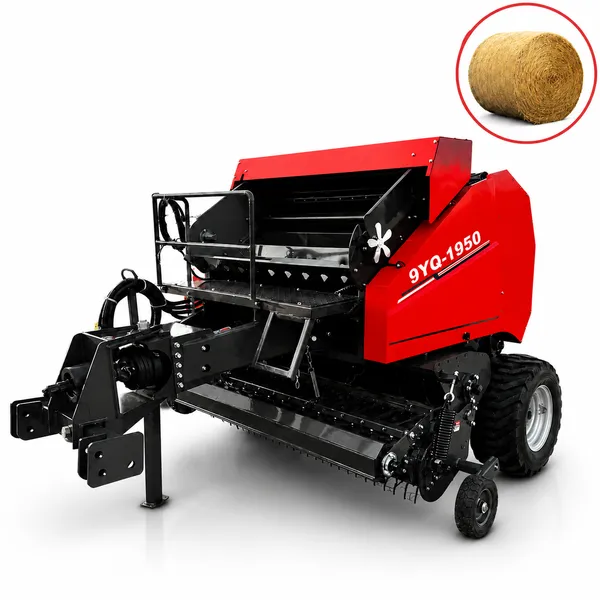
The 9YQ-1950 is the mid-size workhorse in the America Ever-Power round baler lineup — an 18-roller roll-drum machine with a Φ39-inch (1,000 mm) compression chamber, a 76.8-inch (1,950 mm) spring-tooth pickup, and automatic net wrapping. At a power range of 49 to 148 HP and a machine weight of 5,258 lb (2,385 kg), it pairs with the widest range of mid-size utility tractors on the market and delivers commercial-quality roll-drum bales on operations that do not need — and do not want to pay for — the flagship 9YG-2.2’s 201 HP requirement.
- ▶ 18 hardened-steel rollers at Φ190 mm — same roller count as the flagship 9YG-2.2
- ▶ Φ39 in (1,000 mm) chamber — produces a dense 4×4 standard round bale
- ▶ Shift fork + screw continuous feeding — smooth intake on variable windrows
- ▶ Automatic net wrapping — full bale coverage, hands-free wrap cycle
- ▶ 49–148 HP range — compatible with most mid-size utility tractors already on farm
America Ever-Power · Round Baler
Φ39 in Chamber
49 – 148 HP
Auto Net Wrap
5,258 lb · 2,385 kg
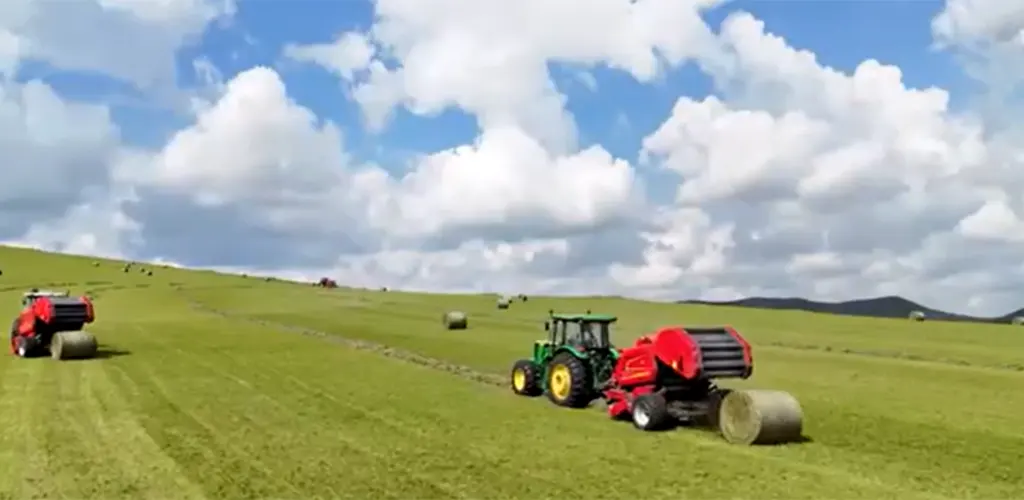
The Mid-Size Round Baler Case — Why 49 to 148 HP Covers More US Operations Than Any Other Power Range
The tractor fleet on most US and Canadian mid-size farms clusters between 60 and 120 HP — the range that handles row-crop cultivation, loader work, and general field tasks without the fuel cost and capital expense of 150 to 200 HP equipment. The 9YQ-1950 is built specifically for this tractor class. Its 49 to 148 HP operating range means a 65 HP utility tractor runs it at 75 percent of rated capacity — the engine is loaded but not overworked, leaving headroom for dense windrows and hillside conditions without lugging. A 100 HP row-crop tractor runs it at 50 to 60 percent capacity, which means sustained fast ground speeds, minimal heat buildup, and exceptional durability over the long seasons that commercial hay producers demand.
The Φ1,000 mm (39 in) compression chamber produces the standard 4×4 round bale format — the most widely traded bale dimension in North American hay markets. A 4×4 bale at the density the 9YQ-1950's 18-roller chamber delivers typically weighs 800 to 1,100 lb depending on crop type and moisture, which is within the handling range of a standard skid steer bucket, a front-end loader, or a bale spear on a 65+ HP tractor. The 4×4 format is accepted by cow-calf operations, horse operations feeding large round bales, and baleage producers wrapping with a 5-foot-diameter wrapper — the broadest market acceptance of any round bale size. For a round baler that needs to serve multiple customers or multiple livestock species, the 9YQ-1950's Φ39-inch format covers more bases than either the smaller 9YK-870 or the larger-footprint 9YG-2.2.
9YQ-1950 Round Baler — Technical Specifications
| Parameter | Specification |
|---|---|
| Model | 9YQ-1950 Round Baler |
| Hitching Method | Trailed |
| Pickup Width | 1,950 mm (76.8 in) |
| Pickup Structure | Spring Tooth Type |
| Feeder Structure | Shift Fork Feeding + Screw Continuous Feeding Mechanism |
| Chamber Type | Roll Drum (fixed chamber) |
| Chamber Width | 1,250 mm (49.2 in) |
| Chamber Diameter | Φ1,000 mm (Φ39.4 in) |
| Qty of Press Rollers | 18 pcs |
| Press Roller Diameter | Φ190 mm (7.5 in) |
| Wrapping Method | Automatic Net Wrapping |
| Matching Power Range | 36.7 – 110.3 kW (49 – 148 HP) |
| PTO Speed | 540 RPM |
| Overall Dimensions (L×W×H) | 3,200×2,500×2,010 mm (126×98×79 in) |
| Machine Weight | 2,385 kg (5,258 lb) |
9YQ-1950 Round Baler — Engineering Features That Matter on a Mid-Size Operation
The 9YQ-1950 shares the roll-drum chamber architecture and 18-roller compression philosophy of the flagship 9YG-2.2, scaled to a power and weight class that suits the 50 to 200 acre operation. Each of the four core features is a direct response to what mid-size producers actually encounter in the field.
◆ 18-Roller Roll-Drum Chamber — Commercial Density at Mid-Size Scale
The 9YQ-1950 runs the same 18-roller compression count as the flagship 9YG-2.2, at a roller diameter of Φ190 mm (7.5 in) in a Φ1,000 mm (39 in) chamber. Eighteen rollers at this spacing create an effective compression ring that contacts the bale surface every 20 degrees around the circumference — close enough to eliminate the soft spots between contact points that fewer-roller designs produce. The result is a bale with measurably more uniform density than 12 or 14-roller roll-drum balers, and without the belt-tension inconsistency that limits belt-type balers in the same size class. For a mid-size round baler, 18 rollers at Φ190 mm is the design that delivers the density performance of a commercial machine in a package that fits a 65 to 100 HP tractor.
- ✓ 18 rollers — same count as flagship 9YG-2.2, in a smaller chamber diameter
- ✓ Uniform radial compression — no belt tension variation, no soft spots
- ✓ Roller service life 50,000+ bales — no belt replacement cost
◆ Shift Fork + Screw Continuous Feeding — Two Mechanisms, One Smooth Feed Rate
The 9YQ-1950 uses a dual-mechanism feeder: a shift fork system at the pickup-to-feeder transition that handles the initial collection and delivers material into the screw, followed by a continuous screw auger that meters forage into the compression chamber at a steady rate. The shift fork manages the variable density and bulk that comes off a real windrow — heavier sections, light sections, the gaps between windrow rows on headland turns — and the screw provides the steady, metered flow that the roll-drum chamber needs for consistent bale density. This combination is what allows the 9YQ-1950 to operate at 4 to 6 mph on typical mid-density windrows without the plug stops that a single-mechanism direct-feed design experiences when windrow weight varies.
- ✓ Shift fork handles variable windrow density at the pickup stage
- ✓ Screw continuous feeder meters forage evenly across the 49.2 in chamber width
- ✓ Combination reduces plug stops on the uneven windrows typical of mid-size operations
◆ Automatic Net Wrapping — Every Bale Protected, No Manual Intervention
The 9YQ-1950 comes standard with automatic net wrapping — the feature that separates a bale that can be stored outdoors for 12 months from one that begins deteriorating after the first rain. The automatic mechanism applies the programmed number of net wrap revolutions when the bale reaches the target diameter, cuts the net cleanly, and signals the operator that the tailgate is ready to open. No manual threading of net across the bale face, no timing the wrap by counting, no bales that come out with insufficient coverage because the operator was distracted. Every bale, every time, the same coverage. On a 50 to 200 acre operation where outdoor storage is the default because barn space is limited, net wrap is not optional — it is the difference between 10 to 15 percent outdoor storage loss and 25 to 35 percent loss, which on 200 bales at $75 each is $2,250 to $4,500 of hay value per year.
- ✓ Automatic cycle — no operator input between bale completion and tailgate open signal
- ✓ Consistent wrap count — eliminates under-wrapping and the outdoor storage loss it causes
- ✓ Compatible with standard 48 to 51 in net wrap rolls from any major supplier
◆ 1,950 mm Spring-Tooth Pickup — Wide Enough for Merged Windrows, Light Enough for Mid-HP Tractors
At 76.8 inches, the 9YQ-1950's pickup is wide enough to collect a merged 2 to 3 swath windrow in a single pass without leaving forage on the ground between passes. The spring-tooth tine design gives each tine individual flexibility to deflect on contact with the ground, which reduces soil contamination, protects tine tips from rock damage, and maintains collection efficiency on terrain that would snap or bend the rigid fingers of fixed-tooth pickups. The 1,950 mm width strikes the right balance for mid-size operations: wide enough to handle the production windrows from a 7 to 9 foot disc mower, without the added weight and PTO load of the 9YG-2.2's 2,200 mm pickup that would exceed the drive capacity of a 65 HP tractor.
- ✓ 76.8 in width — full coverage of 2 to 3 merged swaths in one pass
- ✓ Spring-tooth flex — protects tines on uneven or stony terrain
- ✓ Calibrated to the PTO load range of 49 to 148 HP tractors
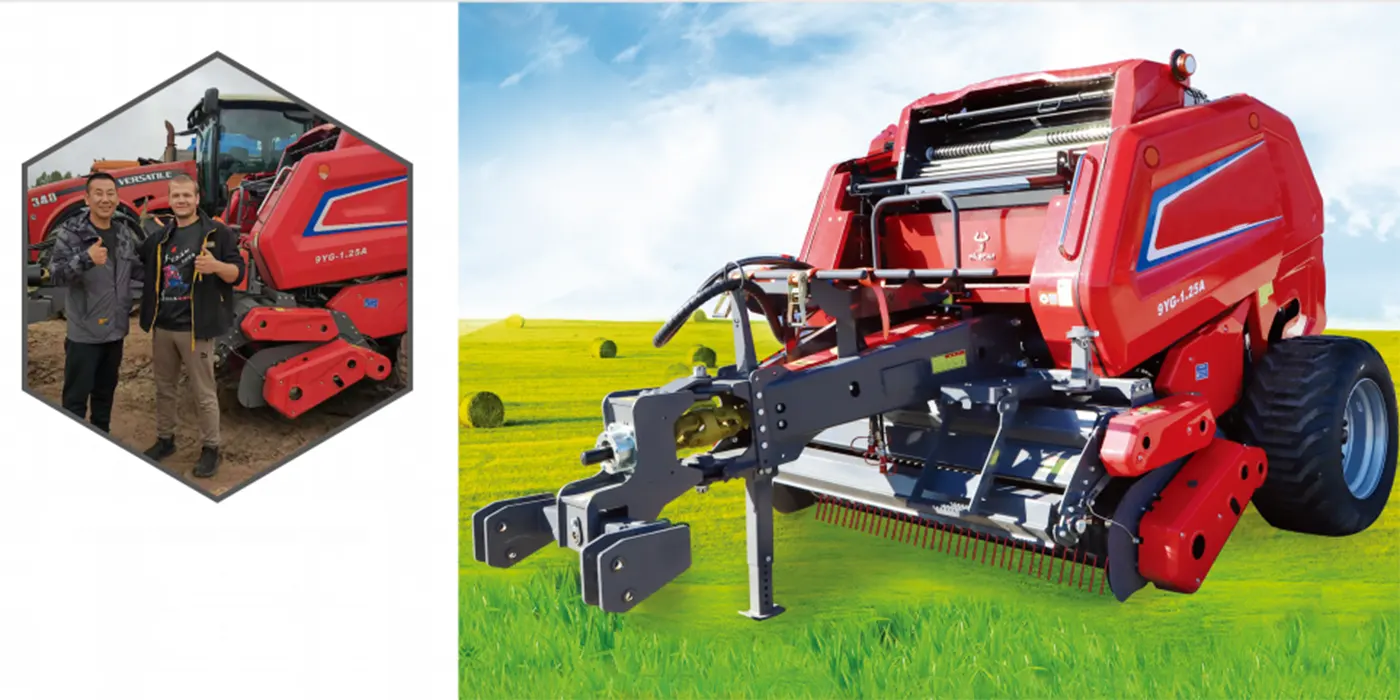
Who the 9YQ-1950 Round Baler Is Built For — Three Operation Types That Fit This Machine
50–200 Acre Cow-Calf and Beef Operations
The core market for the 9YQ-1950. A 100-cow operation consuming 800 to 1,200 round bales per year — at 2 to 4 cuttings from 60 to 120 acres — matches the 9YQ-1950's throughput and size class perfectly. The 4×4 bale format is the standard feeding format for cow-calf operations using a ring feeder, a bale unroller, or a spike-and-tip feeder, and the 5,258 lb machine weight is within the towing capacity of the 65 to 100 HP tractors that most operations this size already run.
Horse Operations and Premium Hay Producers
Horse operations that feed large round bales in ring feeders or slow-feed nets increasingly specify the 4×4 format — large enough to last 2 to 4 days per horse in a small group, small enough for a round-bale unroller or feeding fork to manage without heavy equipment. The 9YQ-1950's roll-drum chamber produces the dense, consistently round bales that unroll cleanly on a ring feeder, and the net wrap standard protects the alfalfa and orchard grass quality that the horse market demands.
Entry-Level Baleage and Silage Production
The 9YQ-1950 handles high-moisture forage at 40 to 55 percent moisture for baleage production. Paired with a downstream bale wrapper, it functions as a mid-size silage baler — producing wrapped baleage bales that ferment to pH 4.0 to 4.5 and store outdoors for 12 to 18 months. For dairy operations and intensive beef producers who want the nutritional advantages of baleage without the capital cost of a full pit-silage system, the 9YQ-1950 with a wrapper is the entry point into fermented forage production at a price point accessible to 50 to 200 acre operations.
Choosing the Right Round Baler Size — Where the 9YQ-1950 Sits in the America Ever-Power Lineup
Round baler selection is fundamentally about matching three variables: bale size to the intended feeding and handling system, PTO HP requirement to the tractor already on the farm, and throughput to the acreage being baled. The America Ever-Power lineup covers the full range from the 9YK-870 mini baler at 25 HP to the 9YG-2.2 flagship at 201 HP, and the 9YQ-1950 occupies the sweet spot for the largest segment of the North American hay-producing population.
| Model | Chamber Ø | Pickup | HP Range | Wrapping | Target Acreage |
|---|---|---|---|---|---|
| 9YK-870 | Φ630 mm / 25" | 800 mm / 31" | 25–50 HP | Rope | Under 20 acres |
| 9YQ-1250 | Φ800 mm / 31" | 1,250 mm / 49" | 54–80 HP | Rope | 20–80 acres |
| 9YQ-1950 ★ | Φ1,000 mm / 39" | 1,950 mm / 77" | 49–148 HP | Net Auto | 50–200 acres |
| 9YQ-2300 | Φ1,000 mm / 39" | 2,300 mm / 91" | 79–178 HP | Net Auto | 100–400 acres |
| 9YG-2.2 | Φ1,220 mm / 48" | 2,200 mm / 87" | 148–201 HP | Net Auto | 200+ acres · commercial |
The 9YQ-1950 and the 9YQ-2300 share the same Φ1,000 mm chamber diameter and 18-roller count — the bale produced is the same format and the same density. The difference is pickup width (76.8 in vs 90.6 in) and the PTO HP range. An operation with a 100 HP tractor and 80 to 150 acres would run the 9YQ-1950 at 65 to 85 percent capacity. The same acreage with a 130+ HP tractor and denser windrows from high-production alfalfa would benefit from the 9YQ-2300's wider pickup and higher HP ceiling. If your acreage and tractor are both on the upper edge of the 9YQ-1950's range, the 9YQ-2300 is worth the step up. If you are at 50 to 120 acres with a 65 to 100 HP tractor, the 9YQ-1950 is sized exactly right for how you work. Operations that also need the premium horse-hay or retail market alongside bulk round-bale production can pair the 9YQ-1950 with any model from the square baler lineup on the same tractor.
Using the 9YQ-1950 as a Silage Baler — Baleage Production at Mid-Size Scale
The 9YQ-1950 is capable of producing baleage — high-moisture fermented round bales — when paired with a downstream bale wrapper. As a silage baler for high-moisture forage, the 9YQ-1950 handles forage wilted to 40 to 55 percent moisture after 4 to 10 hours of field drying, compresses it into a dense round bale, and applies net wrap for structural integrity during transport to the wrapper. The wrapper then seals the bale in 6 to 8 layers of stretch polyethylene film within 2 to 4 hours of baling, triggering the lactic acid fermentation that preserves the forage for 12 to 18 months outdoors.
For a 50 to 150 acre forage operation supplying one or two dairies or a grass-fed beef program, the 9YQ-1950 as a forage baler with a matched wrapper captures the nutritional advantages of fermented forage — 88 to 95 percent crude protein retention vs 82 to 92 percent for dry hay — without the capital cost of a pit-silage system, which requires a concrete bunker, a forage chopper, and a fleet of trucks. The mid-size silage baler approach produces the same high-quality fermented forage from the same fields at a fraction of the infrastructure investment. Dairy nutritionists who specify baleage for high-producing herds pay a $20 to $50 per ton premium for fermented round bales over dry hay — a premium that begins paying back the wrapper investment within the first season on a 200+ bale baleage program.
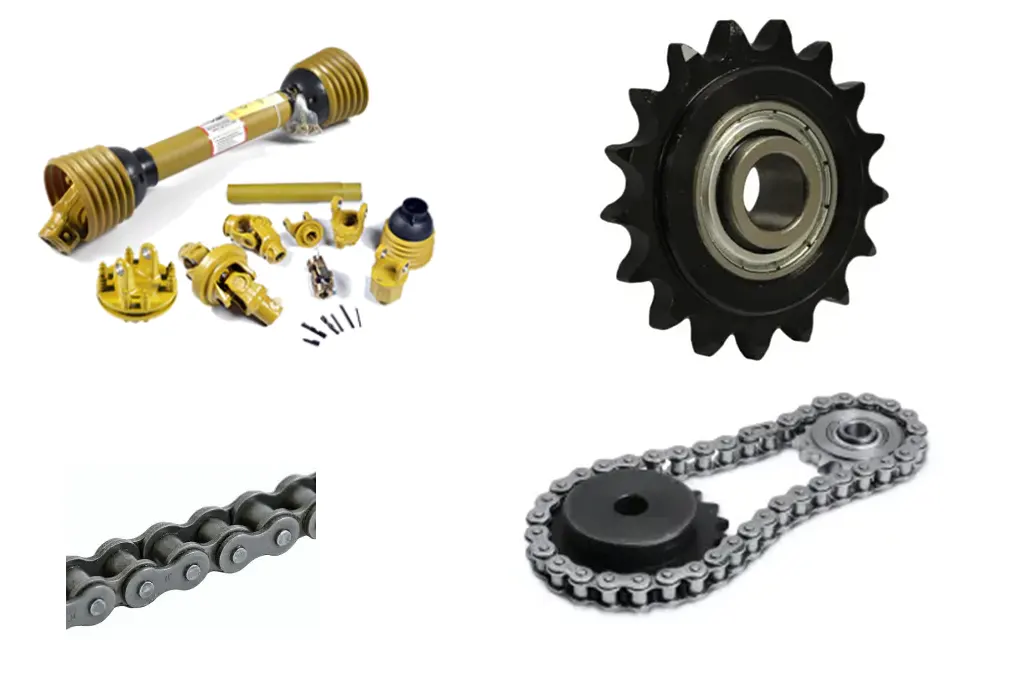
Tractor Requirements and Maintenance Schedule for the 9YQ-1950 Round Baler
The 9YQ-1950 requires a minimum of 49 HP (36.7 kW) at the PTO shaft and a 540 RPM PTO. The practical sweet spot is a 65 to 100 HP utility tractor with MFWD, two rear hydraulic remotes (pickup lift and density control), and a drawbar towing rating of at least 7,000 lb. At 5,258 lb machine weight plus a formed bale of 800 to 1,100 lb, the combined towing load is within the drawbar rating of most 65 HP MFWD tractors without additional ballast on flat terrain. On slopes above 8 percent, a rear weight package on the tractor improves stability during turns with a full bale in the chamber.
- ▶ Before each session: Check net wrap supply · grease PTO shaft universal joints (2–3 pumps) · verify pickup tine condition
- ▶ Every 50 hours: Inspect roller surfaces for wear or flat spots · check drive chain tension · verify net wrap cutter blade sharpness
- ▶ After baleage sessions: Clean roller surfaces of fermented crop residue · inspect screw feeder flights for wear from higher-moisture crop
- ▶ End of season: Replace gearbox oil · inspect clutch plate thickness · store with tailgate open and chamber empty
Complete the hay equipment chain with America Ever-Power implements that share 540 RPM PTO compatibility: a disc mower for cutting, a finger wheel rake for windrow formation, and a round baler that matches your tractor and your acreage. For gearbox replacement parts, the agricultural gearbox network supplies OEM-spec components with 3-day delivery from the Dallas, TX depot.
Get a Quote for the 9YQ-1950 Round Baler
Tell us your tractor model and HP, total annual acreage, and whether you intend to produce dry hay only or add baleage capability. We confirm PTO and tractor compatibility, recommend the right net wrap setting, and provide a delivered price to your farm. Parts depot in Dallas, TX — 3-day delivery across the continental US and Canada.
Related products
-
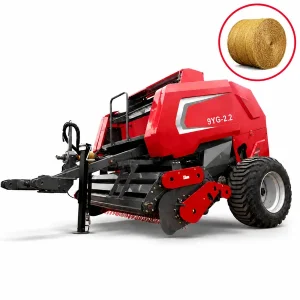
9YG-2.2 Large Roll-Drum Round Baler
-
9YG-1.25A Round Baler – Professional 4×5 Silage Baler Built for American Farms
-
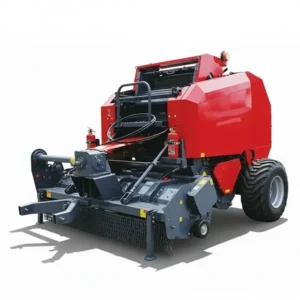
Round Baler – 9YG-1.25 Silage Baler for Efficient Forage Baling
-
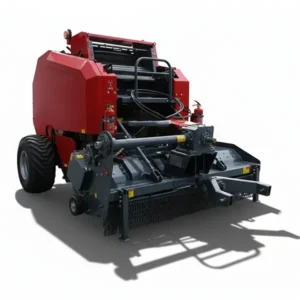
9YG-1.0C Round Baler | Silage Baler for US Farms
-
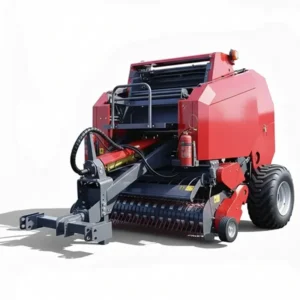
9YG-1.0 Round Baler – Silage Baler for Hay and Forage Harvesting
-
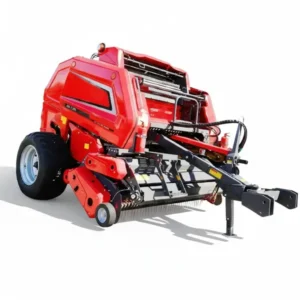
Silage Baler – 9YG-2.24D Round Baler (S9000 Ultra) | Hay and Forage Baling for U.S. Farmers
-
9YG-2.24D S9000 Round Baler (Classic) with Spring Tooth Pickup | High-Density Hay & Silage Baler
-
Silage Baler – 9YG-2.24D S9000 Round Baler | Forage Baler with Spring-Tooth Pickup