Quick Answer
Price hay using two anchors: a cost-plus floor (your production cost plus a 30 to 50 percent margin) and a market-rate ceiling (what comparable hay sells for in your region). Set your asking price between the two, adjusted upward for quality-test documentation, delivery service, and winter-season demand. Typical 2024 to 2026 prices: $4 to $10 per small square, $40 to $120 per 4×5 round bale, and $60 to $150 per wrapped baleage bale. The widest pricing gap is between untested commodity hay and lab-tested, quality-graded hay — a gap of $30 to $80 per ton that costs the producer only $20 per lot to capture.
2 Pricing Methods: Cost-Plus Floor vs Market-Rate Ceiling
Every pricing decision starts with understanding your two boundaries. The cost-plus floor is the minimum price you can charge without losing money. The market-rate ceiling is the maximum price the buyer will pay before choosing an alternative supplier. Your profit lives in the space between these two numbers.
Method 1: Cost-Plus Pricing (Your Floor)
Add up all 7 production costs per bale (fuel, wrap, depreciation, repairs, labor, fertilizer, land), then add a profit margin of 30 to 50 percent. This is the price below which you lose money and should not sell.
Example: Total cost per 4×5 round bale = $30. Margin target = 40%. Floor price = $30 × 1.40 = $42 per bale. You should never sell below $42 regardless of market conditions.
Method 2: Market-Rate Pricing (Your Ceiling)
Research what comparable hay sells for in your market area using USDA Market News hay reports, local auction results, and Craigslist or Facebook Marketplace listings. Match your hay to the closest quality-grade and bale-format combination and set your asking price at or slightly above the comparable sales.
Example: USDA reports 4×5 Good-grade grass round bales at $65 to $85 in your state. Your hay tests Good (155 RFV). Your ceiling is $85 per bale, the top of the comparable range.
If your floor is $42 and your ceiling is $85, your profit zone is $43 wide. Where within that zone you actually set the price depends on the 5 factors discussed below. A producer who prices at the floor leaves $43 per bale on the table. A producer who prices at the ceiling captures the full value that the market assigns to the product. The difference on 500 bales is $21,500 per year in revenue from the same hay, the same mower, and the same round baler.
5 Factors That Determine Where Your Price Falls Within the Profit Zone
Quality Grade (Largest Factor)
The single variable with the greatest impact on price. Supreme-grade alfalfa (185+ RFV, 20+ CP) sells for $240 to $300+ per ton. Utility-grade mixed grass (below 100 RFV, 8% CP) sells for $80 to $120 per ton. That $120 to $180 per ton spread is driven entirely by quality — not by region, not by season, and not by bale format. Quality is proven to the buyer through a $20 lab test report. Without the test, the buyer assumes average quality and pays average price, even if your hay is actually Premium grade. Testing is the highest-ROI pricing decision you can make: $20 invested per lot returns $1,000 to $8,000 per lot in quality-premium revenue.
Bale Format
Small square bales command the highest per-ton price ($200 to $480/ton) because they serve the horse and small-animal market where convenience and hand-handling ability justify the premium. Large round bales sell for the lowest per-ton price ($100 to $220/ton) because they serve the cattle market where cost-per-ton is the primary purchase criterion. Large square bales fall in between ($130 to $260/ton) and serve the commercial dairy and export markets where stackable bale geometry and transport efficiency matter. Baleage from a forage baler commands a per-ton premium of $20 to $50 over equivalent dry round bales because the fermentation preserves higher crude protein and the dairy market values the improved palatability and intake response.
Season and Timing
Hay prices follow a predictable annual cycle. Prices are lowest in June through August when the majority of the annual supply hits the market simultaneously after first and second cuttings. Prices rise 10 to 30 percent from October through March as supply tightens and winter feeding demand drives spot purchases. A producer who stores hay through the summer and sells in winter captures this seasonal premium without any additional production cost — only the carrying cost of storage (which, on gravel with net-wrapped round bales from a good round baler, is 8 to 15 percent dry matter loss over 6 months).
Delivery vs Farm-Gate Pickup
Offering delivery adds $10 to $30 per ton (or $5 to $15 per round bale) to the transaction price, depending on distance. Within 20 miles, charge $5 per bale. From 20 to 50 miles, charge $10 to $15 per bale. Beyond 50 miles, calculate per-mile trucking cost at $3.50 to $5.00 per loaded mile. Many small-acreage buyers (horse owners, hobby farmers) lack the trailer and tractor to pick up round bales and will pay the delivery premium willingly because the alternative is renting equipment they do not own.
Local Supply and Competition
Hay pricing is hyper-local. A county with 50 hay producers and 200 cattle operations has intense competition that pushes prices toward the cost-plus floor. A county with 5 hay producers and 300 horse properties has limited supply that allows pricing near the market-rate ceiling. Survey your competition: count the hay-for-sale listings within 30 miles, note their prices, quality descriptions, and bale formats. If your hay is tested and theirs is not, you own the quality advantage and can price above the average listing.
Regional Price Benchmarks: What Hay Sells For Across the US
| Region | Grass Round ($/bale) |
Alfalfa Round ($/bale) |
Small Square ($/bale) |
Baleage ($/bale) |
|---|---|---|---|---|
| Southern Great Plains (TX, OK) | $40 to $70 | $80 to $130 | $5 to $8 | $60 to $100 |
| Midwest (MO, KY, TN, OH, IN) | $50 to $85 | $90 to $140 | $5 to $9 | $70 to $120 |
| Southeast (GA, AL, SC, NC) | $45 to $75 | — | $6 to $10 | $65 to $110 |
| Northeast (PA, NY, VT, ME) | $55 to $95 | $100 to $160 | $6 to $12 | $75 to $140 |
| Mountain / Pacific NW (ID, MT, OR) | $50 to $80 | $100 to $170 | $7 to $12 | $70 to $130 |
The baleage column consistently commands a $15 to $30 per bale premium over equivalent grass round bales in every region. This premium reflects the higher feed value that fermentation preserves, the improved palatability that dairy nutritionists value, and the production cost of the stretch film ($3.50 to $5.50 per bale) that the buyer expects to be embedded in the price. For a producer with a silage baler selling 200 baleage bales per year, that $15 to $30 per bale premium over dry round bales generates $3,000 to $6,000 of additional annual revenue from the same acreage — a premium that more than covers the annual depreciation on the silage baler and wrapper.
The Seasonal Price Curve: When to Sell for Maximum Revenue
Hay prices are not static throughout the year. They follow a predictable cycle driven by supply gluts after each cutting and demand spikes during winter feeding. Understanding this curve allows producers to time their sales for maximum revenue.
Annual Hay Price Cycle
- June to August (Price Trough): All producers are baling and selling simultaneously. Supply floods the market. Prices hit the annual low. Sell only what you must to cover immediate cash needs. Store the rest.
- September to October (Recovery): Supply tightens as cutting season ends. Buyers who did not secure summer contracts begin spot-buying at rising prices. Prices recover 5 to 15 percent from the summer low.
- November to February (Price Peak): Winter feeding demand peaks. No new supply entering the market. Spot prices rise 15 to 30 percent above summer levels. This is the optimal selling window for stored inventory. A bale that sold for $55 in July sells for $65 to $75 in January — a $10 to $20 per bale gain from 6 months of storage.
- March to May (Spring Decline): Pasture green-up reduces hay demand. Remaining winter inventory must be sold before the new cutting season begins. Prices decline toward summer levels. Move any unsold inventory by April to avoid competing with the fresh first-cut supply that arrives in May and June.
The producer who sells 60 percent of the annual production during the November-to-February peak and only 40 percent during the summer trough earns 8 to 15 percent more total revenue per year than the producer who sells everything at harvest. On 500 bales at $60 average, that timing strategy adds $2,400 to $4,500 of annual revenue from the same hay — revenue earned by storing bales on a gravel pad for 4 to 6 months rather than selling at the summer bottom. Baleage from a forage baler is particularly well-suited to this strategy because wrapped baleage stores outdoors with only 3 to 8 percent DM loss over 12 months, giving the producer a long selling window without significant inventory shrinkage.

5 Strategies to Push Your Price Toward the Market-Rate Ceiling
- Test every lot and include the report with the sale. A lab test costs $20 per sample and proves the CP, ADF, NDF, TDN, and RFV that the buyer is paying for. Without the test, the buyer assumes the hay is average quality and pays average price. With the test showing Premium or Supreme grade, the buyer pays the premium willingly because the data removes the guesswork from the purchase decision. Testing is the single cheapest way to move your price $20 to $80 per ton higher on the same hay.
- Offer standing-order contracts to repeat buyers. A horse stable that buys 10 bales per month for 12 months values reliability more than the lowest price. Offer a 12-month supply agreement at a fixed price 5 to 10 percent below your spot-market rate. The buyer gets price certainty and guaranteed supply. You get 120 pre-sold bales, predictable cash flow, and a customer who will not shop your competitors because the contract locks in the relationship.
- Differentiate by cutting number. Sell first cut to the beef market at $50 to $70 per round bale. Sell second and third cut to the dairy and horse market at $75 to $120 per round bale. Never blend all cuttings into a single price. Each cutting is a different product for a different buyer at a different price point. Differentiating by cutting is free — it requires only the discipline to store the cuttings separately and market them to the appropriate buyer segment.
- Add a baleage product line. Baleage commands $15 to $30 more per bale than equivalent dry round bales and serves the dairy market that increasingly prefers fermented forage over dry hay. A silage baler and wrapper add the capability to produce this premium product from the same field, the same rake, and the same tractor. The baleage product line also extends your cuttable season by 4 to 8 weeks, producing additional tonnage from late-season and rain-rescue cuttings that dry-only competitors cannot capture.
- Offer delivery with transparent surcharges. Many small-acreage buyers lack equipment to pick up round bales. Offering delivery at $5 to $15 per bale based on distance captures a premium that covers your trucking cost plus a $2 to $5 per bale profit. Delivery also builds customer loyalty because the buyer becomes dependent on your service, not just your product.
Volume Discounts: When to Offer Them and How to Structure Them
Volume discounts reduce the per-bale price in exchange for a larger, guaranteed sale quantity. They make sense when the discount is smaller than the cost savings you gain from the larger transaction — fewer delivery trips, fewer marketing hours, and faster inventory turnover. They do not make sense when you have more demand than supply, in which case every bale should sell at the full retail price.
| Purchase Volume | Suggested Discount | Example (Base $70/bale) |
|---|---|---|
| 1 to 9 bales | Full retail price | $70 per bale |
| 10 to 24 bales | 5% off | $66.50 per bale |
| 25 to 49 bales | 10% off | $63.00 per bale |
| 50+ bales (trailer load) | 12 to 15% off | $59.50 to $61.60 per bale |
The 50-bale tier is the critical threshold because it represents a full trailer load (18 to 24 round bales on a typical flatbed). Selling a trailer load in a single transaction eliminates the per-bale marketing cost ($2 to $5 per bale in phone time, scheduling, and small-batch loading) and clears 25 to 30 percent of the average annual inventory in one sale. The 12 to 15 percent discount at this tier is justified by the time and labor savings, but it should never drop the per-bale price below your cost-plus floor.
4 Pricing Mistakes That Cost Producers Thousands Per Year
- Pricing by the bale instead of by the ton. A 900 lb bale and a 1,200 lb bale sold at the same per-bale price give the buyer 33 percent more hay for the same money on the heavy bale. Always weigh a sample of bales, calculate the average weight, and convert your per-bale price to a per-ton equivalent. A consistent per-ton pricing model ensures you are paid fairly regardless of whether your round baler produces 900 lb bales or 1,200 lb bales.
- Matching the cheapest competitor’s price. The lowest-priced hay in your area is almost always untested, poorly cured, or stored improperly. Matching that price positions your tested, barn-stored, quality-graded hay as a commodity when it is actually a premium product. Price to your quality level, not to the market’s lowest denominator. The buyer who buys on price alone is not your target customer; the buyer who buys on value and feed performance is.
- Ignoring your own labor in the cost calculation. Many owner-operators exclude their labor from the cost-plus calculation because “my time is free.” It is not. Every hour spent baling is an hour not spent on other income-producing activities. Value your labor at $20 to $35 per hour and include it in the cost floor. If the resulting floor price is higher than the market will bear, the operation is not profitable enough to justify the time investment — a conclusion that is better reached through honest accounting than through years of unknowing subsidy from the operator’s unpaid labor.
- Selling all inventory at harvest instead of holding for winter premiums. Dumping the entire annual production onto the market in June and July guarantees the lowest price of the year. Hold 40 to 60 percent for the November-to-February peak and capture the 15 to 30 percent seasonal premium. The carrying cost of 6 months of storage on a gravel pad with net-wrapped bales from a quality round baler is $3 to $6 per bale in dry matter loss — far less than the $10 to $20 per bale premium the winter market pays.
Price Higher Because Your Equipment Produces a Better Product
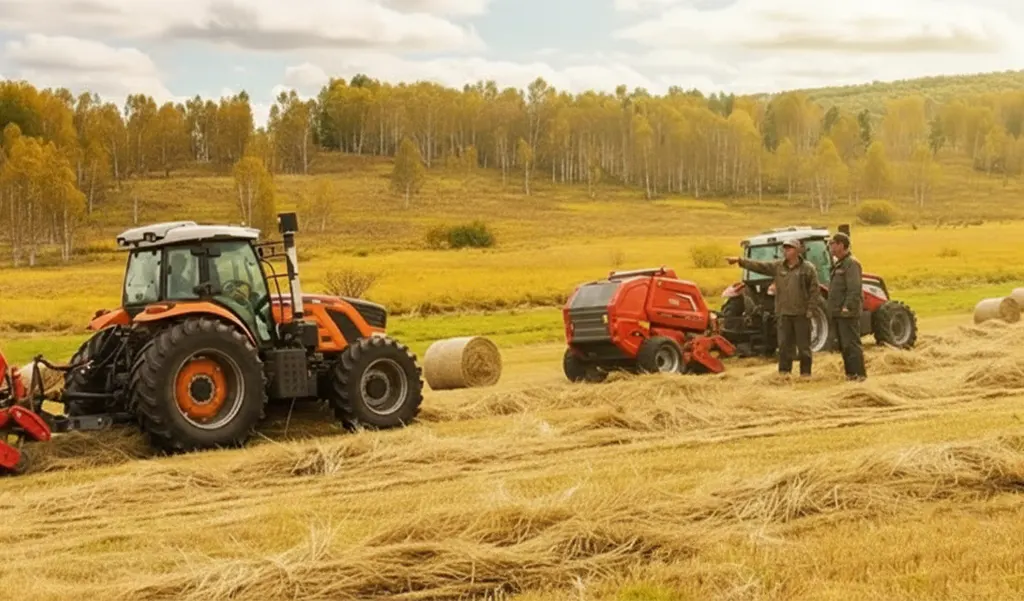
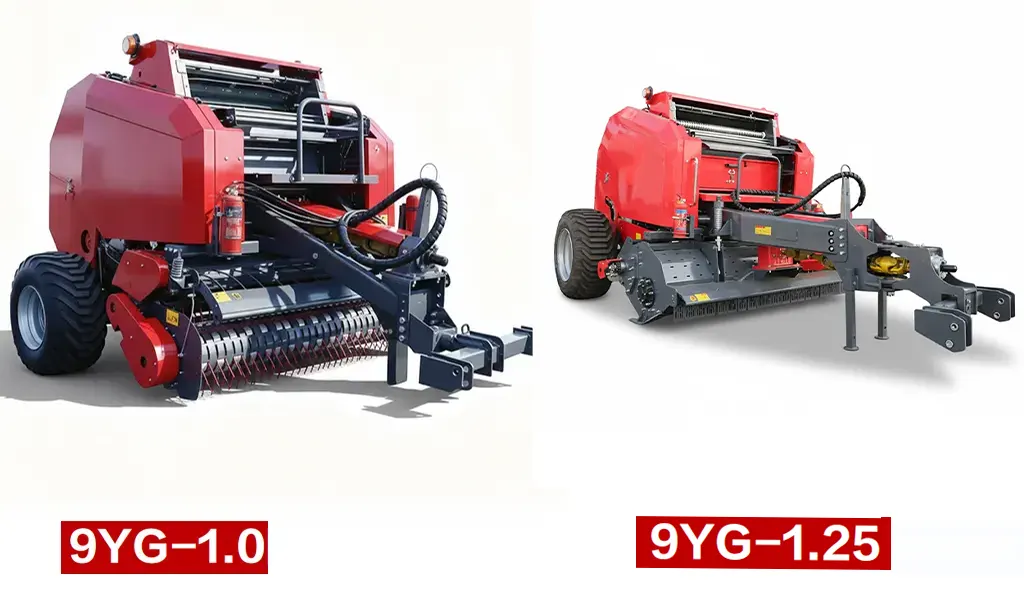
Dense, well-shaped bales from a quality round baler justify premium pricing because they store better, transport more efficiently, and test higher in feed value than loose, low-density bales. America Ever-Power fixed-chamber round balers and silage-grade forage balers produce the bale that commands the top of the market price range. Tell us your target market and annual volume for a matched equipment recommendation. Dallas, TX parts depot for 3-day delivery.
Editor: Cxm