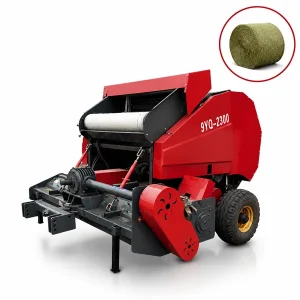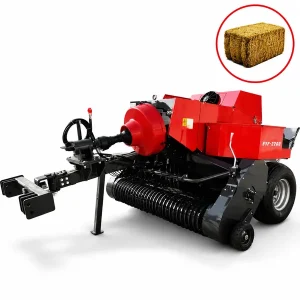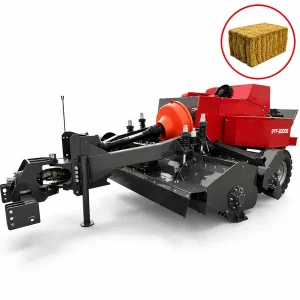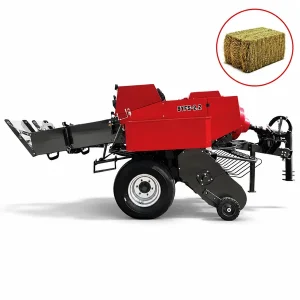
9YF-2200 Square Baler — Trailed Square Hay Baler
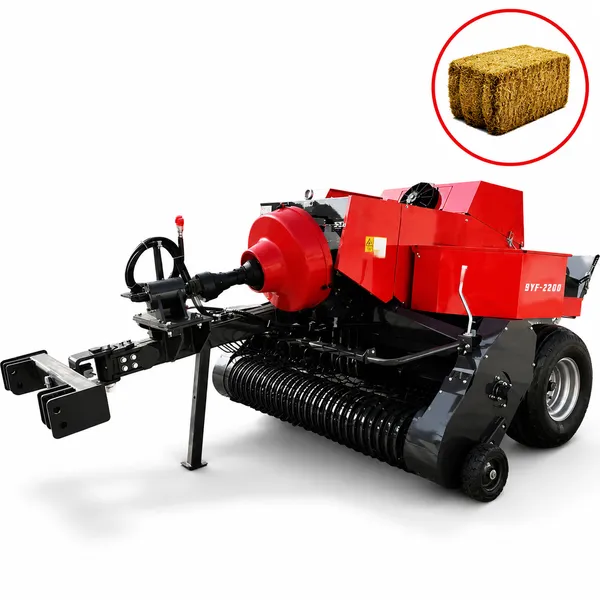
The 9YF-2200 is a mid-size trailed square baler built for the everyday demands of wheat straw, rice straw, corn stalks, cotton stalks, and forage grass collection. With a 2,200 mm (86.6 in) spring-tooth pickup, fork-feeding mechanism, 2 D-type knotters, and a ≥49 HP PTO requirement, it delivers reliable bale density and consistent knot quality on the widest range of common crop residues — all at a machine weight of just 1,950 kg (4,299 lb) that keeps it compatible with mid-size utility tractors already on most farms.
-
- ▶ 2,200 mm (86.6 in) spring-tooth pickup — full-swath collection in one pass
- ▶ Fork feeding mechanism — consistent charge delivery across crop types
- ▶ 2 D-type knotters — proven automatic rope baling
- ▶ 460×360 mm (18.1×14.2 in) bale section — standard small-square format
- ▶ ≥49 HP PTO — compatible with most 50–100 HP utility tractors
Ever-Power · Square Baler
2 D-Type Knotters
≥49 HP
86.6 in Pickup
4,299 lb · 1,950 kg
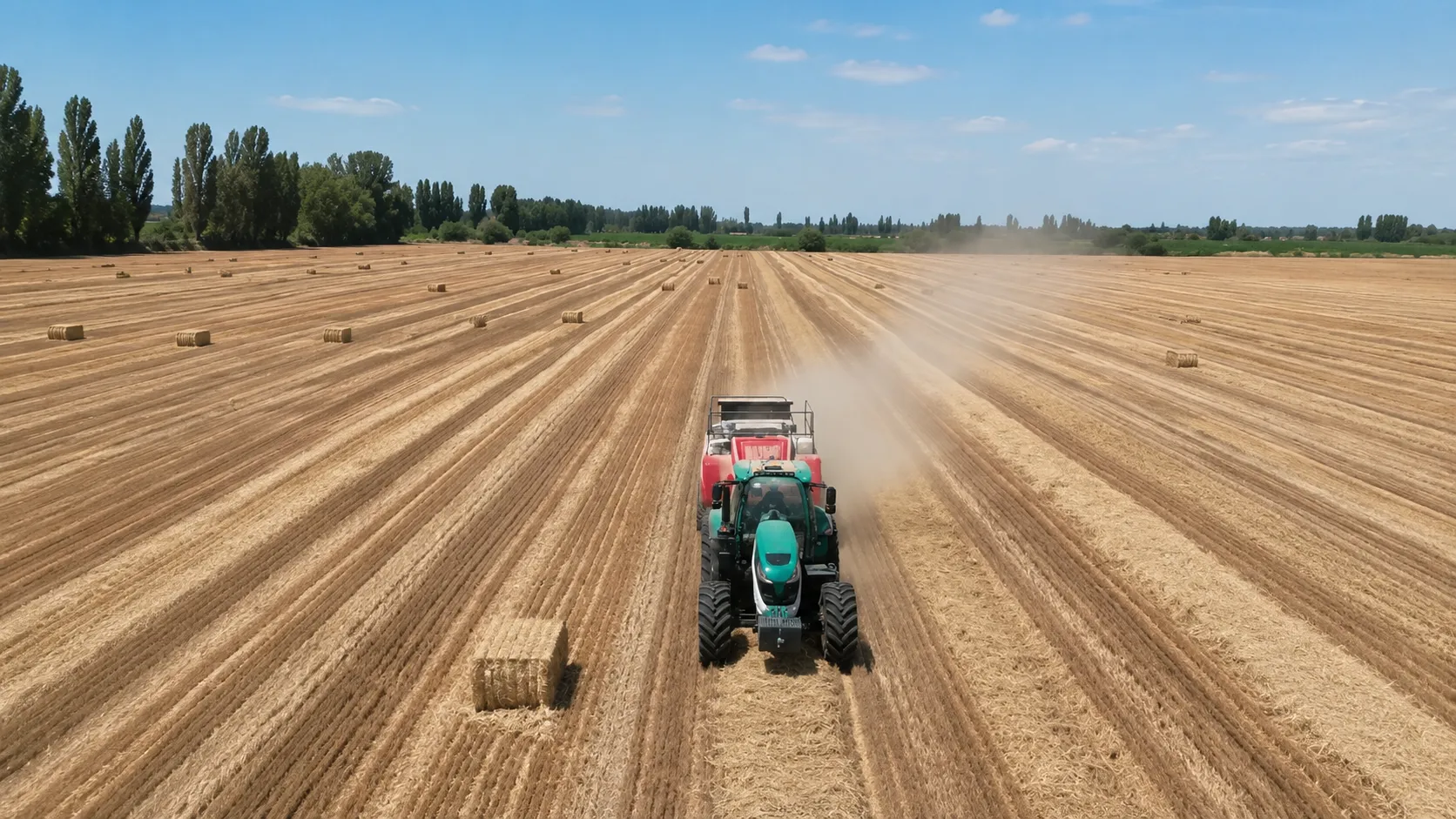
9YF-2200 Square Baler — Built for the Full Range of Crop Residue and Forage
The 9YF-2200 is the standard-production workhorse in the America Ever-Power square baler lineup — the model that covers the widest range of everyday baling tasks with the lowest tractor HP requirement in the 2,200 mm pickup class. It is a mid-mounted, trailed square hay baler designed primarily for collecting and baling wheat straw, rice straw, cotton stalks, corn stalks, and various forage grasses. The spring-tooth pickup, fork-feeding mechanism, D-type knotters, and 460×360 mm compression chamber are all production-proven components that handle the full diversity of crop types and field conditions that a US or Canadian producer encounters across a multi-cutting season.
The 9YF-2200 addresses two practical problems that make small-square baling important for operations that also run a round baler for bulk hay production. First, certain market segments — horse owners, hobby farms, retail feed stores, and small livestock operations — specifically require the small-square format because it is the only bale size one person can physically move, feed in measured portions, and stack in a standard barn bay. A round baler cannot serve these customers regardless of how efficiently it produces bulk hay. Second, crop residue collection after grain harvest — wheat straw after combining, rice straw after harvesting — generates material that would otherwise require burning or incorporation. The 9YF-2200 converts that residue into a saleable product at low additional cost per acre, capturing revenue from material that is already on the ground.
Compared to the 9YFS-2.2 double-chamber model at the top of the square baler lineup, the 9YF-2200 trades the dual-output advantage for a simpler mechanical system, lower machine weight, and a ≥49 HP requirement that puts it within reach of the 50 to 75 HP tractors that most mid-size operations already own. For farms producing 200 to 600 square bales per season across 2 to 4 cuttings, the 9YF-2200 is the cost-effective entry into the high-value small-square market without requiring a dedicated high-HP tractor or a premium equipment budget.
9YF-2200 Square Baler — Technical Specifications
| Parameter | Specification |
|---|---|
| Model | 9YF-2200 Square Baler |
| Hitching Method | Trailed (towed-type) |
| Pickup Width | 2,200 mm (86.6 in) |
| Pickup Structure | Spring Tooth Type |
| Feeder Structure | Fork Feeding Mechanism |
| Knotter Type | D-Type |
| Number of Knotters | 2 pcs |
| Compression Chamber Section (W×H) | 460×360 mm (18.1×14.2 in) |
| Baling Method | Automatic Rope Baling |
| Matching Power Range | ≥36.8 kW (≥49 HP) |
| PTO Speed | 540 RPM |
| Overall Dimensions (L×W×H) | 5,700×2,800×1,780 mm (224×110×70 in) |
| Machine Weight | 1,950 kg (4,299 lb) |
9YF-2200 Square Baler — Key Features and What They Mean in the Field
The four core components of the 9YF-2200 — pickup, feeder, knotters, and compression channel — are each selected and tuned for one priority: producing consistently dense, consistently tied bales across the full range of forage and straw conditions that a North American producer encounters during the baling season.
◆ Spring-Tooth Pickup, 2,200 mm Width — Collection That Keeps Pace With the Field
The 86.6-inch spring-tooth pickup covers the full width of a merged 2 to 3 swath windrow in a single pass. Spring-tooth tines — individual tines mounted on a spring-loaded cam that allows each tine to deflect backward on contact with the ground — combine aggressive material lift with protection from damage on uneven terrain. On a stony field where rigid-tooth pickups lose multiple tines per season, spring-tooth tines flex over the obstacle and spring back into position, maintaining collection geometry without bending. This is particularly relevant for wheat straw collection after combining, where the field surface is irregular from combine wheel tracks and stubble crowns.
- ✓ Wide 86.6 in coverage — suited for paddy fields and dry land equally
- ✓ Spring flex protects tines from damage on uneven or stony ground
- ✓ Effective on wheat, rice, cotton, corn, and forage windrows without adjustment
◆ Fork Feeding Mechanism — Measured Charge, Consistent Bale Weight
Between the pickup and the compression channel sits a fork feeding mechanism that gathers the incoming forage into a measured charge before each plunger stroke. The fork physically holds the accumulated material until the plunger is at the correct position in its stroke cycle, then releases the charge in a timed burst that ensures the plunger compresses a consistent volume on every stroke. This timed, measured delivery — rather than a continuous flow — is what produces the consistent bale density and bale length that makes a square bale format commercially useful. A bale that varies 20 percent in weight from one to the next creates feeding inconsistency for the end user and undermines the pricing confidence that retail and horse markets expect.
- ✓ Timed charge delivery — consistent density and weight across the full field
- ✓ Handles variable windrow density without clogging the intake channel
- ✓ Works on both wet forage (17–23% moisture) and dry straw (10–15% moisture)
◆ 2 D-Type Knotters — Automatic Rope Baling, Every Bale
The two D-type knotters on the 9YF-2200 form the two twine ties that hold every bale together. The D-type geometry — named for the D-shaped cam that drives the bill hook and twine holder through their tying sequence — completes a secure, load-bearing knot in a single cam rotation, which is fast enough to keep pace with the plunger's compression cycle without creating a bottleneck. Both knotters tie simultaneously at the end of each compression cycle, triggered by the star-wheel metering system when the bale reaches the operator-set length. The automatic tie cycle requires no operator input — the machine manages the timing of needle entry, twine wrap, knot formation, and twine cut on every bale throughout the field.
- ✓ Fully automatic knot cycle — no manual tying or intervention during baling
- ✓ Star-wheel metering sets bale length — adjustable for different market specifications
- ✓ Compatible with standard sisal twine (biodegradable) and polypropylene twine
◆ 460×360 mm Compression Channel — Standard Small-Square Format for Every Market
The 460×360 mm (18.1×14.2 in) compression channel produces the standard North American small-square bale cross-section. This format is universally recognized across the horse, retail, and small-livestock markets — barn bays are built to this dimension, hay nets are sized for it, and buyers price it without requiring explanation. The bale length is operator-adjustable from approximately 18 to 36 inches depending on the star-wheel setting, allowing the operator to produce the specific bale weight that matches the intended market: shorter bales for horse-flake feeding, longer bales for bulk pricing to feed dealers and livestock producers who want more weight per bale to reduce handling labor.
- ✓ Standard 18.1×14.2 in cross-section — fits every barn bay, bale net, and hay rack
- ✓ Adjustable bale length — tune weight per bale to match the target market specification
- ✓ High bale density from the compression channel geometry — tight, compact, shelf-stable bales
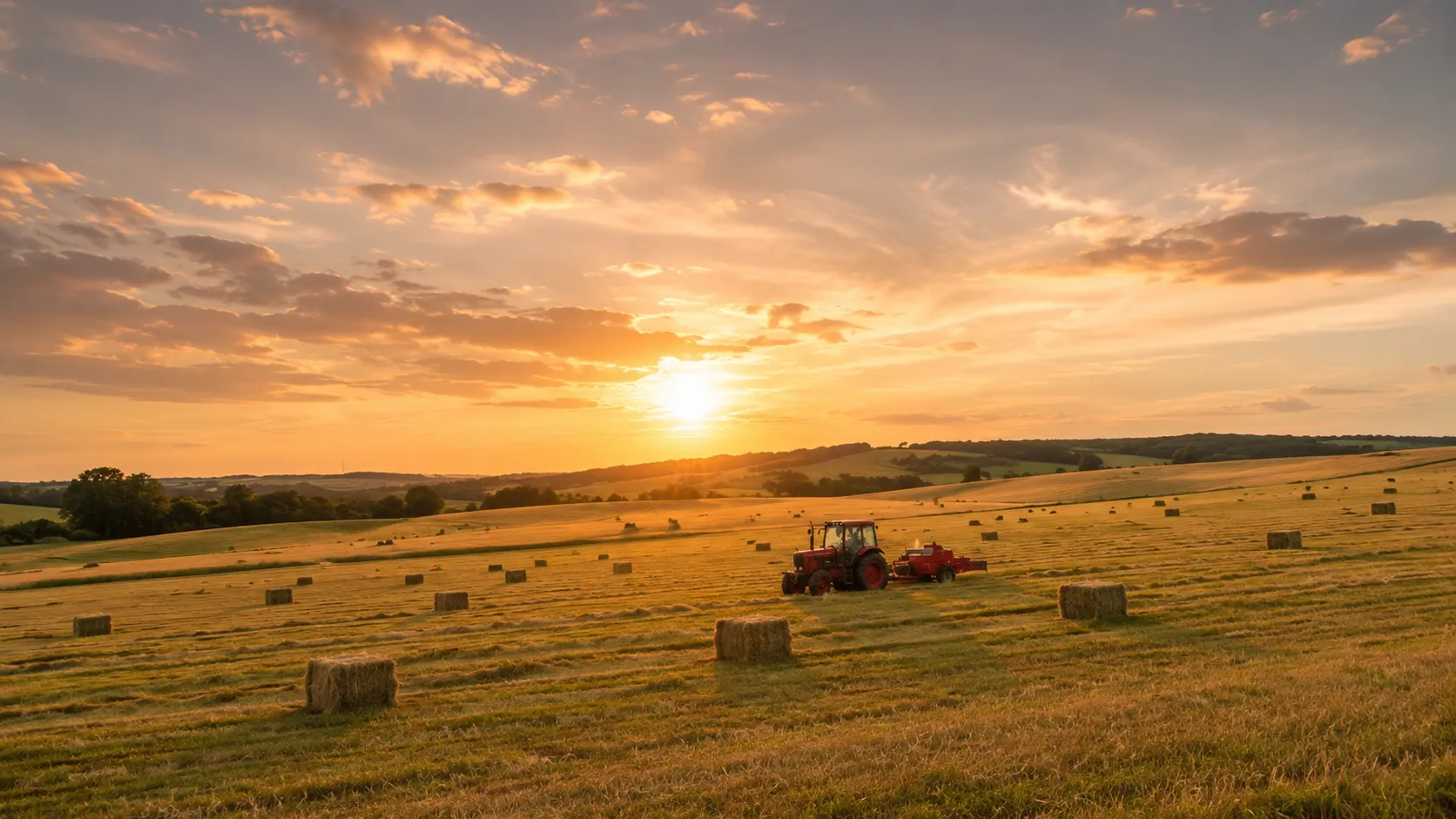
Square Baler Crop Suitability — What the 9YF-2200 Handles and How Well
The 9YF-2200 is designed for both paddy fields and dry land operation, with better performance on flat, stone-free ground — the machine's effective collection and consistent bale density are maximized when the pickup can maintain steady tine-to-ground clearance without constant terrain adjustment. The baled material's density is high, which is convenient for storage and transportation, making the 9YF-2200 one of the essential pieces of equipment for animal husbandry and straw recycling industries. For operations on rough or stony ground, slower ground speed (3 to 3.5 mph) reduces pickup tine impact loads and maintains bale consistency.
Moisture content is the single most important crop-side variable for the 9YF-2200's bale quality. The knotters and plunger are designed for material in the baling-ready moisture window: 17 to 23 percent for legume forage and gramineous forage, 10 to 23 percent for rice, wheat straw, and corn stalks. Material above 25 percent is too wet for reliable knot formation — the twine slips on the wet stems before the knotter can complete the tie sequence. Material below 10 percent has become brittle enough that the spring-tooth pickup shatters the dry leaf fraction, reducing collected protein and increasing field loss. For operations that cannot always hit the ideal moisture window, a forage moisture probe (not included) is the most practical field investment alongside the 9YF-2200.
Crop-by-Crop Moisture Windows for the 9YF-2200
- ▶ Wheat straw: 10–15% moisture — typically ready 3 to 4 days after combining in dry weather
- ▶ Rice straw: 12–20% moisture — allow 2 to 5 days field drying depending on climate
- ▶ Cotton stalks: 15–22% moisture — shred first if stalks are coarse before windrowing
- ▶ Corn stalks: 18–25% moisture — fork feeding handles the variable bulk density of corn residue
- ▶ Forage grasses & alfalfa: 17–23% moisture — ted and rake to uniform windrow before baling
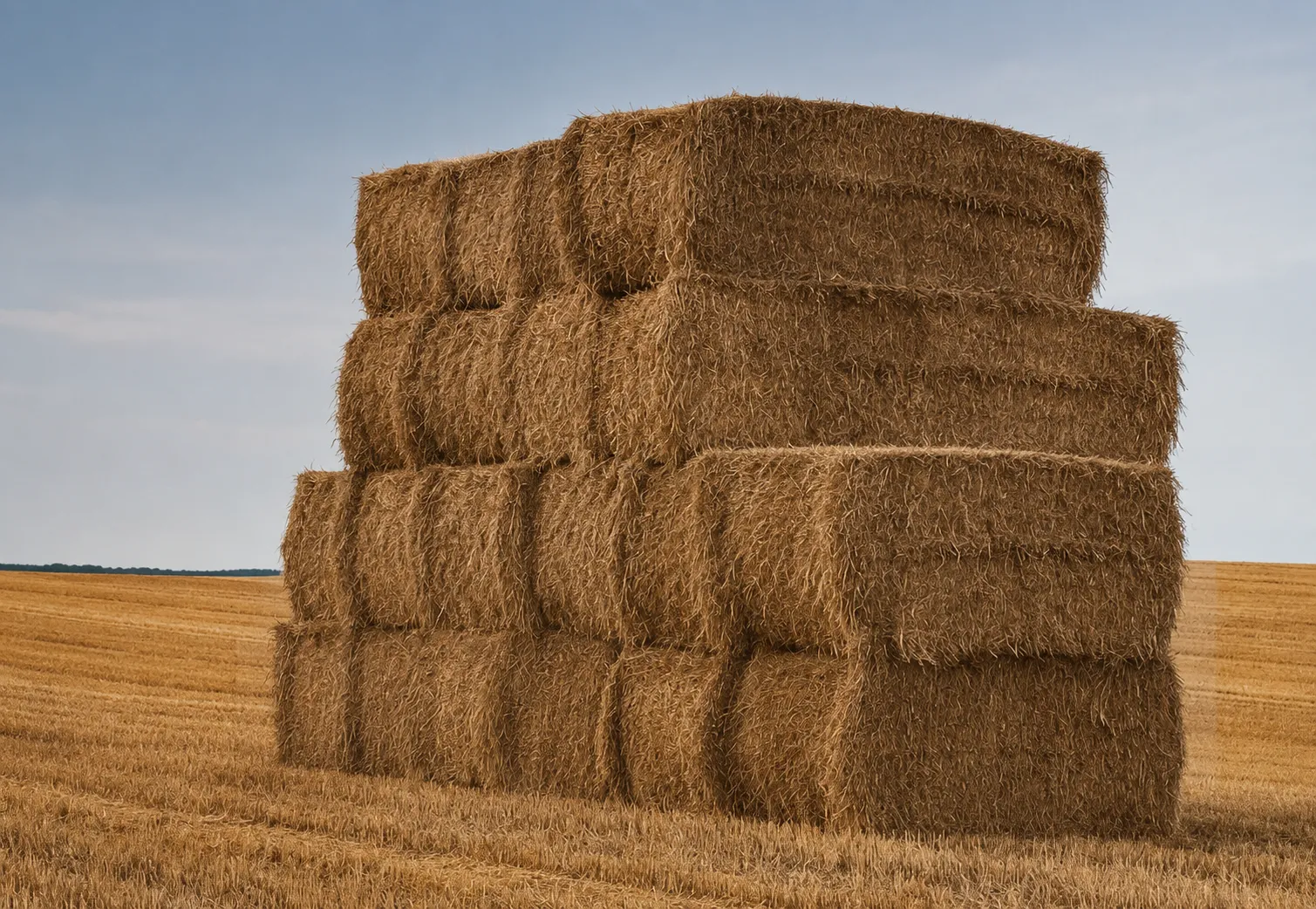
Where the 9YF-2200 Square Baler Fits in the America Ever-Power Lineup
The America Ever-Power square baler lineup covers five models from 40 HP to the dual-chamber 9YFS-2.2 flagship. The 9YF-2200 is the standard single-chamber model with the full 2,200 mm pickup width — the widest pickup in the single-chamber range — and the lowest HP entry point for that pickup class. Understanding where it sits relative to the 9YF-1700, 9YF-1900, and 9YFS-2.2 makes the selection straightforward.
| Model | Chambers | Pickup | HP Range | Weight | Choose If… |
|---|---|---|---|---|---|
| 9YF-1700 | 1 | 67 in | 40–99 HP | 3,858 lb | Compact tractor · narrow windrows |
| 9YF-1900 | 1 | 75 in | 49–99 HP | 4,079 lb | Mid pickup width · 50–70 HP tractor |
| 9YF-2200 ★ | 1 | 87 in | ≥49 HP | 4,299 lb | Full-width pickup · standard production |
| 9YF-2200S | 1 | 87 in | ≥99 HP | 5,181 lb | Corn stalks · shredding + baling in one pass |
| 9YFS-2.2 | 2 | 87 in | ≥69 HP | 6,868 lb | Max throughput · commercial · custom ops |
The 9YF-2200 is the natural choice when the tractor is already at 50 to 70 HP, the target is standard forage and straw without hard-stalk shredding, and the annual bale count does not justify the premium of the dual-chamber 9YFS-2.2. It covers the full-width windrow that the 9YF-1700 and 9YF-1900 cannot reach, at a HP requirement low enough to avoid an equipment upgrade. If corn stalks and sorghum stems are a significant part of the crop mix, the 9YF-2200S with its single or dual shredding mechanism is the better tool for that specific material — but for everything else, the 9YF-2200's simpler, lighter construction is an advantage in both cost and serviceability.
The Economics of Small Square Bales — Why the Format Justifies the Equipment
The small square bale commands a price premium over the round bale format that consistently exceeds the additional cost of the square baler investment. In most US and Canadian markets, the premium horse-hay market pays $8 to $16 per small square bale — equivalent to $320 to $640 per ton. The same forage baled in round bales for the cow-calf market brings $130 to $200 per ton. The $120 to $440 per ton premium in the horse market reflects the format premium alone — not quality, not forage species, just the package size and handling convenience of the small square that horse owners require.
On a 40-acre field producing 2 tons per acre of premium orchard grass, the difference is $9,600 to $35,200 in gross revenue depending on whether the crop is marketed as round bales or small squares. The 9YF-2200's production cost per ton — fuel, twine, and tractor depreciation — is slightly higher than a round baler per ton because square baling is slower, but the revenue gap between the two formats is far larger than the cost difference. For most operations that can access the horse and retail markets, adding a square baler to an existing round baler lineup is one of the highest-return equipment investments available.
Beyond the premium hay market, crop residue baling with the 9YF-2200 generates revenue from material that would otherwise be burned or incorporated at a cost. A wheat field that produces 1 to 1.5 tons per acre of straw at $50 to $80 per ton generates $50 to $120 per acre of additional income from a crop that was already harvested. The 9YF-2200's ≥49 HP requirement means the combine's own row-crop tractor can often run the baler in the afternoon after the morning's combining, keeping a single tractor productive throughout the day.
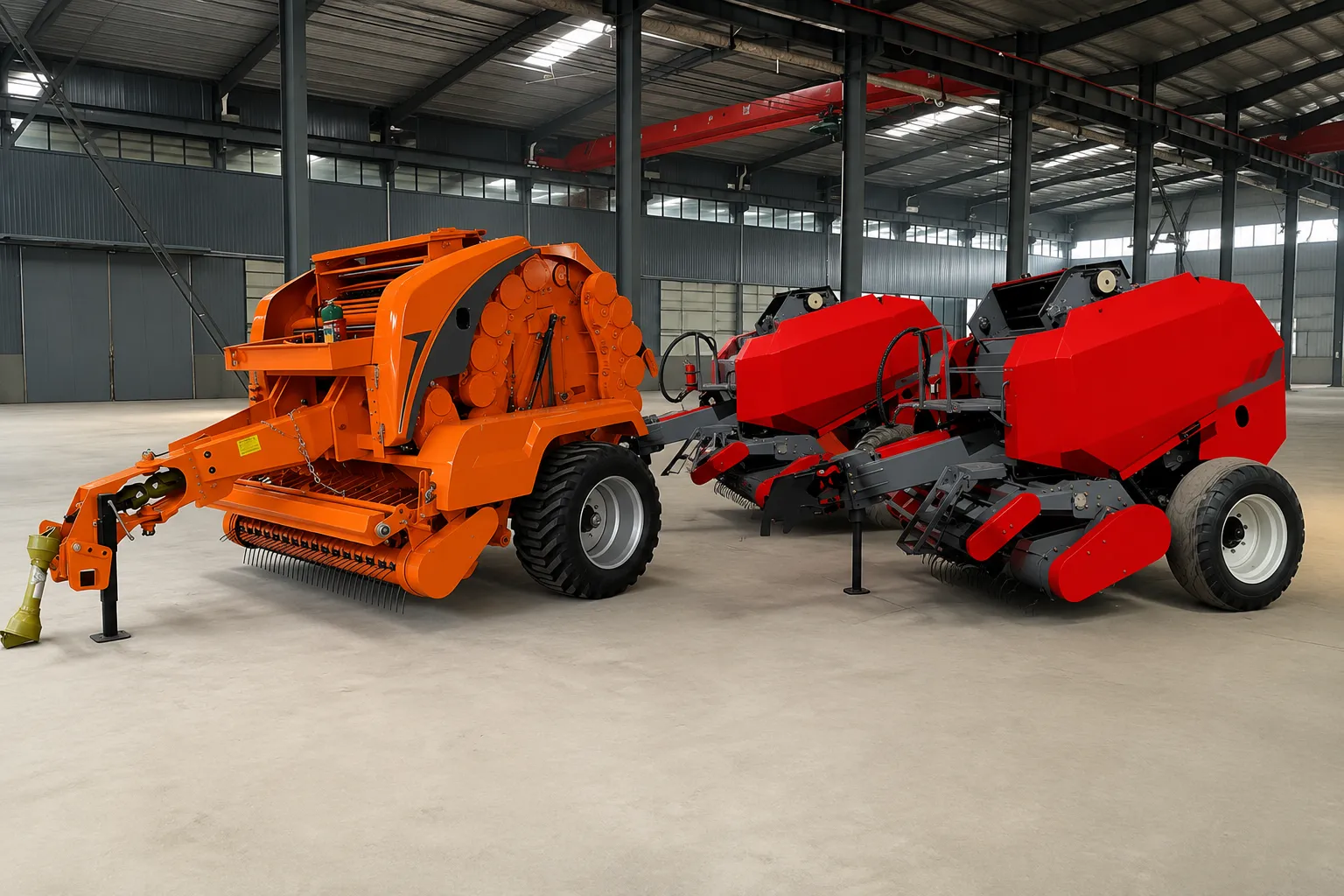
Tractor Matching and Operating Tips for the 9YF-2200 Square Baler
The 9YF-2200 requires a minimum of 49 HP (36.8 kW) at the PTO shaft and a 540 RPM PTO. It is part of the America Ever-Power square baler lineup, which spans five models from 40 HP compact to the 9YFS-2.2 dual-chamber flagship. In practice, a 55 to 75 HP tractor provides the right balance of power reserve and tractor weight for most field conditions. The machine is trailed, so the tractor needs a Category II drawbar hitch and a rear PTO stub — no hydraulic remotes are required for basic baling operation. At 4,299 lb, the 9YF-2200 is light enough that even a 55 HP two-wheel-drive tractor maintains adequate steering control on flat to gently rolling terrain without additional ballast.
- ▶ Optimal ground speed: 3 to 5 mph — adjust down for heavy windrows, up for thin straw
- ▶ PTO engagement: Always engage at low engine RPM, then throttle up to operating speed before entering the windrow
- ▶ Knotter check: Inspect twine tension discs and needle alignment at the start of each season and after every 500 bales
- ▶ Bale length adjustment: Dial the star wheel to the target bale length before the first pass; recheck after the first 10 bales
- ▶ End of season: Clean all crop residue from the knotter mechanism, oil lightly, raise pickup, store under cover
The 9YF-2200 integrates naturally into the America Ever-Power equipment chain. A disc mower cuts the forage, a hay rake merges the swaths into a windrow that the 9YF-2200's 86.6-inch pickup can fully cover, and the square baler produces the finished bales for the premium market. Operations that also need bulk hay production alongside their square bale program can pair the 9YF-2200 with a round baler from the same lineup — both run at 540 RPM PTO and share Category II hitch compatibility. The agricultural drive gearbox and all replacement parts are stocked.
Get a Quote for the 9YF-2200 Square Baler
Tell us your tractor HP, the crops and residues you are baling, and your target market — horse hay, straw, or general forage. We confirm PTO compatibility, recommend the right twine and bale length settings, and provide a delivered price to your farm. Parts depot in Dallas, TX — 3-day delivery across the continental US and Canada.
Additional information
| Editor | Cxm |
|---|