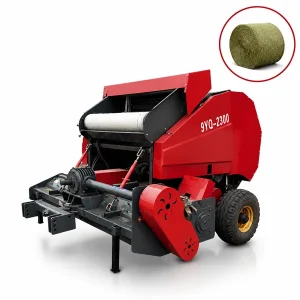
9YQ-2300 Round Baler — Wide-Pickup Commercial Round Baler
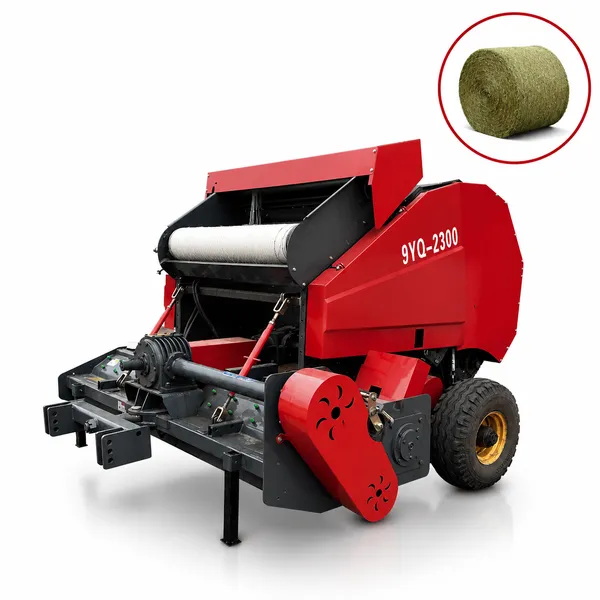
The 9YQ-2300 is the wide-pickup large-acreage model in the America Ever-Power round baler lineup — a roll-drum machine with a 2,300 mm (90.6 in) hammer-claw pickup, 18 pressing rollers in a Φ1,000 mm (39 in) chamber, automatic net wrapping, and a power range of 79 to 178 HP (58.8–132.5 kW). At 5,512 lb (2,500 kg), it is the heaviest of the mid-to-large class models and the one built specifically for operations above 100 acres where windrow width, throughput per hour, and heavy-crop reliability are the defining performance requirements.
- ▶ 2,300 mm (90.6 in) hammer-claw pickup — widest in the lineup, handles standing or lodged material
- ▶ 18 rollers in Φ39 in chamber — same commercial-grade compression as the flagship 9YG-2.2
- ▶ Shift fork + screw continuous feeding — smooth throughput on heavy, variable windrows
- ▶ Automatic net wrapping — full-coverage bale protection, hands-free cycle
- ▶ 79–178 HP range — runs on 80–180 HP row-crop tractors already common on large farms
America Ever-Power · Round Baler
Φ39 in Chamber
79–178 HP
90.6 in Pickup
5,512 lb · 2,500 kg

Why Pickup Width Is the Primary Round Baler Productivity Variable on Large Acreages
On a 30-acre field, pickup width matters little — the total pass count is small regardless of whether the round baler has a 49-inch or 90-inch pickup. On a 200-acre field with 4 cuttings per year, pickup width is the single mechanical variable that determines whether the operation runs one baler or two. A 77-inch pickup requires approximately 13 passes per 100-yard-wide field swath. A 90-inch pickup covers the same ground in 11 passes — 15 percent fewer passes, 15 percent more ground speed equivalent, 15 percent more bales per hour on the same windrow density. Multiplied across 200 acres and 4 cuttings, that 15 percent throughput advantage represents 120 additional acres of equivalent coverage per season from the same tractor and operator, or equivalently, 2 to 3 fewer baling hours needed to clear each cutting before the next weather event arrives.
The 9YQ-2300's 90.6-inch (2,300 mm) pickup is the widest in the America Ever-Power round baler lineup and the widest in its power class. It is matched to a Φ1,000 mm (39 in) roll-drum chamber with 18 pressing rollers — the same roller count as the flagship 9YG-2.2, producing the same commercial-grade bale density from a machine that fits the 80 to 130 HP tractor class that most 100 to 400 acre operations run. For large-acreage hay and forage producers who cannot justify the flagship 9YG-2.2's 148 to 201 HP requirement and purchase price, the 9YQ-2300 delivers 90 percent of the commercial throughput at 60 to 70 percent of the flag-ship's HP demand.
9YQ-2300 Round Baler — Technical Specifications
| Parameter | Specification |
|---|---|
| Model | 9YQ-2300 Round Baler |
| Hitching Method | Trailed |
| Pickup Width | 2,300 mm (90.6 in) |
| Pickup Structure | Hammer-Claw Spring Tooth Type |
| Feeder Structure | Shift Fork Feeding + Screw Continuous Feeding Mechanism |
| Chamber Type | Roll Drum (fixed chamber) |
| Chamber Width | 1,250 mm (49.2 in) |
| Chamber Diameter | Φ1,000 mm (Φ39.4 in) |
| Qty of Press Rollers | 18 pcs |
| Press Roller Diameter | Φ190 mm (7.5 in) |
| Wrapping Method | Automatic Net Wrapping |
| Matching Power Range | 58.8–132.5 kW (79–178 HP) |
| PTO Speed | 540 RPM |
| Overall Dimensions (L×W×H) | 2,950×2,750×2,050 mm (116×108×81 in) |
| Machine Weight | 2,500 kg (5,512 lb) |
9YQ-2300 Round Baler — Four Engineering Features That Set It Apart
◆ Hammer-Claw Pickup at 2,300 mm — The Widest Aggressive-Collection Pickup in the Lineup
The 9YQ-2300 uses a hammer-claw pickup design rather than the spring-tooth tines of the 9YQ-1950. Hammer-claw tines are shaped with a curved, hook-like profile that grabs and lifts material more aggressively than the gentler flick action of a spring tooth. The practical difference shows on two specific field conditions: heavy, dense windrows from high-yield first-cut alfalfa or thick grass, where spring-tooth tines skip over the surface of the compressed windrow and the hammer-claw tines penetrate and lift the full windrow cross-section; and partially lodged or uneven crop that has been disturbed by wind or rain before baling, where the claw geometry engages scattered material from orientations that spring teeth miss.
- ✓ 90.6 in (2,300 mm) — widest pickup in the lineup, 13.8 in wider than the 9YQ-1950
- ✓ Hammer-claw geometry penetrates dense and lodged windrows that spring teeth skip
- ✓ Covers the windrow from a 9 to 12 ft disc mower-conditioner in a single pass
◆ 18-Roller Roll-Drum Chamber, Φ39 in — Commercial Bale Density at the 79–178 HP Class
The 9YQ-2300 shares the same 18-roller, Φ1,000 mm roll-drum chamber as the 9YQ-1950 — the chamber configuration that delivers commercial-grade bale density without belt-type tension variation. At this roller count and diameter, the chamber contacts the bale surface every 20 degrees around its circumference, leaving no gap between contact points large enough to create a soft zone in the finished bale. The result is the same density uniformity as the flagship 9YG-2.2, in a machine that requires 30 to 45 percent less HP to operate. For large-acreage producers who already own 100 to 150 HP row-crop tractors, the 9YQ-2300 puts commercial roll-drum bale quality within reach without requiring a dedicated 200 HP baling tractor.
- ✓ 18 rollers at Φ190 mm — same count as the flagship 9YG-2.2, in the 79–178 HP power class
- ✓ Contact every 20° around circumference — no soft zones, no density variation from belt wear
- ✓ Roller service life 50,000+ bales — no belt replacement cost across the machine's working life
◆ Shift Fork + Screw Continuous Feeding — Matched to the Higher Feed Rate of a 90-inch Pickup
A 90.6-inch pickup sweeping at 5 mph delivers significantly more pounds-per-second of forage than a 77-inch pickup at the same ground speed — the larger intake area collects a wider swath on every pass, and the heavier windrows typical of the large-acreage operations the 9YQ-2300 targets add to the mass flow. The shift fork and screw continuous feeding combination handles this higher feed rate by managing the variable density at the pickup-to-feeder transition (shift fork) and then metering the material into the chamber at a consistent rate (screw auger) regardless of how the windrow density fluctuates between light and heavy sections. Without this dual-mechanism approach, the step from 77-inch to 90-inch pickup would produce plug stops when dense windrow sections arrived at the chamber faster than the rollers could process them.
- ✓ Shift fork manages the variable-density surge that a wide pickup delivers on dense windrows
- ✓ Screw feeder meters material into the chamber at the steady rate the 18-roller system requires
- ✓ Combination allows 5 to 7 mph field speed on moderate-density windrows without plug stops
◆ Automatic Net Wrapping — Standard on Every 9YQ-2300
The 9YQ-2300 comes standard with automatic net wrapping — the system that applies the programmed number of net wrap revolutions when the bale reaches target diameter, cuts the net cleanly, and signals the operator to open the tailgate. On a large-acreage operation running the 9YQ-2300 at 20 to 28 bales per hour, the automatic cycle keeps the baling and ejection rhythm smooth without requiring the operator to manage a manual net wrap process while also monitoring ground speed, windrow tracking, and bale diameter. Each bale receives consistent coverage — typically 2.5 to 3.5 revolutions — without variation from operator fatigue or attention lapses that accumulate over a 10 to 12 hour baling day.
- ✓ Fully automatic — wraps, cuts, and signals tailgate-open without operator input
- ✓ Consistent wrap coverage on every bale across a 10 to 12 hour baling day
- ✓ Reduces outdoor storage DM loss from 25–35% (twine) to 8–15% (net wrap)
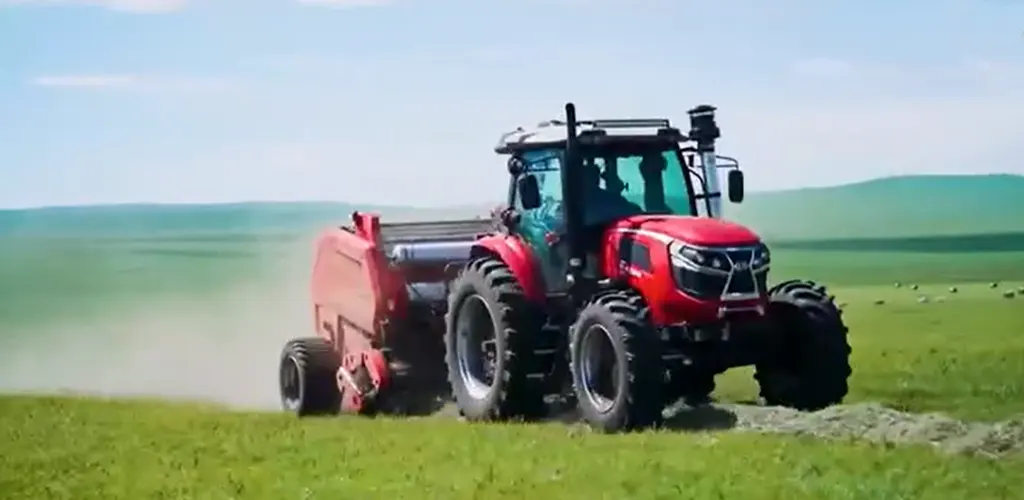
Hammer-Claw vs Spring-Tooth Pickup — Which Round Baler Tine Design Fits Your Field Conditions
Two of the five America Ever-Power round baler models — the 9YQ-2300 and the compact 9YK-870 mini baler — use hammer-claw pickup tines. The other three (9YQ-1250, 9YQ-1950, 9YG-2.2) use spring-tooth tines. The choice between the two pickup geometries reflects fundamentally different field conditions and crop types.
◆ Hammer-Claw Tines — Choose When:
- ➤ First-cut alfalfa or thick grass with heavy, dense windrows that mat down under their own weight
- ➤ Wind-disturbed or rain-lodged windrows where material is no longer lying flat and uniform
- ➤ High-yield operations where the windrow density is consistently at the upper end of the baler's feed capacity
- ➤ Wide windrows from large mower-conditioners (9 to 12 ft cutting width) that produce thick, tall windrow profiles
◆ Spring-Tooth Tines — Choose When:
- ➤ Light to moderate windrows from standard 7 to 9 ft mowers on typical mid-density pasture grass
- ➤ Stony or rough terrain where tine flexibility prevents breakage on rock contact
- ➤ Forage with significant leaf fraction (alfalfa, clover) where aggressive tine contact would shatter dry leaves
- ➤ Operations that prioritize leaf retention over windrow-clearing aggression in dry, brittle late-cut hay
The 9YQ-2300's hammer-claw pickup is the right choice for large-acreage operations where windrow weight and density are consistently at or above the midpoint of the baler's feed capacity range. On a 200-acre field of first-cut orchard grass or heavy alfalfa, the hammer-claw tines clear the windrow on every pass without the intermittent "slipping over" that spring-tooth pickups experience when they encounter a dense, compressed section. The result is a more consistent feed rate into the chamber, more consistent bale weight, and fewer field stops to back up and re-engage a windrow section the pickup missed on the first pass.
Who the 9YQ-2300 Round Baler Is Built For
Large Hay Producers — 100 to 400 Acres
Operations producing 500 to 2,000 bales per year across multiple cuttings and multiple fields. The 9YQ-2300's 90.6-inch pickup and 79 to 178 HP range cover the ground speed and throughput demands of this acreage class. At 20 to 28 bales per hour on moderate windrows, a 200-acre field at 1.5 tons per acre and 1,000 lb average bale weight requires approximately 600 bales — accomplished in a 22 to 30 hour total baling window across 2 to 3 days, well within a reliable weather forecast horizon in most US regions.
High-Yield Alfalfa and Grass Producers
First-cut alfalfa at 3 to 4 tons per acre produces windrows so dense that spring-tooth pickups skip over the compressed surface. The 9YQ-2300's hammer-claw tines penetrate the heavy windrow and deliver consistent feed to the screw feeder, maintaining bale weight uniformity that premium hay buyers require. Consistent bale weight at a verified average is what enables the per-bale pricing premium that the dairy and premium horse markets pay — $15 to $30 more per bale for uniformly dense, reliably weighed hay.
Commercial Baleage Producers and Forage Contractors
As a silage baler paired with a downstream wrapper, the 9YQ-2300 handles the heavy, wet windrows of high-moisture baleage material at 40 to 55 percent moisture content. The hammer-claw pickup lifts the heavier, wetter windrow that spring teeth slip on, and the screw feeder meters the sticky wet forage into the chamber at a consistent rate. For forage contractors supplying multiple dairies across 100 to 400 acres per season, the wider pickup and larger HP range of the 9YQ-2300 reduce the number of field passes and allow higher sustained ground speeds on baleage windrows compared to the 9YQ-1950.
The 9YQ-2300 in the America Ever-Power Round Baler Lineup — The Right Model for 100 to 400 Acres
| Model | Chamber Ø | Pickup | Pickup Type | HP Range | Target Acres |
|---|---|---|---|---|---|
| 9YK-870 | Φ630 mm | 800 mm / 31" | Hammer-claw | 25–50 HP | Under 20 ac |
| 9YQ-1250 | Φ800 mm | 1,250 mm / 49" | Spring tooth | 54–80 HP | 20–80 ac |
| 9YQ-1950 | Φ1,000 mm | 1,950 mm / 77" | Spring tooth | 49–148 HP | 50–200 ac |
| 9YQ-2300 ★ | Φ1,000 mm | 2,300 mm / 91" | Hammer-claw | 79–178 HP | 100–400 ac |
| 9YG-2.2 | Φ1,220 mm | 2,200 mm / 87" | Spring tooth | 148–201 HP | 200+ ac · commercial |
The 9YQ-2300 and the 9YQ-1950 share the same Φ1,000 mm chamber and 18-roller configuration — the bale they produce is identical in diameter, density, and format. The differentiator is the 13.8-inch wider pickup and the hammer-claw tine design of the 9YQ-2300, which together unlock the higher throughput and heavier windrow capability that 100 to 400 acre operations require. Producers who are on the upper edge of the 9YQ-1950's acreage range (150 to 200 acres) and regularly experience pickup difficulties on dense first-cut windrows should step up to the 9YQ-2300 rather than live with the field-stop losses and missed forage that a slightly undersized pickup creates across a full baling season. The difference in annual hay recovery between a pickup that fully engages every windrow and one that skips 3 to 5 percent of the material adds up to real tons of hay per season.
Tractor Requirements and Maintenance for the 9YQ-2300 Round Baler
The 9YQ-2300 requires a minimum of 79 HP (58.8 kW) at the PTO shaft with a 540 RPM PTO. The practical optimal pairing is a 100 to 150 HP MFWD row-crop tractor with 2 rear hydraulic remotes (pickup lift and density control), a drawbar towing capacity of at least 8,000 lb, and MFWD for traction stability when baling on slopes with a 5,512 lb machine plus a formed bale of 800 to 1,100 lb. At 79 HP minimum, a 90 HP MFWD utility tractor can run the 9YQ-2300 at 90 percent capacity — adequate for moderate windrows but with little reserve for dense first-cut conditions. A 110 to 130 HP tractor provides the 25 to 40 percent power reserve that sustained heavy-windrow baling at commercial ground speeds requires.
- ▶ Before each session: Check net wrap supply · inspect hammer-claw tine tips for wear or bending · grease PTO shaft universal joints
- ▶ Every 50 hours: Inspect all 18 roller surfaces for flat spots or scoring · check shift fork timing · verify screw feeder flight condition · check drive chain tension
- ▶ Hammer-claw tines: The claw tips are wear items — inspect tips for rounding after every 200 bales of heavy-crop use and replace when tip wear reduces lift effectiveness
- ▶ End of season: Replace gearbox oil · clean all residue from hammer-claw pickup and chamber · store with tailgate open
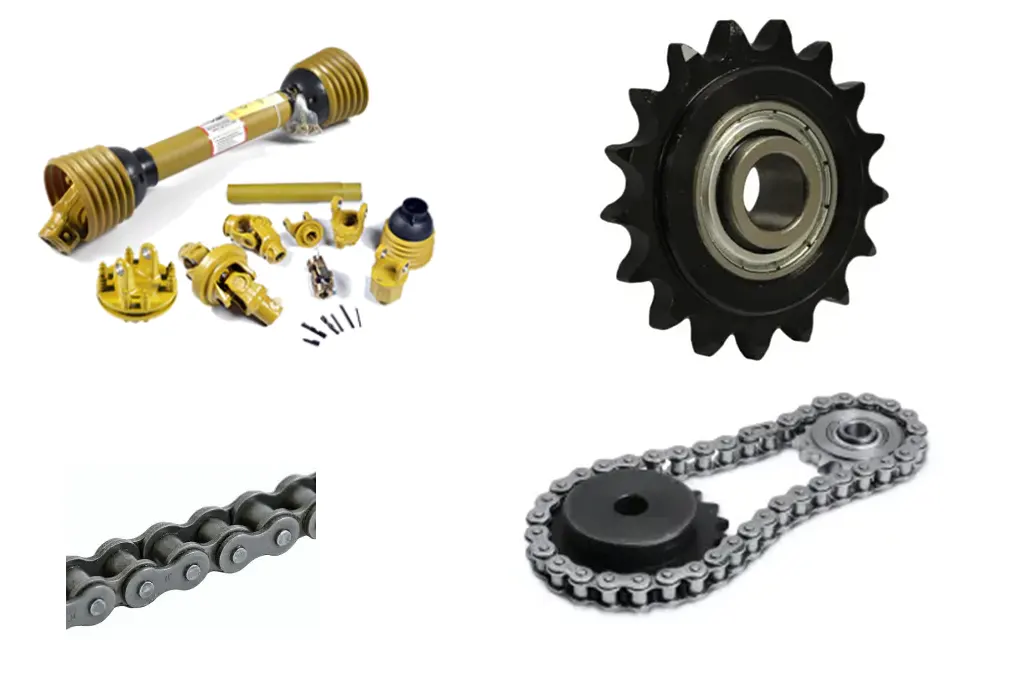
The 9YQ-2300 fits the same America Ever-Power equipment chain as every other model in the round baler lineup: a disc mower for cutting, a hay rake to merge wide mower swaths into a windrow matched to the 9YQ-2300's 90.6-inch pickup, and the round baler itself for high-throughput compression and net wrapping. Operations that also serve the small-square market pair the 9YQ-2300 with a model from the square baler lineup on a separate tractor, running both implements simultaneously during peak baling season to maximize daily output. The input gearbox and all replacement parts for the 9YQ-2300 are stocked at the Dallas, TX parts depot for 3-day delivery to any US or Canadian address.
Get a Quote for the 9YQ-2300 Round Baler
Tell us your tractor model and HP, total annual acreage and cutting schedule, and whether you need dry-hay or baleage capability. We confirm PTO and tractor compatibility, recommend the optimal net wrap setting for your storage conditions, and provide a delivered price to your farm. Parts stocked in Dallas, TX — 3-day delivery across the continental US and Canada.
Additional information
| Editor | Cxm |
|---|