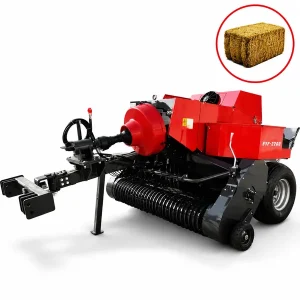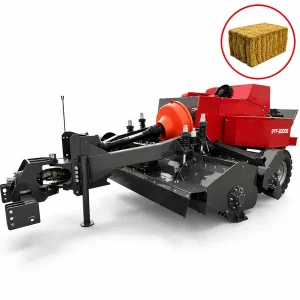
9YFS-2.2 Double-Chamber Square Baler
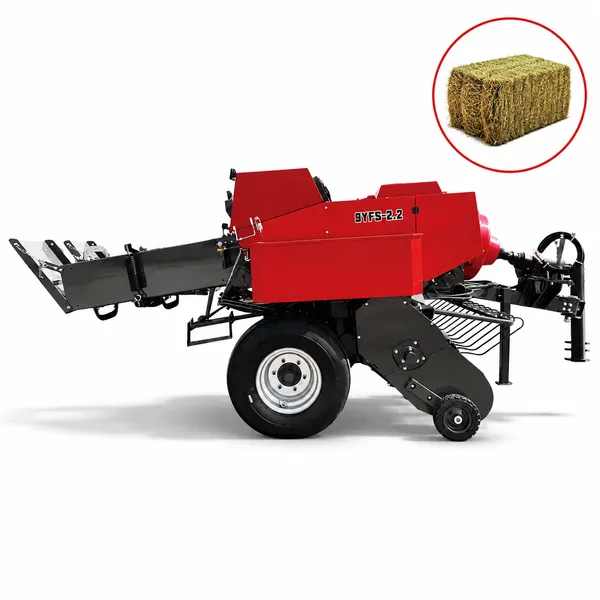
The 9YFS-2.2 is the only square baler in the America Ever-Power lineup that runs two compression chambers in parallel — one pass through the windrow, two finished bales on the ground. With 4 D-type knotters (2×2), a 2,200 mm (86.6 in) spring-tooth pickup, fork-feeding mechanism, and a ≥69 HP PTO requirement, it doubles the output of a conventional single-chamber square baler without doubling the tractor time or fuel cost. At 3,115 kg (6,868 lb), the 9YFS-2.2 is engineered for commercial producers and custom operators who need the highest small-bale throughput available from a single trailed implement.
- ▶ Dual compression chambers — two 460×360 mm bales per cycle
- ▶ 4 D-type knotters (2×2) — independent tying on each chamber
- ▶ 2,200 mm (86.6 in) spring-tooth pickup — wide-swath collection
- ▶ Fork feeding mechanism — reliable intake across crop types
- ▶ Automatic rope baling — hands-free knot cycle every pass
America Ever-Power · Square Baler
4 Knotters (2×2)
≥69 HP
86.6 in Pickup
6,868 lb · 3,115 kg
What Is a Square Baler — and Where It Fits in the Modern Hay Operation
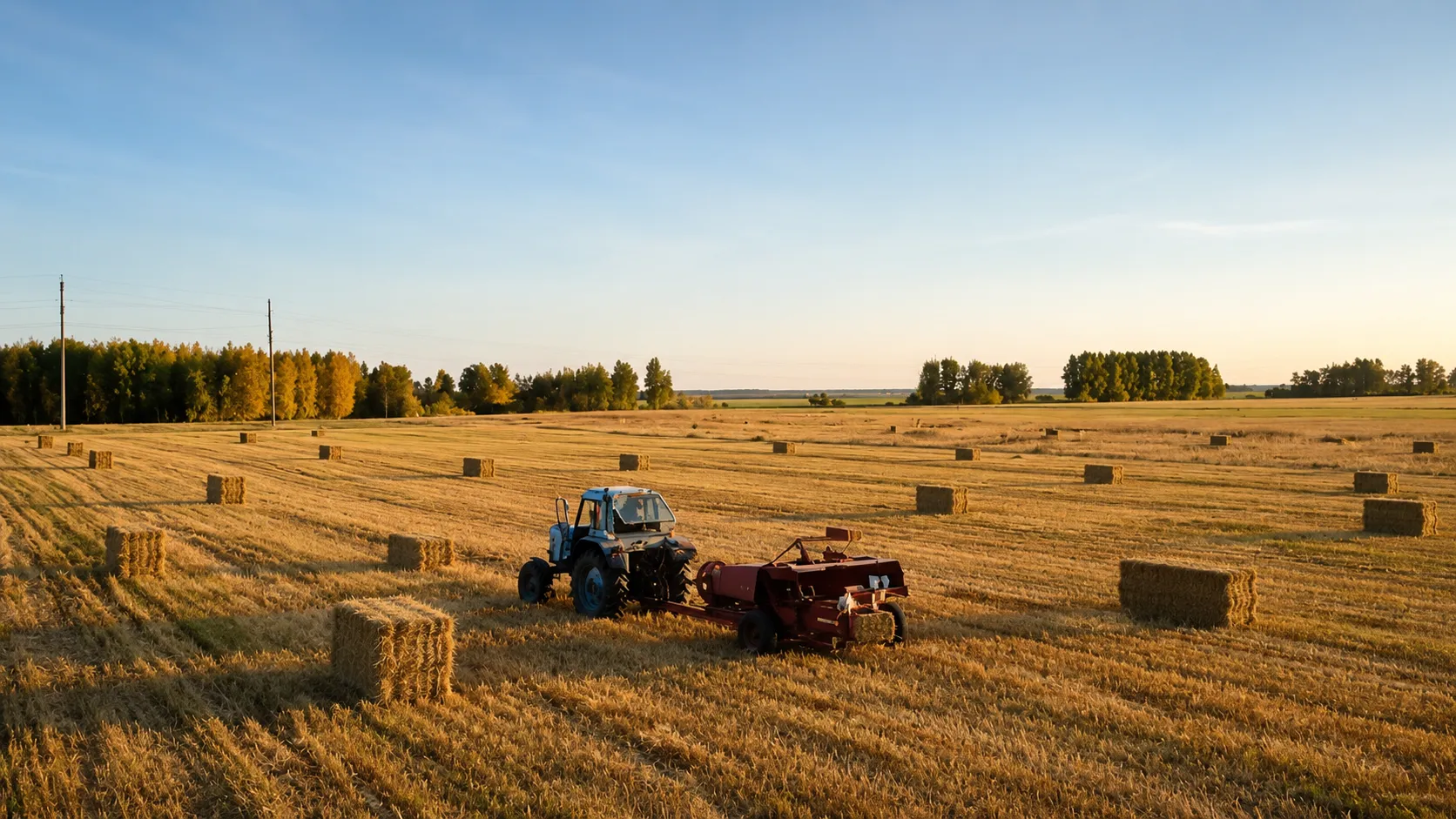
A square baler — more accurately a rectangular baler, since the bale cross-section is a rectangle rather than a square — is a PTO-driven implement that collects forage from a windrow, compresses it through a reciprocating plunger into a rectangular channel, and ties the formed bale with twine using an automatic knotter mechanism. The resulting small square bale (typically 18×14 inches in cross-section and 24 to 48 inches long) is the standard format for the horse market, retail hay sales, farm store supply, and any operation that needs a manually handleable bale that one person can lift, stack, and feed without mechanical assistance.
Compared to a round baler, the square baler produces a format that commands a 30 to 60 percent premium per ton of dry matter in the horse and retail markets. A 50 lb square bale selling at $8 to $14 each delivers $320 to $560 per ton — well above the $130 to $200 per ton that cow-calf round bales command. That premium reflects the handling convenience, the consistent portion size for feeding, and the barn-stackable dimensions that round bales cannot offer. The trade-off is throughput: a square baler produces bales at a fraction of the speed of a round baler, and the twine cost per ton is higher than net wrap. The 9YFS-2.2 was engineered specifically to close that throughput gap.
The Dual-Chamber Advantage — Why the 9YFS-2.2 Square Baler Doubles Output Without Doubling Cost
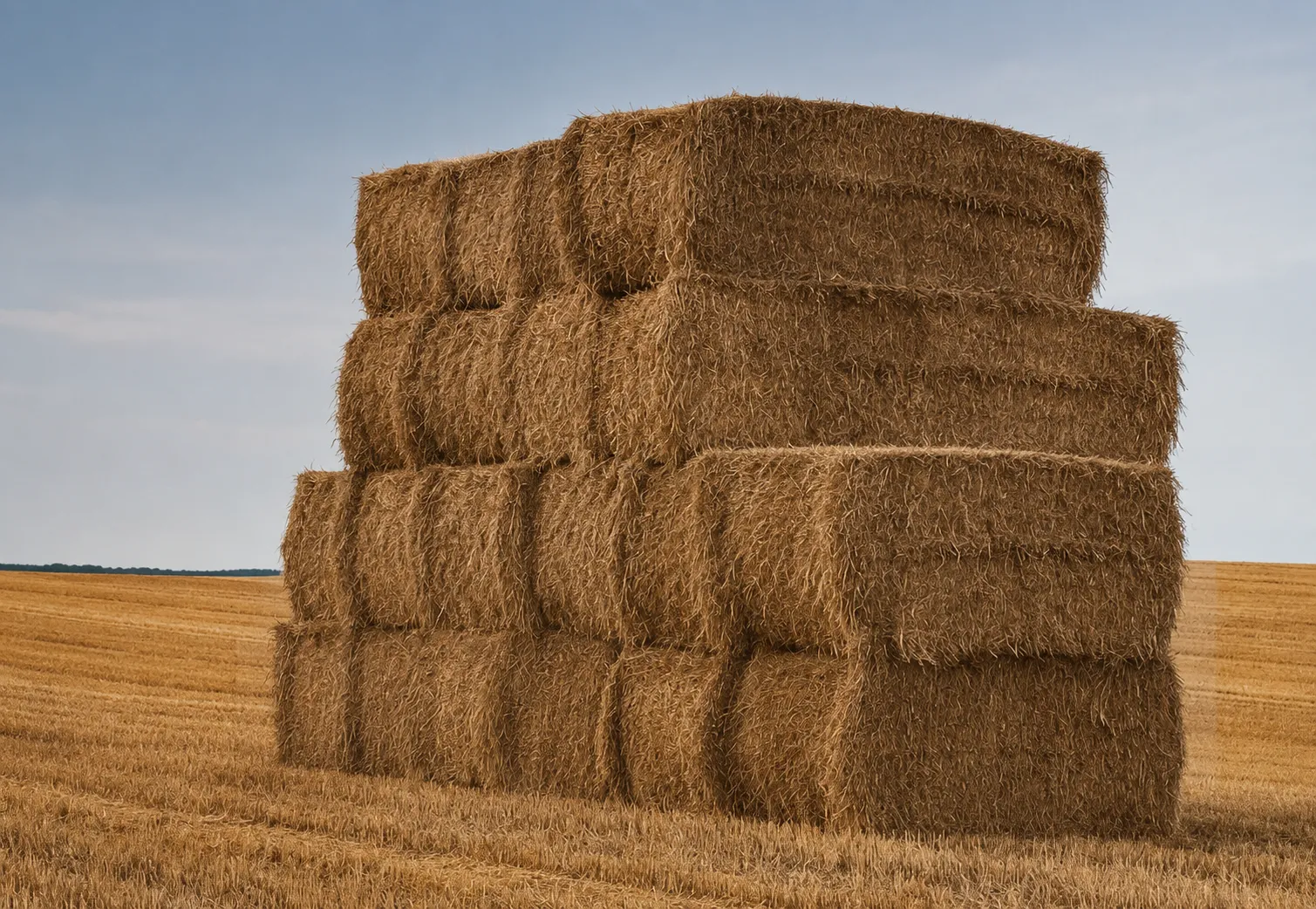
Every conventional square baler operates one compression chamber with one plunger and two knotters, producing one bale per compression cycle. The 9YFS-2.2 operates two compression chambers in parallel, each fed by the same 86.6-inch pickup and fork-feeding system, each running its own plunger and two knotters, and each ejecting a finished bale simultaneously. One tractor pass through the windrow produces two tied, finished bales on the ground.
The productivity implication is significant. A single-chamber square baler producing 80 bales per hour at 4 mph requires 6.25 hours to produce 500 bales. The 9YFS-2.2 producing 160 bales per hour at the same ground speed completes the same 500-bale target in 3.1 hours — freeing the tractor, the operator, and the windrow-clearing momentum for another field or another cutting in the same day. On operations that market baled straw or hay by the truckload, this throughput difference is the margin between filling a 400-bale order in a half-day and tying up the entire day's tractor time to do it.
9YFS-2.2 Double-Chamber Square Baler — Technical Specifications
| Parameter | Specification |
|---|---|
| Model | 9YFS-2.2 Double-Chamber Square Baler |
| Hitching Method | Trailed |
| Pickup Width | 2,200 mm (86.6 in) |
| Pickup Structure | Spring Tooth Type |
| Feeder Structure | Fork Feeding Mechanism |
| Knotter Type | D-Type |
| Number of Knotters | 4 pcs (2 per chamber) |
| Compression Chamber Section (W×H) | 460×360 mm ×2 (18.1×14.2 in ×2) |
| Baling Method | Automatic Rope Baling |
| Matching Power Range | ≥51.5 kW (≥69 HP) |
| PTO Speed | 540 RPM |
| Overall Dimensions (L×W×H) | 5,600×2,780×1,790 mm (220×109×70 in) |
| Machine Weight | 3,115 kg (6,868 lb) |
9YFS-2.2 Square Baler — Key Engineering Features
Every feature below comes directly from the 9YFS-2.2's design brief: maximize bale throughput per tractor-hour without sacrificing knot reliability, bale density, or the crop-collection efficiency that determines how much of the mowed forage actually ends up in a tied bale.
◆ Dual Compression Chambers — Two Bales, One Pass
The 9YFS-2.2 runs two compression chambers side by side, each at 460×360 mm (18.1×14.2 in) cross-section. Both chambers are fed by the same pickup and fork-feeding system, and both plungers operate simultaneously off the same PTO-driven flywheel. The result is two finished, tied bales ejected simultaneously at the end of every compression cycle — without any increase in field passes, windrow preparation, or fuel consumption per acre compared to a single-chamber square baler. For the same 4 mph ground speed and the same field, the 9YFS-2.2 exits with twice the bale count.
- ✓ 2× bale output per acre vs any single-chamber square baler
- ✓ Same tractor-hours, same fuel — half the time to reach a target bale count
- ✓ Ideal for commercial straw and hay operations billing by volume
◆ 4 D-Type Knotters (2×2) — Independent Tying on Each Chamber
Each of the two compression chambers is served by its own pair of D-type knotters — the most widely proven knotter geometry in commercial square baler design. The D-type mechanism forms a slip-proof, load-bearing knot in a single rotation of the knotter disk, which means knot formation time is short enough to keep pace with a dual-chamber machine's output rate without creating a timing bottleneck. With four knotters running simultaneously, the 9YFS-2.2 ties two bales — four individual twine knots — per compression cycle.
- ✓ Each chamber's knotters operate independently — a knotter service on one chamber does not affect the other
- ✓ D-type geometry: proven in millions of bales across every forage crop
- ✓ Compatible with standard sisal and polypropylene twine
◆ 2,200 mm Spring-Tooth Pickup — Wide-Swath, Clean Collection
The 86.6-inch spring-tooth pickup sweeps a wide swath per pass, matching the full width of windrows produced by merging 2 to 3 mowed swaths. Spring-tooth tines flex on contact with the ground rather than digging in, which means less soil contamination in the collected forage and longer tine life on stony or irregular fields. The wide pickup also allows the operator to collect slightly off-center windrows without reducing collection efficiency — a practical advantage on fields where wind or terrain causes windrows to drift from the mower's original placement.
- ✓ Suitable for wheat straw, rice straw, corn stalks, cotton stalks, and forage grasses
- ✓ Spring flex reduces tine breakage on uneven terrain vs. rigid-tooth pickups
- ✓ Wide coverage reduces the number of windrow passes needed to clear a field
◆ Fork Feeding Mechanism — Reliable Intake Across Crop Types
Between the pickup and the dual compression chambers sits a fork feeding mechanism that gathers the collected forage into measured charges and delivers each charge into the compression channel at the correct moment in the plunger's stroke cycle. Fork feeding is more positive and more reliable than auger or rotor pre-feeders on materials with variable bulk density — which describes most field-harvested straw and hay, where a single windrow can shift from loose to compressed within a few feet. The fork mechanism's positive grab means a consistent charge to both chambers on every stroke, which translates directly to consistent bale length and bale weight across the entire field.
- ✓ Consistent charge delivery to both chambers — uniform bale weight throughout the field
- ✓ Handles wet and dry forage without clogging the intake channel
- ✓ Fewer feed-related stoppages compared to auger-type pre-feeders on variable-density windrows
◆ Automatic Rope Baling — Hands-Free Knot Cycle Every Pass
The entire knot-tying cycle on both chambers is fully automatic — the knotters activate at the programmed bale length, complete the four knots simultaneously across both chambers, and the finished bales are ready for ejection without any operator input between compression cycles. Bale length is set by a star-wheel metering mechanism that counts the forage volume passing through the channel, triggering the knotter trip at the target length setting. Changing bale length is a simple adjustment at the metering wheel, allowing the operator to switch between short bales for retail markets and longer bales for bulk feeders without tools.
- ✓ Fully automatic on both chambers — no operator knotter intervention during baling
- ✓ Bale length adjustable via star-wheel metering — no tools required
- ✓ Compatible with sisal twine (biodegradable) and polypropylene twine
America Ever-Power Square Baler Lineup — Choosing the Right Model for Your Output Target
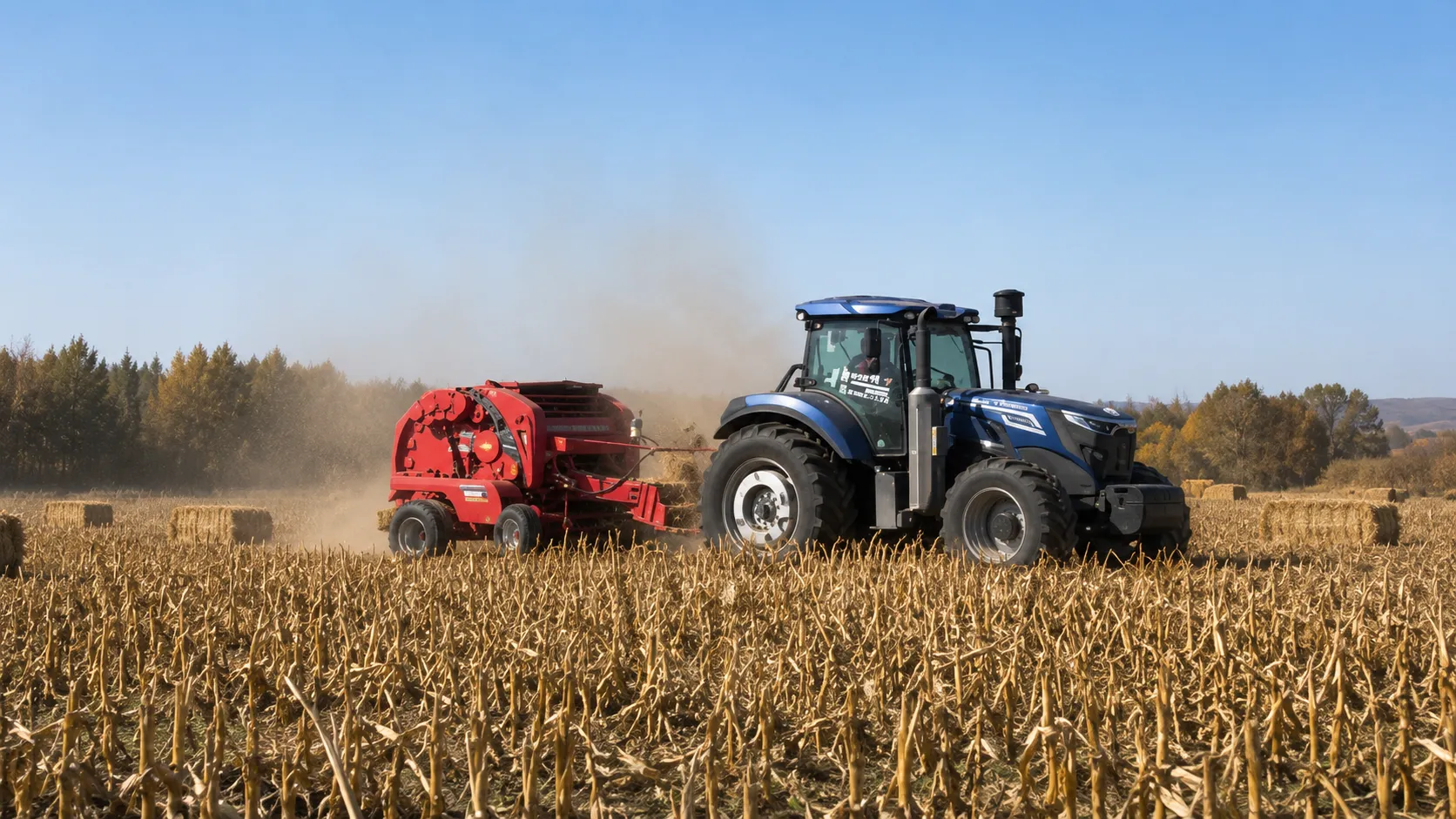
America Ever-Power offers five square baler models ranging from the compact 9YF-1700 at 40 HP entry-level to the 9YFS-2.2 dual-chamber flagship. All five share the same D-type knotter design and spring-tooth pickup philosophy; the differences are pickup width, chamber count, tractor HP requirement, and whether the machine includes a shredding mechanism for corn stalks and sorghum stems.
| Model | Chambers | Pickup Width | HP Range | Special Feature | Best Match |
|---|---|---|---|---|---|
| 9YF-1700 | 1 | 1,700 mm / 67" | 40–99 HP | — | Compact tractor · small farm |
| 9YF-1900 | 1 | 1,900 mm / 75" | 49–99 HP | — | Mid-size farm · horse hay |
| 9YF-2200 | 1 | 2,200 mm / 87" | ≥49 HP | — | Standard production · hay & straw |
| 9YF-2200S | 1 | 2,200 mm / 87" | ≥99 HP | Single or dual shredder + dust fan | Corn stalks · sorghum · standing crop |
| 9YFS-2.2 ★ | 2 | 2,200 mm / 87" | ≥69 HP | Dual chamber · 4 knotters | Max throughput · commercial · custom |
The 9YFS-2.2 occupies the top of the lineup not because it requires the most horsepower — the 9YF-2200S actually requires ≥99 HP for its shredding mechanism — but because it produces the highest bale count per hour of any model. If your primary need is stalk shredding and baling in a single pass, the 9YF-2200S is the right tool. If your primary need is maximum small-square bale output from a standard hay and straw windrow, the 9YFS-2.2 is the answer. Operators who need both capabilities sometimes run the 9YFS-2.2 for prime windrow conditions and the 9YF-2200S for corn stover and standing-crop recovery after harvest.
What Crops and Operations the 9YFS-2.2 Square Baler Is Built For
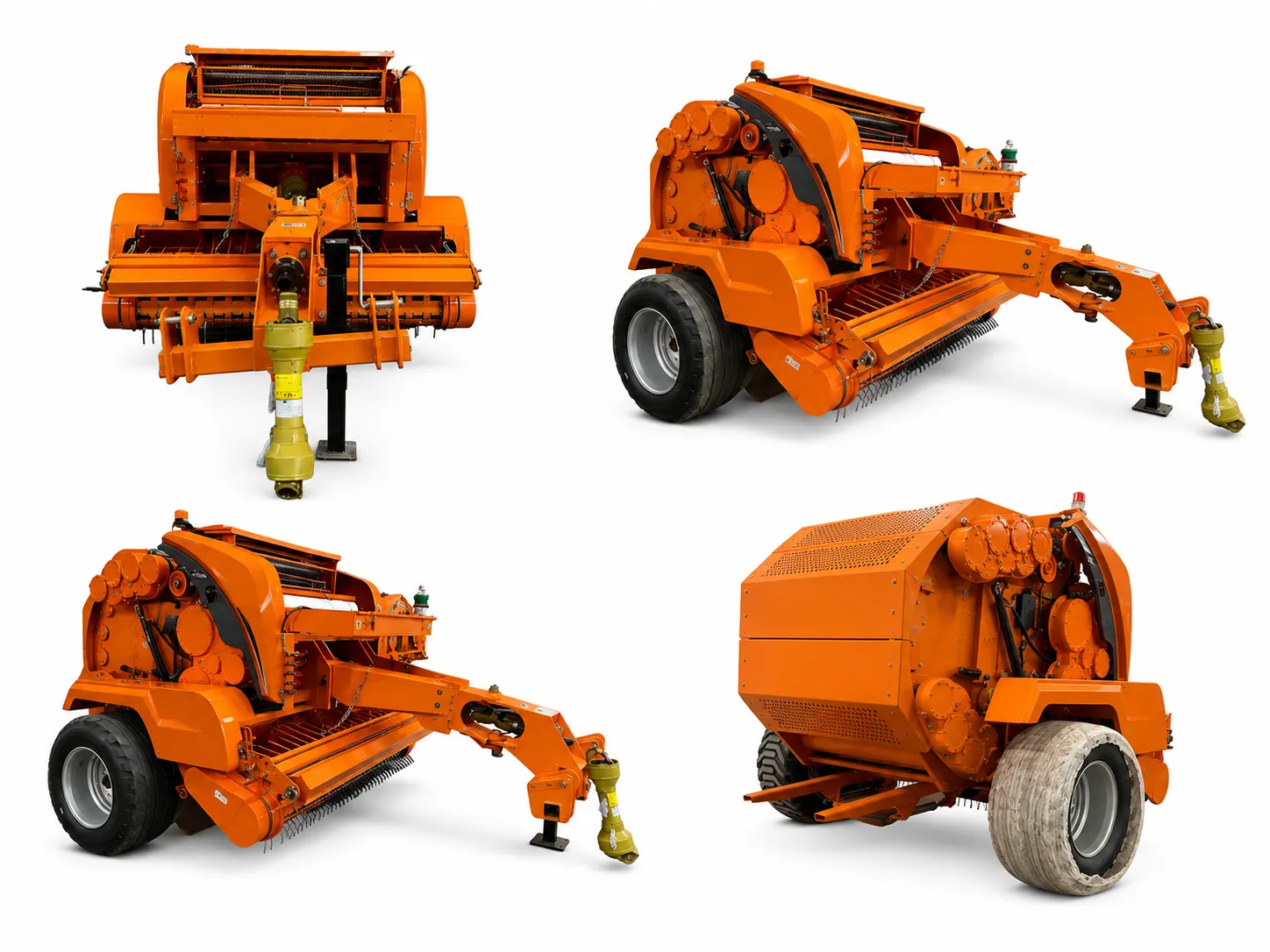
The 9YFS-2.2 is suited for collecting and baling a wide range of crops and residues. The spring-tooth pickup handles forage across the full moisture and bulk-density range that these crops present:
- ➤ Wheat straw — the most common use case; dry, light, and forgiving on the knotters
- ➤ Rice straw — slightly more abrasive; spring-tooth pickup handles the short, slick stems
- ➤ Cotton stalks — the wider 86.6-inch pickup covers the row spacing effectively
- ➤ Various forage grasses, alfalfa, dry and fresh herbage — ideal for the horse and dairy markets
- ➤ Mixed crop residues — any windrowable material at baling moisture (15–23% for grasses, 10–23% for straws)
Commercial Hay & Straw Producers
The dual-chamber output means a 500-bale order takes half the field time of any single-chamber square baler. For operations selling by the truckload to feed dealers, retail stores, or directly to horse owners, the 9YFS-2.2 is the implement that doubles daily revenue capacity without adding a second tractor or a second operator.
Custom Baling Operators
Custom operators billing by the bale — or by the hour — benefit directly from dual output: the same fuel and labor hours produce twice the invoiceable bale count. The 9YFS-2.2 effectively doubles a custom operator's small-square capacity without increasing their fleet size or operating cost structure.
Crop Residue Recovery
Post-harvest straw recovery is a time-critical window: the field needs to be cleared for tillage or next-season planting. The 9YFS-2.2's throughput advantage is most valuable here — clearing straw from 200 acres in the same time a conventional square baler covers 100 acres, keeping the farm schedule intact during the busiest periods of the year.
Tractor Requirements and Field Operation for the 9YFS-2.2 Square Baler
The 9YFS-2.2 requires a minimum of 69 HP (51.5 kW) at the PTO shaft and a 540 RPM PTO. Most utility tractors in the 70 to 100 HP range cover this requirement comfortably, with enough power reserve to handle dense windrows and hillside conditions without engine lugging. The machine runs from a single PTO stub — no additional hydraulic remotes are required for basic baling operation, though a rear hydraulic remote is useful for raising the pickup on headland turns. At 6,868 lb (3,115 kg), the 9YFS-2.2 is heavier than any single-chamber square baler in the lineup, so the tractor should have adequate rear ballast or front weight to maintain steering control when the baler is fully loaded with formed bales in both chambers.
Optimal ground speed is 3 to 5 mph on standard dry-straw and dry-hay windrows. Because the dual chambers are processing twice the forage per unit time at any given ground speed, the 9YFS-2.2 should be run at the lower end of the single-chamber baler's typical speed range until the operator is familiar with how the machine loads across different windrow densities. Heavy windrows — first-cut alfalfa, thick wheat straw after a high-yield harvest — may require 3 to 3.5 mph to keep the fork feeder from backing up into the pickup channel. Thinner windrows allow 4 to 5 mph. The knotters and ejector mechanism determine the upper speed limit: the plunger must complete its compression stroke and the knotters must complete the tie cycle before the next charge enters the chamber, so the maximum productive speed is set by the mechanical cycle time rather than the engine or PTO capacity.
- ▶ Before each session: Check twine supply on all 4 spools · thread knotters on both chambers · inspect pickup tine condition
- ▶ Every 50 hours: Grease all knotter cam bearings and needle pivot points · check plunger wear strips · inspect fork tine tips
- ▶ Knotter adjustment: If bales are coming out untied or with loose knots, check the twine tension disk spring and the bill hook timing per the manual before running another field
- ▶ End of season: Clean all straw and chaff from the knotter mechanism · oil the knotters lightly · store under cover with the pickup raised
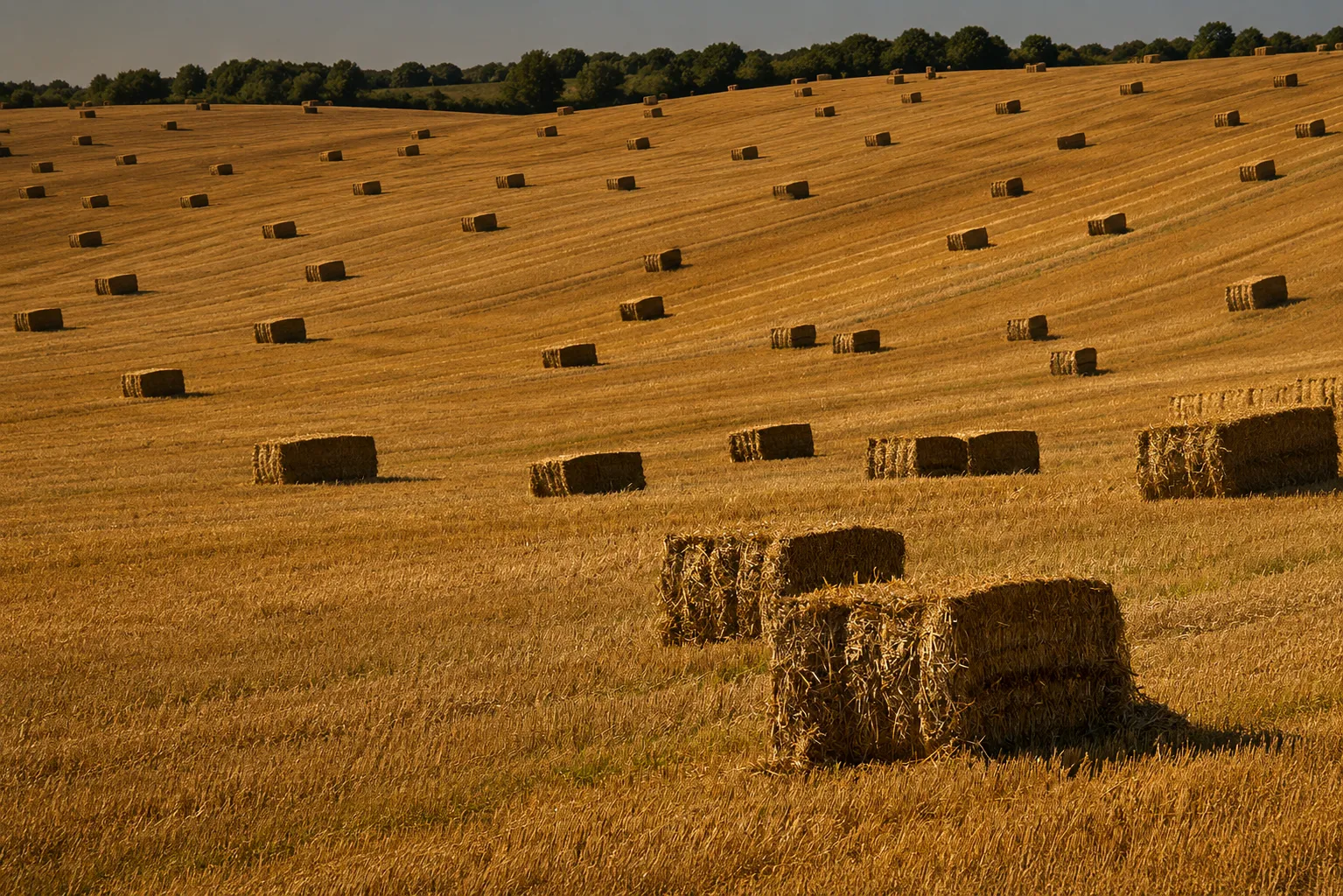
The 9YFS-2.2 fits within the complete America Ever-Power equipment chain. A disc mower cuts the forage, a finger wheel rake merges the swaths into the wide windrow the 9YFS-2.2's pickup can fully utilize, and the double-chamber baler turns that windrow into twice the finished bale count per pass. Operations that also run a round baler for bulk hay production can use the 9YFS-2.2 for premium-market cuttings, switching implements on the same tractor between the bulk round-bale fields and the horse-hay or retail square-bale fields within the same baling day. All America Ever-Power implements share 540 RPM PTO compatibility and standard Category II/III hitch geometry. For information on our full square baler lineup, or to explore gearbox replacement and drivetrain parts from our supplier network at agriculturalgear-boxes.com, contact our team for a compatibility check and parts quote.
Get a Quote for the 9YFS-2.2 Double-Chamber Square Baler
Tell us your tractor HP, the crops you are baling, and your target bale count per season. We confirm compatibility, advise on the right twine type and bale length setting, and provide a delivered price to your farm. Parts stocked in Dallas, TX — 3-day delivery across the continental US and Canada.
Additional information
| Editor | Cxm |
|---|