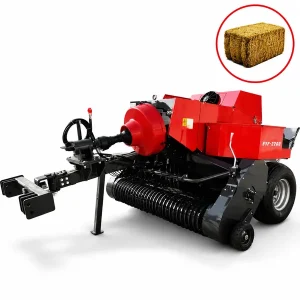
9YF-2200S Square Baler With Shredding Mechanism
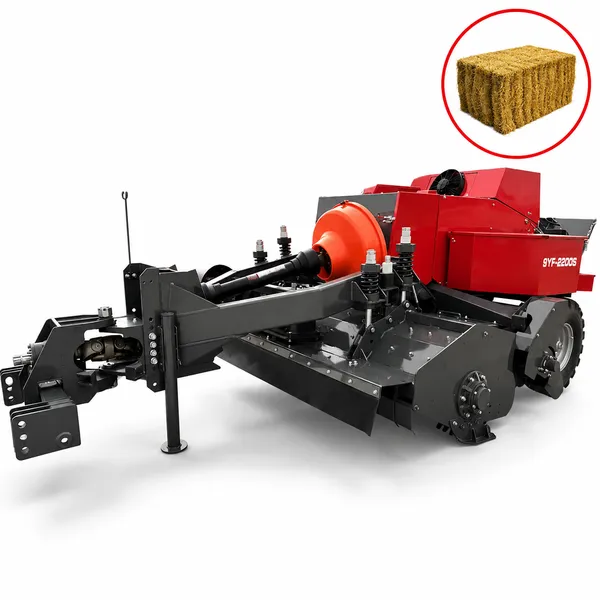
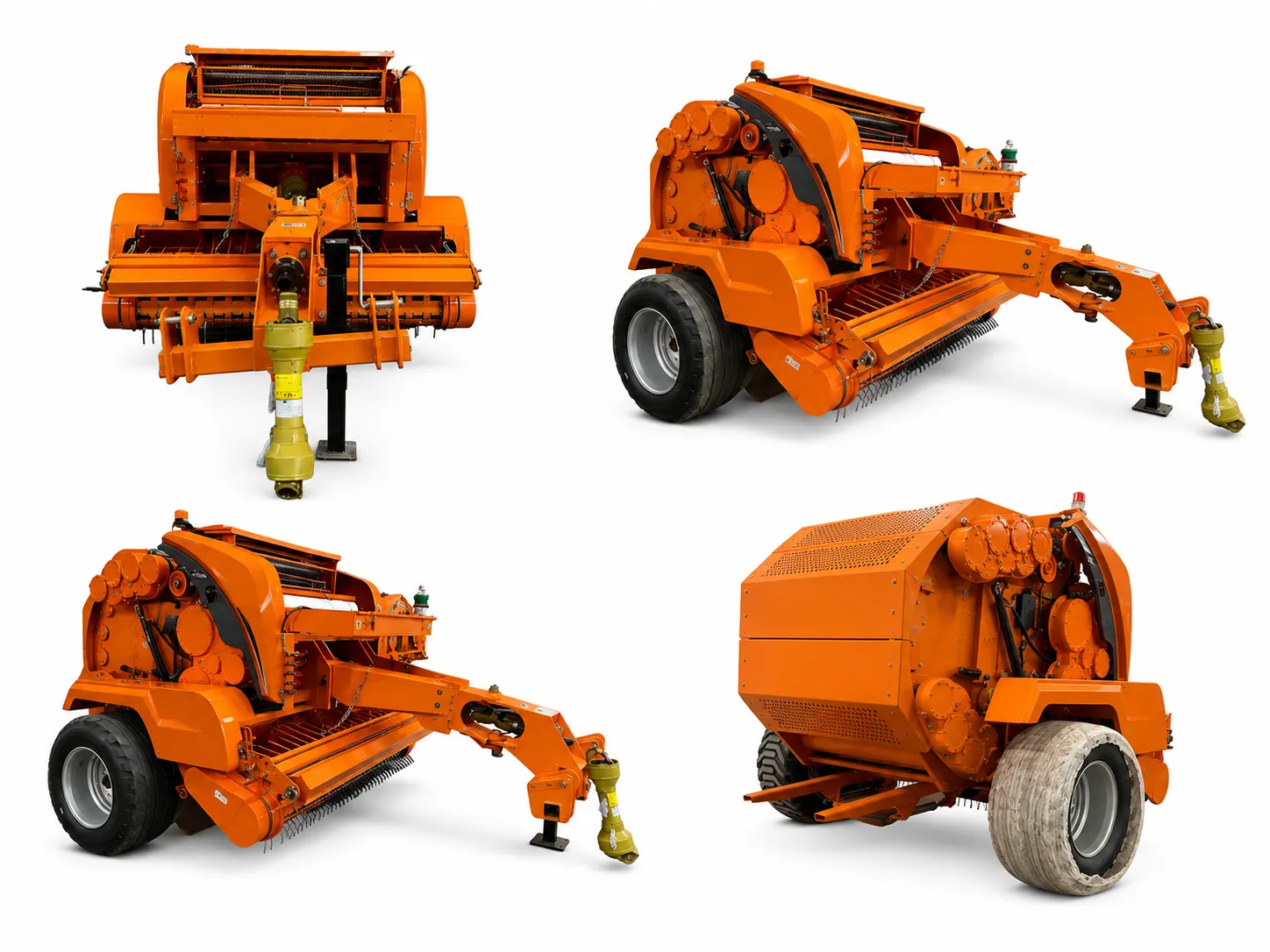
The 9YF-2200S is the only square baler in the America Ever-Power lineup that shreds before it bales. Available in two configurations — single shredding for corn stalks and sorghum, and dual shredding with negative-pressure dust fan for ultra-clean windrows and superior bale palatability — the 9YF-2200S handles the standing, lodged, or windrowed hard-stem material that a standard square baler cannot process. With a 2,200 mm (86.6 in) hammer-claw pickup, ≥99 HP power requirement, and a machine weight of 2,350 kg (5,181 lb), it is built for the commercial corn belt and straw-recycling operations that need to recover high-density bales from the most demanding crop residues without a separate shredding pass.
- ▶ Single shredding: high-efficiency crushing and rubbing of corn, sorghum, and hard-stem stalks
- ▶ Dual shredding + negative-pressure fan: dust removal specialized — cleaner windrow, better palatability
- ▶ Hammer-claw pickup: picks up standing, lodged, or flat-lying material reliably
- ▶ Currently the only equipment in China that reliably picks up and bales upright, lodged, or spread corn and sorghum stalks
- ▶ Material moisture: legumes 17–23%; rice/wheat/corn 10–23%; soil moisture 12–25%; slope ≤8°
America Ever-Power · Square Baler With Shredder
Hammer-Claw Pickup
≥99 HP
86.6 in Pickup
5,181 lb · 2,350 kg
Dual
The Hard-Stem Baling Problem — Why a Standard Square Baler Cannot Handle Corn Stalks and Sorghum
A standard square baler is engineered for forage grass, alfalfa, and cereal straw — material that is flexible, relatively uniform in bulk density, and easy to compress into a stable rectangular shape. Corn stalks, sorghum stems, and cotton stalks are fundamentally different: they are rigid, hollow, highly variable in diameter and hardness, and their outer epidermis is waxy and difficult to bond together under compression. When a standard square baler tries to process corn stalks, the rigid stems bridge across the compression channel instead of compressing, the knotters fail to tie around the irregular bundle, and the resulting bale — if it forms at all — breaks apart when ejected because the stalks have not been broken down enough to interlock and hold their compressed shape.
The solution is shredding before compression. When corn stalks or sorghum stems are crushed and rubbed by a shredding mechanism before they enter the compression channel, the rigid cellular structure is broken, the hollow stems collapse into dense fiber bundles, and the resulting material compresses and interlocks like forage grass — forming high-density bales with stable knot retention that survive ejection, handling, transport, and feeding intact. The 9YF-2200S integrates the shredding mechanism directly into the baling machine, eliminating the need for a separate shredder pass that would require an additional field operation, additional fuel, and additional time in a crop recovery window that is often measured in days.
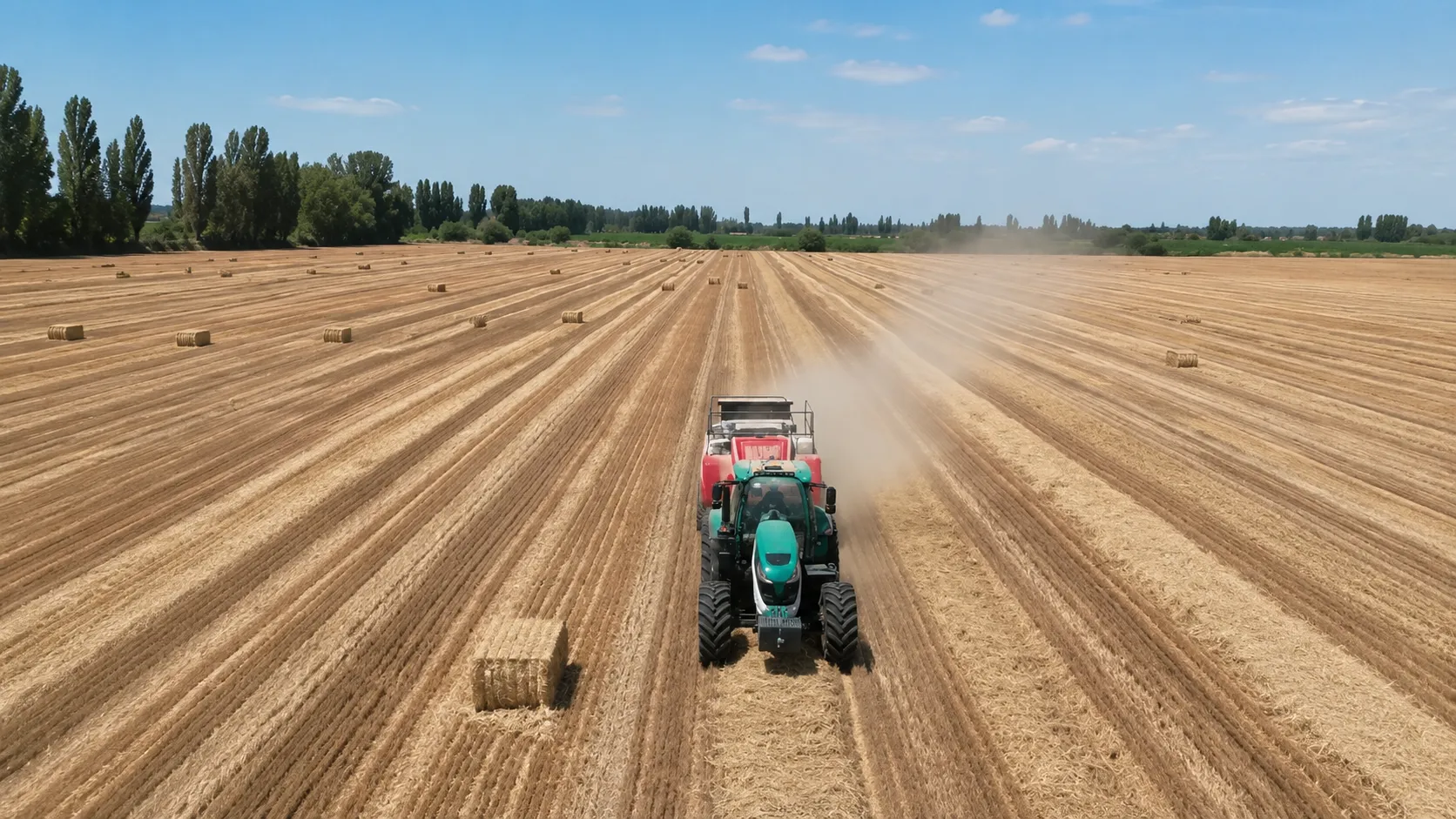
Beyond corn belt crop residue, the 9YF-2200S handles the same range of forage crops as the standard 9YF-2200 square baler — wheat straw, rice straw, alfalfa, dry and fresh herbage — with the additional shredding action improving bale density and forming stability across all material types. It is also designed to pick up and bale material in three field orientations that standard square balers cannot manage: standing upright, lodged at an angle, or spread flat across the stubble. This three-position capability comes from the hammer-claw pickup design, which is aggressive enough to lift material from any orientation rather than requiring a perfectly formed flat windrow.
Two 9YF-2200S Configurations — Single Shredding vs Dual Shredding With Negative-Pressure Fan
The 9YF-2200S is available in two distinct configurations that reflect different priorities in the shredding and baling process. The choice between them depends on the crops being processed and the quality standard required for the baled product.
9YF-2200S Square Baler With Shredder — Technical Specifications
| Parameter | Config A — Single Shredding | Config B — Dual Shredding + Fan |
|---|---|---|
| Model | 9YF-2200S Square Baler | |
| Hitching Method | Trailed (towed-type) | |
| Pickup Width | 2,200 mm (86.6 in) | |
| Pickup Structure | Hammer-Claw Type | |
| Feeder Structure | Fork Feeding Mechanism | |
| Shredding Mechanism | Single shredder | Dual shredder + negative-pressure fan |
| Knotter Type | D-Type | |
| Number of Knotters | 2 pcs | |
| Compression Chamber (W×H) | 460×360 mm (18.1×14.2 in) | |
| Baling Method | Automatic Rope Baling | |
| Matching Power Range | ≥73.5 kW (≥99 HP) | |
| PTO Speed | 540 RPM | |
| Overall Dimensions (L×W×H) | 6,240×2,760×1,700 mm (246×109×67 in) |
6,500×2,900×3,360 mm (256×114×132 in) |
| Machine Weight | 2,350 kg (5,181 lb) | |
9YF-2200S Square Baler — Key Engineering Features From the Catalog
◆ Hammer-Claw Pickup — Three-Position Material Recovery
The hammer-claw pickup replaces the spring-tooth tines used on the standard 9YF-2200 with aggressive hammer-shaped claw fingers that grab material from any orientation. While a spring-tooth pickup works best on material that has already been cut, wilted, and formed into a flat windrow, the hammer-claw design can engage material that is still partially upright, leaning at a post-harvest angle, or scattered flat across the field after a wind event. This three-position capability is what makes the 9YF-2200S the tool of choice for post-harvest corn stalk and sorghum recovery, where the field is not a clean windrow but a mix of orientations from the combine's passage.
- ✓ Picks up standing, lodged, and flat-lying material — not limited to clean windrows
- ✓ Aggressive claw geometry handles the coarse, rigid material that spring-tooth tines skip
- ✓ 2,200 mm (86.6 in) width covers full corn row spacing in a single pass
◆ Single-Stage Shredding Mechanism — Dense Bales From Hard-Stem Material
Adopting a single-stage shredding structure, the shredder achieves efficient crushing and rubbing of hard stalks such as corn and sorghum. This ensures the density and forming stability of the bales after baling, and also facilitates subsequent feeding, returning to the field, or resource utilization. The shredding action breaks the hollow cellular structure of the corn stalk, collapses the stem into dense fiber, and removes the outer epidermal layer that makes unshredded stalks difficult to tie and bond in compression. The result is a bale that holds its shape, maintains its knot integrity through the ejection impact, and stacks stably in storage — the three quality failures that make unshredded corn stalk baling unreliable with a standard square baler.
- ✓ Crushing and rubbing action breaks hollow corn stalk structure before compression
- ✓ High bale density and forming stability — bales survive ejection, handling, and stacking
- ✓ Works on corn, sorghum, cotton stalks, rice straw, alfalfa, fresh and dry herbage
◆ Negative-Pressure Fan (Config B) — Dust Removal Before Baling
In Configuration B, the negative-pressure fan uses adsorption to actively separate dust, fine sand, and other impurities from the material stream as it flows from the shredder toward the feeder. The fan creates a low-pressure zone in the material channel that draws fine particles — the dust and soil contamination that follows a post-harvest corn field — away from the crop fiber and out of the baling stream. The result is a material going into the compression channel that is cleaner, drier in terms of fine particles, and higher in pure crop fiber content per unit weight. The dual-crushing mechanism in Config B also achieves more thorough shredding and rubbing of hard stalks such as corn and sorghum, improving both bale density and the palatability of the baled corn stalk for livestock consumption — particularly dairy and beef cattle that would otherwise refuse dusty or soil-contaminated stalk material.
- ✓ Negative-pressure adsorption removes fine dust and sand before the compression channel
- ✓ Cleaner bale = better palatability and higher livestock feed acceptance rates
- ✓ Dual-stage crushing for more thorough breakdown than single-shredder Config A
◆ Multi-Moisture, Multi-Hardness Material Handling — One Machine for Every Stalk
The 9YF-2200S's shredding mechanism can handle stalks and crop material across a wide range of moisture contents and hardness levels, ensuring high density and good forming of baled corn stalks for easy storage, transportation, and feeding. Leguminous forage and gramineous forage: 17 to 23 percent moisture content. Rice, wheat straw, and corn stalks: 10 to 23 percent moisture content. Soil moisture content: 12 to 25 percent, with a slope of 8 degrees or less. This range covers the field conditions from dry summer straw at 10 to 12 percent moisture through fresh-cut forage at 20 to 23 percent, without requiring the operator to select different shredder configurations for different crops.
- ✓ Legumes and grasses: 17–23% moisture · Rice, wheat, corn: 10–23% moisture
- ✓ Soil moisture tolerance: 12–25% · Max slope: 8°
- ✓ No shredder reconfiguration needed between crop types within the moisture range
Choosing Between Config A and Config B — A Decision Framework
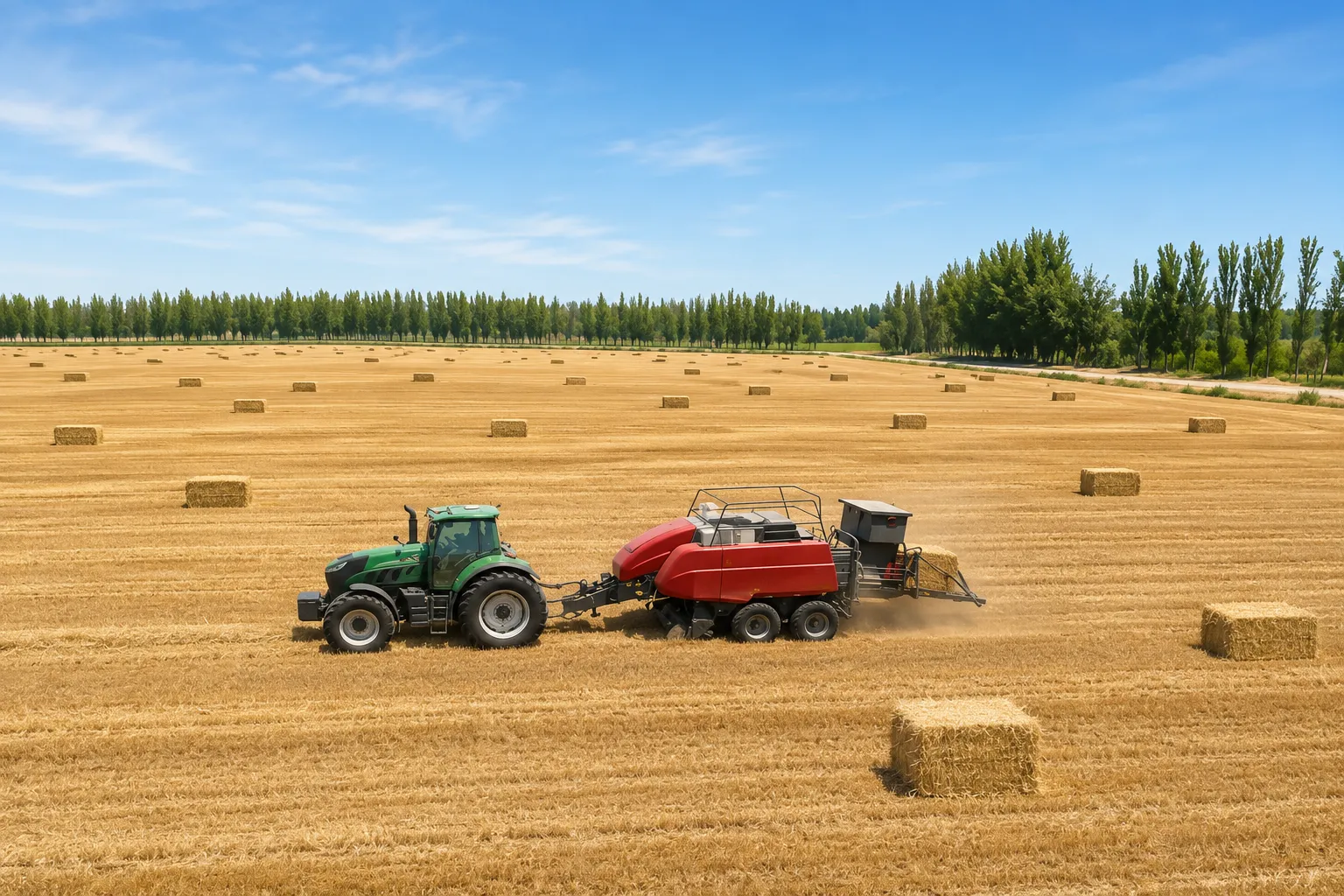
The two configurations of the 9YF-2200S serve the same core function — shredding and baling hard-stem material in one pass — but differ in the quality standard of the baled product and the complexity of the machine. The right choice depends on what happens to the bale after it leaves the field.
Choose Config A (Single Shredding) When:
- ➤ The baled material will be used as bedding or mulch rather than as livestock feed — dust content and palatability are not primary concerns
- ➤ The crop is wheat straw or rice straw (lower dust load than post-harvest corn fields) — the dual-shredder and fan are over-engineered for these cleaner materials
- ➤ The operation needs to minimize machine height and width for barn access or road transport — Config A at 1,700 mm (67 in) height vs Config B at 3,360 mm (132 in)
- ➤ Budget priority — Config A delivers the core shredding-and-baling function at lower equipment cost
Choose Config B (Dual Shredding + Fan) When:
- ➤ The baled corn stalk or sorghum will be fed to dairy cattle or beef cattle — clean, low-dust bales with higher palatability improve dry matter intake and reduce refusal
- ➤ The field has a high soil moisture or dust load — post-harvest corn fields in irrigated regions carry significant soil particles in the residue that the negative-pressure fan removes before baling
- ➤ The operation prioritizes maximum bale density and forming stability — the dual shredder stage achieves more complete breakdown of hard stalks than the single stage
- ➤ The bale will be marketed for livestock feed rather than bedding or field return — the quality premium for clean, dense, palatable stalk bales can justify the Config B equipment premium
Where the 9YF-2200S Sits in the Square Baler Lineup — When to Choose It Over the Standard Models
The 9YF-2200S is the most powerful and most specialized model in the America Ever-Power square baler lineup. It demands the highest HP, weighs the most, and costs the most — but it is the only model that handles corn stalks and sorghum stems reliably. The decision between the 9YF-2200S and the standard 9YF-2200 comes down to a single question: does the operation need to bale corn stalks or sorghum stems?
| Model | Shredder | Pickup | HP | Corn Stalks? | Best For |
|---|---|---|---|---|---|
| 9YF-1700 | None | Spring tooth · 67" | 40–99 | ✗ | Forage, wheat straw · compact tractor |
| 9YF-1900 | None | Spring tooth · 75" | 49–99 | ✗ | Forage, straw · mid-size farm |
| 9YF-2200 | None | Spring tooth · 87" | ≥49 | ✗ | Forage, straw · standard production |
| 9YF-2200S ★ | Single or Dual + Fan | Hammer-claw · 87" | ≥99 | ✓ Yes | Corn stalks, sorghum, all forage |
| 9YFS-2.2 | None | Spring tooth · 87" | ≥69 | ✗ | Max throughput · dual chamber · forage & straw |
Operations that grow corn, sorghum, or cotton alongside their hay production have a clear equipment logic: the 9YF-2200 or 9YF-1900 handles the hay and straw seasons, and the 9YF-2200S handles the post-harvest stalk recovery season. Both run from the same tractor at 540 RPM PTO, and the implement switch takes less than an hour. For operations that need the maximum bale count on forage windrows alongside corn stalk recovery capability, the 9YFS-2.2 dual-chamber model handles forage at maximum throughput while a separate 9YF-2200S run covers the corn stalk season — two implements, same tractor, full-season residue and forage recovery from a single property.
Applications, Tractor Requirements, and Maintenance for the 9YF-2200S
The 9YF-2200S requires a minimum of 99 HP (73.5 kW) at the PTO shaft — the highest HP requirement in the square baler lineup, driven by the energy demand of the shredding mechanism on top of the standard compression and knotter loads. In practice, a 110 to 130 HP row-crop tractor with MFWD is the typical match, providing adequate power reserve for dense corn stalk windrows and for operating on the slopes up to 8 degrees that the machine is rated for. The machine is trailed and requires one rear hydraulic remote for pickup lift in addition to the PTO connection.
The 9YF-2200S is well-suited for a wide range of crop residue and forage recovery scenarios across North American and international agricultural operations:
- ➤ Post-harvest corn stalk recovery — the primary use case; field clearing for tillage plus saleable stalk bales
- ➤ Sorghum and cotton stalk baling — rigid hollow stems that require shredding before compression
- ➤ Forage grass and alfalfa — the shredding mechanism improves bale density on these softer materials too
- ➤ Fresh and dry herbage — the hammer-claw pickup handles mixed fresh and dry material without clumping
- ➤ Straw recycling operations — supplying biomass fuel, mushroom substrate, paper pulp, and animal bedding industries
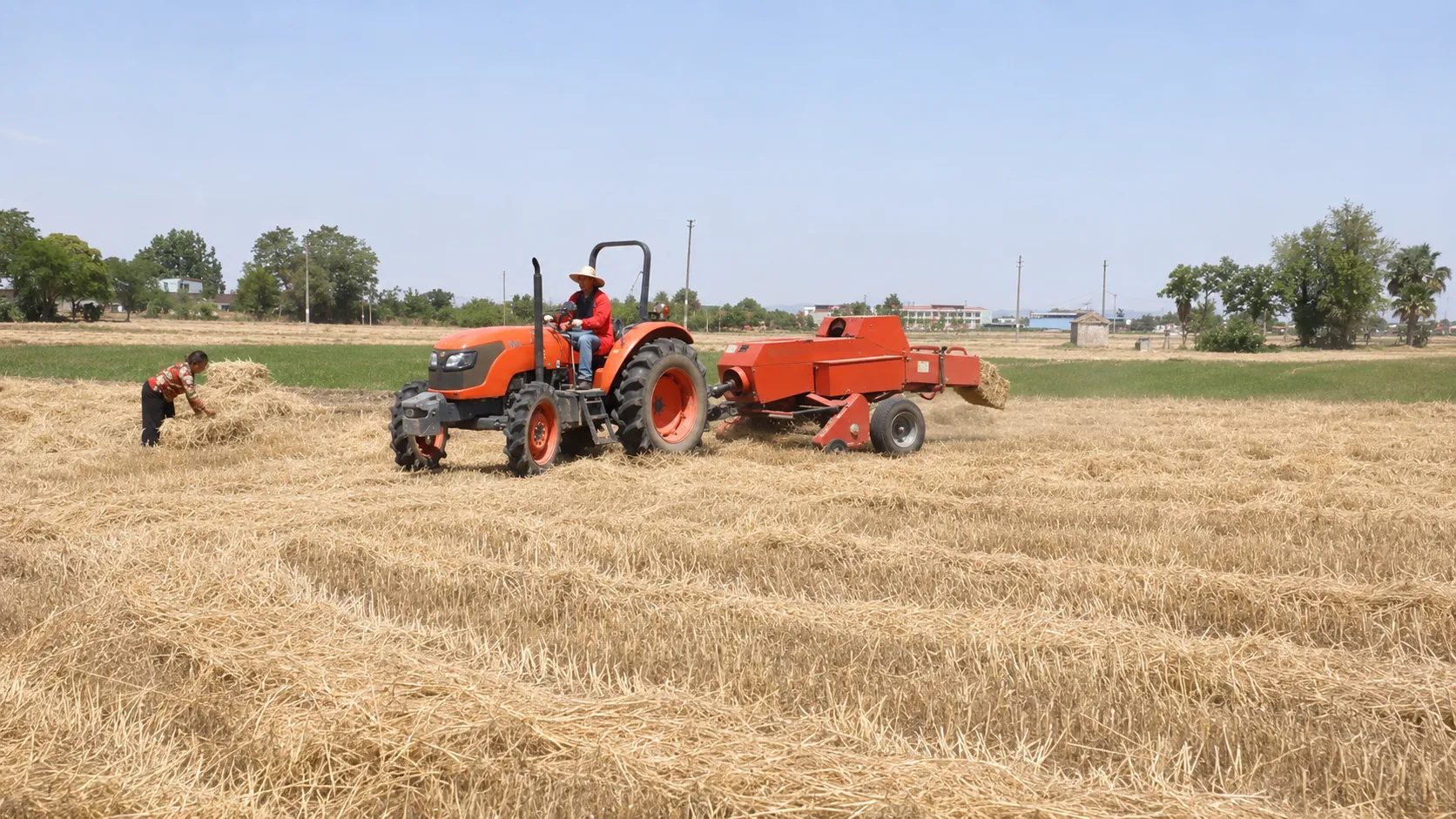
The 9YF-2200S integrates into the America Ever-Power full equipment chain. A disc mower handles the forage cutting season, while the 9YF-2200S operates post-harvest in the corn or sorghum stalk recovery window — two seasonal roles, one tractor platform, a hay rake for windrow formation on forage cuttings, and the square baler lineup covering every baling format from small-square to double-chamber to shredder-equipped. The shredder gearbox and all replacement components are stocked at the Dallas, TX parts depot for 3-day delivery to any US or Canadian address. For operations that also produce bulk round bales, the round baler lineup covers 25 to 201 HP on the same 540 RPM PTO platform.
Get a Quote for the 9YF-2200S Square Baler With Shredding Mechanism
Tell us your primary crop (corn stalks, sorghum, forage, or mixed), tractor HP, and whether the baled material is destined for livestock feed or field return and bedding. We recommend Config A or Config B, confirm PTO compatibility, and provide a delivered price. Parts depot in Dallas, TX — 3-day delivery across the continental US and Canada.
Additional information
| Editor | Cxm |
|---|