Baling Alfalfa Silage: Cutting Stage, Wilting & Wrap Window
Hour 0 to Hour 48 — what alfalfa is doing biochemically and how the silage baler operator times every step against plant phenology and weather.
Alfalfa silage baling is fundamentally a race against plant biochemistry. From the moment the mower-conditioner cuts the standing alfalfa stem, the plant starts a cascade of biological processes that progressively change its nutritional value, moisture content, and silage-fermentation potential. The silage baler operator who understands this timeline can time every operational decision — when to cut, when to start wilting, when to rake, when to enter the field with the baler, when to wrap, and when to move the bale to storage — to land each step at the moment that maximizes finished bale quality. This article walks through the full 48-hour timeline from cutting decision to wrapped bale, with the chemistry behind each phase.
The reference timeline below is calibrated to second-cutting alfalfa in the central U.S. Plains under typical late June weather (35°C daytime high, 18°C overnight low, 35–55% relative humidity, light wind). First cutting in cooler, more humid May weather extends the wilting phase by 6–12 hours. Late-season cuttings in cooler August conditions typically run within a few hours of the reference timeline. Adjust the absolute clock readings to match your conditions; the relative phasing across the 48 hours stays similar across most U.S. growing regions.
Wilting phases (passive)
Mechanical operations
Hour −24 — The Cut Decision Window
The silage baler timeline starts a full day before the mower-conditioner enters the field. The afternoon before planned cutting, the operator walks the field checking alfalfa phenology stage and reviewing the 72-hour weather forecast. Phenology stage is judged at multiple sample points: ideal silage cutting is when 5–10% of the alfalfa stand shows visible flower buds, with the bulk still in late vegetative state. This corresponds to maximum dry matter accumulation per acre — protein content is still rising, fiber content has not yet started its rapid increase, and yield per acre has reached approximately 92–96% of peak.
Cutting too early (full vegetative, no bud) sacrifices 15–20% of yield in exchange for slightly higher protein. Cutting too late (10–25% bloom) sacrifices 2–4 percentage points of crude protein and increases fiber content noticeably — the same hayfield that would have produced 22% CP haylage at bud stage produces 18% CP at full bloom. The 24-hour pre-cut window is when the operator commits to the cutting decision based on observable phenology rather than calendar dates. Different fields on the same operation often need different cut decisions on the same day because phenology varies with field-level soil moisture, nitrogen status, and stand age.
Weather forecast review is the second pre-cut task. The 48 hours after cutting determine whether the wilting phase will proceed normally. Rain in this window is the primary risk — 25 mm of rain on partially-wilted alfalfa pushes moisture back up by 8–15 percentage points and adds 12–24 hours to the wilting phase. Cloudy days with high humidity (above 75%) extend wilting by 6–12 hours even without rain. Wind is generally helpful (accelerates evaporation) but very high wind above 25 km/h causes leaf loss during raking and baling. The pre-cut weather review is essentially asking: will the next 48 hours support a wilt-to-bale cycle, or should cutting be deferred?
Hour 0 — Cutting Begins
Cutting starts in mid-morning, typically between 9:00 and 10:30 local time. Earlier cutting catches dew that delays initial wilting; later cutting compresses the daylight wilting period. The mower-conditioner cuts the alfalfa at 7–8 cm height (slightly higher than dry-hay cutting to keep soil contamination down) and runs the conditioner rolls to crimp the stems. Crimping cracks the cuticle on the stem surface, which accelerates moisture loss by 30–40% compared to uncut stems. A modern conditioner removes 6–8 hours of wilt time compared to mowing without conditioning.
The biological response to cutting starts immediately. Within the first 2–4 hours after stems are severed, the cut alfalfa enters its wilting phase. Stomata on the leaf surfaces are still partially open (the plant has not yet sensed it is no longer connected to roots), so respiration continues at near-living rates and water vapor escapes through both cuticle damage and open stomata. Sugar reserves in the stem and leaves continue to be metabolized by enzyme systems that have not yet shut down. This is why every additional hour between cut and wilt completion costs a small fraction of dry-matter content — sugars get burned by the still-living cells before fermentation can lock them in.
Cutting speed and swath geometry both affect downstream results. A wide swath (90% or more of the cutting width laid down flat behind the mower) wilts faster than a narrow tight windrow because it presents more surface area to sun and wind. Most modern mower-conditioners now allow the operator to set swath width at the cab — wide swath for fast wilting (silage-grade work) versus narrow windrow for protection from light rain or for delayed raking schedules. The Hour 0 setting decision drives Hour 24 raking outcomes directly.
Hour 0 – 24 — Wilt Phase 1
The first 24 hours after cutting do most of the moisture work. Alfalfa enters this phase at roughly 78–82% moisture (the standing-plant range) and exits at 55–65% moisture under typical Plains weather. The decline is not linear — the first 12 hours produce roughly 60% of the total moisture loss (from 80% down to 68–70%) because moisture is leaving from the leaf surfaces where transpiration was always concentrated. The second 12 hours produce slower decline as moisture has to migrate from stem core through the conditioned cracks before it can evaporate.
Overnight conditions matter. Daytime temperatures dropping into evening trigger transpiration shutdown that effectively pauses wilting. Hours 12–18 (afternoon and early evening) drop moisture content the most; hours 18–24 (late evening to dawn) make minimal additional progress and may even reverse wilting through dew accumulation in humid conditions. The operator who cuts at 9:00 AM gets roughly 9 productive wilting hours before evening slowdown begins; the operator who cuts at 1:00 PM gets only 5 productive hours and pushes the rest of the wilting into the next day’s window.
Sugar concentration changes during this phase are equally important to the silage baler operator. Plant respiration during wilt converts simple sugars to CO2 and water at a measurable rate — roughly 1.5–2.5 percentage points of sugar loss per 24 hours of wilting under typical conditions. This is why the silage baler timeline targets 36–48 hours total cut-to-wrap rather than letting wilting extend to 72 hours: extended wilt produces drier forage but also forage with depleted sugar reserves, which subsequently ferments slower and produces lower-quality silage even though the moisture entering the chamber looks correct.
Hour 24 — Raking Into Windrows
Raking happens at Hour 24 — the morning after cutting, typically between 8:00 and 11:00 AM. The wide swath that was laid down at Hour 0 to maximize surface area now needs to be consolidated into a windrow that the silage baler pickup can handle. The hay rake sweeps the swath into a center-line windrow about 1.5–1.8 meters wide. Raking too early (Hour 12, before wilting has dropped moisture below 70%) traps moisture in the consolidated windrow and slows the second wilting phase noticeably. Raking too late (Hour 30+) lets the swath start re-absorbing morning dew and adds another 6–12 hours to the timeline.
Raking technique affects bale quality significantly. Aggressive raking that flips the swath over rather than gently sweeping it produces leaf shatter — alfalfa leaves at this moisture level are still pliable but increasingly fragile, and rough handling drops 8–15% of the leaf material onto the soil where it cannot be recovered. Since alfalfa leaves contain 65–70% of the protein in the plant, leaf shatter losses translate almost directly to protein losses in the finished bale. A 10% leaf shatter loss drops finished bale crude protein from 22% to roughly 19.5% — a meaningful difference for dairy or horse customers who specify 20%+ CP haylage.
Windrow geometry from raking sets up the silage baler’s pickup geometry at Hour 36. The pickup width on most mid-tier silage balers is 1.8–2.2 meters; if the windrow is wider than the pickup, the operator has to drive in two passes (wasteful); if the windrow is narrower than the pickup, intake speed has to drop to keep up with the lower forage density (slow). The right windrow geometry is set during raking and cannot be effectively corrected during baling. Most operators standardize on a windrow width that matches their silage baler pickup minus 10% — guaranteeing full pickup engagement without the lopsided-bale risk that wider windrows produce.
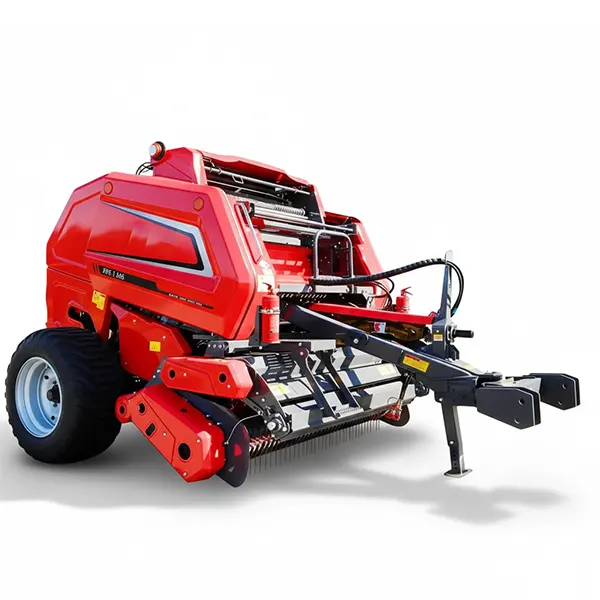
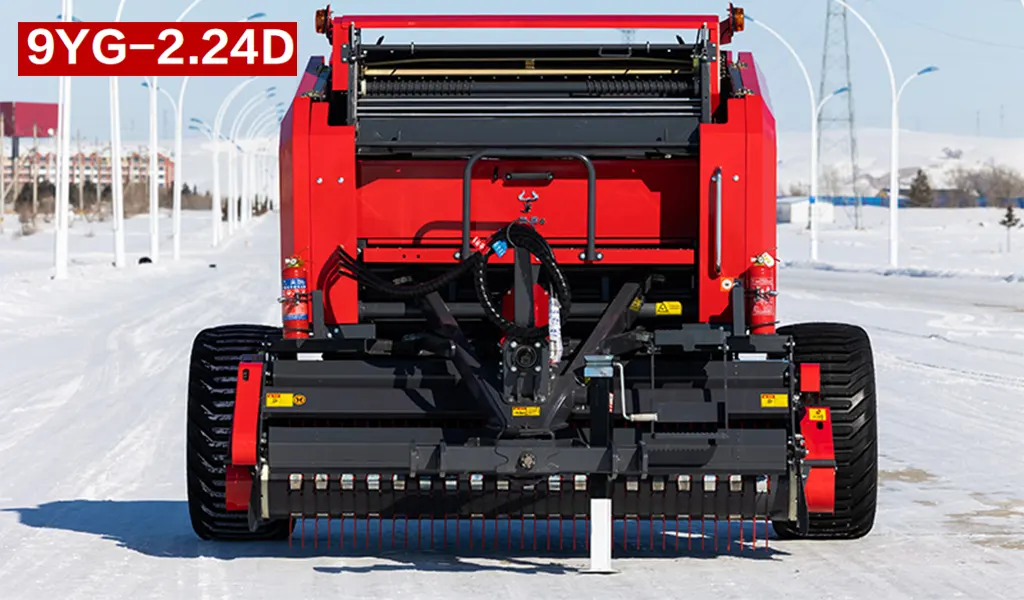
9YG-2.24D S9000 Silage Baler
Variable-chamber design handles the tight Hour 36–48 wrap window for alfalfa silage. 5-belt chamber, 14-knife rotor, hydraulic density control suited for the 50–60% moisture range typical of second-cutting Plains alfalfa.
Hour 24 – 36 — Wilt Phase 2 (Final Drop)
The 12 hours after raking complete the wilting process. Moisture content drops from roughly 60% (post-rake) to 50–55% (silage baler entry target) under good Plains weather. This phase is slower per hour than Phase 1 because the consolidated windrow has less surface area exposed to sun and wind than the wide swath did. The trade-off was made deliberately at Hour 24 — operators accept slower wilt rate in exchange for windrow geometry the silage baler can handle effectively.
Moisture monitoring during Phase 2 is more important than during Phase 1. Operators carry a handheld forage moisture meter (or use the moisture sensor built into modern silage balers) and check the windrow at multiple points across the field every 2–3 hours during this phase. The goal is identifying the moment the field-average moisture reaches the target window. Different parts of the field will hit the target at different times — south-facing slopes ahead of north-facing ones, sandy soils ahead of clay soils, lighter cuttings ahead of heavy ones. Operators on large fields sometimes start baling on the first ready section while later sections complete wilting, accepting the operational complexity in exchange for higher quality on the early-section bales.
Late afternoon thunderstorms are the largest weather risk during Phase 2 in Plains-state operations. Operators in regions where afternoon storms are common (most of Kansas, Nebraska, and Oklahoma in summer) often plan their cutting schedule so that Phase 2 completes by 1:00 PM rather than 4:00 PM, allowing baling to commence in early afternoon and complete before any developing weather. The alternative — pushing baling into late afternoon and risking a thunderstorm at Hour 38 — has cost many operations entire cuttings of forage that ended up baled wet and either fermented poorly or had to be ripped open and re-spread to dry.
Hour 36 – 48 — Silage Baler Wrap Window
Hour 36 is when the silage baler enters the field. Moisture content is at the 50–55% target, the rake-formed windrows are dimensioned for the pickup, and the chamber, density, and wrap subsystems are pre-warmed (the operator typically runs the silage baler for 5–10 minutes empty before entering the field to bring hydraulic systems and bearings up to operating temperature). The next 12 hours are the productive baling and wrapping window for this cutting. Productive baling hours per day vary with field size — small operations finish a full cutting in 4–6 hours; large operations on 200+ acre fields may push the baling phase into 14–16 hours of operation across two operators or extended single-operator days.
Each individual bale takes 90–110 seconds from pickup engagement through wrap completion (see the operation cycle article for the 12-step breakdown). The compressed silage in the chamber is fundamentally different from dry hay in the same machine — wet forage develops higher friction against chamber belts, requires slightly higher chamber pressure, and produces denser bales at the same fill percentage indicator. Operators making the transition from dry hay baling to silage baling on the same equipment often find their first 50 silage bales come out at lower density than expected because they had not adjusted the chamber pressure setting upward to compensate for the moisture difference.
Wrap timing is the critical discipline during Hour 36–48. Best practice is to wrap each bale within 2–4 hours of forming it; outside this window, oxygen-driven aerobic bacteria start growing on the bale surface and the subsequent fermentation runs at lower quality. Combo silage baler-wrappers wrap immediately (under 30 seconds from chamber to fully wrapped); stand-alone setups may have wrappers running 2–3 hours behind the baler. The combo configuration is the technically superior choice for alfalfa silage; the stand-alone configuration is acceptable when the operator can closely manage the bale-to-wrap window.
Hour 48 — Storage Pad Placement
Wrapped bales sitting in the field face two ongoing risks: physical damage from livestock or wildlife wandering through, and incidental wrap puncture from stubble or rocks during the field-to-storage move. The 24–48 hours after wrapping is when the bale is most vulnerable, before the wrap layers have fully relaxed and adhered. Most operations move bales to the storage pad within 6 hours of wrapping when possible, using a bale transporter with squeeze-clamp pickup that protects the wrap.
The fermentation that determines finished bale quality begins inside the wrap during the first 7 days. Lactic acid bacteria already present on the alfalfa surface multiply rapidly in the oxygen-depleted environment, dropping bale pH from initial 6.0 down to 4.2 within 14 days. The transition from cut-stem chemistry (Hour 0) through wilting (Hour 0–36) through compressed-and-wrapped (Hour 36–48) ends with the bale in a stable fermentation environment that, if properly executed, holds quality for 12–18 months. Bales that completed every step on schedule with appropriate quality discipline emerge from storage looking and smelling identical to bales 14 days old, even after a year in the storage pad.
Fermentation problems trace back to specific points in the timeline. Bales with butyric acid odor at opening (sour smell, low palatability) typically suffered Hour 36–48 wrap delays or under-wrap that allowed clostridia bacteria to dominate fermentation. Bales with mold spots on opening typically suffered wrap punctures during the field-to-storage move at Hour 48. Bales with dusty texture and low moisture at opening typically were baled outside the moisture window — wilted past 48% moisture before the silage baler entered the field. The post-mortem on poor bales often points back to a single timing slip in the 48-hour timeline.
Timeline Summary by Stage
All eight phases in one place, with their durations and the key decisions or actions at each.
| Stage | Hour | Forage Moisture | Key Decision or Action |
|---|---|---|---|
| Pre-cut | −24 | ~80% (standing) | Field walk, phenology check, weather review |
| Cut | 0 | ~78–82% | Mower-conditioner enters field, 7–8 cm cut height |
| Wilt 1 | 0–24 | 80% → 60% | Wide swath wilting, no operator action |
| Rake | 24 | ~60% | Hay rake consolidates swath into baler-width windrow |
| Wilt 2 | 24–36 | 60% → 50–55% | Windrow wilting, moisture monitoring every 2–3 hr |
| Bale + Wrap | 36–48 | 50–55% | Silage baler enters field, combo wrapping recommended |
| Storage | 48 | 50–55% (sealed) | Move bales to storage pad with squeeze-clamp transporter |
| Fermentation | 48–360 | Stable, dropping pH | 14–day fermentation completes; bale stable for 12–18 months |
Where to Go Next
For operators baling alfalfa silage who want deeper coverage of specific phases, the next reading depends on what is most pressing. The article on optimal moisture covers the chemistry of the moisture window in technical detail. The article on bale density covers Hour 36–48 chamber decisions. The article on common silage baler problems maps fermentation outcomes back to specific timeline phases where things went wrong.
For specific silage baler models matching the alfalfa silage application described above, our round baler and silage baler catalog covers compact through commercial configurations. The Sacramento application desk can also walk through timing math against your specific cutting schedule and regional weather patterns.
Editor: Cxm