ROUND BALER GUIDE · SERVICE LIFE · BELT REPLACEMENT · GEARBOX · AMERICA EVER-POWER
How Long Does a Round Baler Last? —
Service Life, Belt Replacement, and Gearbox Milestones
A well-maintained round baler on a low-volume small farm can last 30 years. A poorly maintained baler on a high-volume commercial operation may need major component replacement within 5 seasons. The difference is not machine quality alone — it is annual bale count, maintenance consistency, and whether the operator replaces wear items at the right intervals rather than running to failure. This guide maps the service life milestones for every major component on America Ever-Power 9YG-series round balers.
Belt Replacement
Baler Maintenance
AMERICA EVER-POWER · DALLAS TX PARTS DEPOT · 3-DAY DELIVERY US & CANADA
QUICK REFERENCE · 9YG ROUND BALER COMPONENT SERVICE LIFE
BALE CHAMBER BELTS
15,000–25,000 bales
With proper tension and storage. Dry-hay operation at 1,000 bales/yr = 15–25 years. Baleage at 1,000 bales/yr = 8–12 years due to moisture acceleration.
PICKUP TINES
3,000–8,000 bales
Varies by crop abrasiveness. Grass hay: 6,000–8,000 bales. Straw or silica-rich crops: 3,000–5,000 bales. Inspect tips every 50 hours.
INPUT GEARBOX
50,000–100,000 bales
With annual oil changes and correct oil specification. Gearbox failures before 50,000 bales are almost always oil-related — wrong spec, contaminated, or run low.
OVERALL MACHINE LIFE
20–40 years
Frame and structural components last indefinitely with corrosion management. Machine life is determined by wear component replacement, not by structural failure on well-maintained machines.
What Actually Wears Out on a Round Baler
A round baler is not a machine that wears out uniformly — it wears in distinct layers based on the load and abrasion that each component experiences. The components in direct contact with the crop — pickup tines, bale chamber belts, and the rotor — are the first-generation wear items that need replacement within a few thousand bales. The driveline components — chains, universal joints, and the input gearbox — are second-generation wear items that last 10 to 30 times longer than the crop-contact items with correct lubrication. The structural frame, side sheets, and hardware are essentially lifetime components on a properly stored machine that never experience the fatigue failure that would occur if the structural design were undersized for the application.
Understanding which component generation an item belongs to determines the replacement budget per year and the inspection interval. A machine producing 1,500 bales per year will replace its first set of pickup tines in years 3 to 5, its first set of belts in years 10 to 17, and its input gearbox in years 30 to 65 — all assuming correct maintenance. A machine producing 5,000 bales per year compresses all those timelines by a factor of 3 to 4 but faces the same sequence of wear events in the same order. The per-bale wear rate is what stays constant; the calendar timeline varies entirely with annual production volume.
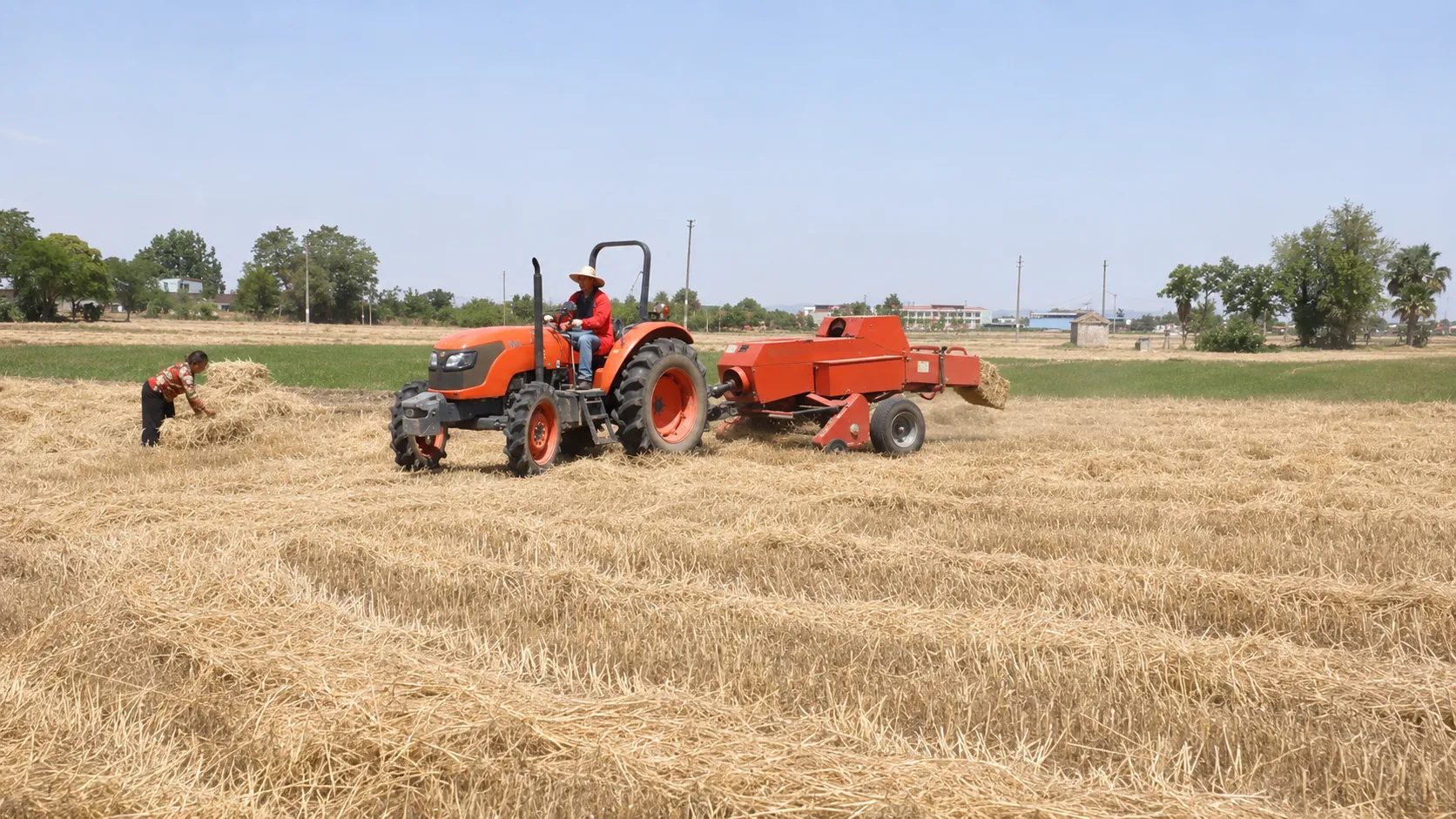
The factor that most disrupts this predictable wear sequence is deferred maintenance — specifically, allowing lubrication intervals to lapse and allowing wear items to run past their replacement threshold rather than replacing them at the scheduled milestone. A chain that runs 30 percent past its replacement threshold stretches enough to accelerate sprocket tooth wear by 200 to 300 percent compared to a properly tensioned chain. A belt that runs 20 percent past its replacement threshold develops internal cord fatigue that causes a sudden full-length split rather than a gradual, detectable deterioration — turning a planned $400 belt replacement into an unplanned $1,200 emergency replacement plus potential secondary damage to the rollers and frame guides inside the bale chamber.
Bale Chamber Belts — Life Expectancy and Replacement Signs
The bale chamber belts on a 9YG-series round baler are the most expensive consumable component in the machine — a full set of replacement belts costs $800 to $2,000 depending on the model — and the one with the most variable service life depending on operating conditions. The rated life expectancy of 15,000 to 25,000 bales assumes dry hay baling in moderate conditions with correct belt tension maintained throughout the service life. Baleage production at 45 to 55 percent moisture reduces belt life by 30 to 50 percent compared to dry hay — the moisture accelerates the oxidation of the belt’s rubber compound and causes the internal fabric cords to absorb moisture and lose their dimensional stability. An operation that bales 50 percent baleage and 50 percent dry hay at 1,500 bales per year can expect the first belt replacement at 8 to 14 years rather than the 15 to 25 years typical of an all-dry-hay operation at the same annual volume.
The reliable visual signs that belt replacement is approaching or overdue are: transverse cracking across the inner (drive side) surface of the belt, particularly at the splice points where the belt ends are joined; longitudinal edge cracking along the belt’s side edges where the belt contacts the chamber side guides; surface glazing on the outer (crop contact) face of the belt where rubber has hardened and lost its grip coefficient; and a sticky, tacky feel to the inner surface when touched, indicating rubber breakdown from heat cycling. Any of these signs, found on more than 10 to 15 percent of the belt surface area, indicates the belt is within 500 to 2,000 bales of its end of life — schedule replacement before the start of the next cutting season rather than after the belt fails in the field.
Pickup Tines and Rotor Bearings — When to Replace
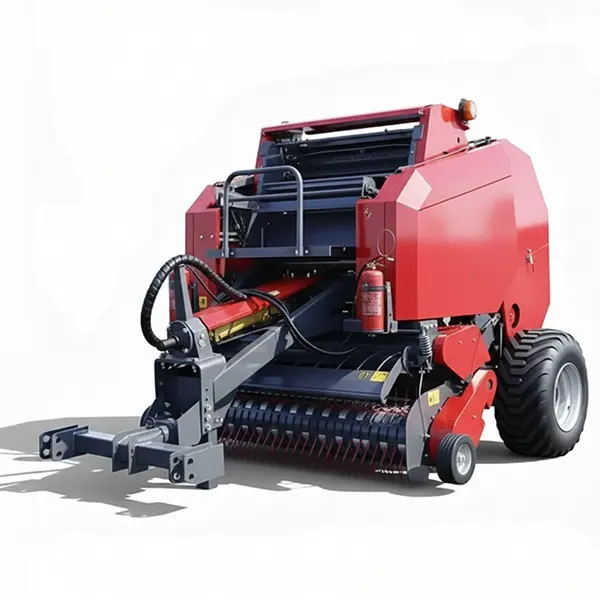
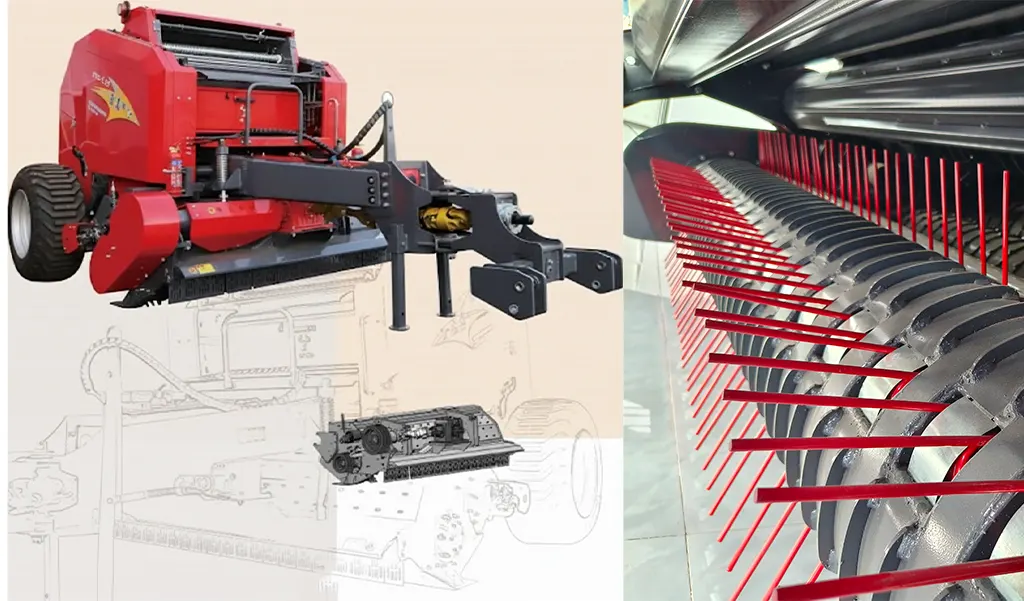
Pickup tines are the first wear item that a new round baler operator encounters — they wear faster than any other component because they are in direct abrasive contact with the forage, the soil surface, and the occasional rock or debris that the windrow contains. The tine tip is the wear surface: a new tine has a sharp, slightly curved tip designed to lift crop without gouging the soil surface. As the tip wears, the radius increases and the effective lift angle decreases — a worn tine tip no longer lifts the windrow cleanly off the ground but instead slides under it and misses the outer stems, reducing pickup efficiency and increasing harvest losses in the windrow.
The replacement trigger for pickup tines is a tip wear measurement: measure the distance from the tip to the first tine curve. When this measurement has decreased by more than 20 percent from the original dimension (found in the baler parts manual), the tine should be replaced. In practice, most operators assess tine condition visually by comparing new tines to used ones side by side — a tine that has noticeably more tip rounding than a new tine and shows visible flattening of the curved profile is past the replacement point. Replace all tines on a single tine bar simultaneously rather than mixing new and worn tines — the height difference between new and worn tines on the same bar creates an irregular lift pattern that increases bale density variation and missed windrow material.
Pickup rotor bearings — the bearings that support the pickup rotor shaft on each side of the machine — last significantly longer than the tines, typically 20,000 to 40,000 bales with regular greasing. The early warning sign of pickup rotor bearing failure is a metallic rubbing or grinding sound from the pickup area at operating speed that is not present when the pickup is lifted clear of the ground. Confirming the bearing as the source by feeling for play in the rotor shaft — more than 1 to 2 mm of axial or radial movement at the shaft end indicates bearing wear — allows planned replacement before the bearing seizes and damages the rotor shaft journal, which turns a $40 bearing replacement into a $300 to $600 rotor shaft repair.
Input Gearbox — Service Life and Early Warning Signs
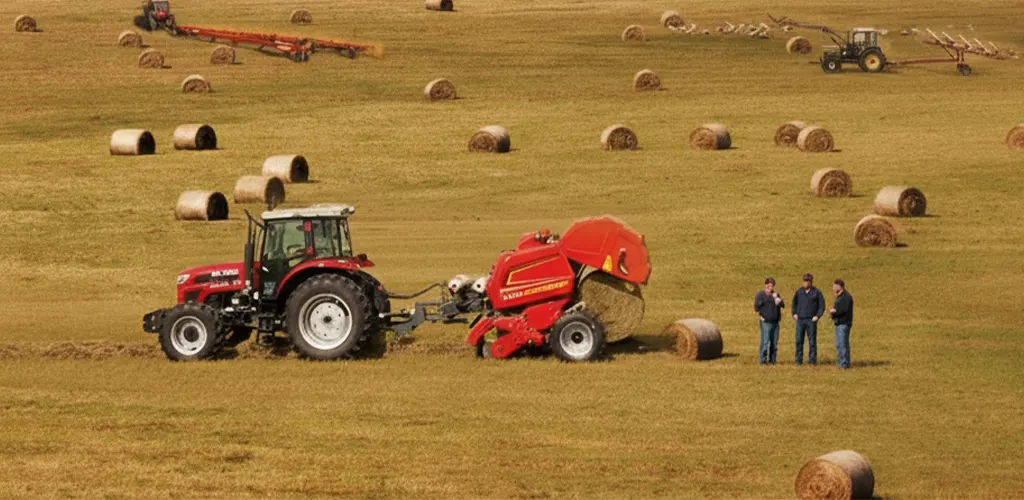
The input gearbox on the 9YG-series round baler is designed for a service life of 50,000 to 100,000 bales — equivalent to 33 to 100 years of production on a 1,000-bale-per-year operation, or 10 to 20 years on a 5,000-bale-per-year commercial operation. At this life expectancy, the input gearbox is a once-or-twice-in-the-machine’s-life replacement rather than a recurring maintenance item for most small to mid-size operations.
The vast majority of input gearbox failures before the 50,000-bale threshold are caused by oil-related issues: running the gearbox without adequate oil level after a seal failure, using the wrong oil specification (engine oil or hydraulic fluid instead of GL-4 80W-90), or failing to change the oil annually and allowing acid buildup in aging oil to etch the gear tooth surfaces. Early warning signs of incipient gearbox failure include: elevated oil temperature at the gearbox housing during operation (the housing should be warm to the touch but not too hot to hold your hand against for 5 seconds); metallic particles in the oil at the annual drain — a small amount of gray-black metallic powder in old oil is normal gear wear, but visible silver flakes or chunks indicate accelerated wear that warrants immediate inspection; and a higher than normal operating noise level from the gearbox that has appeared over several operating sessions rather than suddenly. Replacement input gearbox assemblies for all 9YG-series models are stocked at the agricultural gearbox specialists at the Dallas, TX parts depot.
Drive Chains and Rollers — Mid-Life Service Items
Drive chains on the 9YG-series round balers occupy the middle tier of the wear hierarchy — lasting significantly longer than pickup tines but shorter than the input gearbox. The service life of a properly lubricated and correctly tensioned drive chain is 10,000 to 20,000 bales — comparable to 7 to 20 years on a 1,000-bale-per-year operation. The chain’s wear mechanism is the gradual elongation of the chain pitch — the distance between link pins — as the pin and bushing contact surfaces wear slightly over millions of engagement cycles with the drive sprockets. When the pitch has elongated by 3 percent above the nominal new-chain dimension, the chain is at its replacement threshold regardless of whether it has broken or shows any visible damage.
The field measurement method for chain wear is simple: count out 20 complete links along the chain and measure the total length of those 20 links. Compare to the nominal pitch × 20 specification for the specific chain. A measurement more than 3 percent above nominal (for a 20-link standard pitch chain, this is the nominal 20-link length plus about 0.6 inches) indicates the chain is at or past its replacement point. Replace the chain before it reaches the point of visible sag or skipping on the sprocket — a chain that skips under load has already caused sprocket tooth wear that accelerates wear on the next replacement chain installed on the same sprocket.
Bale chamber rollers — the steel rollers that guide and tension the belts inside the bale chamber — typically last 30,000 to 60,000 bales with correct belt tension. The roller bearing is the wear item, not the roller shell. A roller that develops lateral wobble during operation — visible as a rhythmic side-to-side movement at operating speed — has a worn roller bearing that needs replacement before the wobble causes belt edge damage or uneven belt wear that shortens the belt life by 20 to 40 percent. Roller bearing replacement on the 9YG-series requires removing the chamber side access panel and pressing out the old bearing cup — a straightforward task for operators with a bearing press and the correct replacement bearing part number from the parts manual.
Bale chamber rollers — the steel rollers that guide and tension the belts inside the bale chamber — typically last 30,000 to 60,000 bales with correct belt tension. The roller bearing is the wear item, not the roller shell. A roller that develops lateral wobble during operation — visible as a rhythmic side-to-side movement at operating speed — has a worn roller bearing that needs replacement before the wobble causes belt edge damage or uneven belt wear that shortens the belt life by 20 to 40 percent. Roller bearing replacement on the 9YG-series requires removing the chamber side access panel and pressing out the old bearing cup — a straightforward task for operators with a bearing press and the correct replacement bearing part number from the parts manual. Keeping a written record of operating hours per cutting season and total bales produced allows the operator to predict the next chain, belt, and tine replacement event 1 to 2 seasons in advance and order parts proactively rather than reactively — eliminating the mid-season emergency order that costs 2 to 5 days of lost production while parts are shipped.
Total Machine Life — What a 30-Year Round Baler Looks Like
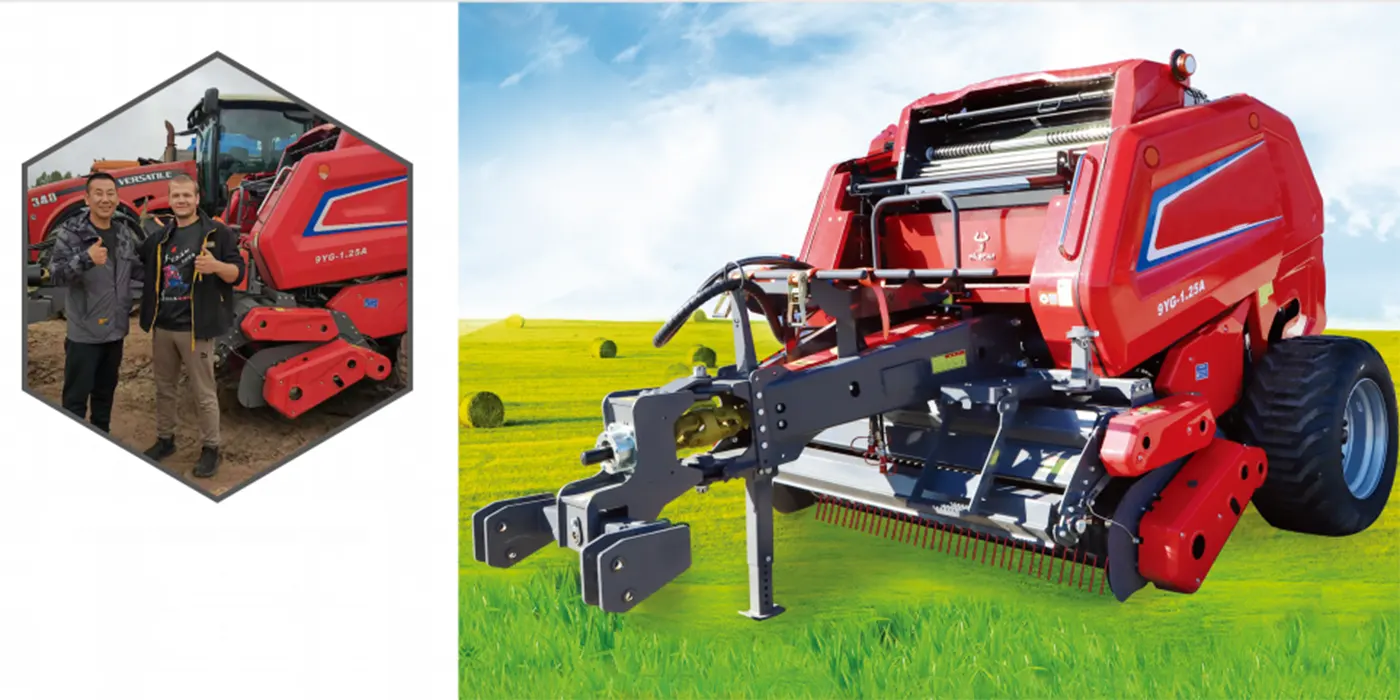
A round baler that reaches 30 years of productive service on a 1,000-bale-per-year operation has produced approximately 30,000 bales and consumed several generations of the following wear items: 4 to 5 sets of pickup tines, 1 to 2 full sets of bale chamber belts, 2 to 3 complete drive chain replacements across all chains in the system, and several sets of PTO universal joint crosses. Its input gearbox may still be original — at 30,000 bales and annual oil changes, the gearbox is at 30 to 60 percent of its expected service life. The frame, side sheets, chamber guides, and all structural components are original and undamaged if the machine has been stored indoors and painted or touched up annually to prevent rust propagation.
The total wear-component cost across 30 years and 30,000 bales is approximately $3,000 to $6,000 — an average of $100 to $200 per year in planned wear-item replacement costs. Against an original machine price of $8,000 to $18,000 (depending on model and year of purchase), the 30-year total cost of ownership is $11,000 to $24,000 — $0.37 to $0.80 per bale in total machine cost including original purchase price and all maintenance. This per-bale cost is far below the rental or custom baling alternatives for any operation producing more than 300 to 400 bales per season, validating equipment ownership as the correct economic choice for operations at or above that scale.
The single most important factor in achieving 30-year machine life is indoor storage. A round baler stored outdoors year-round in a wet climate loses 20 to 30 percent of its structural service life to corrosion of the side sheet welds, the pickup frame, and the PTO shaft yoke bores — components that cost $1,000 to $3,000 to fabricate or replace when they reach structural failure. Storing the baler in a dry building eliminates this corrosion pathway entirely and keeps the machine in full structural integrity through all 30 years. All replacement wear parts for the complete 9YG and 9YQ round baler lineup — belts, tines, chains, bearings, gearboxes — are stocked at the Dallas, TX parts depot for 3-day delivery to any US or Canadian address. Carrying 1 to 2 critical spare items — a spare universal joint cross kit and a spare chain master link set — on the tractor during baling sessions eliminates the most common single-day downtime events that occur in the middle of a baling window.
Scheduling Belt, Tine, or Gearbox Replacement?
Tell us your baler model, approximate bale count since last major service, and the symptoms you are observing. We will confirm whether replacement is due and ship the correct parts from Dallas, TX within 3 days to any US or Canadian address.
Editor: Cxm