SQUARE BALER GUIDE · CORN STALKS · 9YF-2200S · RESIDUE BALING · AMERICA EVER-POWER
Square Baler for Corn Stalks —
Why Standard Models Struggle and What the 9YF-2200S Solves
Corn stalks are the most commonly attempted and most commonly failed square baling project for operators running a standard hay baler. The rigid, hollow stem structure that makes corn stalks bridging-prone is also the reason they need a specific mechanical solution — the shredding mechanism on the 9YF-2200S. This guide covers what goes wrong with standard balers on corn stalks, what the shredder does differently, and the operational practices that produce consistent bales from post-harvest cornstalk fields.
9YF-2200S
Residue Baling
AMERICA EVER-POWER · DALLAS TX PARTS DEPOT · 3-DAY DELIVERY US & CANADA
QUICK REFERENCE · CORN STALK BALING WITH THE 9YF-2200S
HP REQUIREMENT
≥99 HP
Shredding mechanism draws 30–40% more PTO load than standard baling on the same windrow. Do not attempt corn stalk baling below 99 HP on the 9YF-2200S.
BALE WEIGHT RANGE
55–80 lb
Post-shredder corn stalk material is denser than unshredded stover. Bales are heavier per unit volume than straw but lighter than alfalfa hay at equivalent settings.
STALK MOISTURE TARGET
15–25 %
Bale after grain harvest when stalks have field-dried to 15–25%. Below 12% stalks shatter excessively. Above 30% riskes mold in high-density stover bales.
MARKET VALUE
$40–$90 /ton
Corn stover in small square bales for cattle bedding or biomass. Higher value in certified-clean stover for specialty livestock markets.
Why Corn Stalks Fail in a Standard Square Baler
The corn stalk problem in a standard square baler is structural. A corn stem post-harvest is a rigid, thick-walled, hollow cylinder — typically 0.5 to 1.2 inches in diameter at the base and 5 to 8 feet tall. This structure is fundamentally different from the soft, fibrous stems of grass and legume forage crops that interlock and compress reliably in the bale channel. When a standard square baler pickup lifts post-harvest corn stalks off the ground, the long, rigid stems enter the fork feeder system at unpredictable angles. Instead of compressing against each other to form a cohesive mat as grass fibers do, the corn stems bridge across the compression channel — the rigid hollow cylinder spans the channel width and resists being pushed into the accumulating bale by the plunger. The result is a blockage, a jam, or a bale with large voids and inconsistent density that the knotters cannot tie reliably because the bale face is not filling the full channel cross-section uniformly.
Even when standard baler operators reduce ground speed to a crawl and carefully manage the feeding rate to minimize bridging, the fundamental problem remains: the geometry of the corn stem is incompatible with the geometry of the square baler compression channel. A stem that enters the channel horizontally in its long axis pushes the plunger face rather than being compressed by it. A stem that enters vertically compresses across the channel wall rather than into the bale. Only after the stems are broken into short, random-orientation fragments — which the shredding mechanism on the 9YF-2200S accomplishes mechanically before the material enters the channel — can corn stalk material fill a square bale channel uniformly and produce consistent, knotter-reliable bales.
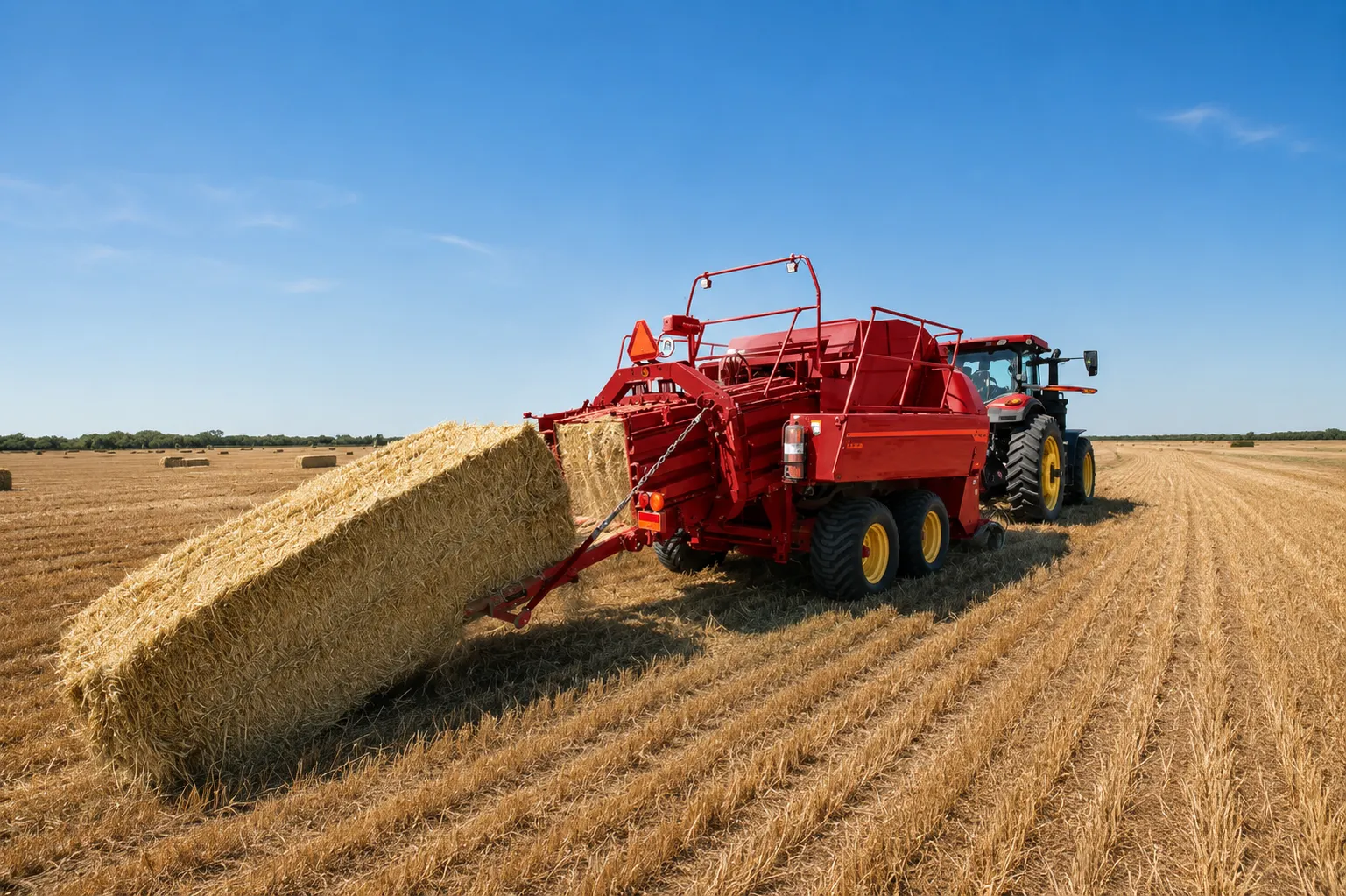
The other major failure mode of standard balers on corn stalks is knotter reliability. Even when the bale chamber fills without a hard blockage, the variable density and surface texture of incompletely compressed corn stalks causes the twine to slip through the knotter cycle without maintaining the tension required to close the knot. The result is one or both ties that are loose, cut but unknotted, or that pull undone when the bale is picked up. An experienced operator on a standard machine will typically produce a 20 to 40 percent missed-knot rate on post-harvest corn stalks — compared to under 1 percent on the same machine baling well-conditioned grass hay.
How the Shredding Mechanism on the 9YF-2200S Solves the Problem
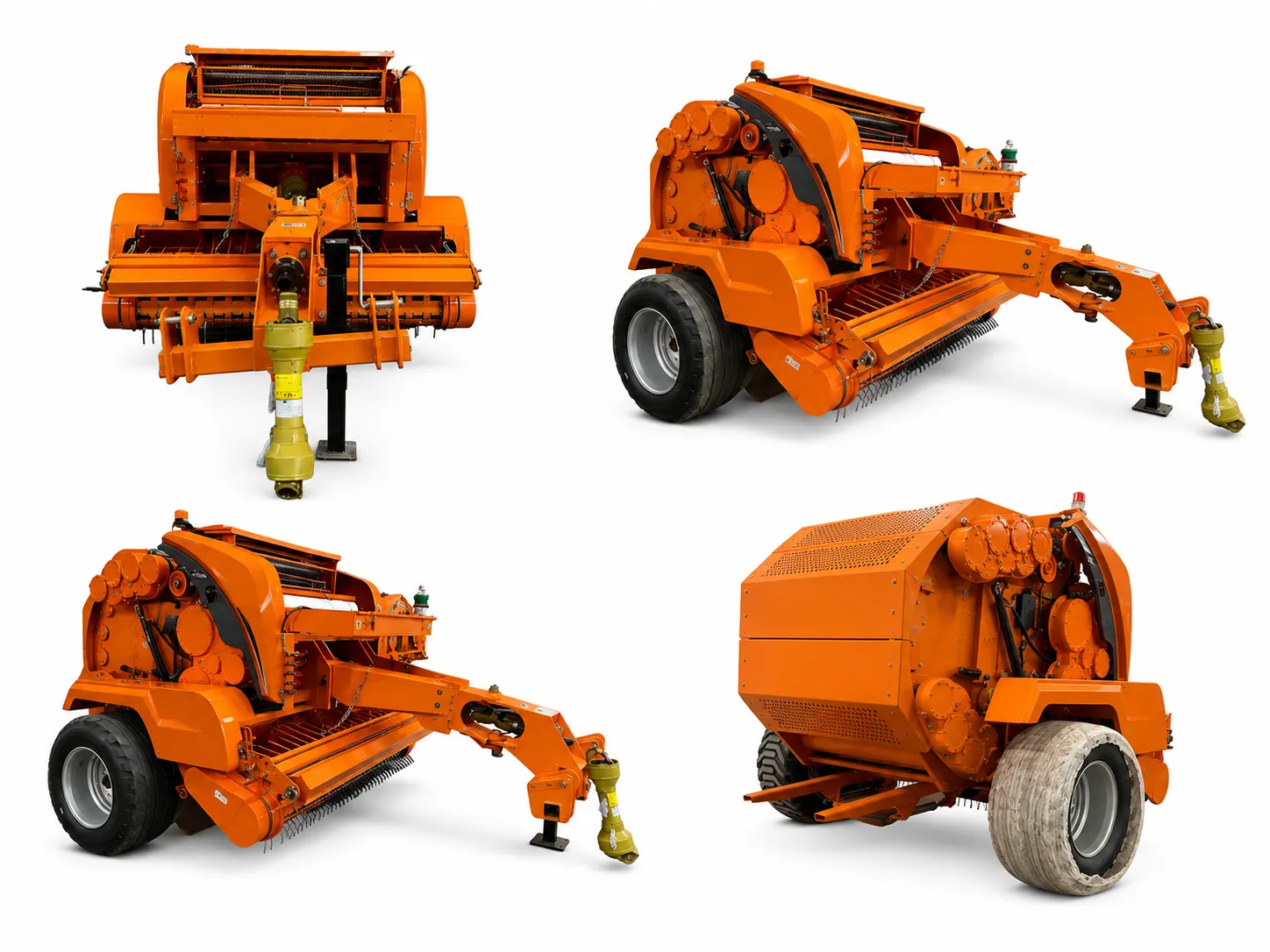
The 9YF-2200S adds a shredding and conditioning mechanism positioned between the pickup and the fork feeder — the point where standard balers are most vulnerable to corn stalk bridging. The shredder consists of a bank of rotating knives or flails that receive the incoming stalk material from the pickup and impact it at high speed, breaking the rigid hollow stems into short random-orientation fragments before they reach the fork feeder system. The impact breaking is not a uniform cutting action — it produces fragments of variable length (typically 3 to 8 inches) that intermix in a way that fills the compression channel uniformly, with no single fragment long enough to bridge the channel width.
The secondary effect of the shredding action is that it collapses the hollow cylinder of the corn stem — the impact and compression of the rotating flails crush the stem wall and partially flatten the hollow interior, creating a denser, more compressible mass than the intact hollow stem. This crushed-stem material behaves more like a fibrous mat and less like a collection of rigid rods in the compression channel, allowing the plunger to produce a uniformly dense bale face that the twine can grip reliably and the knotters can tie consistently. The 9YF-2200S typically achieves knotter reliability above 98 percent on post-harvest corn stalks — comparable to standard baler performance on grass hay.
The shredding mechanism requires 30 to 40 percent more PTO power than the equivalent pickup-and-compress operation on grass hay at the same ground speed. This is why the 9YF-2200S has a 99 HP minimum requirement rather than the 49 HP minimum of the standard 9YF-2200 — the shredder load, combined with the compression channel load, consistently draws 80 to 95 HP on dense post-harvest corn windrows at normal operating ground speeds. A 99 HP tractor running the 9YF-2200S on standard corn stover windrows operates at approximately 80 to 90 percent of PTO capacity — workable but with limited headroom for windrow density spikes at field corners or double-pass areas where two windrow passes overlap.
Moisture, Timing, and Field Preparation for Corn Stalk Baling
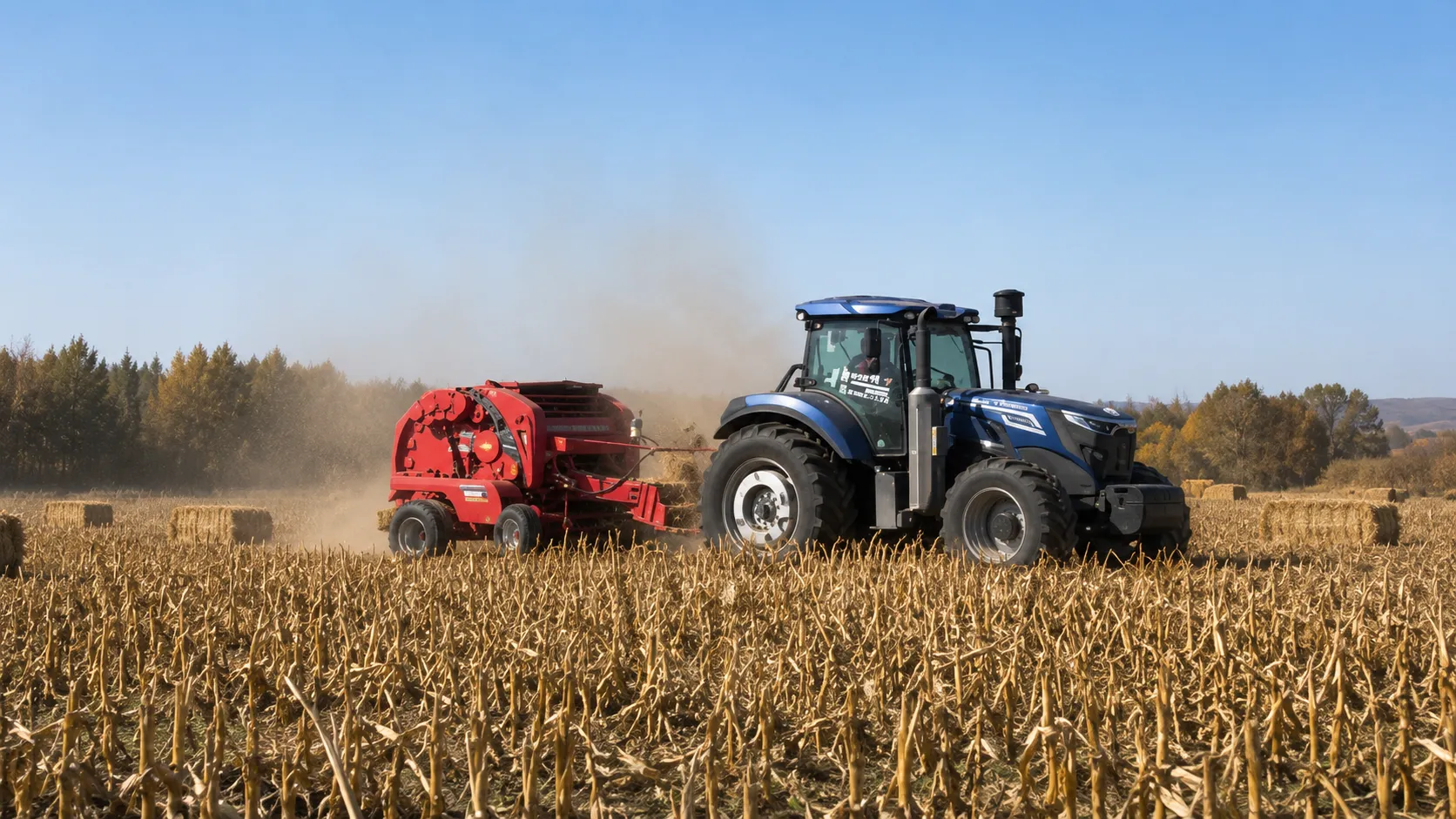
Corn stalk baling has a narrower field-condition window than hay baling, and entering the field at the wrong moisture or too long after harvest produces predictable problems that no baler design can fully overcome. The optimal window for corn stalk baling is 2 to 6 weeks after grain harvest, when the stalks have field-dried from their harvest moisture of 25 to 40 percent down to 15 to 25 percent. At 15 to 25 percent, the stalks are dry enough to store without mold risk but still flexible enough to resist complete shattering at the shredder and pickup. Below 12 percent moisture, the stalks are fully dry and brittle — the shredder action produces a high fraction of fine dust and very short fragments that do not compact well, and the pickup tines break off leaf and node material that falls back to the ground rather than entering the baler. Above 25 to 30 percent, the stalks are still too wet for safe dense storage — the high-density stover bale at 30%+ moisture will heat significantly in the first 2 to 3 weeks and develop mold on the bale interior.
Corn Stalk Field Preparation Checklist
- ▶ Wait 2–4 weeks after combine: Allows surface moisture from harvest damage to dry and standing stalk moisture to drop below 25%.
- ▶ Check stalk moisture before entry: Snap a mid-stalk section — it should break cleanly with a dry snap, not bend. Bending = still too wet.
- ▶ Stalk chopper or flail first pass (optional): Running a separate stalk chopper before baling reduces average stalk length from 5–8 ft to 12–18 in, significantly reducing shredder load on the 9YF-2200S and increasing baling speed.
- ▶ Rake into windrows: Corn stalks lying flat on the ground after the combine must be raked into a pick-up-width windrow before baling. Standard side-delivery rakes work adequately on dry stalks at reduced rake speed.
- ▶ Check for cobs and ears: Ear corn remaining in the stover after a wet harvest or mechanical harvest issue damages shredder knives quickly — inspect windrows for ear concentration before the full baling pass.
Baler Settings and Ground Speed for Corn Stalks on the 9YF-2200S
Corn stalk baling on the 9YF-2200S requires different ground speed and density spring settings than the same machine running on forage hay. The shredder processes a large volume of material before it reaches the compression channel, and the feeder capacity ahead of the plunger is the first point of limitation at high ground speeds on dense stover windrows. The recommended starting ground speed for corn stalk baling is 2.5 to 3.5 mph — significantly slower than the 4 to 5 mph used for hay baling on the standard 9YF-2200. This lower speed allows the shredder to process the incoming material fully before the fork feeder is overwhelmed with unshredded stalk sections that bridge the feeder opening.
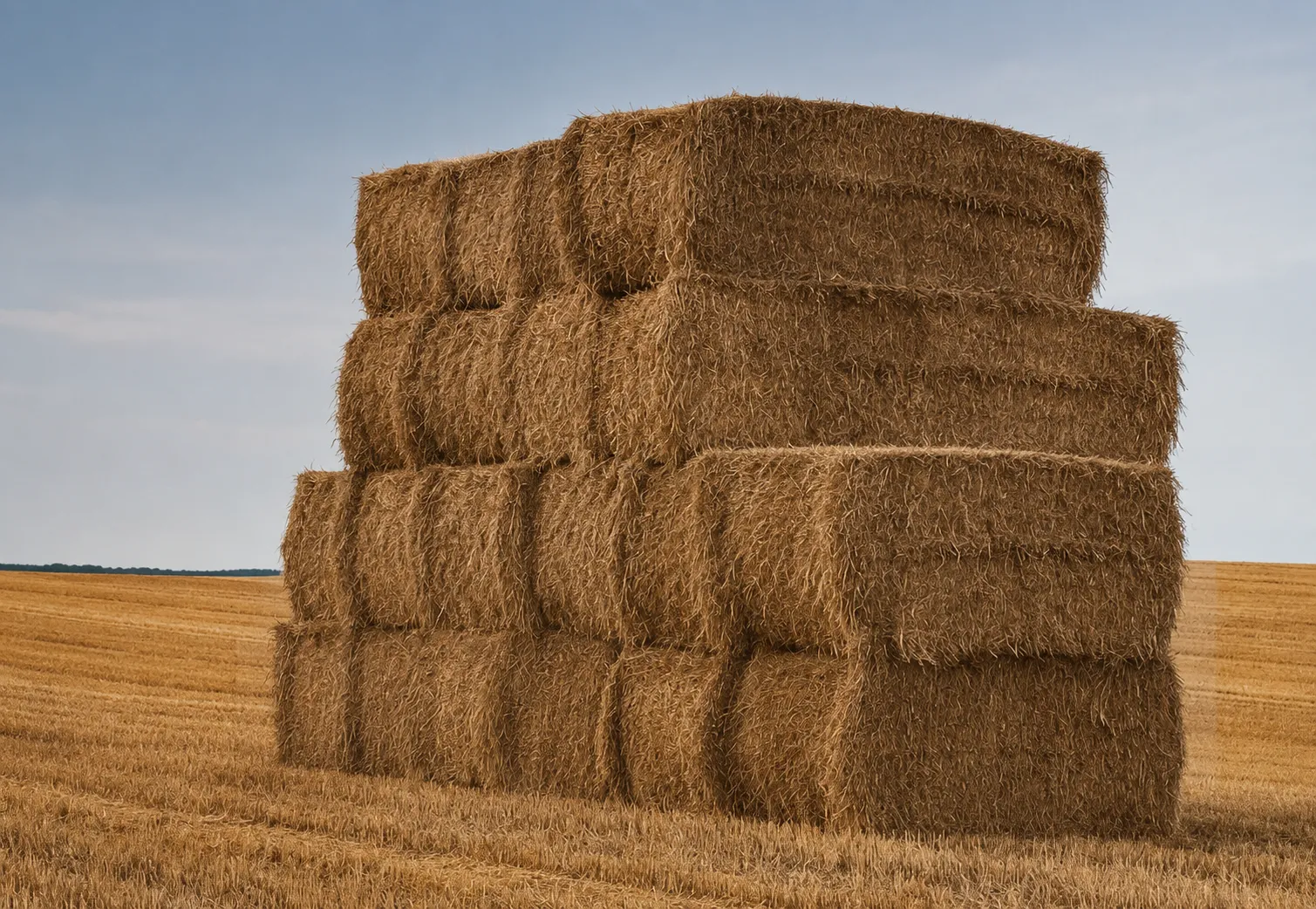
The density spring setting for corn stalks should start at the medium position and be adjusted toward tighter after the first 10 test bales. Crushed corn stalk material is denser than the unshredded stalk in its natural state but less dense than alfalfa hay fiber — bales tend to run lighter per unit volume than expected if the spring is set at the hay position without adjustment. Target bale weight on corn stalks with the 9YF-2200S at 30-inch bale length is typically 55 to 75 lb depending on stalk size and moisture. At this weight range, the bales stack stably 5 to 6 high on a standard pallet for transport and are within the single-person handling range preferred by livestock bedding buyers.
Knotter twine selection for corn stalks should lean toward the heavier end of the specification range — 130 to 150 m/kg rather than the 150 to 170 m/kg used for light grass hay. Crushed stalk material has a rougher surface texture than hay fiber and produces slightly higher twine-to-bale friction during the knotter cycle, which can cause premature tension disc wear at the lighter twine specifications used for low-density crops. The heavier twine’s higher breaking strength at the knot also provides additional insurance against bale breakage during the rough handling that corn stover bales experience during bedding operations.
Knotter twine selection for corn stalks should lean toward the heavier end of the specification range — 130 to 150 m/kg rather than the 150 to 170 m/kg used for light grass hay. Crushed stalk material has a rougher surface texture than hay fiber and produces slightly higher twine-to-bale friction during the knotter cycle, which can cause premature tension disc wear at the lighter twine specifications used for low-density crops. The heavier twine’s higher breaking strength at the knot also provides additional insurance against bale breakage during the rough handling that corn stover bales experience during bedding operations at the receiving farm.
Market Uses for Corn Stalk Bales — Bedding, Feed, and Biomass
Corn stover in small square bales has three primary markets, each with different quality specifications and price ranges. Understanding which market is accessible from a given farm determines whether the economics of investing in a 9YF-2200S justify the cost of the shredder-equipped model versus a round baler for bulk stover.
- ▶ Livestock bedding ($50–$90/ton): The highest-value stover market for small square bales. Cattle, hog, and poultry operations that bed on dry stover value the small square format because it allows targeted bedding application without a tractor — one person can carry and spread a 65 lb stover bale in a stall without mechanical assistance. Small square bales command a $20 to $40 per ton premium over round bale stover in most midwestern markets. Quality specification: clean stover without excessive ear corn, moisture below 20%, good bale integrity.
- ▶ Beef cattle feed supplement ($40–$60/ton): Corn stover provides low-protein, high-fiber roughage for dry beef cows in mid-gestation. At 5 to 7 percent crude protein and 65 to 70 percent TDN, corn stover alone is insufficient for high-production cattle but can provide 30 to 50 percent of the winter roughage requirement when protein is supplemented. Small square bales are used in horse and small-livestock operations where ring feeders for round bales are impractical. Quality specification: free of mycotoxins from moldy ears, moisture below 20%.
- ▶ Biomass and specialty uses ($35–$55/ton): Mushroom substrate production, erosion control matting, compost feedstock, and biomass energy applications all use corn stover. Quality specifications vary by end use but typically require clean, dry, weed-free stover without ear corn contamination.
The 9YF-2200S for Mixed Operations — Hay and Residue on the Same Baler
The 9YF-2200S runs all standard forage crops — grass hay, alfalfa, legumes, wheat straw, rice straw, and cotton stalks — in addition to corn stalks and sorghum-Sudan stems. The shredding mechanism can be bypassed or disengaged on most operating configurations for crops that do not need it, which reduces the PTO load back to the level of a standard 9YF-2200 for hay operations and extends shredder knife life by avoiding unnecessary wear on soft-stemmed hay that needs no pre-conditioning.
For a corn belt farm that produces both premium horse hay and post-harvest stover bales, the 9YF-2200S is the single machine that handles both products from the same tractor. The spring forage baling sessions run with the shredder bypassed on the soft-stemmed hay crops; the fall stover baling sessions run with the shredder fully engaged on the post-harvest residue. This dual-season capability is the primary justification for choosing the 9YF-2200S over the standard 9YF-2200 for mixed grain-and-hay farms, even when the premium spring and summer market commands the highest per-bale revenue and the fall stover market is secondary. The incremental cost of the shredding mechanism over the standard model is recovered through the stover revenue that would otherwise be inaccessible with a standard square baler, effectively turning a recurring field-clearing cost into a genuine annual revenue stream that pays back the upgrade investment within 2 to 4 seasons depending on stover acreage and local market price.
All wear parts for the 9YF-2200S — shredder knives, shredder rotor bearings, pickup tines, tension disc springs, cutter blades, and input gearbox assemblies — are stocked at the Dallas, TX parts depot for 3-day delivery to any US or Canadian address. The shredder knives are wear items that should be inspected after every 200 to 300 acres of corn stalk baling and replaced when the leading edge has worn to a round profile that reduces shredding efficiency and increases the bridging frequency that the shredder is designed to prevent. For complete square baler lineup information and model-specific support, the Dallas parts team is available to confirm the right consumable and wear-part kit for both hay and residue baling seasons on the 9YF-2200S.
Baling Corn Stalks and Need the Right Equipment?
Tell us your corn acreage, tractor HP, post-harvest stover timing, and whether you also bale hay on the same farm. We will confirm whether the 9YF-2200S fits your tractor and operation and provide a delivered price and parts availability for your location. Dallas, TX depot — 3-day delivery to any US or Canadian address.
Editor: Cxm