SQUARE BALER GUIDE · DUAL CHAMBER · 9YFS-2.2 · AMERICA EVER-POWER
Double Chamber Square Baler —
What It Is, How It Works, and When the 9YFS-2.2 Is Worth It
A double chamber square baler produces two tied bales per plunger cycle instead of one, effectively doubling throughput from the same number of field passes without increasing ground speed. The America Ever-Power 9YFS-2.2 is the dual-chamber model in the lineup. This guide explains the mechanism, the HP requirement, the throughput math, and the payback calculation for operations evaluating the step up from a single-chamber machine.
9YFS-2.2
Square Baler
AMERICA EVER-POWER · DALLAS TX PARTS DEPOT · 3-DAY DELIVERY US & CANADA
QUICK REFERENCE · 9YFS-2.2 DUAL-CHAMBER SQUARE BALER
HP REQUIREMENT
≥69 HP
Minimum 69 HP PTO. Two plungers + two knotter systems + wider pickup all draw additional PTO load vs single-chamber models.
MACHINE WEIGHT
6,868 lb
3,115 kg — heaviest square baler in the lineup by 1,687 lb over the 9YF-2200. Requires 80+ HP tractor for stable field towing on slopes.
THROUGHPUT vs SINGLE
1.8–2× faster
Two bales per plunger cycle. In practice 1.8× faster than single-chamber due to slight ground speed reduction needed for double-width intake.
PICKUP WIDTH
87 in
Same 2,200 mm pickup as the 9YF-2200 — dual chambers do not require a wider pickup, only a wider compression channel and second knotter set.
How a Double Chamber Square Baler Produces Two Bales Per Cycle
A standard single-chamber square baler has one compression channel, one plunger, two knotters (one on each side of the channel), and one bale output. Each plunger stroke compresses one charge of forage against the accumulating bale in the single channel, and when the star-wheel trips the knotters, one bale is tied and ejected. A double chamber square baler — the America Ever-Power 9YFS-2.2 — operates two parallel compression channels side by side on the same frame, each with its own plunger and two knotters. A single main shaft driven from the same PTO input drives both plungers simultaneously through an offset-crank mechanism that compresses both channels on each stroke. Both channels accumulate forage, both channels trip their knotters when their respective star-wheels reach the target length, and both channels eject a tied bale in the same time it takes a single-chamber baler to produce one.
The forage distribution between the two channels is handled by a divider mechanism behind the pickup. The pickup collects the full windrow in the standard 87-inch (2,200 mm) spring-tooth pickup — the same width as the 9YF-2200. The forage stream is then divided by a central splitter that directs half the incoming forage to the left channel and half to the right channel. The two channels are dimensionally identical to the single-chamber models — each produces an 18×14 inch (460×360 mm) bale at the same length setting — so the bales the 9YFS-2.2 produces are indistinguishable from single-chamber bales in the field and at market.
The forage distribution between the two channels is handled by a divider mechanism behind the pickup. The pickup collects the full windrow in the standard 87-inch (2,200 mm) spring-tooth pickup — the same width as the 9YF-2200. The forage stream is then divided by a central splitter that directs half the incoming forage to the left channel and half to the right channel. The two channels are dimensionally identical to the single-chamber models — each produces an 18×14 inch (460×360 mm) bale at the same length setting — so the bales the 9YFS-2.2 produces are indistinguishable from single-chamber bales in the field and at market.
The symmetry of the two channels is important for consistent bale quality. If the forage divider delivers a 60/40 split instead of a 50/50 split — which can happen on windrows that are denser on one side than the other, or when the baler is not running on a level surface — the left and right bales will have different weights from the same baling cycle. This is the primary quality management challenge of dual-chamber operation that does not exist on a single-chamber machine. Experienced 9YFS-2.2 operators address it by ensuring windrows are formed as uniformly as possible with consistent rake speed and by monitoring the ejected bales for weight symmetry at the start of each session, adjusting the density spring on each channel independently if necessary to equalize the output. The density spring on each channel of the 9YFS-2.2 is independently adjustable — a feature that allows the operator to compensate for windrow asymmetry in the field without modifying the star-wheel settings.
Throughput Math — What 1.8× Faster Means Across a Full Cutting
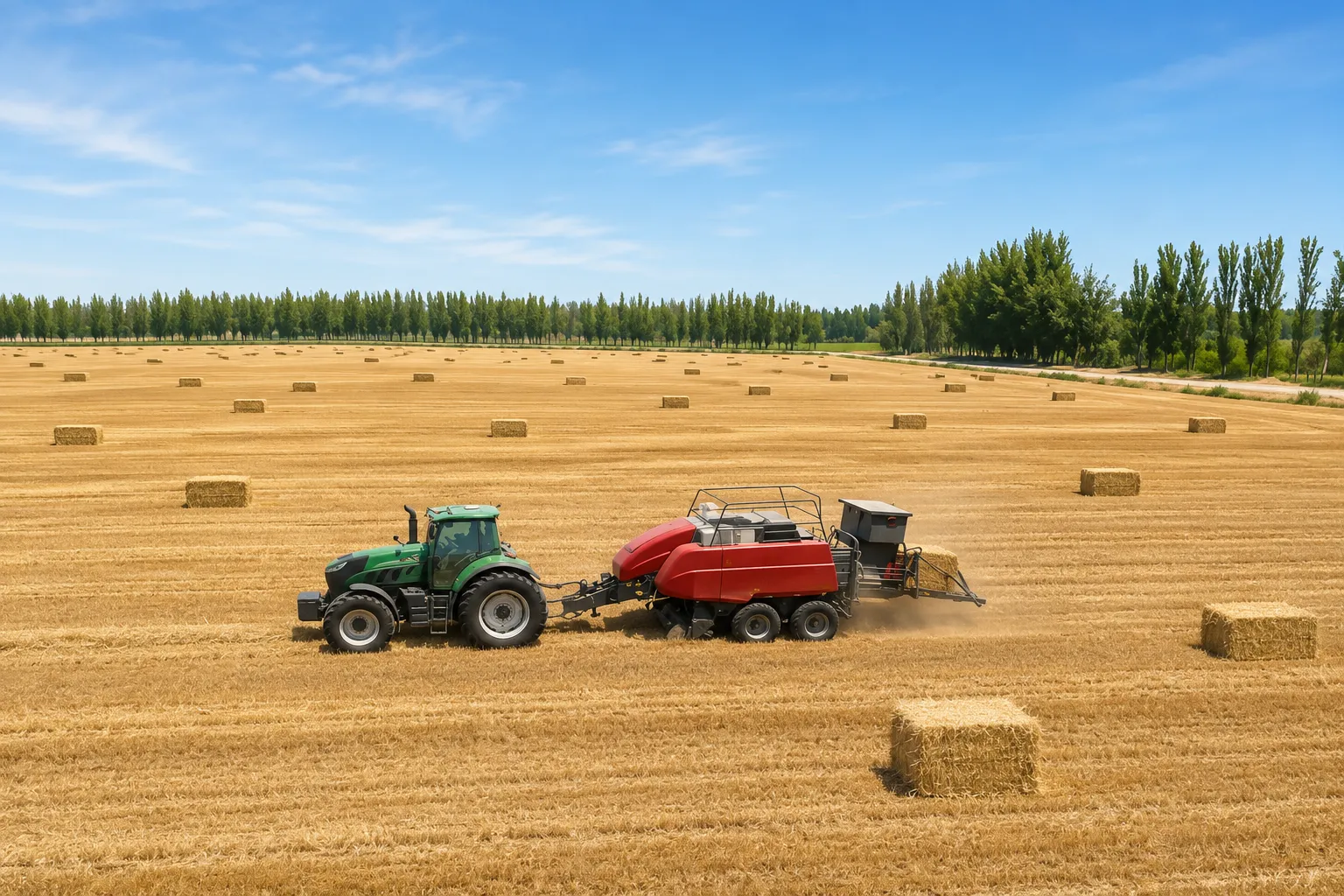
The throughput advantage of the dual-chamber 9YFS-2.2 over a single-chamber 9YF-2200 is real but not exactly double in field conditions. The reason is that the dual-chamber machine must process twice the forage mass per unit time from the same windrow width — and to maintain stable dual-channel feeding without overloading the fork feeder system, the operator typically reduces ground speed by 10 to 20 percent compared to the single-chamber operating speed on the same windrow. The net result is approximately 1.8× the bale output per hour rather than the theoretical 2.0× that the dual-channel design implies.
THROUGHPUT COMPARISON — 60-ACRE FIRST-CUT ORCHARD GRASS · 2 TON/ACRE · $10/BALE
9YF-2200 Single Chamber
~80 bales/hr
2,400 bales total · 30 hrs baling · 5 full baling days at 6 hrs/day. Revenue: $24,000 from 60 acres.
9YFS-2.2 Dual Chamber
~145 bales/hr
2,400 bales total · 16.5 hrs baling · 3 baling days at 6 hrs/day. Same revenue, 13.5 fewer operating hours.
Time Saving Per Cutting
13.5 hours
Same 2,400 bales and $24,000 revenue. 60-acre field cleared in 3 days instead of 5 — 2-day reduction in weather exposure risk for premium hay.
The time saving per cutting translates directly into weather-window risk reduction. For a 60-acre premium hay operation in a region with 3 to 4 day dry windows, finishing the baling in 3 days instead of 5 days reduces the probability of a rain event catching the bale windrows before baling is complete — a risk that is worth far more in preserved hay value than the additional cost of the dual-chamber machine on any cutting where weather becomes a factor.
HP, Weight, and Tractor Requirements for the 9YFS-2.2
The 9YFS-2.2 requires a minimum of 69 HP PTO and weighs 3,115 kg (6,868 lb) — 1,687 lb more than the 9YF-2200 at 4,299 lb. Both the HP requirement and the machine weight have implications for the tractor that must power and tow it.
At 69 HP minimum, the 9YFS-2.2 is accessible to a 75 to 80 HP utility tractor — but that tractor will be operating at near-maximum PTO capacity on dense first-cut windrows where both channels are processing heavy material simultaneously. The more comfortable operating range is 80 to 100 HP, which provides a 15 to 45 percent power reserve for heavy windrow sections without the engine lugging that occurs when a tractor is operated consistently at 95%+ of PTO capacity. A 100 HP mid-size row-crop tractor running the 9YFS-2.2 at 69 to 80 percent of PTO capacity on standard grass and legume windrows represents the optimal match — enough power reserve to handle any windrow density without a speed reduction, while fully utilizing the dual-chamber’s output capacity.
The 6,868 lb machine weight requires a tractor with a drawbar towing rating of at least 7,500 lb at 10 mph — a rating that most 75+ HP 2WD utility tractors meet on flat terrain but that may be marginal on 10%+ slopes where the tractor’s rear axle load must also support the baler’s tongue weight. On operations with significant slope terrain, upgrading to MFWD (mechanical front-wheel drive) on the tractor is recommended when running the 9YFS-2.2, as the front-axle traction from MFWD provides meaningful stability improvement when towing heavy equipment on crowned or sloped fields.
The 6,868 lb machine weight requires a tractor with a drawbar towing rating of at least 7,500 lb at 10 mph — a rating that most 75+ HP 2WD utility tractors meet on flat terrain but that may be marginal on 10%+ slopes where the tractor’s rear axle load must also support the baler’s tongue weight. On operations with significant slope terrain, upgrading to MFWD (mechanical front-wheel drive) on the tractor is recommended when running the 9YFS-2.2, as the front-axle traction from MFWD provides meaningful stability improvement when towing heavy equipment on crowned or sloped fields.
Hydraulic remote requirements for the 9YFS-2.2 are similar to the single-chamber models — one rear single-acting remote for pickup lift — but the heavier machine weight requires verifying that the tractor’s hydraulic system provides adequate flow at the remote outlet at full system pressure while the PTO is simultaneously delivering 69+ HP to the baler input gearbox. Most mid-size tractors in the 80 to 120 HP class with adequate PTO HP also provide sufficient hydraulic flow for pickup lift on the 9YFS-2.2, but confirming the hydraulic flow specification in the tractor operator’s manual before purchase prevents the situation of owning a machine whose pickup cannot be raised quickly enough during headland turns because the hydraulic flow is shared with power steering demand at the same moment.
The 9YFS-2.2 uses the same 540 RPM PTO standard as every other America Ever-Power hay implement — the single-chamber square balers, the round balers, the disc mowers, and the hay rakes. Any tractor that runs the 9YFS-2.2 at 69+ HP on the PTO is fully compatible with the complete hay chain on the same 540 RPM stub.
Knotter Complexity — Four Knotters vs Two on Single-Chamber Models
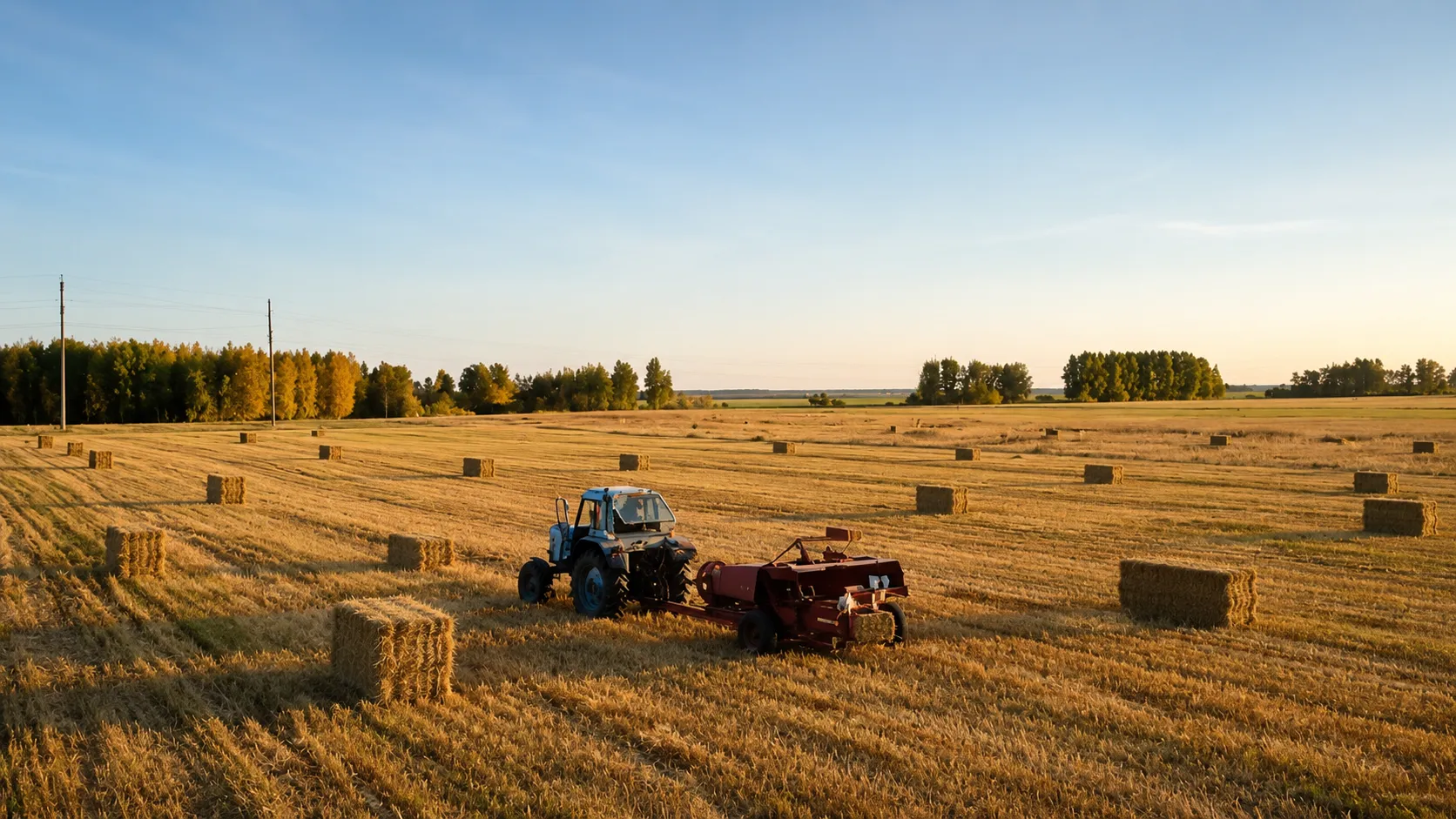
The most significant maintenance difference between the 9YFS-2.2 and the single-chamber models is the knotter count. The dual-chamber machine runs four knotters — two per channel — compared to two on the single-chamber models. This doubles the number of knotter components that must be inspected, maintained, and serviced, and doubles the potential failure points for missed knots in the field. An operator who maintains a single-chamber baler’s two knotters reliably will have a longer learning curve on the 9YFS-2.2’s four-knotter system, particularly in the early seasons of operation before they have developed the pattern-recognition skills for which of the four knotters is responsible for a given missed-knot symptom.
The knotter maintenance schedule for the 9YFS-2.2 is identical in procedure to the single-chamber schedule — tension disc spring check, cutter blade inspection, needle timing verification, and twine holder jaw assessment — but requires twice the time at each service interval because each of the four knotters must be inspected and greased individually. Pre-season knotter service on the 9YFS-2.2 takes approximately 2 to 3 hours for an experienced operator compared to 1 to 1.5 hours on the 9YF-2200. This additional maintenance time is a real cost that should be factored into the total ownership calculation alongside the throughput benefit.
Payback Calculation — When the Dual Chamber Justifies the Price
The payback analysis for the 9YFS-2.2 vs the 9YF-2200 is straightforward in structure. The dual-chamber machine’s price premium over the single-chamber 9YF-2200 must be recovered through one or more of three revenue sources: additional bales produced per season from the same tractor hours, additional cuttings captured within the weather window that would have been lost on a slower single-chamber operation, or labor savings from completing the same bale count in fewer operating hours.
Dual Chamber Justification Thresholds
- ✓ Annual bale count above 1,500 bales: Below this threshold the throughput advantage does not provide enough labor-hour savings to offset the additional machine cost within a reasonable payback period.
- ✓ Premium bale price at $9+ per bale: The weather-window risk reduction benefit of the faster dual-chamber is worth more per saved cutting than the machine cost differential on operations at these price levels.
- ✓ Custom baling revenue: Operators who bale neighbor fields at $X per bale directly convert throughput time to additional revenue. A custom operator billing $3 per bale for machine-and-operator service recovers the price premium in approximately 1 to 2 seasons on a 200+ acre annual custom volume.
- ✓ Labor constraint operations: Farms where the baling window is limited by operator availability (1 person, 6 hours per day) benefit significantly from the 1.8× throughput increase because the constraint is hours per day, not machine speed.
- ✗ Not justified when: Annual bale count is under 1,000, the tractor is below 75 HP and already at capacity on the single-chamber, or the primary crop is dense straw or residue where the dual-channel divider has difficulty producing consistent symmetric distribution between the two channels.
Who Should Choose Single vs Double Chamber
The correct choice between the single-chamber 9YF lineup and the dual-chamber 9YFS-2.2 reduces to a clear decision tree once the annual bale count, tractor HP, and target market are known.
Choose Single Chamber (9YF-1700 to 9YF-2200) When:
- ➤ Annual bale count under 1,500 from own farm
- ➤ Tractor HP is under 80 — dual chamber draws too much PTO
- ➤ Primary crop is straw or corn residue requiring shredding (use 9YF-2200S)
- ➤ Budget favors lower entry cost and lower maintenance complexity
- ➤ Operation is new to square baling and building knotter experience
Choose Dual Chamber (9YFS-2.2) When:
- ➤ Annual bale count exceeds 1,500 from own farm or custom work
- ➤ Tractor is 80 HP or above — dual chamber can be powered correctly
- ➤ Operation is in a weather-volatile region where baling days are limited
- ➤ Custom baling revenue directly converts throughput to additional income
- ➤ Knotter maintenance experience is established from single-chamber operation
Both paths end at the same market outcome — the same 18×14 inch bale format that horse and retail buyers specify — but at different throughput rates, different investment levels, and different maintenance requirements. For operations that have outgrown their single-chamber machine and are evaluating the dual-chamber upgrade, the Dallas, TX parts and equipment team can provide the throughput and payback analysis for the specific acreage, crop, and tractor combination. All models in the square baler lineup — single and dual chamber — are supported by the same 3-day parts delivery network from Dallas to any US or Canadian address, with gearbox assemblies and all knotter wear parts stocked for immediate shipment through agricultural gearbox specialists. The complete hay chain including disc mowers and hay rakes is available from the same supplier.
Evaluating Single vs Dual Chamber for Your Operation?
Tell us your annual bale count, tractor HP, acreage, primary crop, and whether you do any custom baling. We will run the throughput and payback comparison for your specific numbers and recommend the right model — single or dual chamber. Dallas, TX parts depot — 3-day delivery to any US or Canadian address.
Editor: Cxm