Round Baler 5-Year Cost of Ownership: Real Numbers
Sticker price is only 35-45% of the real cost. A field-tested breakdown of what U.S. hay producers, ranchers, and dairy silage baler buyers actually spend across the first five years.
Most buyers walk into a round baler purchase with the sticker price in mind and walk out five years later having spent roughly 2.5 to 3 times that number across acquisition, fuel, wear parts, storage, and depreciation. The gap between expected cost and actual cost is not a failure of budgeting — it is a failure of which numbers ended up in the budget. Sticker price is one line item out of six, and on most U.S. operations it accounts for only 35-45% of total ownership cost over a typical 5-year hold.
This guide breaks down the full 5-year cost picture for a round baler — including the silage baler variants in the same family — across six cost categories, with three worked case studies pulled from real U.S. operations. The intent is not to scare anyone away from buying; it is to make sure the spreadsheet you build before signing a purchase order matches the spreadsheet you will actually live with for the next five years.
Why Sticker Price Is Only 35-45% of the Real Cost
The most common ownership-cost mistake we see at the Sacramento application desk is a spreadsheet that captures only the purchase price, the fuel bill, and twine. Three of the six real cost categories rarely appear on the buyer’s first draft: freight and commissioning charges that hit during Year 1 (typically $1,800-$4,500 depending on zip code), wear-part replacement spikes that arrive in Year 3 or Year 4 as belts and pickup teeth reach end-of-life, and the depreciation calculation that determines what the baler is actually worth at trade-in time.
Honest 5-year cost analysis matters most for the buyer comparing brand-name OEM equipment against import-spec direct-from-factory units. The brand-name OEM looks more expensive on Day One but holds resale value better at Year 5; the import-spec unit costs less to acquire but depreciates faster. Whether either approach wins on total cost depends on annual hour utilization, which we walk through in the worked examples later in this guide.
The other piece that is rarely captured in a first draft is opportunity cost on the Year 1 capital outlay. A $40,000 acquisition price represents either cash that could have been earning 4-6% in a money-market account during the hold period, or borrowing capacity used up that could have funded other operational investments. Whether you treat this as an explicit cost line or a soft assumption, it belongs in any honest 5-year ownership analysis. Operations that finance through equipment leasing pay this cost back as interest; operations that pay cash absorb it as forgone yield. Either way, the impact compounds across the hold.
The Six Cost Categories of Round Baler Ownership
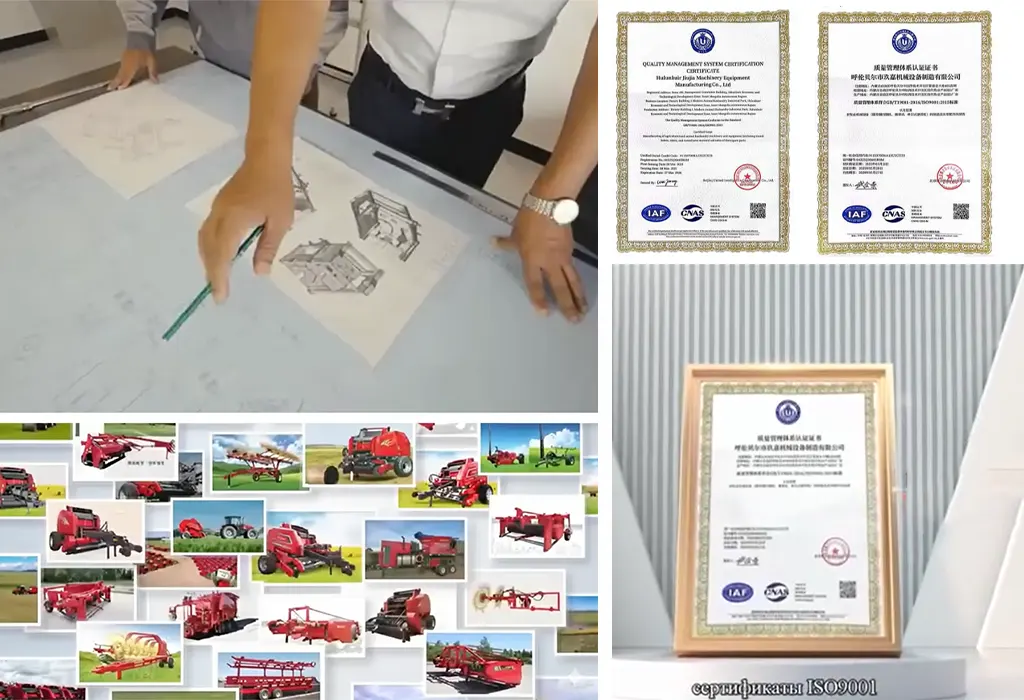
Total ownership cost lands across six distinct categories. Each one has its own cadence — some hit in Year 1, some accumulate every season, some spike at predictable mileage, and one only matters at the end of the hold period. Build the spreadsheet across all six and the picture sharpens considerably.
Acquisition & Commissioning
Sticker price plus freight to your zip code, sales tax, commissioning visit, operator training. Lands in Year 1; typically 35-45% of 5-year total.
Fuel & Tractor Hours
6-9 gallons per hour at typical baling load on the towing tractor. Recurs every season; typically 12-18% of 5-year total at U.S. diesel pricing.
Twine, Net Wrap, Stretch Film
Consumable per bale: $1.80-2.40 net wrap, $3.20-3.80 stretch film for silage baler workflows. 8-15% of 5-year total depending on annual bale volume.
Wear Parts & Maintenance
Belts, pickup teeth, twine arm, bearings, hydraulic seals. Predictable spike at Year 3-4 as initial wear cycle ends; 8-12% of 5-year total.
Storage, Insurance, Labor
Off-season shed storage, equipment insurance ($300-700/year), operator labor amortized across baled tons. 15-22% of 5-year total combined.
Depreciation & Resale Loss
Difference between purchase price and trade-in value at Year 5. Typically 35-65% of original price, depending on brand-name vs import-spec.
The percentages above describe a “typical” mid-range round baler running a mid-sized hay program. Actual category weights shift by operation: high-volume custom haulers see fuel and consumables dominate; low-volume hobby cow-calf operators see depreciation and storage dominate. The next two sections walk through Year 1 and Years 2-5 in concrete dollars.
Year 1 — Acquisition and Commissioning Costs
Year 1 is the heaviest cost year because acquisition lands in full plus the first season of operating expenses. Build the Year 1 line items into the purchase decision rather than treating them as separate transactions — they all hit the cash flow inside the first 12 months. The breakdown below walks through what a typical mid-size round baler order looks like at Year 1 close, before any wear-part replacements have been needed.
| Year 1 Line Item | Typical Range (USD) | Notes |
|---|---|---|
| Baler purchase price | $25,000 – $80,000 | Compact 4×4 to high-density 5×6 chamber |
| Freight to zip code | $1,800 – $4,500 | Lower 48; rates checked spring 2026 |
| Sales tax | 0% – 9% | Varies by state; ag exemption may apply |
| Commissioning & operator training | $0 – $1,800 | On-site engineer dispatch for fleet orders |
| Year 1 fuel (typical 200-400 hours) | $1,200 – $3,000 | At $4.20/gal U.S. average diesel |
| Twine, net wrap, stretch film | $900 – $4,500 | Depends on bale volume and silage share |
| Equipment insurance | $300 – $700 | Premium scales with replacement cost |
| Year 1 Total | $29,200 – $94,500 | Wide range reflects baler size class |
A note on financing: net-30 terms are available from many factory-direct sellers (including Sacramento) for verified commercial buyers, which moves the Year 1 cash hit out by 30 days but does not change the total. Equipment leasing is also available at U.S. ag-equipment lenders, typically at 6-9% effective interest on a 5-year structure, which spreads the acquisition cost across the hold period at the cost of a higher 5-year total. Cash purchase remains the lowest-total-cost option for buyers who can absorb the Year 1 hit.
Annual Operating Costs Across Years 1-5
Years 2-5 settle into a more predictable cadence. Fuel, consumables, insurance, and routine maintenance recur every season. Wear parts arrive on a longer cycle: belts and pickup teeth typically last 800-1,200 baling hours, which means the first major wear-part replacement spike usually lands in Year 3 or Year 4 for an operation running 250-400 hours per year on the baler. The cost stack below reflects an 800-acre cow-calf operation as the baseline; high-volume custom haulers will see consumables and fuel multiply roughly 2-3 times.
- ●Fuel: $1,200-3,000/year for 200-400 hours of baling at typical loads. Fuel pricing tracks U.S. diesel benchmarks; 2026 baseline is $4.20/gallon farm-tank average.
- ●Consumables: $0.40-0.80 per bale for twine, $1.80-2.40 per bale for net wrap, $3.20-3.80 per bale for stretch film on a silage baler. Multiply by annual bale count.
- ●Routine maintenance: $400-900/year for grease, hydraulic fluid changes, filter replacement, and minor adjustments. Mostly DIY on most farms.
- ●Wear parts (Year 3-4 spike): $1,800-4,500 for belts replacement, $400-900 for pickup teeth set, $200-600 for twine arm components. Lands once during the 5-year hold for moderate-volume operators.
- ●Insurance: $300-700/year on most farm equipment policies. Premium drops 20-30% by Year 5 as the depreciated value falls.
- ●Storage: $0 if you have an existing shed; $400-1,200/year if you rent space. Outdoor storage shortens machine life and is rarely worth the savings.
For a typical 800-acre operation running 300 hours per year on the baler, the average annual operating cost across Years 2-5 lands at roughly $4,500-7,200. The Year 3-4 wear-part spike adds another $2,500-5,500 in whichever year it falls, which is why the cash-flow line in the spreadsheet should leave room for that bump rather than treating annual costs as flat.
Three Worked 5-Year Cost Examples
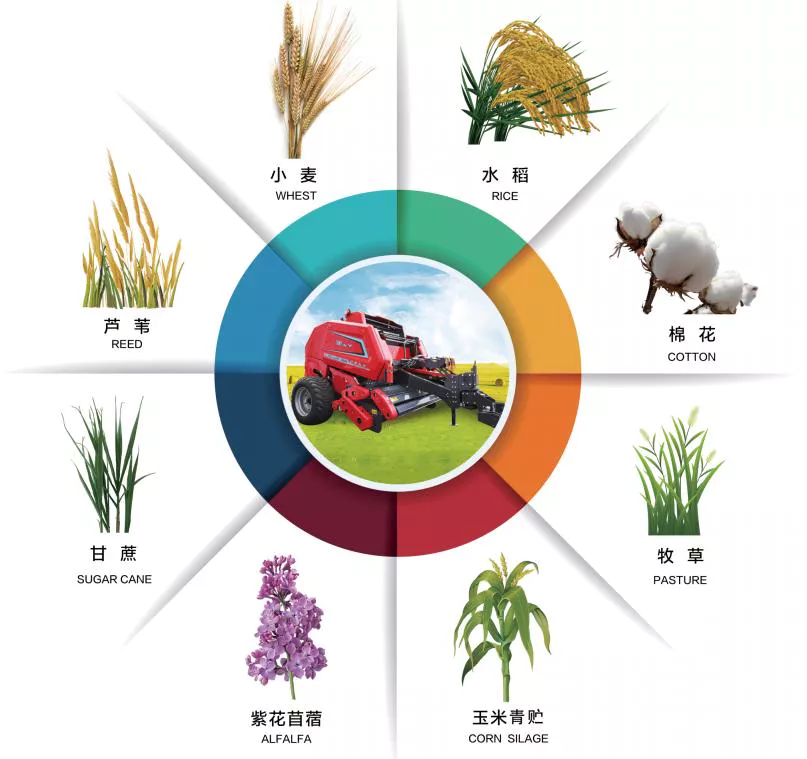
Three working examples below show how the six categories play out across different U.S. operations. Numbers are pulled from real customer conversations adjusted for 2026 pricing and rounded for clarity. Use the structure to model your own operation; the actual line-item values will shift based on your zip code, fuel pricing, and tractor inventory.
Example 1: Cow-Calf Ranch (800 acres, Wyoming)
Compact 4×5 round baler | ~250 hr/yr | 1,400 bales/yr
Year 1: $36,500 (acquisition + first-season ops)
Years 2-5 avg: $5,200/yr operating
Year 5 trade-in: $11,000 (import-spec)
5-year net cost: $46,300
Cost per ton baled: ~$22
Example 2: Custom Hay Operation (2,500 acres, Idaho)
High-density 5×5 round baler | ~600 hr/yr | 6,500 bales/yr
Year 1: $74,000 (acquisition + first-season ops)
Years 2-5 avg: $14,800/yr operating
Year 5 trade-in: $21,000 (import-spec)
5-year net cost: $112,200
Cost per ton baled: ~$15
Example 3: Dairy Silage Baler (1,500 cows, Wisconsin)
Silage baler-wrapper combo | ~400 hr/yr | 3,200 wrapped bales/yr
Year 1: $98,000 (combo unit + first-season ops)
Years 2-5 avg: $18,400/yr operating
Year 5 trade-in: $26,000 (import-spec)
5-year net cost: $145,600
Cost per wrapped bale: ~$11
Two patterns stand out across the three examples. First, cost per ton baled drops sharply with annual volume — the 800-acre cow-calf at $22/ton, the 2,500-acre custom hauler at $15/ton, and the dairy silage baler workflow at $11 per wrapped bale. Second, the dairy silage baler example carries higher absolute cost because of the integrated wrapper, but the wrapped-silage feed value justifies the premium for operations that need fermented inventory rather than dry hay.
Resale, Trade-In, and Year-5 Decisions
Year 5 is decision time on most U.S. round baler holds. The machine is roughly halfway through its useful life if it has been kept indoors and serviced on schedule, and it sits at the inflection point where some operators trade for new equipment and others run-to-end for another 5-8 years. The right call depends on the resale curve of the machine class and the operation’s cash-flow tolerance.
| Machine Class | Year 5 Resale | Year 10 Resale | Best Hold Strategy |
|---|---|---|---|
| Brand-name OEM (Deere, NH, Case) | 55-65% | 25-35% | Trade at Year 5 |
| Vermeer / Krone | 50-60% | 22-32% | Trade at Year 5-7 |
| Import-spec direct-from-factory | 35-45% | 15-25% | Run-to-end at Year 8-10 |
| Used machine purchased at Year 3-4 | N/A (already past resale peak) | 10-20% | Run-to-end |
The brand-name OEM round baler holds the strongest Year-5 resale value because dealer trade-in programs and a deep used-equipment market keep prices supported. The import-spec round baler depreciates faster on paper but typically offers a lower acquisition cost that more than offsets the resale gap for buyers planning to keep the machine 8-10 years. The math closes in favor of the brand-name OEM only if you are confident you will trade at Year 5 and are unwilling to absorb the run-to-end depreciation curve.
Two factors raise resale value at Year 5 regardless of brand: documented service history and indoor storage. A used machine offered with a complete service log — oil changes, belt replacements, hydraulic fluid samples — typically sells 8-12% above an undocumented unit at the same age. Indoor storage adds another 5-10% premium because the cosmetic condition signals that internal components have been treated similarly. Operators planning a Year 5 trade should keep service records from Day One and store the machine indoors from the first off-season; both decisions cost almost nothing and pay back at trade time.
How to Stretch Round Baler Service Life Beyond 5 Years
A baler that lasts 8-10 years in good working condition cuts ownership cost per baled ton by 35-45% versus a 5-year trade. The path to longer service life is not exotic; it is consistent attention to a small number of items that compound over time. Operators who hit all five points below routinely run their balers past 8,000 hours without major rebuilds.
- 1Indoor storage between seasons. Outdoor storage shortens belt life by 30-40%, accelerates rust on the chamber, and degrades hydraulic seals. A pole-shed roof is the cheapest 5-year service-life extender available.
- 2Daily greasing during operation. 8-12 zerks per cycle, 30 seconds each. Skipping greasing is the single biggest cause of premature bearing failure on these machines.
- 3Hydraulic fluid changes every 1,000 hours. Cheaper than the filter clogs and pump wear that follow neglected fluid. Sample testing at year 4 catches early contamination.
- 4Pre-emptive belt replacement at Year 4. Belts that survive past Year 5 are running on borrowed time and tend to fail mid-season. Plan a belt swap during the off-season ahead of peak haying weeks.
- 5Annual chamber inspection. Walk the chamber, the pickup reel, the twine arm, and the powertrain coupler once a year. Catch wear at 60-70% before it forces a roadside repair.
A round baler treated to all five points above typically reaches 7,000-10,000 hours of working life before major rebuilds become unavoidable — roughly double the service life of a unit run on the bare-minimum service schedule. The cost-per-baled-ton math improves dramatically across that extended hold because the depreciation portion of the cost stack drops to a small fraction of its Year 5 weight. Operators who plan for an 8-year hold from Day One typically save 25-35% on cost-per-ton compared with the trade-at-Year-5 alternative, even after accounting for the Year 6-7 wear-part rebuild that the longer hold inevitably requires.
Building Out the Hay-Making Workflow
5-year cost analysis is most accurate when it covers the whole hay-making chain rather than just the baler in isolation. The mower, the rake, and the baler share fuel cost, share operator hours, and share field time during peak haying weeks. Buying all four implements together also captures freight savings of typically 12-18% on a single Sacramento shipment versus separate orders.
The four product families below cover the full chain from cutting through baling, plus the kidney bean puller line for operations running a hay-and-bean rotation. Match the implement throughput across the chain — a 9 m hay rake paired with a 1.0 m round baler pickup wastes capacity, while a 5 m rake feeding a 1.8 m high-density baler bottlenecks throughput. The application desk runs the throughput math against your specific tractor inventory before any quote is finalized.
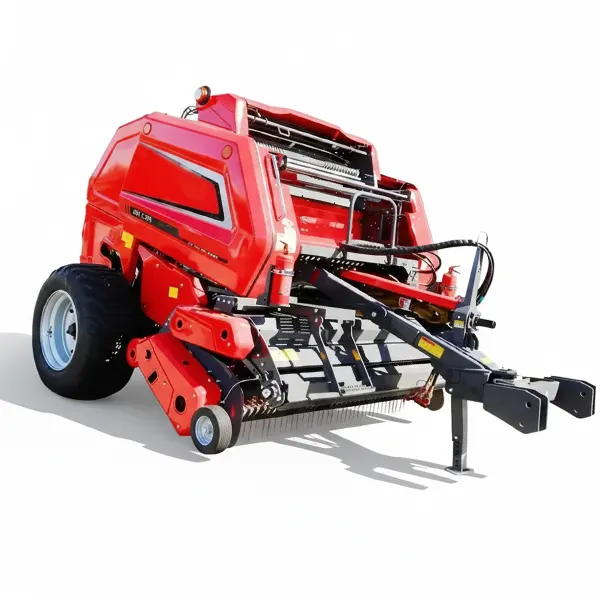
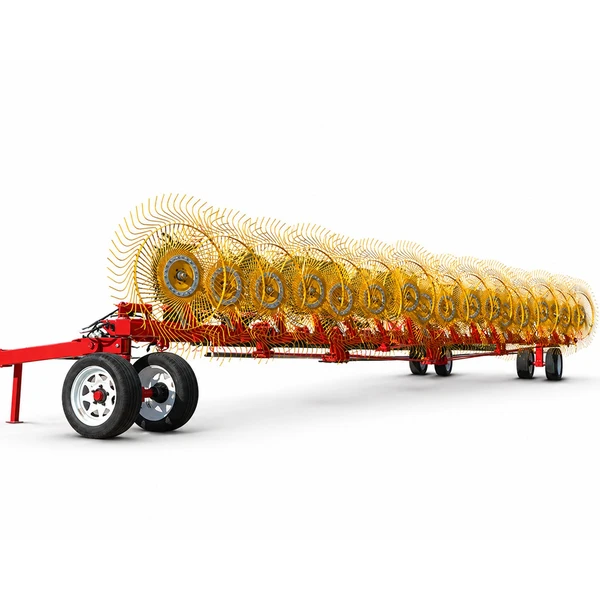
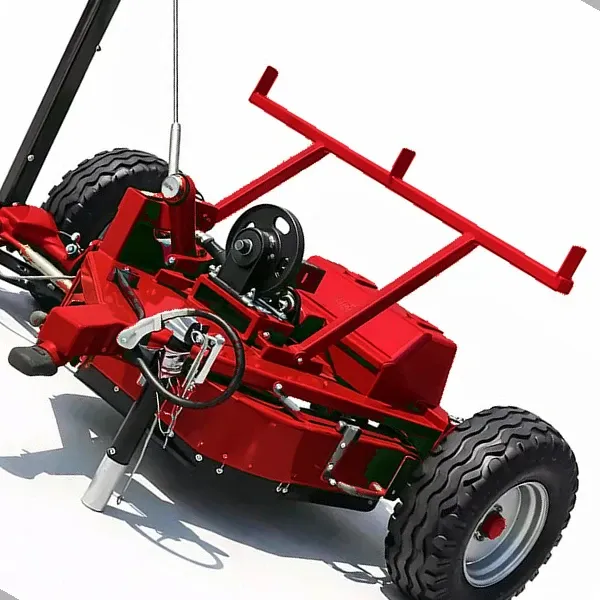
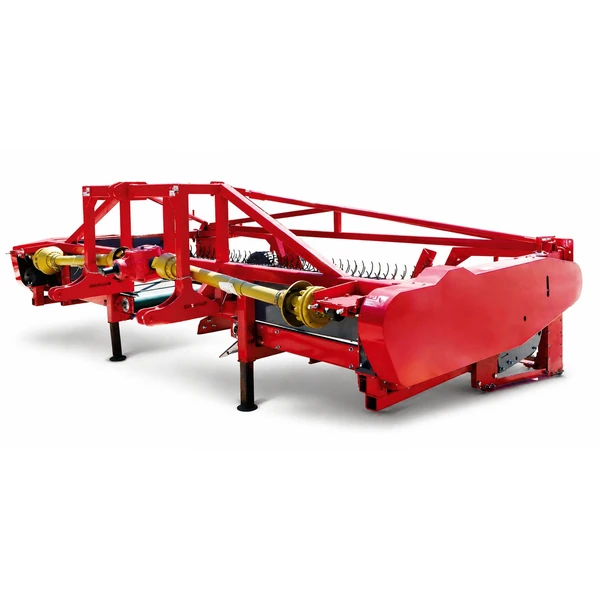
Browse the full silage and forage equipment catalog or look at other products like bale transporters and forage hammer mills that complete the on-farm chain after the round baler is in place.
Frequently Asked Questions
What is the typical 5-year total cost for a mid-range baler?
For a mid-range 4×5 baler running 250-350 hours per year, the 5-year total ownership cost typically lands at $50,000-$75,000 net of trade-in value, depending on annual bale volume and freight zip code. The acquisition portion of that total runs $30,000-$45,000; the rest is fuel, consumables, wear parts, insurance, and depreciation across the hold.
How does a silage baler compare on cost to a dry-hay round baler?
A silage baler-wrapper combo typically lists 40-60% above a comparable stand-alone dry-hay baler at the same chamber size. Operating cost runs $5-8 per ton higher because of stretch film, but wrapped silage feed value typically delivers a 9-11% protein retention advantage that justifies the cost premium for dairy operations.
Should I buy new or used to minimize 5-year cost?
Used is cheaper at acquisition but the wear-part replacement spike often arrives in Year 1 or Year 2 instead of Year 3-4 on a new machine, which compresses the cash flow. For operations under 6,000 bales per year, a direct-from-factory new baler typically wins on 5-year total cost because warranty covers the early failure modes that hit a used machine in Years 1-2.
Are equipment leases worth considering for cash-flow management?
Leases spread the acquisition cost across the 5-year hold at 6-9% effective interest, which adds 12-18% to the 5-year total. They make sense for operations that cannot absorb the Year 1 cash hit, or for operators who want to refresh equipment every 5 years without trade-in negotiations. Cash purchase remains the lowest-total-cost approach for buyers with the working capital available.
How much does freight add to a round baler purchase?
Freight from the Sacramento warehouse to most lower-48 zip codes runs $1,800-$4,500 on a single baler, depending on distance and whether the delivery is to a commercial address or a farm. Freight scales sub-linearly when ordering multiple implements together — a single shipment with the baler, hay rake, and mower typically saves 12-18% versus three separate orders.
What insurance coverage do I need on a round baler?
Most U.S. farm policies bundle baler coverage into a general farm equipment rider at $300-700/year for typical replacement values. Confirm whether your policy covers field-side fire, road-transit damage, and theft from outdoor storage — these are the three most common exclusions on basic ag-equipment policies.
When should I plan to trade in or sell my round baler?
Year 5-7 captures the strongest resale value on brand-name OEM balers; Year 8-10 maximizes total value extraction on import-spec units that depreciate faster but retain useful working life. The right exit timing depends on whether you have an immediate next-machine plan and on cash-flow timing — there is no single right answer.
Ready to run the 5-year numbers on your operation?
Honest 5-year cost projections are best done against your actual operation rather than a generic spreadsheet. Send your annual bale volume, target tractor model, and freight zip code to the Sacramento application desk and we will walk through the line items relevant to your situation, including freight cost, financing options, and the right baler model for your tractor inventory.
Editor: Cxm