Silage Baler in Arid & High-Altitude Regions: 2×2 Matrix
Four quadrants defined by elevation and aridity — each with distinct silage baler operating discipline that the standard playbook does not fully address.
Silage operations in arid and high-altitude regions face the opposite challenges from humid-climate operations. Wilting happens too fast rather than too slow. Forage moisture drops below silage-acceptable ranges within hours rather than days. Cutting decisions are governed by clock rather than calendar, and the standard cut-day-rake-day-bale-day cycle compresses into a single-day workflow that the equipment chain has to accommodate. Standard cattle-belt operating discipline produces consistently sub-optimal results in these regions because the assumptions baked into the standard playbook (24+ hour wilting windows, predictable moisture decline curves, ambient conditions that support quality fermentation) all break down. This article walks through arid and high-altitude operations using a 2×2 matrix defined by elevation (low vs high) and aridity (semi-arid vs fully arid), with operating discipline notes for each quadrant.
The matrix produces four distinct operating regimes. Low-elevation arid covers Central Valley California and parts of Arizona — hot dry summers with predictable solar drying and abundant irrigation. High-elevation arid covers the Colorado high plains and Mountain West dryland operations — cool dry conditions with thin air and intense UV. Low-elevation semi-arid covers Western Kansas and the Texas Panhandle — moderate aridity with longer wilting tolerance than the fully-arid quadrants. High-elevation mountain operations cover Wyoming, Montana, and Idaho mountain valleys — short growing seasons with rapid wilting and challenging logistics. Each quadrant has a reference operation described below.
(under 900 m)
(over 1,500 m)
(< 300 mm)
(300–500 mm)
Why Arid and High-Altitude Operations Need Different Discipline
Arid-region wilting happens fast. The combination of low ambient humidity, high daytime temperatures, and direct solar exposure can drop alfalfa from 80% standing moisture to 50% silage moisture in 8–12 hours during peak summer conditions — a third of the time required in humid Northeast operations. The compressed wilting window forces a different operational approach: cutting decisions made in early morning, raking and baling completed the same day, and storage-pad placement happening within 24 hours of cutting rather than 48–72 hours. The silage baler runs in a tighter sequence with the upstream equipment than humid-region operations require.
High-altitude operations add a separate set of complications independent of aridity. UV intensity at 2,000+ meter elevation is roughly 25–30% higher than at sea level, accelerating wrap film degradation by similar margins. Air pressure is meaningfully lower, affecting hydraulic system performance and slightly reducing engine power output. Temperature swings are larger across the day-night cycle, which creates expansion-contraction stress on bale wrap that does not occur as severely in low-elevation operations. And growing seasons are short — 90–120 days in many mountain valleys — compressing the entire annual baling work into a tighter calendar than lower-elevation operations face.
The combined effect is that arid and high-altitude operations face wilting that happens too fast and storage that faces UV and thermal stress. The answer is not to slow wilting (which the climate makes nearly impossible) but to compress the entire workflow and protect bales aggressively after wrapping. Silage baler selection, operating schedules, and storage pad design all reflect these adaptations. The four quadrants below show how the specific combination of elevation and aridity shapes each operating regime.
QUAD ALow-Elevation Fully Arid: Central Valley CA, AZ
The Central Valley California reference is a 600-cow Holstein dairy that featured in earlier articles. The valley combines low elevation (60–150 meters), low annual precipitation (180–350 mm depending on location), and irrigation-supported alfalfa production at 7+ tons DM per acre annually across 4 cuttings. Summer daytime temperatures regularly exceed 35°C, relative humidity drops below 30% in early afternoon, and wilting moves fast enough that operators have to actively manage to avoid over-drying.
Quad A operations typically run a same-day cut-rake-bale workflow during peak summer. The mower-conditioner enters the field at 9:00 AM, cutting completes by mid-morning, the rake follows by early afternoon, and the silage baler enters by mid-to-late afternoon. The wilting target is hit within an 8–10 hour window. Operations that try to stretch this to a 24-hour cycle frequently end up with over-dry forage that bales as effectively dry hay rather than silage — the wrapped bales from the silage baler seal in residual oxygen and produce sub-fermented product that horses and dairy cattle reject.
The advantage of Quad A operations is operational reliability. Once the same-day workflow is dialed in, weather rarely interrupts the schedule. The disadvantage is the compressed timeline forces equipment-chain coordination that operations transitioning from less arid regions struggle to achieve in their first season. Operations new to Quad A often hire experienced regional custom operators for the first 1–2 cuttings to learn the timing rhythms before transitioning to fully owned-and-operated workflows. The learning curve is real but generally completes within a single season — by year 2, most operators have internalized the same-day timing patterns.
QUAD BHigh-Elevation Fully Arid: Colorado High Plains, New Mexico
Quad B operations sit at 1,500–2,200 meters elevation with annual precipitation under 350 mm — the high desert of eastern Colorado, the Sangre de Cristo foothills of New Mexico, and parts of central Wyoming. The reference operation here is a 450-cow beef-cattle ranch in southern Colorado at 1,700 meters elevation, running 800 acres of irrigated alfalfa and mixed pasture. Summer daytime temperatures are moderate (28–32°C) but UV exposure is intense at the elevation, humidity is consistently below 35%, and overnight temperatures drop sharply (often below 10°C) creating large thermal swings.
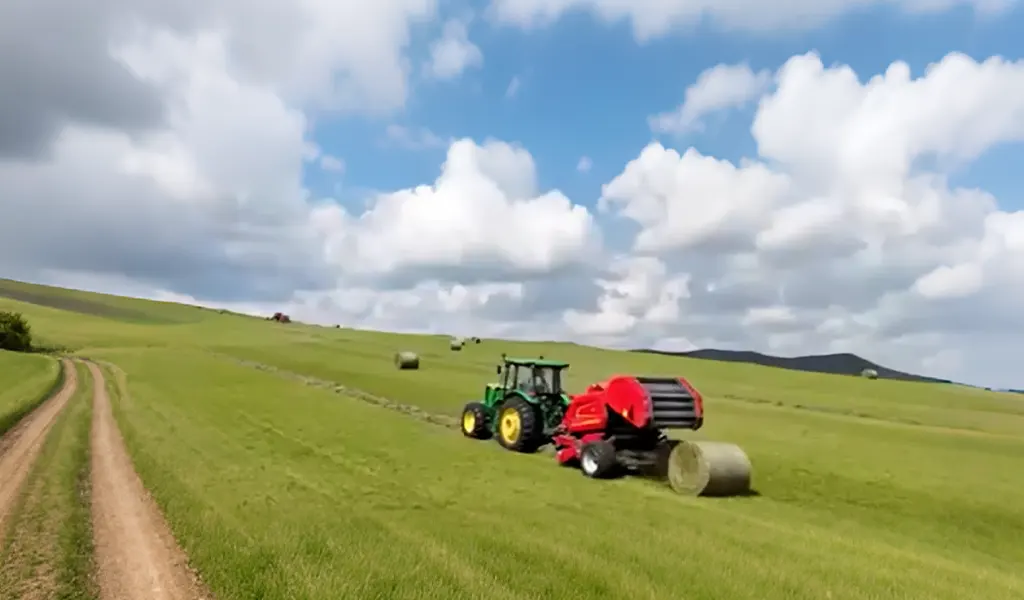
Quad B wilting times are similar to Quad A (8–14 hours from cut to silage moisture) but the cooler ambient temperatures and stronger UV produce different forage condition outcomes. Alfalfa in Quad B retains slightly higher protein content at silage-moisture targets than equivalent Quad A forage because lower-temperature wilting causes less protein degradation during the moisture-loss process. Quad B operations targeting horse-haylage and high-protein dairy markets often capture price premiums that low-elevation operations cannot match because of this protein-retention advantage.
The UV intensity at Quad B elevation is the dominant equipment-related challenge. Wrap film deterioration on silage baler bales runs 25–30% faster than at sea level, dropping effective storage life from 18+ months to 12–14 months at the same wrap layer count. Quad B operations universally specify 8-layer wrap minimum (versus 6-layer typical at low elevation) to compensate for the accelerated UV damage. Storage pad covering with shade cloth or lightweight roofing is increasingly common at Quad B elevations even in the dry climate, specifically to extend wrap life rather than to protect against precipitation.
QUAD CLow-Elevation Semi-Arid: Western Kansas, Texas Panhandle
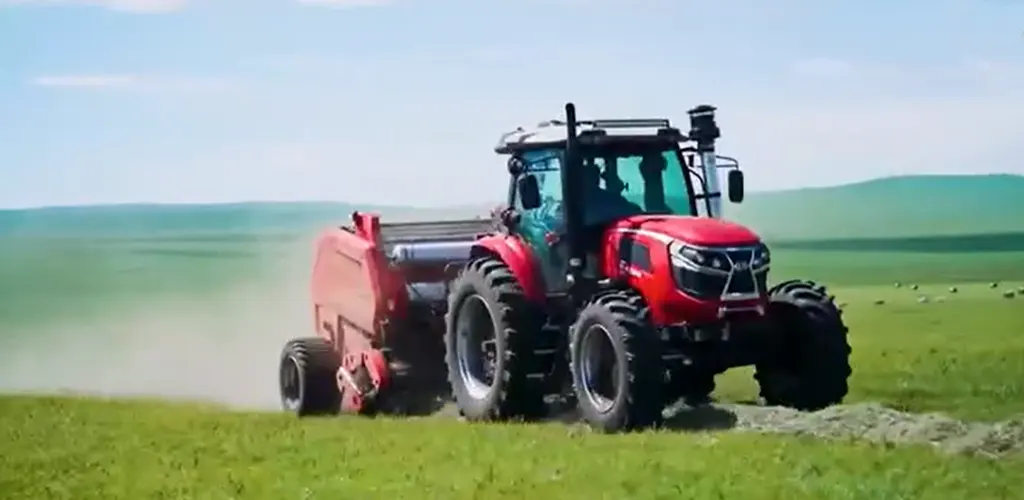
Quad C represents the easiest operating profile in the arid matrix — moderate aridity (300–500 mm annual precipitation), low elevation (300–900 meters), and weather conditions that fall closer to the standard operating manual than the fully-arid quadrants do. The reference operation is a 1,200-acre Western Kansas farm running irrigated and dryland alfalfa-grass production for both feedlot beef and regional hay markets. Wilting times run 14–24 hours under typical summer conditions, falling between the compressed Quad A timing and the standard Plains baseline.
Quad C silage baler operations can choose between same-day workflows (Quad A style) and 24-hour workflows (standard Plains style) based on weather and scheduling priority. The flexibility is genuinely valuable for operations managing multiple cutting decisions across diverse acreage — different fields can be on different schedules without conflict. Most Quad C operations adopt a 24-hour workflow as the default and shift to same-day execution when weather forecasts suggest afternoon conditions might compromise forage quality.
Standard wrap layer counts (4–6 layers) work in Quad C without the elevation-driven adjustments that Quad B requires. Storage discipline is forgiving — open-air storage pads on level ground produce acceptable spoilage rates (3–5%) without the roofing investment that humid zones or high-elevation arid zones often require. Equipment specifications match the Plains baseline rather than requiring climate-specific upgrades. Operations transitioning from Plains-state experience to Quad C find their existing operating habits transfer well; operations transitioning from humid or fully-arid zones face larger adjustments.
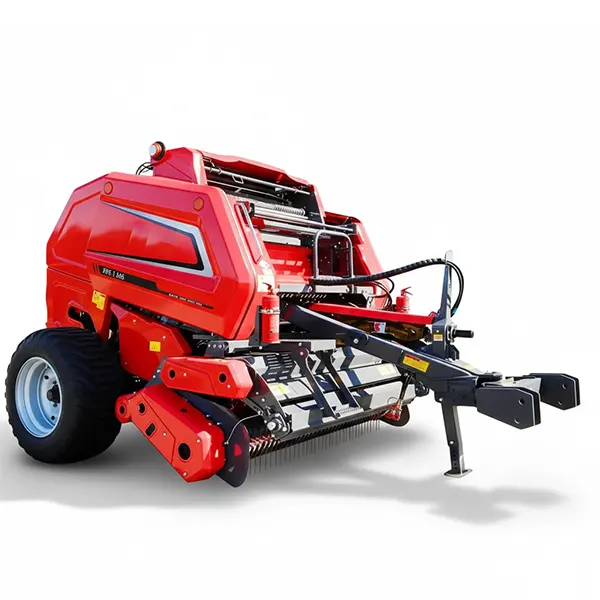
9YG-2.24D S9000 Silage Baler
Variable-chamber design suits the compressed same-day workflows typical of Quad A and Quad B arid operations. High-throughput rate keeps pace with the tight wilting windows that define arid-region silage operations.
QUAD DHigh-Elevation Mountain: Wyoming, Montana, Idaho
Mountain valley silage baler operations represent the most operationally complex quadrant in the matrix. The reference operation is a 350-cow beef ranch in southwestern Montana at 1,800 meters elevation, running 600 acres of mixed alfalfa-grass meadow forage along a river bottom plus 4,000 acres of summer mountain pasture. The growing season is roughly 100 days from late May through early September. Within that short window, operations have to complete 2–3 hay cuttings while also managing summer cattle rotations, water-system maintenance, and fence work that all compete for operator hours.
Quad D wilting conditions vary significantly across the season for the silage baler. June can be cool and damp (semi-humid effectively), July is typically warm and dry (full Quad B conditions), and August often returns to cooler conditions as temperatures decline at elevation. Operators have to adjust workflows month-by-month rather than running a single seasonal pattern. The June first cutting often requires 24–30 hour wilting windows; the July second cutting compresses to 12–18 hours; the August or September final cutting may extend back to 24+ hours. Adapting to this seasonal variability is the operational discipline that distinguishes successful Quad D operations.
Equipment logistics in Quad D add complications that low-elevation operations do not face. The silage baler often needs to move between widely-separated meadows along river bottoms, with significant tractor-and-trailer travel time between cutting locations. A 2-hour move between fields is common; a 4-hour move not unusual. Operators plan cutting sequences to minimize equipment moves rather than chasing optimal-quality cuts across distant fields. The result is a workflow that prioritizes logistics efficiency over per-bale quality maximization — the opposite of horse-operation prioritization.
Storage in Quad D faces the combined challenges of UV exposure, large diurnal thermal swings, and occasional summer hailstorms that can damage open-stored bales. Shade cloth covering is common; full roofing is increasingly typical for operations where bale-quality preservation justifies the capital investment. Hailstorm damage protection is the unique Quad D consideration — a 3 cm hailstorm can puncture wrap film on dozens of bales simultaneously, producing widespread fermentation problems that show up 4–6 weeks later. Mountain valley operations universally inspect bales after any significant hailstorm and often patch punctured wrap with specialty silage-tape products before the punctures spread.
Four-Quadrant Operating Discipline Summary
The four quadrants in side-by-side summary, with the operating discipline adjustments each requires versus a Plains-state baseline.
| Dimension | Quad A Low Arid | Quad B High Arid | Quad C Low Semi-Arid | Quad D Mountain |
|---|---|---|---|---|
| Wilting time | 8–12 hr | 8–14 hr | 14–24 hr | 12–30 hr seasonal |
| Workflow style | Same-day | Same-day | 24-hour standard | Variable by month |
| Wrap layers | 4–6 baseline | 8 minimum | 4–6 baseline | 8 minimum |
| UV adjustment | Standard | Shade cloth common | Standard | Shade common, hail concern |
| Season length | 180+ days, 4–5 cuttings | 120–150 days, 3 cuttings | 150–180 days, 3–4 cuttings | 90–120 days, 2–3 cuttings |
| Logistics burden | Low | Moderate | Low | High (field moves) |
The matrix makes clear that operating discipline differs systematically across quadrants. Quad C is the closest match to standard Plains-state operating manual; Quad A and Quad B require workflow compression; Quad D requires seasonal adaptation and logistics planning that the other quadrants do not face. Operators evaluating equipment purchases or operating discipline upgrades should benchmark against their specific quadrant rather than applying generic arid-climate guidance. Operations spanning multiple quadrants — for example, a Wyoming operation with valley meadows (Quad D) and high-plain summer pasture (Quad B) — need to develop separate workflow patterns for each elevation range rather than averaging across them.
Equipment Around the Silage Baler
Arid and high-altitude operations typically run a different equipment chain than humid-climate operations. The mower-conditioner can run lighter conditioning settings (or even mow without conditioning) because the dry climate handles moisture release without aggressive crimping. The hay rake selection often favors faster wheel rakes over finger-wheel designs because the dry forage tolerates aggressive raking without leaf-shatter losses. The compressed workflows in Quad A and Quad B reward equipment-chain coordination more than equipment-quality investment — the dollars matter most when applied to keeping the chain moving rather than to component upgrades on individual machines.
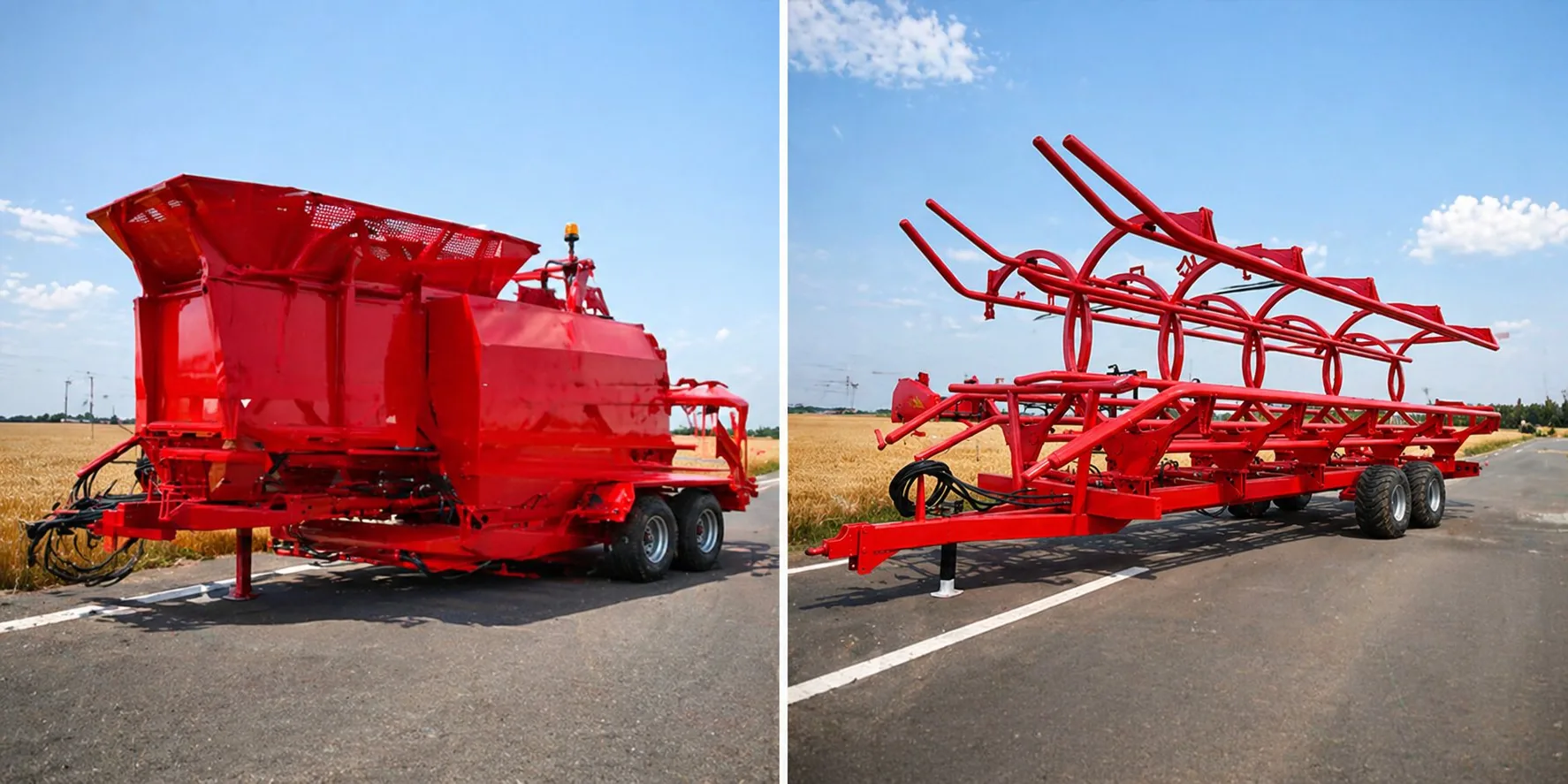
The bale transporter in arid operations needs to move bales fast within the same-day workflow. Operations producing 100+ bales per day need transporter capacity matching that rate, which often means commercial-grade transporters rather than compact units. Operations in Quad D mountain conditions also need transporters that handle rough field conditions — a transporter sized for paved-road movement struggles on the rocky logging-road conditions typical of mountain meadow access.
Tractor specification in arid and high-altitude operations also differs from humid-region operations. The drier forage in arid zones produces less chamber friction, reducing horsepower demand by 5–10% versus humid-zone equivalents. High-altitude operations face the opposite — thin air at 1,800+ meters reduces tractor engine output by 8–12% versus sea-level rated power. The two effects partially offset for high-altitude arid operations, but mountain valley operators (Quad D) often specify slightly higher-rated tractors than the silage baler manufacturer recommends to maintain margin against the elevation power loss.
Editor: Cxm