Optimal Moisture for Silage Baling: The 50-65% Window
Eight questions silage baler operators ask about moisture — answered with the chemistry, the measurement methods, and the field-level adjustments that actually work.
Silage baler discussions assume the operator already knows that the moisture target is roughly 50-65% and that hitting this window matters. New operators inheriting silage equipment from previous-generation operations, or operators transitioning from dry hay production for the first time, frequently lack the underlying understanding of why the moisture window exists, what happens at the edges, and how to measure and adjust forage moisture in the field. This article answers eight of the most common operator questions about silage moisture in plain language, with the underlying fermentation chemistry where it helps explain the practical answer.
The Q&A format reflects how operators actually encounter these questions — not as a structured curriculum but as practical questions that come up during the cutting season, often when a particular bale is producing unexpected outcomes and the operator wants to understand why. The answers below assume an audience of operators with field experience but limited formal training in silage chemistry. Operators with academic agronomy backgrounds may want more depth on specific topics; the references at the end of each article in this series point to those resources.
Q1Why is the silage moisture range 50% to 65% and not something else?
The 50–65% range exists because of two competing biological processes that have to balance for silage fermentation to proceed correctly. Below 50% moisture, lactic-acid bacteria — the microbes that drive proper silage fermentation — do not have enough free water to multiply effectively. The bale enters the wrap with insufficient bacterial activity, residual oxygen does not get consumed quickly enough, and aerobic spoilage bacteria gain a foothold instead of being outcompeted by the lactic-acid bacteria. The bale ends up partially fermented at best, often with measurable mold development within 30–60 days.
Above 65% moisture, a different problem dominates. Excess moisture in the bale supports clostridia bacteria — particularly Clostridium tyrobutyricum and related species — that compete with lactic-acid bacteria for the available sugars. Clostridia produce butyric acid rather than lactic acid, which gives the bale a characteristic sour smell and dramatically reduces palatability for livestock. Wetter bales also exert more internal pressure on the wrap film, increasing the risk of seam separation and oxygen ingress during storage. The 65% upper limit balances against both the fermentation chemistry and the wrap-mechanical risk.
Within the 50–65% window, operators can target different points based on their specific application. Dairy operations targeting maximum lactating-cow palatability often run at 55–60%; horse operations producing haylage push the lower edge at 45–55% (slightly outside the cattle-silage range); beef cattle operations comfortably accept the full 50–65% range. The window is not a single optimal point — it is a range within which acceptable fermentation can occur, with finer optimization based on the specific feeding application.
Q2How do I measure moisture in the field accurately?
Three field measurement methods are practical for silage baler operations. Handheld electrical-resistance moisture meters cost $150–400 and produce results within 5–10 seconds when sample probes are inserted into the windrow. These meters are accurate to within 2–3 percentage points if calibrated correctly for the specific forage species — a meter calibrated for alfalfa reads slightly differently from a meter calibrated for grass mixtures. Most operators verify their meter against a microwave-oven moisture test (the gold-standard field method) once or twice per season to catch calibration drift.
Microwave-oven testing is more time-consuming but produces accurate results for any forage. The procedure: weigh a 100-gram fresh sample, microwave it on full power for 2–3 minutes, weigh again, repeat in 30-second intervals until weight stabilizes (usually 5–8 minutes total), then calculate moisture as (fresh weight – dry weight) ÷ fresh weight × 100. The full procedure takes 10–15 minutes including weighing and calculation, which is too slow for active field decisions but works well for daily calibration of handheld meters.
Modern silage baler models include built-in moisture sensors in the chamber that read average forage moisture as bales form. These cab-displayed readings are typically accurate to within 3–5 percentage points and provide bale-by-bale data that handheld meters cannot match. The trade-off is that the baler-mounted sensor measures forage that is already entering the chamber — by the time the sensor reads out-of-range moisture, several seconds of forage have already accumulated as part of the bale. Handheld pre-baling measurement still provides earlier decision points than the baler-mounted readout.
Q3What happens if I bale at 70% moisture (above the window)?
Baling at 70% moisture produces predictable problems that show up over the 7–60 day window after baling. Within the first 7 days, the wet bale exerts higher-than-normal internal pressure on the wrap. Wrap film designed for 50–65% moisture content can stretch and seal-shift under the higher pressure, sometimes producing visible deformation in the bale geometry. Within 14–30 days, fermentation runs differently than the standard pattern — clostridia bacteria gain ground, butyric acid concentrations rise, and the bale develops the characteristic sour smell that 70%-baled silage produces.
By 30–60 days, the bale’s quality is largely determined. Bales baled at 70% moisture typically show 15–25% lower palatability than equivalent bales baled at 60% moisture, with measurable feeding-side consequences: dairy cows reduce intake by 8–15%, horses refuse some bales entirely, and beef cattle eat through but at slower rates. Mold development is also more common in the 70%-baled bales because the over-wet conditions create surface niches where aerobic spoilage organisms can establish.
If you discover mid-cutting that the field is at 70% moisture, the right response is usually to stop baling and let the field continue wilting. Forage at 70% will typically drop to 65% within 4–8 hours of additional sun and wind exposure, depending on conditions. Pushing through a cutting at 70% moisture to “save the cutting” almost always produces worse outcomes than waiting for additional wilt time and accepting that the day’s baling work shifts later.
Q4What happens if I bale at 45% moisture (below the window)?
Baling at 45% moisture produces a different but equally problematic set of outcomes. The forage is too dry to ferment properly — lactic-acid bacteria do not have enough water activity to multiply effectively. The bale enters the wrap with active oxygen present and aerobic bacteria still alive, and the sealed wrap creates an anaerobic environment that does not eliminate the oxygen quickly enough. The result is a bale that essentially behaves as wrapped dry hay rather than fermented silage — stable but with limited fermentation, residual oxygen pockets, and increased risk of mold development at any wrap weakness.
The 45%-moisture-baled product is not necessarily unfeedable — many horse operations actually target this range for haylage production specifically because the limited fermentation produces a milder-flavored forage that horses accept readily. The problem is when 45%-moisture baling happens unintentionally on cattle or dairy operations expecting full silage. The unfermented product does not deliver the palatability advantages that drove the silage decision in the first place, and the operation effectively spent silage-baling money to produce wrapped dry hay.
If you discover mid-cutting that the field has wilted past 50% moisture, the choice is to either accept the 45-50% range as effectively haylage rather than silage (acceptable for horse and dairy goat operations, marginal for cattle), or skip the silage program for that cutting and let the forage finish drying for traditional dry-hay baling. Most experienced operators check moisture every 2 hours during the late-wilting phase specifically to catch the over-dry transition before it happens, so they can pivot to dry-hay baling rather than producing sub-optimal silage.
Q5Why does moisture vary across a single field?
Single fields rarely wilt uniformly across their entire area. Field-level moisture variation typically runs 5–10 percentage points between the wettest and driest sections at the time of baling. The variation comes from soil-moisture differences (sandy soils dry faster than clay soils), aspect (south-facing slopes wilt faster than north-facing), shade patterns from tree lines, irrigation patterns (if irrigated), and stand density (denser stands wilt slower than thinner ones because of self-shading effects).
The practical implication is that the silage baler operator should expect different bales coming off the same field to have different fermentation outcomes. The first bales of the day (typically from the most wind-exposed section) often run drier than the bales coming off shaded or low-lying sections later in the same baling day. Operators tracking quality outcomes by section can identify which areas of the field consistently produce the best or worst bales and adjust mowing, raking, or baling timing accordingly for future cuttings.
Some operations bale fields in two passes specifically to handle moisture variation — entering the dry sections first when overall field-average moisture is at the upper edge of the window, then returning 4–6 hours later to bale the wetter sections after they have completed wilting. The two-pass approach adds operational complexity but produces more uniform bale quality than single-pass baling on heterogeneous fields. Most operators run single-pass baling and accept the quality variation; horse-haylage and high-end dairy operations sometimes adopt two-pass workflows for the additional consistency.
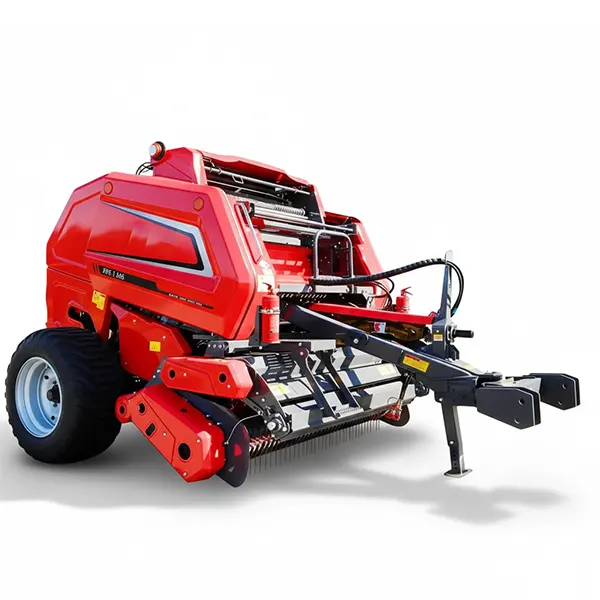
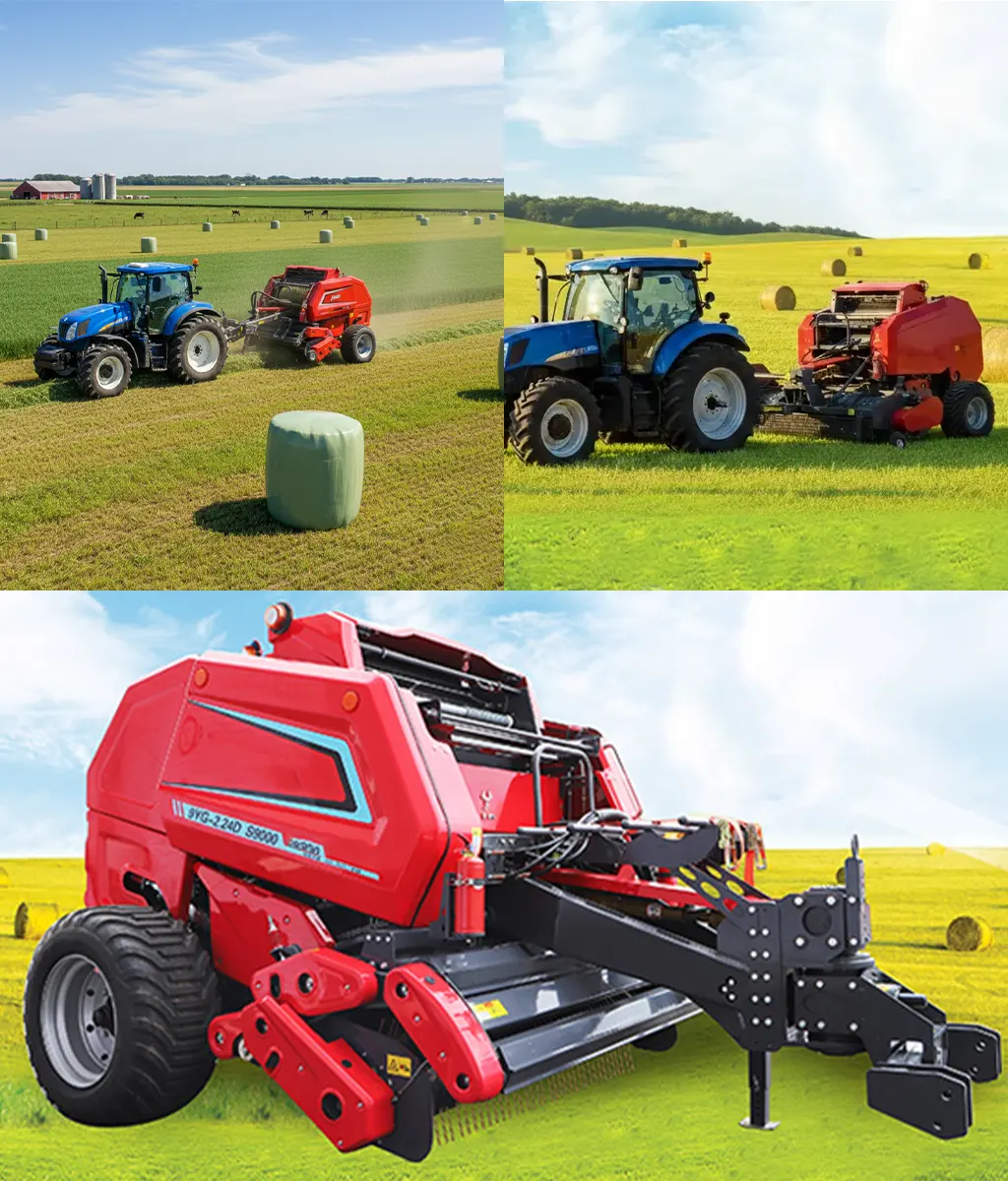
9YG-2.24D S9000 Silage Baler
Variable-chamber silage baler with optional in-chamber moisture sensor that reads bale-by-bale forage moisture and displays in the cab. Combined with handheld pre-baling measurement, provides full visibility into the moisture window during active operation.
Q6How do I speed up wilting when the forecast closes early?
When weather forecasts shift unfavorably mid-cutting, three field-level interventions can accelerate wilting. The first is increasing swath spread — if the swath was originally laid down at 75% of cutting width (typical), the operator can use a tedder or swath inverter to spread the swath to 95% of the cutting width, exposing more surface area to wind and sun. This intervention adds 4–8 hours of equipment work but can shave 6–12 hours off the wilting timeline.
The second intervention is conditioning intensity. If the mower-conditioner was originally set to light conditioning, the swath can be re-passed with a flail conditioner or a heavy-duty crimping operation that increases stem damage and accelerates moisture release. This intervention is most effective on first-cutting alfalfa with thicker stems; later cuttings and grasses do not benefit as much. Re-conditioning adds equipment hours and slightly increases leaf shatter, but the trade-off is usually worthwhile when weather windows are closing.
The third intervention is cutting timing for next time. Operations that frequently face closing weather forecasts learn to start cutting earlier in the morning (7:00–8:00 AM rather than 9:00–10:00 AM) to extend the productive wilting window during the cutting day itself. The earlier start adds an hour of operator time to the cutting day but produces 4–6 additional hours of useful wilting time before evening slowdown begins. This is a structural rather than reactive intervention but is the most reliable way to handle forecast uncertainty. Operations in regions where afternoon thunderstorms are common often standardize on early-morning cutting starts as a permanent operating discipline rather than a weather-driven adjustment.
Q7How does moisture affect chamber pressure and bale density?
Wet forage compresses more readily than dry forage at the same chamber pressure setting. A silage baler set to a standard 200 bar pressure produces a denser bale on 60%-moisture forage than on 50%-moisture forage from the same field. The density difference comes from how the cellular structure of the forage responds to compression — more water in the cells means the cells deform more readily, packing tighter against neighboring cells, and the resulting bale has fewer air pockets per unit volume.
The practical implication is that operators baling across the moisture range should adjust chamber pressure to maintain consistent target density. A typical adjustment: 200 bar at 60% moisture, 215 bar at 55% moisture, 230 bar at 50% moisture. The pressure increase compensates for the lower compressibility of drier forage and produces consistent bale weight and density across the moisture range. Most modern silage baler models allow chamber pressure adjustment from the cab, making mid-cutting adjustments practical when moisture varies across field sections.
Operations that ignore the moisture-pressure relationship produce bales with significant density variation across a single cutting. The bales coming off dry sections of the field at 50% moisture come out 10–15% lighter than bales from wetter sections at 60% moisture, even though the chamber indicator shows the same fill percentage. This density variation translates to fermentation outcome variation — the lighter bales have more residual oxygen and are more vulnerable to aerobic spoilage during storage. The pressure adjustment is a small operator action that produces measurable downstream quality differences.
Q8Does moisture target differ by forage species?
Yes. Different forage species ferment optimally at slightly different moisture points within the broad 50–65% range. Alfalfa and other legumes target the lower-middle range (50–58%) because their higher protein content and lower sugar content mean fermentation runs at the lower edge of the lactic-acid productivity curve. Grasses (orchardgrass, ryegrass, fescue) target the upper-middle range (58–62%) because their higher sugar content drives fermentation efficiently even at slightly higher moisture. Mixed alfalfa-grass stands typically target the middle of the overall range (55–60%) as a compromise across species.
Corn-derived silage products differ further. Earlage and snaplage target 35–45% moisture because the dense kernel and cob material does not need additional water for fermentation — the kernels themselves provide adequate moisture and fermentable carbohydrates. Stover (post-grain corn residue) typically gets baled at 25–35% moisture, which produces a wrapped product that is closer to dry hay than fermented silage but still benefits from the wrap-protected storage. The general pattern: leafy forages target the middle of the silage range; cob-and-kernel materials target the lower edge; coarse-stem materials sometimes go below the silage range entirely.
Operations baling multiple species in a single season learn to recalibrate their moisture targets between cuttings. The same operator running alfalfa silage in May at 55% moisture, sorghum-sudangrass silage in July at 60% moisture, and earlage in October at 40% moisture is hitting three different optimal points on the same silage baler equipment. The chamber and wrap discipline stays similar; the moisture target shifts with the species. Operators that apply a single moisture target across all species produce sub-optimal results on at least some of the cuttings.
Moisture Target Summary by Application
Eight common silage baler applications and the moisture target each one optimizes around. Use this as a quick-reference rather than as a substitute for measuring actual field moisture before baling.
| Application | Target Moisture | Reason |
|---|---|---|
| Alfalfa silage (dairy) | 55–60% | Best palatability for lactating cows |
| Alfalfa silage (beef) | 50–60% | Wider tolerance, less fermentation-sensitive |
| Grass silage (dairy) | 58–62% | Higher sugar drives clean fermentation |
| Mixed pasture silage | 55–60% | Compromise across species |
| Horse haylage | 40–50% | Slower fermentation, milder horse acceptance |
| Sorghum-sudan silage | 58–63% | Coarse stems need higher moisture to compress |
| Earlage / snaplage | 35–45% | Kernels provide internal moisture and sugars |
| Corn stover bales | 25–35% | Wrapped dry-hay-equivalent, limited fermentation |
The application-specific moisture targets in the table reflect what experienced operators find produces the best feeding outcomes for each customer profile. The standard 50–65% silage baler operating range covers most leafy-forage applications; corn-byproduct applications operate below this range; haylage applications operate at the lower edge or slightly below. None of these targets is rigid — operators frequently bale at 1–3 percentage points outside the listed targets without significant consequence — but bales falling 5+ percentage points outside the appropriate range tend to produce the predictable problems described in earlier questions.
Equipment Around the Silage Baler
The supporting equipment chain affects how cleanly the silage baler hits the moisture window. The mower-conditioner conditioning intensity directly affects wilting rate; light conditioning produces slower wilting and gives operators more flexibility to hit the moisture target across a wider window. The hay rake raking timing is also critical — raking too early traps moisture in the consolidated windrow and slows wilting noticeably; raking too late leaves the swath in over-dry condition by baling time.
A bale transporter with squeeze-clamp pickup matters most for bales near the upper moisture limit — wetter bales are more vulnerable to wrap damage during handling. The wrap film and net wrap inventory also play moisture-related roles: 8-layer wrap on a 65%-moisture bale provides similar oxygen-barrier protection to 6-layer wrap on a 55%-moisture bale, because the higher-moisture bale’s faster initial fermentation depletes residual oxygen more quickly. Some operations adjust wrap-layer counts based on actual bale-by-bale moisture readings rather than running a single layer count across the entire cutting.
Tedders are a piece of equipment specifically related to moisture management that some operations add to their chain. A tedder spreads the swath after initial cutting to accelerate wilting, particularly useful when weather forecasts suggest a tighter-than-expected window. Tedders are common in Northeast and Mid-Atlantic operations where weather windows are unreliable, less common in Plains operations where standard cutting-and-raking workflows usually hit the moisture window without intervention. The capital cost of a tedder ($8,000–14,000) is justified primarily for operations that frequently lose cuttings to weather-driven moisture problems.
Editor: Cxm