Mower-to-Baler Workflow: Cutting Hay That Bales Cleanly
A practical guide for U.S. hay producers — sickle-bar vs disc mowers, cutting height and speed, the conditioning question, and matching mower throughput to round baler capacity.
Bale quality is set in the field before the round baler ever shows up. The mower decides cutting height, swath profile, and the dry-down rate of the forage that will eventually flow through the rake and into the chamber. Get the mower-to-baler workflow right and the round baler runs at full capacity on consistent windrows; get it wrong and you spend the rest of the haying chain compensating for problems that traced back to the cutting stage.
This guide walks through the mower decisions that matter most — the choice between sickle-bar and disc/rotary designs, whether to add conditioning, the cutting parameters that decide swath quality, and how to match mower throughput to your existing round baler or silage baler. The framework applies to U.S. hay programs from 50-acre cow-calf cuttings through 5,000-acre commercial operations, with the specific mower spec scaling to the operation size.
Why Mower Choice Decides Bale Quality Downstream
Three things flow from the cutter into bale quality: cutting cleanliness at the stem, swath profile after the cut, and dry-down rate during the wilting period. Each one telegraphs through to a measurable bale quality outcome that the buyer pays for at the bunker or the elevator scale.
A clean cut at the stem matters because ragged or torn stems regrow more slowly, which costs the operator on the next cutting yield. Sickle-bar mowers running sharp blades produce a clean shear cut at the stem — typically 95% clean cuts on alfalfa with properly maintained blades. A disc with worn blades or excessive tip speed produces a high percentage of torn or shredded stems, which costs 5-10% on the regrowth yield of the second and third cuttings. The penalty compounds across the season, especially on irrigated alfalfa programs running 4-5 cuttings per year.
Swath profile sets dry-down rate and the windrow density that ultimately reaches the round baler pickup. A wide, shallow swath (2.0-2.4 meters wide on a 2.4-meter cutting bar) dries 30-40% faster than the same forage piled into a narrow, dense swath. The 30-40% gap matters because it determines whether you can bale the next day, two days later, or three days later — and the longer the dry-down, the more nutrient and leaf loss accumulates in the swath. For dairy and beef silage baler workflows targeting the 50-55% moisture window, a wide swath is the difference between hitting the wrap timing and missing it.
The third quality lever — leaf retention during the cut itself — is where mower choice and operator skill intersect most directly. Aggressive cutting at high tip speeds shatters dry-side leaf off alfalfa stems before the forage even hits the swath, costing 4-8% of the protein-rich top growth before any wilting starts. Cutting at moderate speeds with sharp components keeps the leaf attached to the stem through the cut and into the swath, where the rake can consolidate it into the windrow without further loss.
The Two Mower Designs Used on U.S. Hay Operations
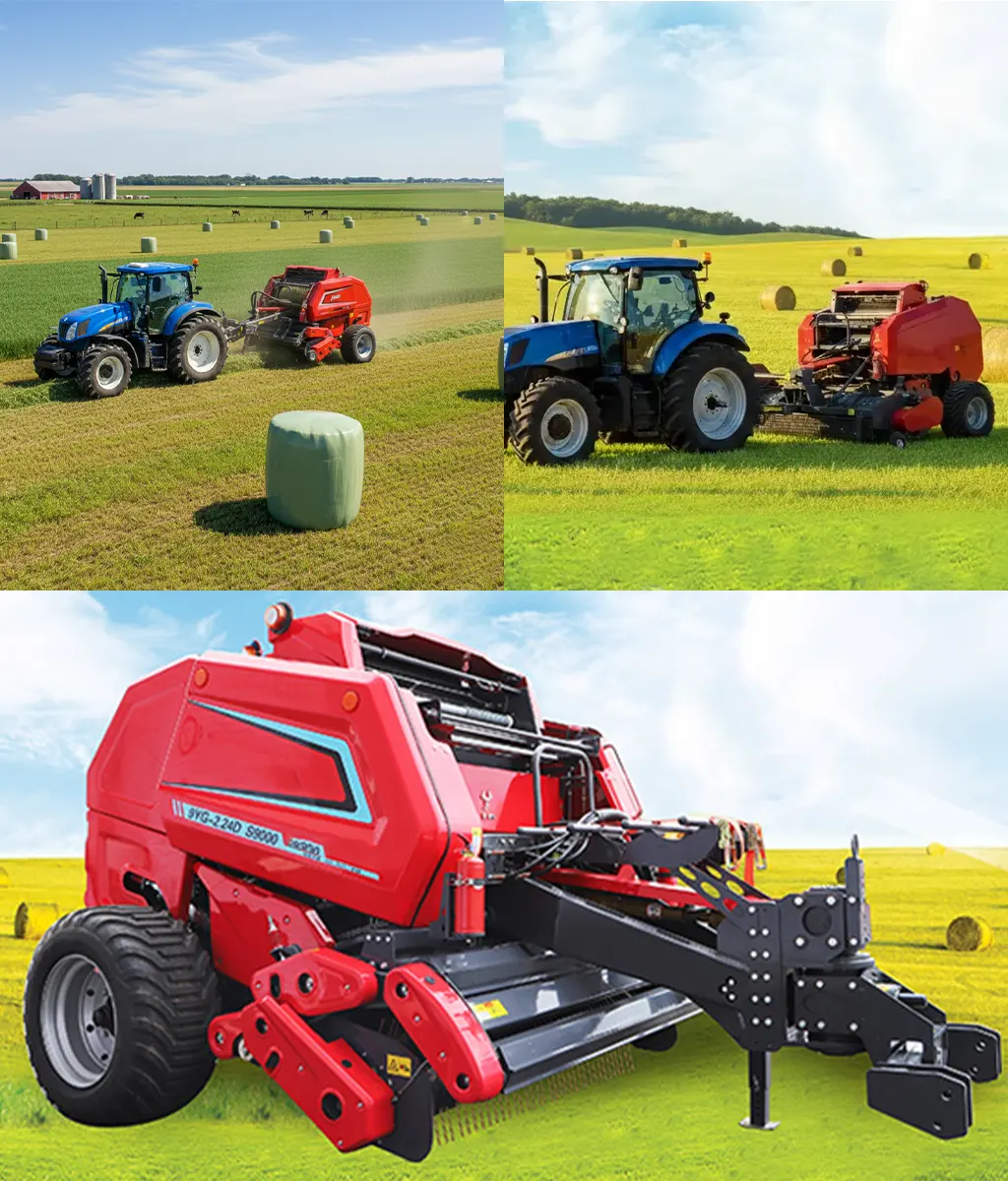
Two mower design families cover most U.S. hay programs: sickle-bar mowers and disc/rotary mowers. Each handles a different operational profile and produces a different swath. Mower-conditioners — disc mowers with integrated crimping rollers — are a third family used on premium alfalfa operations and large dairy programs; they fall outside the scope of this guide but are mentioned where relevant.
Sickle-Bar Mower
Cutter bar with reciprocating teeth | Cleanest cut, lowest power demand
Reciprocating teeth shear forage cleanly at the stem. Lower forward speed (6-10 km/h) than disc designs, but very clean stem cut and minimal regrowth penalty.
Best for: Alfalfa with multiple cuttings, premium hay programs, light-tractor operations
Trade-off: Lower throughput than disc mowers; sensitive to debris in the cutter bar
Disc / Rotary Mower
Rotating disc with blades | Highest throughput, debris-tolerant
A horizontal disc with knife blades cuts forage on impact. Higher forward speed (10-16 km/h) and tolerant of small debris that would jam a sickle bar. Standard on commercial hay operations.
Best for: Grass hay, large acreage, mixed forage with stones or sticks
Trade-off: Higher PTO power demand; some stem shredding on alfalfa at high tip speed
The choice between sickle-bar and disc/rotary tracks the operation profile more than absolute size. A 200-acre alfalfa program selling into the equine market typically wins with a sickle-bar mower because the clean cut preserves regrowth yield across 4-5 cuttings per season. A 1,500-acre grass-hay program serving ranch winter feed typically wins with a disc mower because the throughput advantage matters more than the marginal regrowth penalty. The next two sections walk through each design in detail.
Sickle-Bar Mowers — Strengths and Best Fits
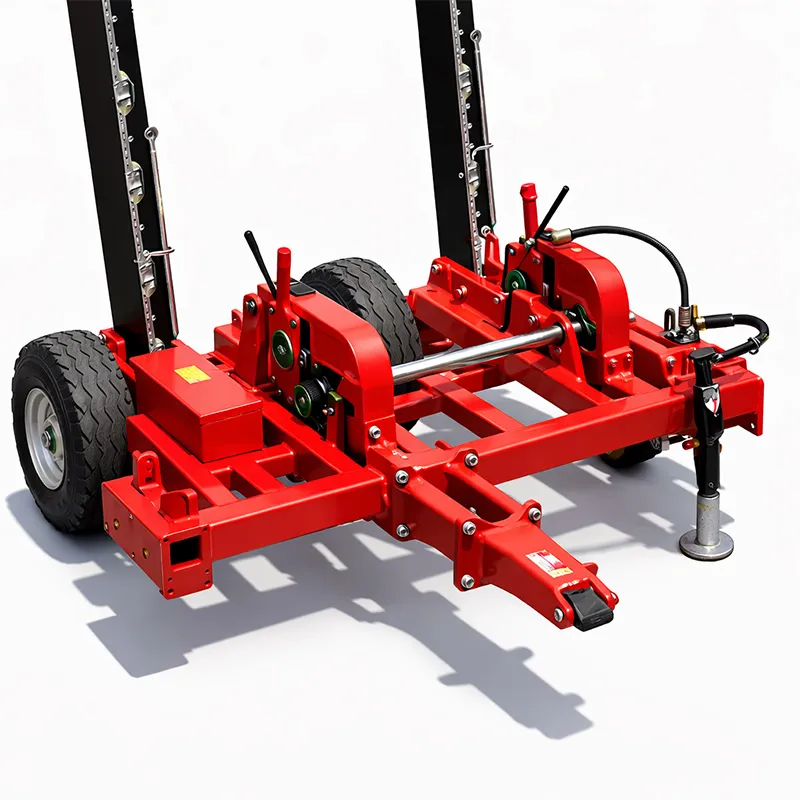
The sickle-bar mower is the workhorse of U.S. small-to-mid-size hay operations and the design of choice for premium alfalfa programs. The cutter bar runs reciprocating teeth — typically 50-75 teeth across the bar width that shear forage cleanly at the stem with a scissor-like action. The clean cut is the headline benefit: alfalfa stems sheared by a sickle-bar regrow within 24-36 hours of cutting, while torn or shredded stems take 48-72 hours and lose 5-10% on regrowth yield.
Power demand is modest — a 5-meter sickle-bar mower runs comfortably on a 35-65 HP utility tractor, and the same tractor that pulls the round baler in the afternoon often pulls the mower in the morning on smaller operations. Operating speed is slower than disc mowers (typically 6-10 km/h), but for a 200-400 acre operation the throughput is more than adequate. The double-acting variant — where the cutter bar reciprocates on both forward and reverse strokes — produces noticeably cleaner cuts than single-acting designs and handles heavy first-cutting alfalfa without binding.
Trade-offs are honest. A sickle-bar mower is sensitive to debris in the cutter bar — small stones, sticks, or wire can jam the reciprocating action and snap teeth. Operations on rocky or stick-prone fields need to walk the field before cutting or accept higher tooth replacement rates. The cutter bar also requires more frequent blade sharpening than a disc mower (every 30-50 cutting hours versus every 100-150 hours on a disc), which adds 2-3 hours per season of operator maintenance time. For most U.S. hay programs targeting consistent regrowth and clean alfalfa, the trade-offs are well worth it. The 9GS-5.0 pull-type double-acting sickle-bar mower is the typical specification for commercial U.S. operations between 200 and 800 acres.
Disc / Rotary Mowers — Strengths and Best Fits
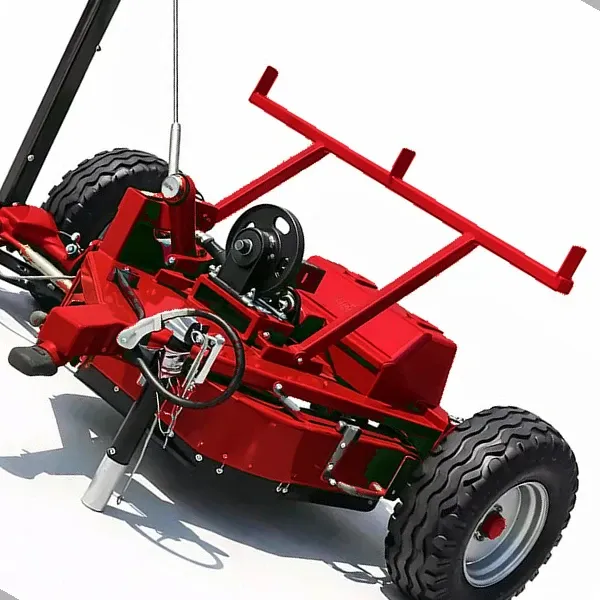
Disc and rotary mowers earn their place on operations where throughput, debris tolerance, or terrain conditions favor a more aggressive cutting mechanism. The horizontal disc — single-blade on compact units, multiple-disc on commercial models — spins at 2,500-3,500 RPM and cuts forage on impact rather than by shearing. The result is a faster pass through the field and far less sensitivity to small debris than a sickle-bar mower of the same width.
For utility cutting applications — pasture topping, ditch banks, orchard understory, light hay on cow-calf operations — a compact single-blade rotary mower like the 9GD-2.5 covers a wide range of cutting tasks at a much lower acquisition cost than a commercial sickle-bar. The PTO drive runs comfortably on a 25-50 HP tractor, and the unit handles small stones, fallen branches, and the occasional fence wire without breaking teeth (a sickle-bar on the same field would be in the shop within an hour). Operations that need a “do-everything” mower for general grass cutting plus occasional light hay duty often pick a single-blade rotary as the cost-effective answer.
For hay-only operations above 800 acres, commercial multi-disc mowers from competitor brands typically outperform either format the user offers — they reach 4-7 m cutting widths and run at 12-16 km/h forward speed, which fits the throughput needs of large hay programs. The trade-off remains the same: disc designs cut faster but produce more stem shredding than sickle-bar designs, which costs marginally on alfalfa regrowth yield. For grass-hay operations, the regrowth penalty is smaller and the throughput advantage usually closes the math in favor of disc designs. For premium alfalfa programs, the math more often favors a sickle-bar despite the lower throughput.
The Conditioning Question — Plain Cut vs Conditioned Swath
Conditioning — running the cut forage through crimping rollers immediately after cutting — accelerates the dry-down rate by mechanically breaking the waxy stem cuticle that normally slows water loss. The benefit is faster wilting (typically 30-40% reduction in dry-down time on alfalfa) and more uniform moisture across the swath. The cost is additional equipment complexity, higher PTO power demand, and a larger upfront capital outlay.
Plain Cut (No Conditioning)
Mower cuts the forage and lays it in a swath; dry-down happens via natural sun-and-wind exposure with no mechanical assistance. Standard on most U.S. utility and small-to-mid-size hay operations.
Dry-down time: 36-72 hours typical for alfalfa to silage moisture
Best for: Cow-calf, grass hay, dry-hay-only programs, smaller operations
Conditioned Swath
Crimping rollers break the stem cuticle as the forage exits the mower. Faster dry-down, more uniform moisture, but requires either a mower-conditioner combo or a separate conditioning unit downstream of the cut.
Dry-down time: 18-36 hours for the same alfalfa cutting
Best for: Premium alfalfa, dairy silage baler workflows, large acreage with tight harvest windows
For most U.S. operations under 600 acres, plain-cut mowing without conditioning is the right answer — the dry-down delay is manageable on the typical 3-5 day haying window, and the simpler equipment costs less and breaks less. For operations above 800 acres or operations running silage baler workflows that demand the 50-55% moisture window within 24-36 hours of cutting, conditioning starts paying back. The trade-off is operation-specific; the application desk runs the moisture math against your typical haying calendar before quoting.
Cutting Parameters — Height, Speed, and Swath Width
Three operating parameters decide swath quality on every mower: cutting height, forward speed, and resulting swath width. Each one has a target range that fits typical U.S. hay conditions, and each one trades off against the others. Setting them correctly takes 10-15 minutes at the start of each new field; setting them wrong wastes the entire cutting.
Cutting height is the parameter most operators set and forget, and it costs them money. The 3-7 cm range works for most alfalfa and grass cuttings, but conditions shift the optimum within that range. Drought-stressed fields want the upper end (5-7 cm) to leave a stubble that protects regrowth; well-watered alfalfa first cutting can go to the lower end (3-4 cm) to maximize yield. Cutting too low scalps the crown and costs regrowth yield on the next cutting; cutting too high leaves protein-rich lower-stem material in the field as residue.
Forward speed is the parameter operators most often push beyond the design range during peak haying weeks. A sickle-bar mower running above 10 km/h on heavy first-cutting alfalfa starts producing irregular cuts because the cutter bar cannot keep up with the forage flow; a disc mower running above 16 km/h produces excessive stem shredding. The 30-minute time savings of running a kilometer faster usually costs more in regrowth yield and bale quality than it saves in operator time. Hold the speed in the design range and let the mower do its job correctly.
Matching Mower Throughput to Round Baler Capacity
A mower that cuts faster than the round baler can bale stops the workflow at the rake and stack-yard end; a mower that cuts slower bottlenecks the start of every haying day. The table below maps mower cutting widths to typical baler capacities so the cutting and baling stages stay in balance across the haying calendar.
| Operation Size | Mower Width | Daily Cutting Capacity | Matching Round Baler |
|---|---|---|---|
| Under 100 acres | 2-3 m compact | 8-15 acres/day | Compact 4×4 or 4×5 |
| 100-400 acres | 3-5 m sickle-bar | 15-30 acres/day | Standard 4×5 or 5×5 |
| 400-1,000 acres | 5-7 m commercial | 30-50 acres/day | High-density 5×5 |
| 1,000+ acres | 7-9 m disc / two mowers | 50-90 acres/day | Commercial 5×6 / silage baler combo |
Daily cutting capacity assumes 8-9 hour cutting days at typical forward speeds. Actual capacity varies with field shape, transport time between fields, and operator experience. The cutting capacity should run roughly 1.2-1.4 times the round baler’s daily baling capacity to account for the 1-3 day dry-down gap between cutting and baling. Operations running silage baler workflows compress this ratio because the dry-down is shorter (12-36 hours to silage moisture), which means the cutting and baling need to run closer to each other in time.
A common operational mistake is buying a mower scaled to last year’s acreage rather than the next 3-5 year plan. Hay programs grow more often than they shrink — adding rented ground, expanding the alfalfa rotation, taking on custom hay work for neighbors. A cutting capacity that fits today comfortably may bottleneck the operation 2-3 years from now. Sizing the cutting capacity 20-30% above current acreage gives the operation room to grow without forcing a mid-life equipment upgrade. The capital cost difference between a 5-meter and a 6-meter cutting width is typically 12-18% — small compared with the cost of replacing the unit before its design life is up.
Mower Wear Points and Service Schedule
Mowers wear differently from other hay equipment because the cutting interface contacts soil, stems, and abrasive material on every pass. The wear points sort into three categories: cutting components, drive system, and frame items. Each category has its own service interval and characteristic failure mode.
Cutting Components (highest wear)
Sickle-bar teeth: sharpen every 30-50 cutting hours; replace at 600-900 hours total. Disc blades: 100-150 hours sharpening interval, 400-600 hours replacement.
Cutter bar guide plates wear faster on stony fields — inspect monthly and replace any showing more than 3 mm of wear at the leading edge.
Drive System (mid-tier wear)
PTO U-joints and slip clutch: 1,500-2,500 cutting hours typical service life. Inspect annually for slop or noise.
Sickle-bar drive ram or disc gearbox: 2,000-3,500 hours; oil change every 500 hours on gearbox-driven units.
Frame and General (lowest wear)
Hitch pins, frame welds, support rails: typically last the life of the mower (6,000-8,000 cutting hours) if the mower is stored indoors.
Cab-control cables and electrical connectors: replace as needed; UV exposure during outdoor storage is the primary failure mode.
Daily greasing on the sickle-bar drive and the cutter bar pivot points is the highest-return service investment on a mower — 2-3 minutes per cutting day extends life on multiple wear items. Operators who skip daily greasing typically see drive failures at 60-70% of the design service life, which compresses the ownership economics significantly.
Indoor storage between seasons is the second-highest-return service investment. UV exposure during outdoor storage degrades rubber drive belts, hydraulic hoses, and cab-control cables 30-40% faster than indoor storage. A pole-shed roof — even an open-sided one — typically extends the life of the unit by 2-3 years on a moderate-volume operation. The cost of a basic shed is recovered through delayed wear-part replacement on the first machine alone.
Building Out the Hay-Making Workflow
A mower decision is one piece of a four-stage hay chain: cut, condition (or skip), rake, bale. Mismatched throughput across the chain bottlenecks the entire workflow. The four product families below cover the full chain — order all four together and the mower-to-baler workflow stays balanced from the first cutting through the last bale of the season.
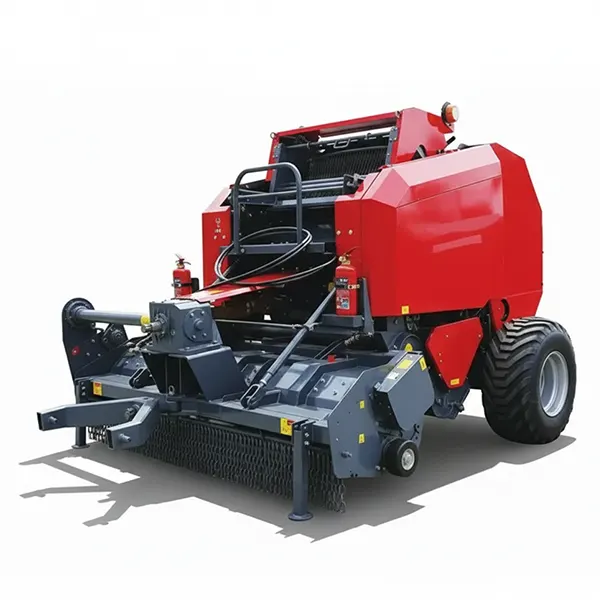
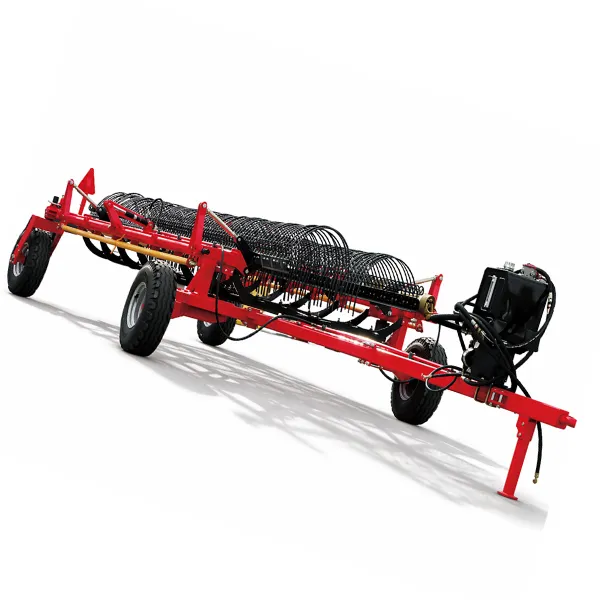
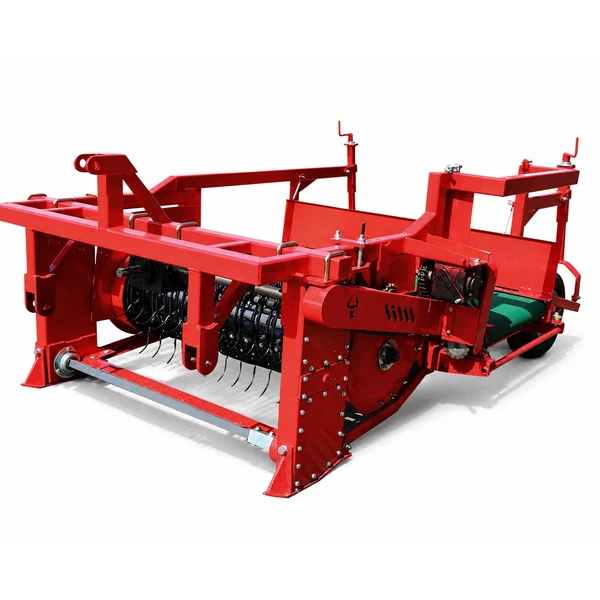
Browse the full silage and forage equipment catalog or look at other products like bale transporters and forage hammer mills that complete the on-farm chain. Operations sourcing the full chain together typically save 12-18% on freight from a single Sacramento shipment, and the application desk matches the cutting throughput against the round baler capacity in a single pre-sale conversation.
Throughput matching matters most at the boundaries of equipment capacity. A 5-meter sickle-bar feeding into a high-density 5×6 commercial round baler underuses the baler chamber capacity; a 7-meter disc paired with a compact 4×4 round baler creates a windrow backlog that the smaller chamber cannot keep up with. The application desk runs the math against your specific tractor inventory and acreage profile to flag mismatches before the order ships, rather than after the equipment arrives at your zip code.
Frequently Asked Questions
Sickle-bar or disc mower for a 300-acre alfalfa operation?
Sickle-bar wins for most 300-acre alfalfa operations because the cleaner cut preserves regrowth yield across 4-5 cuttings per season. The 5-10% regrowth advantage compounds to 10-20 cwt/acre/year of additional yield, which more than offsets the throughput penalty versus a disc mower. The 9GS-5.0 pull-type double-acting sickle-bar is the typical fit at this acreage.
What cutting height should I use on my first cutting of alfalfa?
3-5 cm on well-watered first-cutting alfalfa to maximize harvest yield. Drop to 4-7 cm on drought-stressed fields to leave protective stubble for regrowth. Cutting below 3 cm scalps the crown and costs 8-12% on second-cutting yield; cutting above 7 cm leaves protein-rich lower-stem material in the field.
Do I need a mower-conditioner for silage baler workflows?
For silage baler operations targeting the 50-55% moisture window within 24-36 hours of cutting, conditioning typically pays back through tighter dry-down timing. For dry-hay-only operations and most operations under 600 acres, plain-cut mowing without conditioning is the right answer — the dry-down delay is manageable on a typical 3-5 day haying window.
How fast can I run a sickle-bar mower without losing cut quality?
6-10 km/h is the design range for most pull-type sickle-bar mowers. Pushing to 12 km/h on heavy first-cutting alfalfa overwhelms the cutter bar and produces irregular cuts with up to 15% torn or shredded stems. The 30-minute time savings of running faster usually costs more in regrowth yield and bale quality than it saves in operator time.
Can the same tractor pull both my mower and my round baler?
Often yes — the PTO requirements overlap broadly. A 65-90 HP utility tractor handles both a 5-meter sickle-bar mower and a standard 4×5 round baler. Operations stepping up to high-density 5×6 round balers or silage baler combo machines typically want 100-130 HP, which still covers the mower comfortably. Plan tractor and implements together rather than separately.
How often do sickle-bar teeth need sharpening?
Every 30-50 cutting hours during normal operation, more often on stony or stick-prone fields. Operators who run a 200-300 hour season typically sharpen 4-6 times across the year. Tooth replacement runs every 600-900 cutting hours; budget for one full set of replacement teeth per 2-3 seasons of moderate use.
What is the lead time on a mower order from Sacramento?
Standard configurations ship 14-21 days from the Sacramento warehouse to most lower-48 zip codes. Operators ordering ahead of spring haying season should confirm orders by mid-winter to lock in the production slot. Mower orders bundled with a round baler or hay rake typically save 12-18% on freight versus separate shipments.
Ready to spec the right mower for your operation?
If your operation is moving from a compact rotary mower to a commercial sickle-bar, or stepping up the cutting capacity to match a new round baler, the right mower depends on your specific acreage, forage profile, end markets, and tractor inventory. Send your numbers to the Sacramento application desk and we will quote freight to your zip code within 48 hours.
Editor: Cxm